
When do refractory system upgrades pay off most clearly?




For financial decision-makers, refractory system upgrades pay off most clearly when rising fuel costs, unplanned shutdowns, and lining failures begin eroding margins faster than routine maintenance can contain.
In high-temperature industries, the right upgrade is not only a technical correction. It is a capital efficiency decision tied to uptime, thermal stability, and lower risk exposure.
Across cement, glass, incineration, refractory production, and extrusion, the economics have shifted. Energy volatility and emissions pressure now reveal the value of refractory system upgrades much faster.
The strongest returns appear when heat loss, shell temperature drift, repeated patching, and process instability combine into a visible cost pattern. That is when delayed action becomes more expensive than investment.
The clearest payback window is opening earlier than before

In many plants, refractory system upgrades used to be justified only after severe failure. Today, the trigger point is earlier because thermal inefficiency becomes financially visible sooner.
Fuel prices remain structurally unstable. Carbon accounting is tighter. Production plans are less tolerant of shutdowns. Under these conditions, small lining weaknesses create outsized economic losses.
CF-Elite’s industry observations show a common pattern. Sites with frequent hot spots, variable coating behavior, or recurring repair zones often underestimate annual losses from degraded refractory performance.
The market signal is clear. Returns from refractory system upgrades are no longer limited to crisis situations. They are strongest when a plant still runs, but runs with hidden penalties.
Current signals show why refractory system upgrades are moving up the investment agenda
Several trend signals explain this shift across integrated thermal industries.
- Energy cost spikes magnify every degree of unnecessary heat loss.
- Higher alternative fuel use changes flame chemistry and lining wear patterns.
- Longer production campaigns increase the cost of unexpected kiln or furnace stops.
- Decarbonization targets raise attention to insulation efficiency and thermal balance.
- Digital monitoring exposes shell temperature variation more quickly than manual inspection.
These signals affect not one sector, but the whole chain of high-temperature operations. Cement kilns, glass furnaces, waste-to-energy systems, and material extrusion lines all feel the same pressure.
That is why refractory system upgrades are increasingly assessed as strategic resilience projects, not only maintenance expenses.
The strongest drivers behind clear returns can be measured directly
A good investment case starts with measurable drivers rather than general assumptions. The table below shows where returns usually become visible first.
This is where refractory system upgrades become easier to defend financially. Each driver translates into a cost line, a risk line, or both.
Returns become most visible in four operating scenarios
1. When thermal losses are persistent but normalized
Many plants normalize elevated shell temperatures because production continues. Yet chronic heat leakage often creates one of the fastest payback cases for refractory system upgrades.
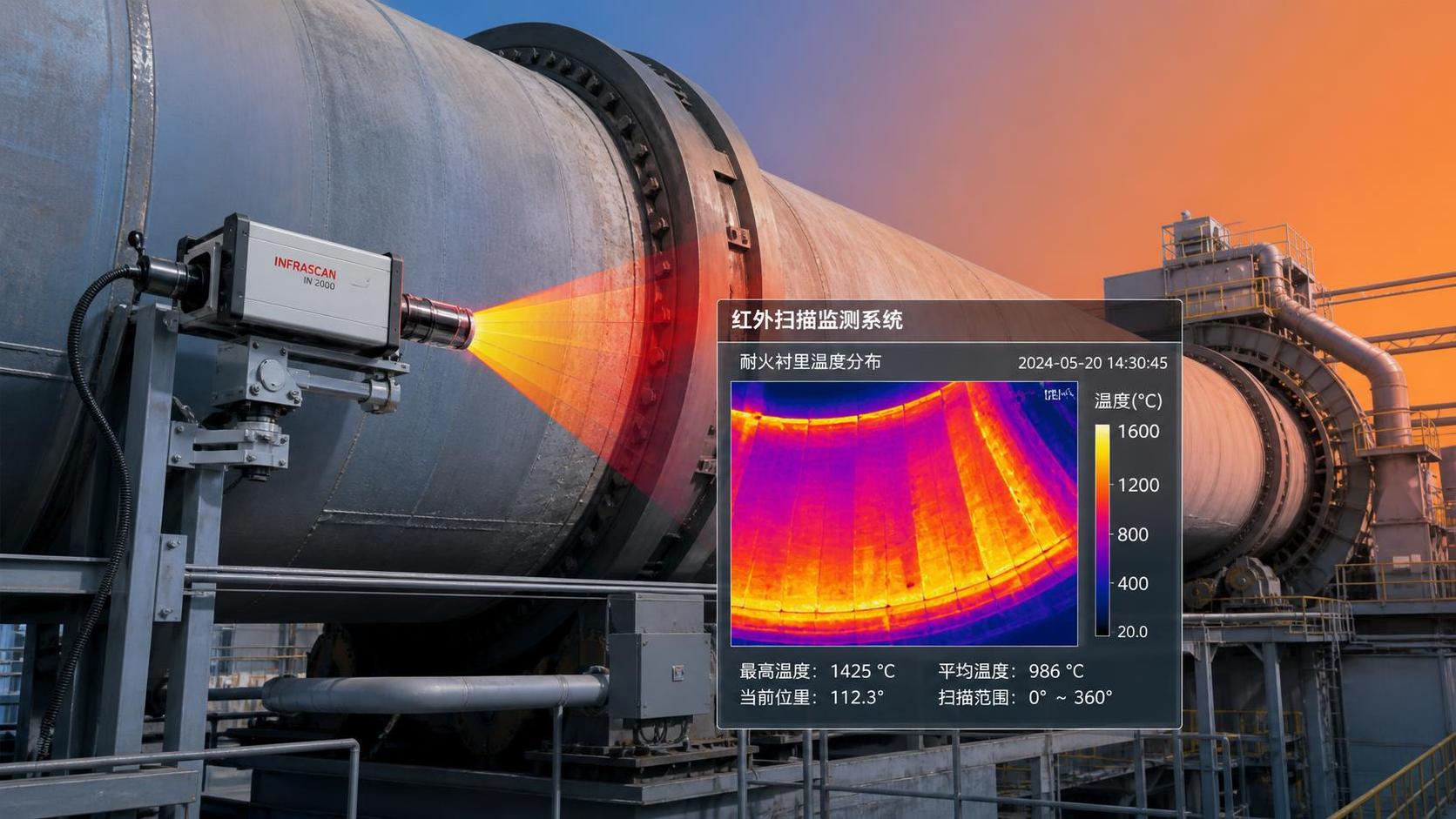
If thermal imaging repeatedly shows hot zones, the site is usually paying for avoidable energy escape every hour of operation.
2. When shutdown costs exceed material savings
A lower-cost lining is rarely cheaper if it shortens campaign length. In continuous or semi-continuous operations, one forced stop can erase years of apparent purchasing savings.
This is especially true in kilns, incinerators, and furnaces where restart losses, labor, and downstream disruption multiply rapidly.
3. When fuel mix or process chemistry has changed
Alternative fuels, secondary raw materials, and new product recipes change abrasion, alkali attack, thermal shock, and coating behavior.
In such cases, older lining designs may fail economically before they fail physically. Refractory system upgrades then protect both process compatibility and service life.
4. When reliability has become a revenue issue
Where delivery timing, energy recovery, or quality consistency matters, lining integrity directly affects revenue capture. The return is not only cost reduction. It is output protection.
The impact spreads across different business links, not only the hot face
The effect of refractory system upgrades extends beyond the refractory zone itself. It influences several connected business links inside complex industrial systems.
- Energy balance improves through lower heat loss and steadier thermal profiles.
- Production scheduling becomes more reliable because emergency stoppages decline.
- Maintenance planning improves because interventions move from reactive to predictable.
- Product quality often stabilizes through more uniform process conditions.
- Safety performance can improve when hot spots and structural distress are reduced.
This wider impact explains why the best business case often comes from cross-functional evaluation. The financial gain is distributed, even when the upgrade budget sits in one line item.
What deserves close attention before approving refractory system upgrades
Not every upgrade creates the same value. Clear returns depend on matching material design, installation quality, and process reality.
- Separate wear symptoms from root causes such as burner imbalance or mechanical distortion.
- Compare total campaign economics, not only purchase price per brick or castable ton.
- Review shell scans, fuel history, stoppage records, and patching frequency together.
- Check whether anchoring, expansion allowance, and dry-out practices support the upgrade.
- Model expected gains in fuel, availability, labor, and avoided failure costs.
The strongest refractory system upgrades combine better material selection with installation discipline and monitoring visibility. Leaving out one of these elements weakens the return profile.
A practical way to judge whether the timing is right
A useful decision framework is to compare three numbers: annual heat loss cost, expected downtime loss, and recurring repair cost.
If those three values together exceed the projected upgrade cost within a reasonable period, the investment case is already forming.
This framework avoids vague discussions. It turns refractory system upgrades into a decision supported by operating evidence.
The next move should be evidence-led, not failure-led
The clearest returns rarely come after catastrophic lining collapse. They appear just before that stage, when losses are measurable but controllable.
That is why refractory system upgrades should be evaluated during normal operation reviews, energy audits, and campaign planning cycles.
A practical next step is to build a short decision file using twelve months of shell scans, shutdown records, fuel use, and repair logs. That baseline reveals whether hidden losses already justify action.
In sectors observed by CF-Elite, the most durable advantage comes from acting before thermal inefficiency becomes structural damage. That is when refractory system upgrades pay off most clearly.
Related News
 Optical Glass Tech FellowHow to Evaluate a Glass Annealing Equipment Manufacturer for Production StabilityChoose a glass annealing equipment manufacturer with proven thermal uniformity, reliable controls, lifecycle value, and responsive service for stable production.Sep 08, 2026
 Prof. Marcus ChenThermal Energy Architecture in North America: Strategies for Lower Building Energy UseThermal energy architecture North America helps project leaders cut building energy use through stronger envelopes, right-sized HVAC, storage, and smart commissioning.Sep 07, 2026
 Ms. Elena RodriguezHow Should Buyers Evaluate Building Material Industry Intelligence Pricing?Building material industry intelligence pricing: learn how to compare coverage, technical depth, and ROI to choose intelligence that reduces procurement risk.Sep 07, 2026
 Ms. Elena RodriguezHow to Use Building Material Intelligence Data for Market and Investment DecisionsBuilding material industry intelligence data helps leaders evaluate demand, costs, regulation, capacity, and technology to make smarter market and investment decisions.Sep 05, 2026
 Thermal Energy ArchitectHow PLC Control Improves Energy Efficiency and Temperature Stability in KilnsEnergy efficient kilns PLC control improves temperature stability, cuts fuel waste, and optimizes combustion, draft, and material flow. Explore proven strategies for smarter kiln modernization.Sep 04, 2026
 Optical Glass Tech FellowEuropean Glass Melting Processes: Furnace Choices, Energy Use, and Quality ControlGlass melting process Europe: explore furnace choices, energy efficiency, cullet strategy, and quality control to improve output, compliance, and long-term glass performance.Sep 03, 2026
 Thermal Energy ArchitectWhat Determines Refractory Lining Monitoring Price for Industrial Kilns?Refractory lining monitoring price depends on kiln size, sensor technology, installation, software, and support. Compare total lifecycle costs and choose the right solution.Sep 02, 2026
 Silicate Process EngineerCement Production System Costs: A Plant Buyer’s Guide to Budgeting and ROICement production systems cost planning made clear: compare CAPEX, operating costs, compliance, and ROI to build a resilient, profitable cement plant investment.Sep 01, 2026
 Dr. Alistair VaughnWhat Should a Process Technology Database Track for High-Temperature Plants?Process technology database essentials for high-temperature plants: track thermal profiles, feed chemistry, refractory wear, emissions, energy, and maintenance for safer, data-driven decisions.Aug 31, 2026
 Ms. Elena RodriguezHow to Evaluate a Silicate Processing Equipment Manufacturer for Plant ProjectsSilicate processing equipment manufacturer selection: assess process fit, guarantees, energy, compliance, delivery risk, and lifecycle support for dependable plant performance.Aug 30, 2026
 Dr. Alistair VaughnHow to Specify Custom Agricultural Processing Equipment for Throughput and HygieneEquipment customization services for agricultural processing: learn to specify hygienic, high-throughput lines that improve yield, reliability, and long-term efficiency.Aug 29, 2026
 Dr. Alistair VaughnHow to Select Process Plant Equipment for High-Temperature, Abrasive Production LinesProcess plant equipment selection for high-temperature, abrasive lines: reduce downtime, improve durability, and optimize lifecycle performance.Aug 28, 2026
 Silicate Process EngineerHow Kiln Heat Recovery Systems Cut Fuel Use in Cement and Lime ProductionKiln heat recovery helps cement and lime plants cut fuel use, improve thermal stability, and build practical, reliable decarbonization strategies.Aug 27, 2026
 Ms. Elena RodriguezProcess Equipment Comparison: Which Metrics Matter Most for Reliable Selection?Process equipment comparison made practical: discover which metrics truly drive reliable selection, from energy efficiency and control stability to wear life, maintainability, and uptime.Aug 26, 2026
 Ms. Elena RodriguezWhat Buyers Should Check Before Sourcing Precision Alloy Bars for Critical PartsPrecision Alloy Bars buyers should verify grade, chemistry, tolerances, surface quality, traceability, and lead time before sourcing for critical parts. Learn what prevents costly machining and reliability risks.Aug 27, 2026
 Ms. Elena RodriguezHow to Evaluate Thermal Management Solutions Insulation for High-Heat Industrial SystemsThermal management solutions insulation: learn how to assess high-heat industrial systems by thermal performance, durability, lifecycle cost, and supplier data for smarter decisions.Aug 25, 2026
 Ms. Elena RodriguezWhat Drives Waste Recycling Cost in Industrial Projects and How to Estimate It?Waste recycling cost in industrial projects depends on composition, moisture, transport, pre-treatment, and compliance. Learn how to estimate it accurately and compare suppliers with confidence.Aug 24, 2026
 Silicate Process EngineerHow to Evaluate Cement Production Plants in the Middle East for Capacity, Fuel Flexibility, and ROIcement production plants Middle East: Learn how to assess true capacity, fuel flexibility, and ROI risks to identify resilient assets and smarter investment opportunities.Aug 23, 2026
 Structural Material AnalystHow to Evaluate Lightweight Material Machinery for Output, Energy Use, and Product QualityLightweight material machinery evaluation guide: compare stable output, energy use, and product quality to choose equipment that cuts waste, lowers costs, and improves production confidence.Aug 22, 2026
 Material Heat-Resist ExpertWhat Determines Refractory Production Line Price in a Turnkey Plant Project?Refractory production line price depends on raw materials, forming method, kiln and drying design, automation, utilities, and scope. Learn what really drives turnkey plant cost before you invest.Aug 21, 2026

Related News
- 00
0000-00
What Determines Refractory Production Line Price in a Turnkey Plant Project? - 00
0000-00
How to Evaluate a Silicate Production Line for Capacity, Energy Use, and Product Quality - 00
0000-00
Silicate Production Line Process Explained: Key Stages, Equipment, and Quality Control - 00
0000-00
How to Evaluate a Refractory Production Line in Southeast Asia: Capacity, Fuel, and Raw Material Factors - 00
0000-00
How to Evaluate a Silicate Production Lines Supplier for Capacity, Automation, and Raw Material Fit
Weekly Insights
Stay ahead with our curated technology reports delivered every Monday.