
How does advanced ceramic processing cut failure rates?




For technical evaluators, failure rate is not just a quality metric—it directly affects uptime, safety, and lifecycle cost. This article examines how advanced ceramic processing improves microstructural consistency, thermal stability, and defect control across demanding industrial applications. By linking process variables with performance outcomes, it offers a practical lens for assessing whether advanced ceramic processing can deliver lower failure rates in high-temperature and precision-engineered environments.
In sectors tracked by CF-Elite—cement plants, glass manufacturing systems, industrial kilns, refractory lines, and extrusion-based building materials—ceramic parts often work above 800°C, under abrasive load, or in chemically unstable atmospheres. Under these conditions, a small pore cluster, grain-boundary weakness, or thermal expansion mismatch can turn into unplanned shutdowns, lining collapse, sensor drift, or premature wear.
For evaluators comparing equipment, materials, or retrofit options, the central question is practical: which processing methods actually cut failure rates, and how can that be verified before procurement or scale-up? The answer rarely depends on a single material grade. It usually depends on how powders are prepared, formed, densified, inspected, and matched to service conditions across a 3-stage chain: design, processing, and field operation.
Why failure starts in processing rather than in service alone
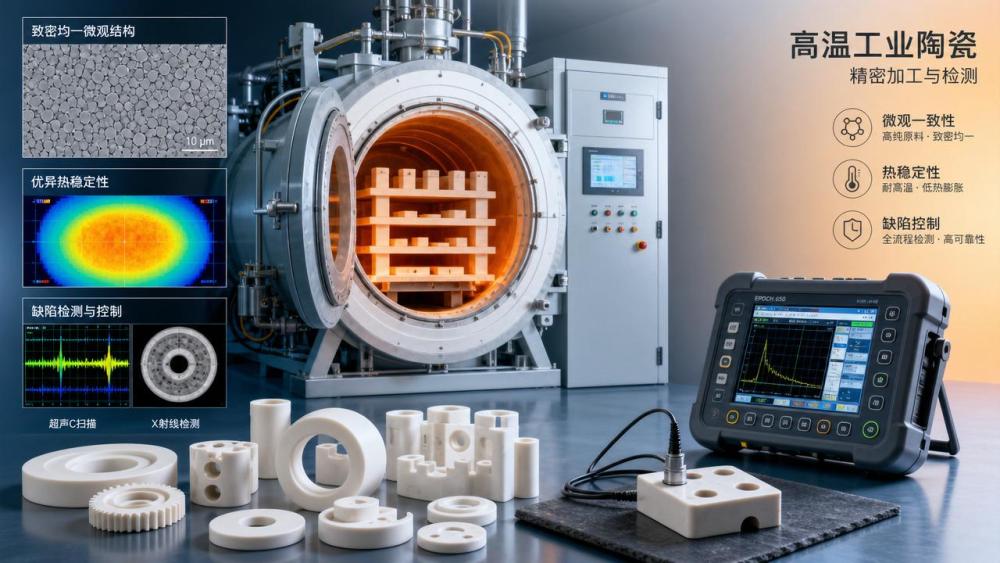
Many ceramic failures appear during operation, but the root cause is often embedded much earlier. Advanced ceramic processing reduces failure rates by controlling defect populations before the component ever reaches a kiln hood, burner block, wear liner, or insulating assembly. In technical terms, the process aims to reduce variability in porosity, grain size, phase distribution, and residual stress.
In high-temperature industries, a component may survive 12 to 36 months in one plant yet fail in 3 to 9 months in another. That gap is not explained by chemistry alone. It often reflects processing discipline: powder purity above 99%, particle size distribution within a narrow band such as D50 of 0.5–5 μm, forming pressure consistency, and sintering control within ±5°C to ±15°C depending on the system.
The defect mechanisms technical evaluators should track
Failure in industrial ceramics generally begins through 4 recurring paths: crack initiation from pores, thermal shock from uneven expansion, chemical attack at grain boundaries, and wear acceleration from weak densification. Advanced ceramic processing addresses all four by tightening microstructural control rather than only increasing nominal hardness or refractoriness.
- Open porosity above typical design targets can increase slag or alkali penetration.
- Residual stress from uneven cooling can trigger delayed cracking after 10 to 50 thermal cycles.
- Large agglomerates in feedstock can create local weak zones that fail under compressive and bending loads.
- Binder burnout defects can leave channels that accelerate oxidation or corrosive infiltration.
How advanced ceramic processing changes the reliability baseline
Compared with conventional routes, advanced ceramic processing typically adds tighter feedstock classification, more stable forming methods, refined thermal profiles, and stronger in-line inspection. That does not guarantee zero failure, but it can significantly lower defect scatter, which is often more valuable than increasing peak strength on a data sheet.
For evaluators, lower scatter matters because heavy industrial systems are judged by predictable service intervals. A refractory nozzle with 15% lower average strength but half the standard deviation may be the better procurement choice if it avoids surprise breakage across a 6-month campaign.
The table below shows how common processing variables connect with failure modes in high-temperature and precision-engineered environments.
The key takeaway is that advanced ceramic processing lowers failure rates by reducing defect variance at multiple steps, not by relying on one final inspection gate. A technically strong evaluation should therefore review process capability, not only finished-part specifications.
Which advanced ceramic processing steps deliver the biggest reliability gains
Not every improvement step has equal impact. In most industrial ceramic systems, the highest reliability gains come from feedstock preparation, forming precision, sintering stability, and non-destructive evaluation. When these four are controlled together, failure mechanisms become easier to predict and service life becomes less erratic.
1. Feedstock engineering and powder conditioning
Powder processing is often underestimated because it happens upstream. Yet for advanced ceramic processing, raw powder condition can determine 50% or more of the later defect risk. Deagglomeration, spray drying, impurity screening, and moisture control all shape compaction behavior and sintering response.
For example, in refractory or wear-resistant components used in kilns and incineration systems, oversized agglomerates can create density gradients. A moisture swing of even 0.3% to 0.8% may alter flowability enough to cause fill inconsistency in complex molds. Over long campaigns, those small upstream shifts can translate into a higher installed failure rate.
What evaluators should verify
- Powder lot consistency across at least 3 production batches.
- Control of contamination from milling media, liners, and handling.
- Moisture and binder uniformity before forming.
- Documented particle size and agglomerate screening methods.
2. Forming methods that minimize internal gradients
Pressing, isostatic pressing, extrusion, tape casting, and injection-based routes each create different internal stress patterns. In CF-Elite’s focus sectors, extrusion and pressing are especially relevant for kiln furniture, refractory shapes, insulating parts, and specialized building material components. The goal is not simply shape formation. It is uniform packing and controlled green strength.
When green density varies by more than a few percentage points across a section, firing shrinkage becomes uneven. That can produce hidden cracks or geometric drift beyond tolerances such as ±0.3 mm to ±1.0 mm, depending on component size. Advanced ceramic processing reduces this risk through better die design, pressure distribution control, and debinding schedules.
3. Sintering and thermal profile optimization
Sintering is where many ceramic components either gain long-term reliability or lock in latent weakness. Thermal ramps that are too fast can trap gases, while insufficient soak time can leave incomplete densification. Conversely, excessive soak can drive abnormal grain growth and reduce thermal shock resistance.
For technical evaluation, it is useful to ask whether the supplier controls at least 4 thermal parameters: ramp rate, intermediate hold points, peak soak duration, and cooling profile. In high-value components, even a 1-step versus 3-step cooling approach can influence crack susceptibility after repeated cycling between ambient temperature and 1000°C or more.
4. Finishing and inspection that catch hidden risk
Advanced ceramic processing does not stop at firing. Grinding damage, edge chipping, and surface flaws can sharply reduce actual component strength. For precision applications, the last 0.1 mm of surface condition may matter more than the previous 10 mm of bulk structure. Non-destructive inspection helps confirm that the part shipped is the part qualified.
Depending on size and value, inspection may include dimensional checks, dye penetrant methods, ultrasound, acoustic analysis, or CT scanning. Not every component needs the same level. But high-consequence parts in thermal management systems, burner assemblies, or specialty extrusion lines usually justify more than visual acceptance alone.
How to evaluate failure-rate reduction before procurement
For B2B buying teams, the challenge is not understanding the theory. It is turning processing quality into a procurement decision with manageable risk. A technical evaluator should compare suppliers using measurable process indicators, field-fit criteria, and validation steps rather than broad claims about “superior ceramic quality.”
A practical evaluation framework for industrial applications
The most reliable method is a 4-part review: material suitability, process stability, test relevance, and service feedback. This is especially important in sectors where ceramics interact with hot dust, alkali vapor, mechanical vibration, and frequent start-stop cycles. A component that tests well in laboratory flexural strength may still fail in 60 days if thermal cycling conditions were not represented.
The table below provides a procurement-oriented checklist for assessing whether advanced ceramic processing is likely to cut failure rates in real plant conditions.
This checklist shifts the conversation from nominal material claims to actual failure-risk management. In many cases, the better supplier is not the one with the highest peak property, but the one with the more consistent process envelope and more application-relevant validation data.
Common mistakes during technical evaluation
A frequent mistake is relying on room-temperature strength values without reviewing thermal shock behavior, creep stability, or chemical compatibility. Another is accepting average test values without asking for variation bands across multiple lots. Advanced ceramic processing creates value through consistency, so statistical spread is often as important as the mean.
- Do not compare components with different finishing conditions as if they were equivalent.
- Do not treat lab density as a direct proxy for field durability in corrosive environments.
- Do not ignore installation and mounting stress in assemblies with metal interfaces.
- Do not assume a successful trial in one kiln zone will transfer unchanged to another zone.
Where advanced ceramic processing creates the most value in CF-Elite’s core sectors
The value of advanced ceramic processing is highest where downtime is costly, heat loads are unstable, or contamination tolerance is low. In CF-Elite’s coverage areas, this includes kiln internals, incineration wear zones, glass line thermal components, refractory support structures, and extrusion tooling for green building materials.
Cement and lime process lines
In cement and lime applications, ceramics and refractory-derived parts face alkali attack, abrasion, and rapid temperature swings. Advanced ceramic processing helps by lowering connected porosity, improving dimensional stability, and maintaining integrity under repeated thermal cycling. These gains can reduce maintenance frequency over shutdown intervals of 3 to 12 months.
Glass manufacturing equipment
Glass systems demand clean thermal behavior and stable geometry. In feeder, insulation, sealing, and handling zones, microcracks or contamination can affect both equipment life and product yield. Here, advanced ceramic processing supports tighter tolerances, lower impurity transfer, and more predictable expansion behavior during long continuous runs.
Industrial kilns, incineration, and thermal waste treatment
These environments combine corrosive gases, ash deposition, flame fluctuations, and mechanical wear. Components may see 24-hour continuous operation and severe local gradients. Processing quality becomes critical because even small defects can propagate rapidly in zones exposed to thermal shock and chemical attack at the same time.
Extrusion-based new building materials
In extrusion lines, wear parts and thermal components need dimensional consistency and stable resistance to friction, pressure, and heat. Advanced ceramic processing is especially valuable when line operators need repeatable output, low contamination risk, and controlled maintenance planning instead of reactive replacement.
Implementation guidance: from pilot qualification to full-scale deployment
Even the best processed ceramic should be introduced through a structured qualification path. For most industrial buyers, a 3-step approach works well: laboratory review, controlled pilot use, and monitored scale deployment. This reduces the risk of overcommitting before service behavior is understood under real plant loads.
Recommended 3-step rollout
- Review process documentation, key test data, and dimensional capability.
- Run a pilot in one defined operating zone for 30 to 90 days or one maintenance cycle.
- Expand only after comparing wear, crack incidence, and shutdown impact against the baseline part.
Where possible, technical evaluators should align pilot acceptance to 3 or 4 measurable indicators: survival time, crack frequency, dimensional drift, and maintenance hours. This creates a stronger basis for investment than a simple pass-fail judgment after installation.
What a strong supplier conversation should include
Ask how the supplier links advanced ceramic processing to field performance, not just how they describe the material. Useful questions include whether they segment products by thermal profile, whether they monitor batch variation, and how quickly they can support failure analysis if a component underperforms. In long-cycle industrial equipment, responsiveness within 48 to 72 hours can materially reduce repeat downtime.
Advanced ceramic processing cuts failure rates when it is treated as a system of defect prevention, microstructure control, and application matching. For technical evaluators in cement, glass, kiln, incineration, refractory, and extrusion environments, the most important signal is not a single headline property. It is repeatable processing that produces stable performance under real thermal, chemical, and mechanical stress.
CF-Elite focuses on exactly these decision points across foundation materials and thermal management industries, helping teams connect processing variables with plant-level outcomes. If you are assessing ceramic-intensive equipment, refractory-related components, or thermal system upgrades, now is the right time to review the process details behind the material claim. Contact us to discuss your application, request a tailored evaluation framework, or explore more high-temperature industry solutions.
Related News
 Optical Glass Tech FellowHow to Evaluate a Glass Annealing Equipment Manufacturer for Production StabilityChoose a glass annealing equipment manufacturer with proven thermal uniformity, reliable controls, lifecycle value, and responsive service for stable production.Sep 08, 2026
 Prof. Marcus ChenThermal Energy Architecture in North America: Strategies for Lower Building Energy UseThermal energy architecture North America helps project leaders cut building energy use through stronger envelopes, right-sized HVAC, storage, and smart commissioning.Sep 07, 2026
 Ms. Elena RodriguezHow Should Buyers Evaluate Building Material Industry Intelligence Pricing?Building material industry intelligence pricing: learn how to compare coverage, technical depth, and ROI to choose intelligence that reduces procurement risk.Sep 07, 2026
 Ms. Elena RodriguezHow to Use Building Material Intelligence Data for Market and Investment DecisionsBuilding material industry intelligence data helps leaders evaluate demand, costs, regulation, capacity, and technology to make smarter market and investment decisions.Sep 05, 2026
 Thermal Energy ArchitectHow PLC Control Improves Energy Efficiency and Temperature Stability in KilnsEnergy efficient kilns PLC control improves temperature stability, cuts fuel waste, and optimizes combustion, draft, and material flow. Explore proven strategies for smarter kiln modernization.Sep 04, 2026
 Optical Glass Tech FellowEuropean Glass Melting Processes: Furnace Choices, Energy Use, and Quality ControlGlass melting process Europe: explore furnace choices, energy efficiency, cullet strategy, and quality control to improve output, compliance, and long-term glass performance.Sep 03, 2026
 Thermal Energy ArchitectWhat Determines Refractory Lining Monitoring Price for Industrial Kilns?Refractory lining monitoring price depends on kiln size, sensor technology, installation, software, and support. Compare total lifecycle costs and choose the right solution.Sep 02, 2026
 Silicate Process EngineerCement Production System Costs: A Plant Buyer’s Guide to Budgeting and ROICement production systems cost planning made clear: compare CAPEX, operating costs, compliance, and ROI to build a resilient, profitable cement plant investment.Sep 01, 2026
 Dr. Alistair VaughnWhat Should a Process Technology Database Track for High-Temperature Plants?Process technology database essentials for high-temperature plants: track thermal profiles, feed chemistry, refractory wear, emissions, energy, and maintenance for safer, data-driven decisions.Aug 31, 2026
 Ms. Elena RodriguezHow to Evaluate a Silicate Processing Equipment Manufacturer for Plant ProjectsSilicate processing equipment manufacturer selection: assess process fit, guarantees, energy, compliance, delivery risk, and lifecycle support for dependable plant performance.Aug 30, 2026
 Dr. Alistair VaughnHow to Specify Custom Agricultural Processing Equipment for Throughput and HygieneEquipment customization services for agricultural processing: learn to specify hygienic, high-throughput lines that improve yield, reliability, and long-term efficiency.Aug 29, 2026
 Dr. Alistair VaughnHow to Select Process Plant Equipment for High-Temperature, Abrasive Production LinesProcess plant equipment selection for high-temperature, abrasive lines: reduce downtime, improve durability, and optimize lifecycle performance.Aug 28, 2026
 Silicate Process EngineerHow Kiln Heat Recovery Systems Cut Fuel Use in Cement and Lime ProductionKiln heat recovery helps cement and lime plants cut fuel use, improve thermal stability, and build practical, reliable decarbonization strategies.Aug 27, 2026
 Ms. Elena RodriguezProcess Equipment Comparison: Which Metrics Matter Most for Reliable Selection?Process equipment comparison made practical: discover which metrics truly drive reliable selection, from energy efficiency and control stability to wear life, maintainability, and uptime.Aug 26, 2026
 Ms. Elena RodriguezWhat Buyers Should Check Before Sourcing Precision Alloy Bars for Critical PartsPrecision Alloy Bars buyers should verify grade, chemistry, tolerances, surface quality, traceability, and lead time before sourcing for critical parts. Learn what prevents costly machining and reliability risks.Aug 27, 2026
 Ms. Elena RodriguezHow to Evaluate Thermal Management Solutions Insulation for High-Heat Industrial SystemsThermal management solutions insulation: learn how to assess high-heat industrial systems by thermal performance, durability, lifecycle cost, and supplier data for smarter decisions.Aug 25, 2026
 Ms. Elena RodriguezWhat Drives Waste Recycling Cost in Industrial Projects and How to Estimate It?Waste recycling cost in industrial projects depends on composition, moisture, transport, pre-treatment, and compliance. Learn how to estimate it accurately and compare suppliers with confidence.Aug 24, 2026
 Silicate Process EngineerHow to Evaluate Cement Production Plants in the Middle East for Capacity, Fuel Flexibility, and ROIcement production plants Middle East: Learn how to assess true capacity, fuel flexibility, and ROI risks to identify resilient assets and smarter investment opportunities.Aug 23, 2026
 Structural Material AnalystHow to Evaluate Lightweight Material Machinery for Output, Energy Use, and Product QualityLightweight material machinery evaluation guide: compare stable output, energy use, and product quality to choose equipment that cuts waste, lowers costs, and improves production confidence.Aug 22, 2026
 Material Heat-Resist ExpertWhat Determines Refractory Production Line Price in a Turnkey Plant Project?Refractory production line price depends on raw materials, forming method, kiln and drying design, automation, utilities, and scope. Learn what really drives turnkey plant cost before you invest.Aug 21, 2026

Related News
- 00
0000-00
What Determines Refractory Production Line Price in a Turnkey Plant Project? - 00
0000-00
How to Evaluate a Silicate Production Line for Capacity, Energy Use, and Product Quality - 00
0000-00
Silicate Production Line Process Explained: Key Stages, Equipment, and Quality Control - 00
0000-00
How to Evaluate a Refractory Production Line in Southeast Asia: Capacity, Fuel, and Raw Material Factors - 00
0000-00
How to Evaluate a Silicate Production Lines Supplier for Capacity, Automation, and Raw Material Fit
Weekly Insights
Stay ahead with our curated technology reports delivered every Monday.