
How ceramic extrusion machinery affects product consistency




For quality control and safety managers, ceramic extrusion machinery is more than a production asset—it is a critical factor in maintaining dimensional accuracy, density uniformity, and process stability.
From raw material feeding to pressure control and die performance, every mechanical variable can influence product consistency, defect rates, and workplace risk.
In high-temperature and building material industries, stable ceramic extrusion machinery also supports energy efficiency, traceable quality, and stronger production planning.
Understanding how ceramic extrusion machinery shapes consistency
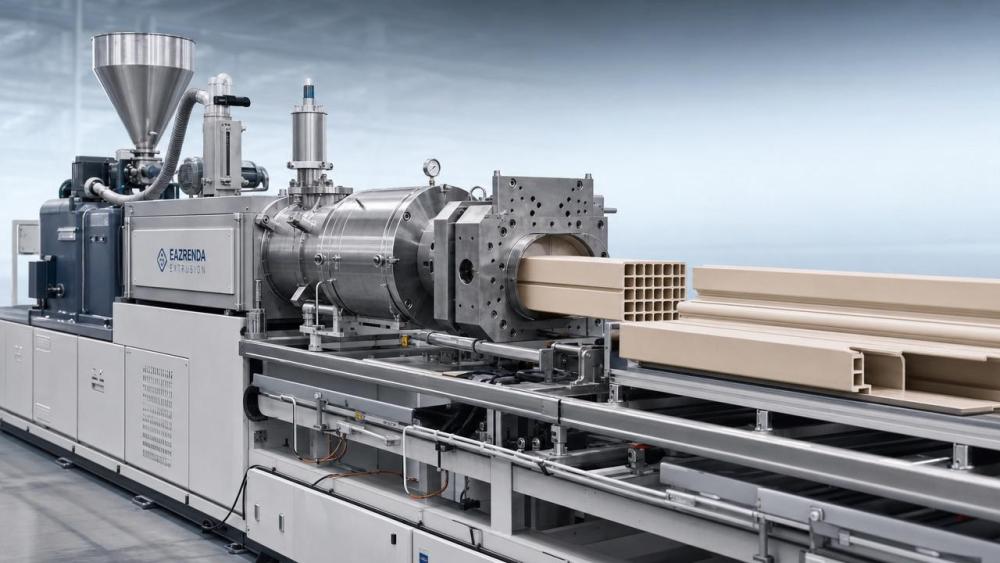
Ceramic extrusion machinery forms clay-based or silicate bodies by forcing prepared material through a die under controlled pressure.
The goal is not only shape creation. The larger objective is repeatable output across long production runs.
Consistency means each extruded unit shows similar dimensions, moisture distribution, density, surface finish, and green strength.
When ceramic extrusion machinery performs unevenly, variation starts early and often becomes worse during drying and firing.
Small deviations in feed rate, vacuum level, screw wear, or die temperature can create cracks, warping, lamination, and density bands.
That is why equipment condition and process design must be reviewed together, not as separate quality topics.
Core consistency indicators
- Dimensional stability after extrusion
- Uniform bulk density across the section
- Stable moisture content from batch to batch
- Consistent surface texture and edge definition
- Predictable shrinkage during drying and firing
Industry background and current control priorities
Across advanced ceramics, refractories, and new building materials, tighter tolerance demands are changing equipment expectations.
Production lines now need better repeatability, lower scrap, safer operation, and clearer links between machine settings and final properties.
This trend is especially visible in hollow blocks, honeycomb ceramics, kiln furniture, insulation bodies, and technical extrusion profiles.
For integrated industrial systems, ceramic extrusion machinery is increasingly evaluated as part of a wider thermal and material flow chain.
Upstream mixing quality and downstream dryer behavior both determine whether machine precision becomes real product consistency.
Mechanical factors that directly affect product consistency
Feeding and material delivery
A stable feed system keeps material residence time predictable. Irregular feeding creates pressure pulses and uneven body compaction.
In ceramic extrusion machinery, feeder geometry must match particle size, plasticity, and moisture range.
Screw design and wear condition
Screw pitch, compression ratio, and surface condition influence shear energy and material densification.
Worn screws often reduce pressure stability. They can also increase local overheating or poor material movement.
Vacuum de-airing performance
Air pockets weaken green bodies. They later become cracks, bloating points, or strength variation after firing.
Effective vacuum systems in ceramic extrusion machinery improve body homogeneity and reduce internal defect risk.
Die design and flow balance
The die is often the final source of variation. Uneven flow channels create wall thickness differences and section distortion.
Balanced die geometry helps maintain equal resistance across the profile, especially in complex hollow products.
Drive control and pressure response
Speed fluctuations change output density and cut length. Responsive drive systems reduce drift during continuous production.
Modern ceramic extrusion machinery benefits from synchronized control between motor load, screw speed, and cutter timing.
Business value of stable ceramic extrusion machinery
Higher consistency is not only a technical target. It affects throughput, waste cost, maintenance planning, and final market credibility.
When ceramic extrusion machinery runs with tight control, plants can lower sorting effort and reduce downstream corrective actions.
- Less scrap during drying and firing
- Better kiln loading due to dimensional reliability
- Lower unplanned downtime from wear-related instability
- Improved safety through predictable machine behavior
- Stronger compliance with documented quality systems
This also supports carbon reduction goals. Fewer rejects mean less wasted thermal energy, raw material, and transport effort.
For intelligence-driven industrial operations, machine consistency data becomes a useful decision layer for line upgrades.
Typical production scenarios and consistency risks
These examples show that the same ceramic extrusion machinery principle can face different failure modes depending on product geometry.
Therefore, consistency programs should combine machine diagnostics with product-specific acceptance limits.
Practical recommendations for better control
Link process data to quality results
Record pressure, vacuum, motor load, throughput, and moisture values. Compare them with dimensional and density outcomes.
Set wear inspection intervals
Check screws, liners, die lands, cutters, and seals on a documented schedule. Gradual wear often hides behind acceptable output rates.
Standardize material preparation
Even advanced ceramic extrusion machinery cannot compensate for unstable particle size distribution or inconsistent plasticity.
Control changeovers carefully
Product switches should include cleaning, die verification, and fresh baseline settings. This reduces contamination and startup variation.
Use trial windows before full output
Short controlled trials help identify whether new settings improve consistency or only move defects downstream.
- Define target ranges for pressure and vacuum
- Create response rules for drift and alarms
- Verify die condition after abnormal defects
- Review cutter synchronization with extrusion speed
- Connect dryer feedback to extrusion settings
A practical next step for operational improvement
A useful starting point is a line audit focused on ceramic extrusion machinery variables that most affect product consistency.
Review feed uniformity, vacuum efficiency, die wear, pressure trend data, and defect mapping from drying and firing stages.
For organizations tracking thermal efficiency and material reliability, this approach creates a direct bridge between machine behavior and business performance.
CF-Elite continues to observe how ceramic extrusion machinery, silicate processing, and thermal management evolve together across global heavy industry.
By turning equipment data into practical intelligence, operations can improve consistency, lower waste, and strengthen control across the entire production chain.
Related News
 Optical Glass Tech FellowHow to Evaluate a Glass Annealing Equipment Manufacturer for Production StabilityChoose a glass annealing equipment manufacturer with proven thermal uniformity, reliable controls, lifecycle value, and responsive service for stable production.Sep 08, 2026
 Prof. Marcus ChenThermal Energy Architecture in North America: Strategies for Lower Building Energy UseThermal energy architecture North America helps project leaders cut building energy use through stronger envelopes, right-sized HVAC, storage, and smart commissioning.Sep 07, 2026
 Ms. Elena RodriguezHow Should Buyers Evaluate Building Material Industry Intelligence Pricing?Building material industry intelligence pricing: learn how to compare coverage, technical depth, and ROI to choose intelligence that reduces procurement risk.Sep 07, 2026
 Ms. Elena RodriguezHow to Use Building Material Intelligence Data for Market and Investment DecisionsBuilding material industry intelligence data helps leaders evaluate demand, costs, regulation, capacity, and technology to make smarter market and investment decisions.Sep 05, 2026
 Thermal Energy ArchitectHow PLC Control Improves Energy Efficiency and Temperature Stability in KilnsEnergy efficient kilns PLC control improves temperature stability, cuts fuel waste, and optimizes combustion, draft, and material flow. Explore proven strategies for smarter kiln modernization.Sep 04, 2026
 Optical Glass Tech FellowEuropean Glass Melting Processes: Furnace Choices, Energy Use, and Quality ControlGlass melting process Europe: explore furnace choices, energy efficiency, cullet strategy, and quality control to improve output, compliance, and long-term glass performance.Sep 03, 2026
 Thermal Energy ArchitectWhat Determines Refractory Lining Monitoring Price for Industrial Kilns?Refractory lining monitoring price depends on kiln size, sensor technology, installation, software, and support. Compare total lifecycle costs and choose the right solution.Sep 02, 2026
 Silicate Process EngineerCement Production System Costs: A Plant Buyer’s Guide to Budgeting and ROICement production systems cost planning made clear: compare CAPEX, operating costs, compliance, and ROI to build a resilient, profitable cement plant investment.Sep 01, 2026
 Dr. Alistair VaughnWhat Should a Process Technology Database Track for High-Temperature Plants?Process technology database essentials for high-temperature plants: track thermal profiles, feed chemistry, refractory wear, emissions, energy, and maintenance for safer, data-driven decisions.Aug 31, 2026
 Ms. Elena RodriguezHow to Evaluate a Silicate Processing Equipment Manufacturer for Plant ProjectsSilicate processing equipment manufacturer selection: assess process fit, guarantees, energy, compliance, delivery risk, and lifecycle support for dependable plant performance.Aug 30, 2026
 Dr. Alistair VaughnHow to Specify Custom Agricultural Processing Equipment for Throughput and HygieneEquipment customization services for agricultural processing: learn to specify hygienic, high-throughput lines that improve yield, reliability, and long-term efficiency.Aug 29, 2026
 Dr. Alistair VaughnHow to Select Process Plant Equipment for High-Temperature, Abrasive Production LinesProcess plant equipment selection for high-temperature, abrasive lines: reduce downtime, improve durability, and optimize lifecycle performance.Aug 28, 2026
 Silicate Process EngineerHow Kiln Heat Recovery Systems Cut Fuel Use in Cement and Lime ProductionKiln heat recovery helps cement and lime plants cut fuel use, improve thermal stability, and build practical, reliable decarbonization strategies.Aug 27, 2026
 Ms. Elena RodriguezProcess Equipment Comparison: Which Metrics Matter Most for Reliable Selection?Process equipment comparison made practical: discover which metrics truly drive reliable selection, from energy efficiency and control stability to wear life, maintainability, and uptime.Aug 26, 2026
 Ms. Elena RodriguezWhat Buyers Should Check Before Sourcing Precision Alloy Bars for Critical PartsPrecision Alloy Bars buyers should verify grade, chemistry, tolerances, surface quality, traceability, and lead time before sourcing for critical parts. Learn what prevents costly machining and reliability risks.Aug 27, 2026
 Ms. Elena RodriguezHow to Evaluate Thermal Management Solutions Insulation for High-Heat Industrial SystemsThermal management solutions insulation: learn how to assess high-heat industrial systems by thermal performance, durability, lifecycle cost, and supplier data for smarter decisions.Aug 25, 2026
 Ms. Elena RodriguezWhat Drives Waste Recycling Cost in Industrial Projects and How to Estimate It?Waste recycling cost in industrial projects depends on composition, moisture, transport, pre-treatment, and compliance. Learn how to estimate it accurately and compare suppliers with confidence.Aug 24, 2026
 Silicate Process EngineerHow to Evaluate Cement Production Plants in the Middle East for Capacity, Fuel Flexibility, and ROIcement production plants Middle East: Learn how to assess true capacity, fuel flexibility, and ROI risks to identify resilient assets and smarter investment opportunities.Aug 23, 2026
 Structural Material AnalystHow to Evaluate Lightweight Material Machinery for Output, Energy Use, and Product QualityLightweight material machinery evaluation guide: compare stable output, energy use, and product quality to choose equipment that cuts waste, lowers costs, and improves production confidence.Aug 22, 2026
 Material Heat-Resist ExpertWhat Determines Refractory Production Line Price in a Turnkey Plant Project?Refractory production line price depends on raw materials, forming method, kiln and drying design, automation, utilities, and scope. Learn what really drives turnkey plant cost before you invest.Aug 21, 2026

Related News
- 00
0000-00
What Determines Refractory Production Line Price in a Turnkey Plant Project? - 00
0000-00
How to Evaluate a Silicate Production Line for Capacity, Energy Use, and Product Quality - 00
0000-00
Silicate Production Line Process Explained: Key Stages, Equipment, and Quality Control - 00
0000-00
How to Evaluate a Refractory Production Line in Southeast Asia: Capacity, Fuel, and Raw Material Factors - 00
0000-00
How to Evaluate a Silicate Production Lines Supplier for Capacity, Automation, and Raw Material Fit
Weekly Insights
Stay ahead with our curated technology reports delivered every Monday.