
Heat-Resistant Material Development: Which Properties Matter Most in Kiln Linings?




Kiln lining performance is often judged after failure, yet the real decision point comes much earlier, during material selection, inspection, and operating design. In high-temperature systems, a damaged lining can distort product chemistry, raise shell temperatures, increase unplanned shutdowns, and create immediate safety exposure. That is why heat-resistant material development matters far beyond laboratory performance claims.
Across cement plants, glass equipment, incineration units, refractory production lines, and extrusion systems, the same question keeps returning: which properties actually protect a kiln lining through long campaigns? The answer is not a single number. It is a balance of thermal, chemical, mechanical, and operational behavior under real process conditions.
Why kiln lining properties have become a strategic issue
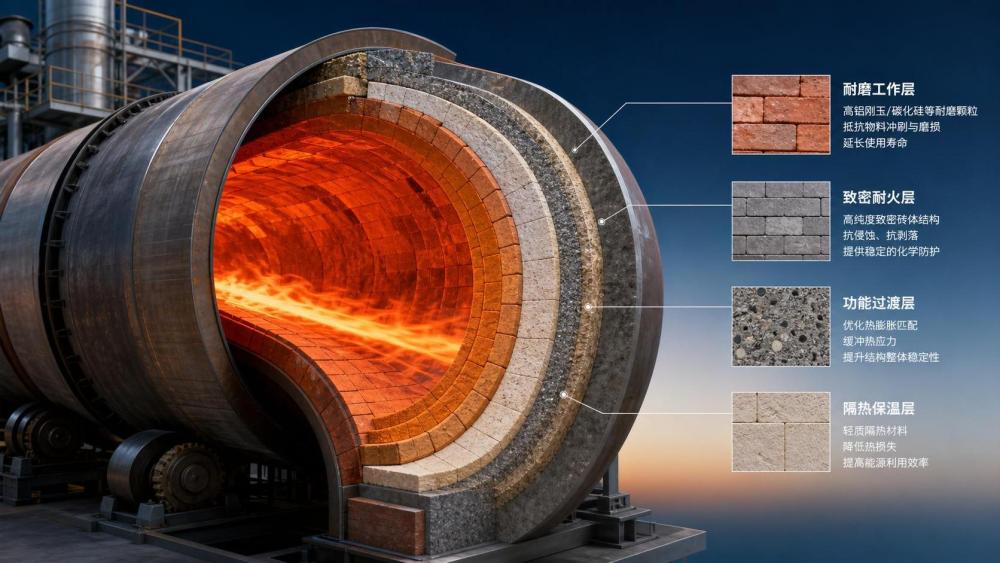
Modern kilns are under pressure from three directions at once: energy efficiency, emission control, and longer service intervals. That combination changes what counts as a “good” refractory or insulating lining.
Fuel flexibility adds complexity. Alternative fuels, waste-derived feedstocks, and fluctuating combustion profiles can shift flame shape, alkali loading, and local oxygen conditions. A lining that worked well in a stable campaign may fail quickly under these new variations.
This is one reason CF-Elite tracks lining intelligence across silicate production, thermal processing, and industrial waste conversion. The useful question is no longer “Which brick has the highest temperature rating?” It is “Which material system stays reliable when the process moves away from ideal conditions?”
The core idea behind heat-resistant material development
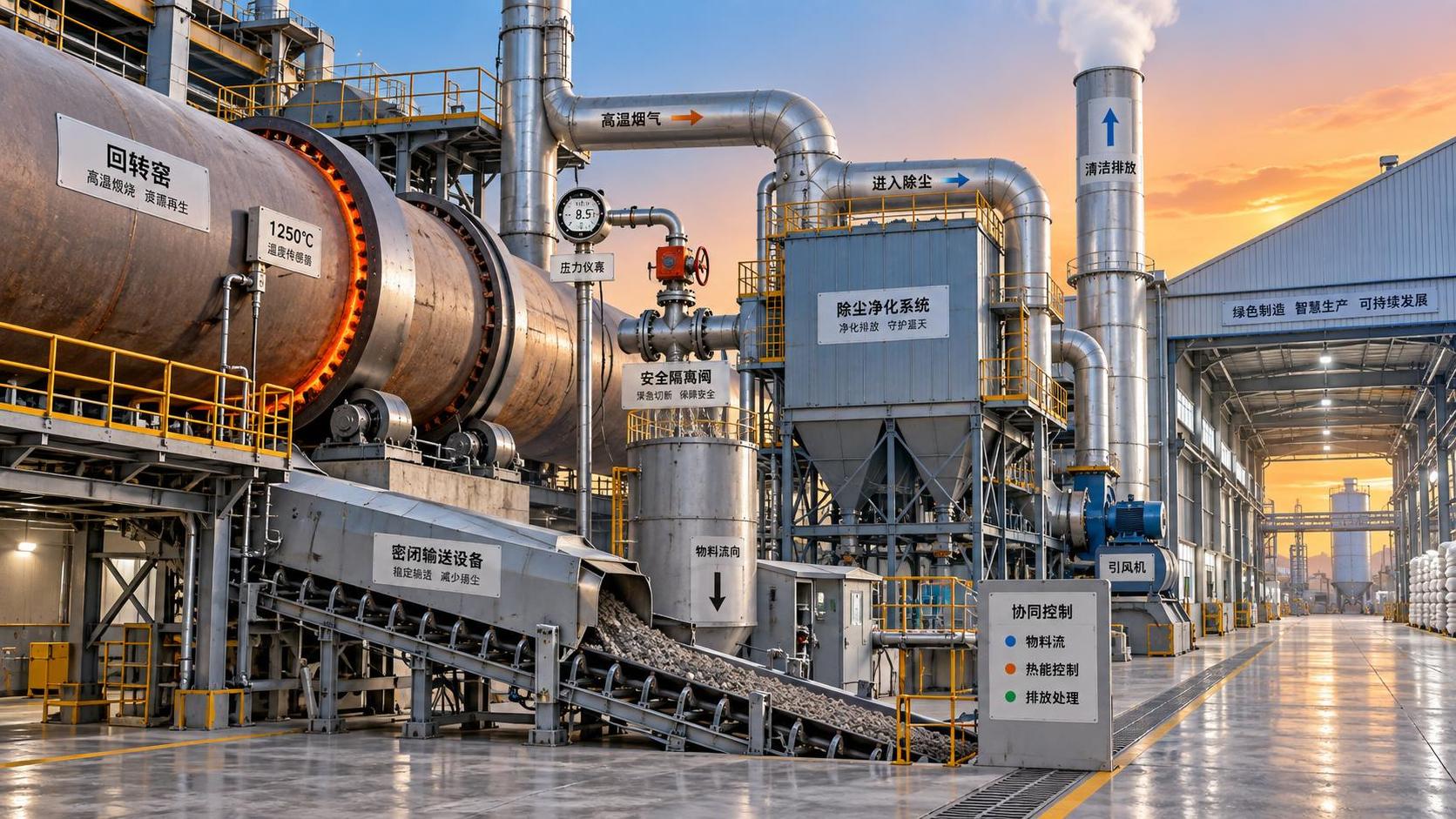
Heat-resistant material development is the process of improving materials so they keep structural integrity and functional performance under sustained heat and repeated thermal cycling. In kiln linings, that development includes composition, microstructure, bonding phase, porosity, density, and installation compatibility.
A lining does not experience heat alone. It also sees gas flow, dust impact, clinker or slag contact, molten phases, alkali salts, reducing atmospheres, and mechanical vibration. Because of that, the best heat-resistant material development programs test interaction effects, not isolated properties.
In practical terms, a high-grade kiln lining must do two things at once. It must survive the extreme zone where damage starts, and it must help the whole thermal system remain stable, efficient, and predictable.
Which properties matter most in real kiln service
Not every property carries equal weight in every zone. Still, several performance factors repeatedly determine whether a lining reaches its design life.
Thermal shock resistance
Rapid heating and cooling generate internal stress. If a material cannot absorb that stress, cracks spread fast, especially near the burner area, kiln inlet, cooler transition points, or shutdown-restart locations.
Thermal shock resistance depends on more than strength. Elastic modulus, thermal expansion, fracture behavior, and microcrack tolerance all affect survival. Strong but brittle materials often disappoint in unstable operating cycles.
Refractoriness under load
A lining may tolerate high temperature in theory, yet deform under mechanical load at lower-than-expected service conditions. Refractoriness under load matters where bricks support weight while facing intense heat.
This property is especially relevant in large rotary kilns and static vessels with long operating campaigns. Sagging, shape loss, and local collapse often begin when high temperature combines with creep behavior.
Chemical resistance
Chemical attack is one of the most underestimated failure drivers. Alkalis, sulfur compounds, chlorides, slags, and volatile salts can penetrate the lining, react with the matrix, and reduce strength from within.
In cement and incineration service, infiltration can be more damaging than surface wear. The right heat-resistant material development path therefore focuses on phase stability and low permeability, not only hot-face hardness.
Abrasion and erosion resistance
Dust-laden gas, clinker movement, ash transport, and turbulent flame zones steadily remove material from the hot face. This wear shortens thickness margin and opens the door to deeper thermal and chemical damage.
Abrasion resistance becomes critical in areas with high solids velocity or repeated material scouring. However, harder is not always better. Excess hardness can reduce thermal shock tolerance if microstructure is poorly balanced.
Thermal conductivity and insulation balance
Low heat loss improves fuel efficiency and shell safety, but insulation cannot be treated as a standalone target. Some zones need controlled heat flow to maintain coating stability or avoid condensation of corrosive species.
That means heat-resistant material development should evaluate the full lining package, including working layer, backup layer, anchors, expansion joints, and shell temperature behavior.
Property priorities shift by kiln zone
The most reliable selection process is zone-specific. A single property ranking rarely works across the whole installation.
This zone view helps explain why some lining upgrades fail. The material may be excellent in general, yet poorly matched to the local failure mechanism.
What to verify beyond the datasheet
Datasheets are useful, but they rarely tell the whole operational story. Two materials with similar test values can behave very differently once installation quality, joint design, burner tuning, and feed chemistry enter the picture.
In actual review work, several checkpoints deserve close attention:
- Whether laboratory tests reflect the real atmosphere, not only oxidizing conditions.
- Whether porosity and permeability support resistance to alkali or slag penetration.
- Whether installation tolerances and dry-out procedures match the material system.
- Whether historical shell temperature maps confirm even thermal behavior.
- Whether wear patterns point to chemistry, impact, or thermal cycling as the true root cause.
Heat-resistant material development becomes far more valuable when these checkpoints are treated as connected evidence. A better material alone cannot correct unstable process conditions.
Why this matters for quality, safety, and carbon performance
Lining decisions influence product consistency more directly than many teams expect. When refractory surfaces degrade, process temperatures fluctuate, residence times shift, and contamination risk rises. In silicate processing, even small deviations can affect mineral formation, melt behavior, or final product appearance.
Safety consequences are just as immediate. Hot spots, shell overheating, sudden spalling, and structural instability increase the likelihood of emergency intervention near hazardous areas. A lining that degrades gradually is easier to manage than one that fails without warning.
There is also a carbon dimension. Better heat-resistant material development supports lower heat loss, more stable combustion, fewer shutdowns, and less replacement waste. For sectors facing decarbonization pressure, lining performance is part of the energy strategy, not a background maintenance topic.
Using operational intelligence to improve lining decisions
The strongest decisions combine material science with operating data. CF-Elite’s industry perspective is useful here because kiln linings sit at the intersection of thermal management, reaction kinetics, equipment reliability, and environmental compliance.
A practical review usually compares five evidence streams:
- Failure history by zone and by campaign length.
- Fuel and raw material variability over time.
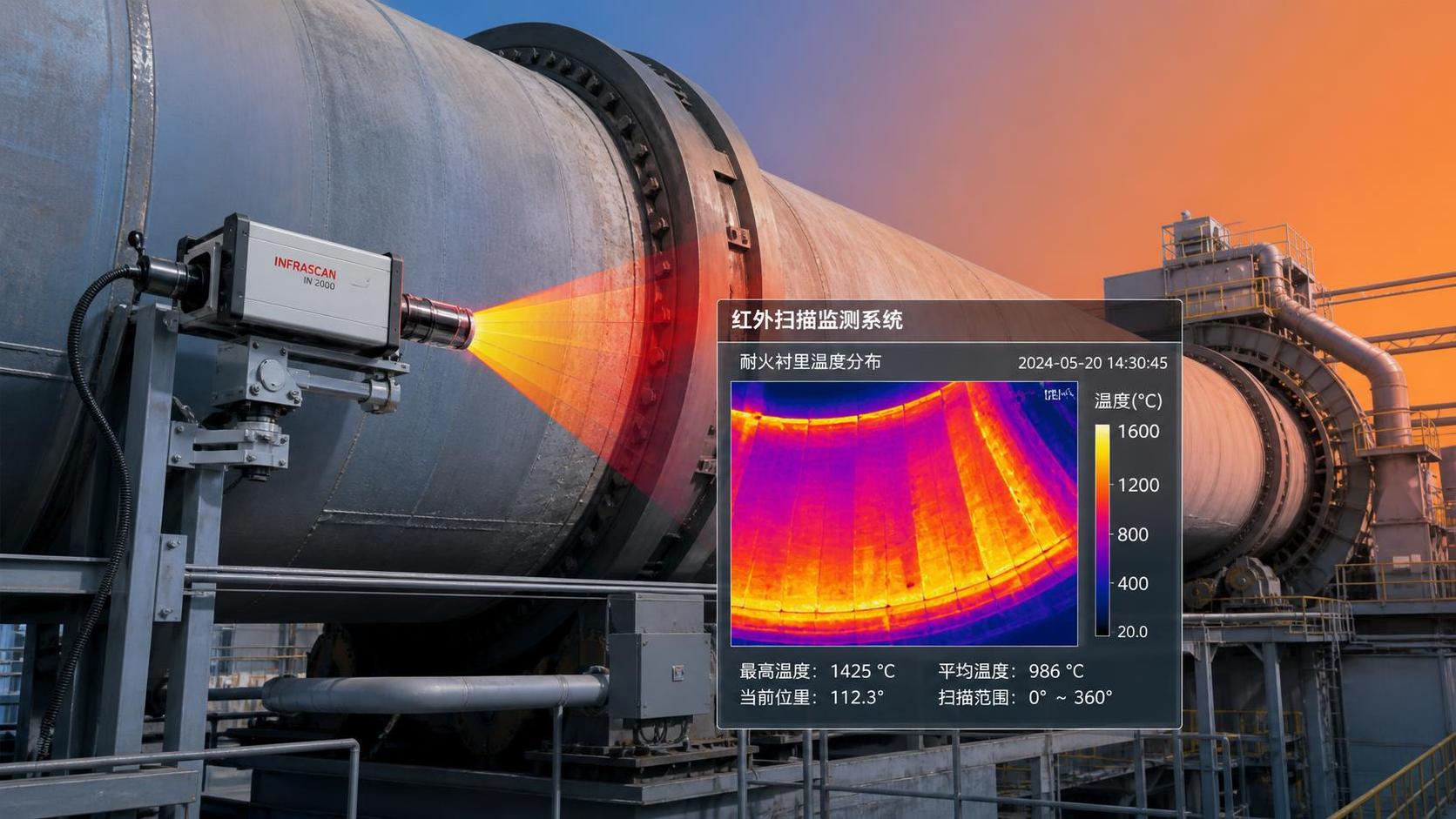
- Temperature distribution from shell scanning or online monitoring.
- Post-shutdown inspection findings, including crack pattern and infiltration depth.
- Supplier test methods, bonding system, and installation requirements.
This approach turns heat-resistant material development from a procurement choice into a controlled risk decision. It also makes it easier to justify change when a conventional lining no longer matches the process reality.
A better next step than chasing the “highest grade”
The most effective kiln lining is rarely the one with the most impressive standalone specification. It is the one whose properties match the dominant damage mechanism in each zone, while fitting operating practice and maintenance discipline.
A useful next step is to build a short decision matrix for every critical section: expected temperature range, chemical exposure, cycling severity, abrasion pattern, allowable shell temperature, and target campaign length. From there, heat-resistant material development can be assessed against actual service priorities instead of generic labels.
When those criteria are reviewed alongside monitoring data and shutdown evidence, lining selection becomes clearer, safer, and more defensible. That is usually where longer service life begins.
Related News
 Thermal Energy ArchitectRotary Kiln Efficiency: How Feed Rate, Fuel Use, and Heat Loss Affect OutputRotary kiln efficiency explained: discover how feed rate, fuel use, heat loss, combustion, and cooling performance shape output, quality, and energy costs.Sep 14, 2026
 Thermal Energy ArchitectHow to Select Heat-Resistant Materials That Maintain Abrasion Resistance in KilnsHeat-resistant materials abrasion resistance: learn how to select kiln linings that withstand heat, wear, thermal cycling, and chemical attack for longer service life.Sep 13, 2026
 Thermal Energy ArchitectHow Rotary Kiln Automation Improves Temperature Control and Fuel EfficiencyRotary kiln technology automation enhances temperature control, stabilizes combustion, and improves fuel efficiency with smarter data, predictive control, and safer operations.Sep 12, 2026
 Silicate Process EngineerCement Plant Emission Control: Selecting Systems for Dust, NOx, and SO2 LimitsCement plant emission control guide: compare dust collectors, NOx reduction, and SO2 systems for reliable compliance across kiln modes, fuel changes, and operating upsets.Sep 11, 2026
 Thermal Energy ArchitectSelecting Abrasion-Resistant High-Temperature Materials for Kiln and Conveyor Wear ZonesHigh-temp material engineering guide to abrasion-resistant kiln and conveyor solutions—match wear, heat, chemistry, and installation design for longer service life.Sep 10, 2026
 Dr. Alistair VaughnIndustrial Process Engineering: How to Map Processes for Safer, More Efficient PlantsIndustrial process engineering reveals bottlenecks, safety risks, and energy losses through practical process mapping for safer, more efficient plants.Sep 09, 2026
 Optical Glass Tech FellowHow to Evaluate a Glass Annealing Equipment Manufacturer for Production StabilityChoose a glass annealing equipment manufacturer with proven thermal uniformity, reliable controls, lifecycle value, and responsive service for stable production.Sep 08, 2026
 Prof. Marcus ChenThermal Energy Architecture in North America: Strategies for Lower Building Energy UseThermal energy architecture North America helps project leaders cut building energy use through stronger envelopes, right-sized HVAC, storage, and smart commissioning.Sep 07, 2026
 Ms. Elena RodriguezHow Should Buyers Evaluate Building Material Industry Intelligence Pricing?Building material industry intelligence pricing: learn how to compare coverage, technical depth, and ROI to choose intelligence that reduces procurement risk.Sep 07, 2026
 Ms. Elena RodriguezHow to Use Building Material Intelligence Data for Market and Investment DecisionsBuilding material industry intelligence data helps leaders evaluate demand, costs, regulation, capacity, and technology to make smarter market and investment decisions.Sep 05, 2026
 Thermal Energy ArchitectHow PLC Control Improves Energy Efficiency and Temperature Stability in KilnsEnergy efficient kilns PLC control improves temperature stability, cuts fuel waste, and optimizes combustion, draft, and material flow. Explore proven strategies for smarter kiln modernization.Sep 04, 2026
 Optical Glass Tech FellowEuropean Glass Melting Processes: Furnace Choices, Energy Use, and Quality ControlGlass melting process Europe: explore furnace choices, energy efficiency, cullet strategy, and quality control to improve output, compliance, and long-term glass performance.Sep 03, 2026
 Thermal Energy ArchitectWhat Determines Refractory Lining Monitoring Price for Industrial Kilns?Refractory lining monitoring price depends on kiln size, sensor technology, installation, software, and support. Compare total lifecycle costs and choose the right solution.Sep 02, 2026
 Silicate Process EngineerCement Production System Costs: A Plant Buyer’s Guide to Budgeting and ROICement production systems cost planning made clear: compare CAPEX, operating costs, compliance, and ROI to build a resilient, profitable cement plant investment.Sep 01, 2026
 Dr. Alistair VaughnWhat Should a Process Technology Database Track for High-Temperature Plants?Process technology database essentials for high-temperature plants: track thermal profiles, feed chemistry, refractory wear, emissions, energy, and maintenance for safer, data-driven decisions.Aug 31, 2026
 Ms. Elena RodriguezHow to Evaluate a Silicate Processing Equipment Manufacturer for Plant ProjectsSilicate processing equipment manufacturer selection: assess process fit, guarantees, energy, compliance, delivery risk, and lifecycle support for dependable plant performance.Aug 30, 2026
 Dr. Alistair VaughnHow to Specify Custom Agricultural Processing Equipment for Throughput and HygieneEquipment customization services for agricultural processing: learn to specify hygienic, high-throughput lines that improve yield, reliability, and long-term efficiency.Aug 29, 2026
 Dr. Alistair VaughnHow to Select Process Plant Equipment for High-Temperature, Abrasive Production LinesProcess plant equipment selection for high-temperature, abrasive lines: reduce downtime, improve durability, and optimize lifecycle performance.Aug 28, 2026
 Silicate Process EngineerHow Kiln Heat Recovery Systems Cut Fuel Use in Cement and Lime ProductionKiln heat recovery helps cement and lime plants cut fuel use, improve thermal stability, and build practical, reliable decarbonization strategies.Aug 27, 2026
 Ms. Elena RodriguezProcess Equipment Comparison: Which Metrics Matter Most for Reliable Selection?Process equipment comparison made practical: discover which metrics truly drive reliable selection, from energy efficiency and control stability to wear life, maintainability, and uptime.Aug 26, 2026



Related News
- 00
0000-00
What Determines Refractory Production Line Price in a Turnkey Plant Project? - 00
0000-00
How to Evaluate a Silicate Production Line for Capacity, Energy Use, and Product Quality - 00
0000-00
Silicate Production Line Process Explained: Key Stages, Equipment, and Quality Control - 00
0000-00
How to Evaluate a Refractory Production Line in Southeast Asia: Capacity, Fuel, and Raw Material Factors - 00
0000-00
How to Evaluate a Silicate Production Lines Supplier for Capacity, Automation, and Raw Material Fit
Weekly Insights
Stay ahead with our curated technology reports delivered every Monday.