
Advanced Ceramics Production Explained: Key Process Steps and Quality Risks




Advanced ceramics production sits at the intersection of materials science, thermal engineering, and disciplined plant control. A small deviation in powder purity, binder ratio, furnace atmosphere, or handling practice can shift a component from reliable to rejected. That is why this topic matters well beyond the ceramics workshop itself. It influences equipment uptime, product certification, worker exposure, and the economics of high-temperature manufacturing.
Across electronics, wear parts, kiln furniture, medical components, and insulation systems, advanced ceramics production is judged by consistency rather than output alone. In practical terms, stable density, controlled shrinkage, low contamination, and traceable inspection data are what separate robust operations from recurring quality incidents.
This is also where broader industrial intelligence becomes useful. CF-Elite tracks thermal management, refractory behavior, kiln performance, and decarbonization pressures across heavy industry. Those same signals shape how advanced ceramic lines evaluate sintering efficiency, emissions control, digital monitoring, and process risk before defects become expensive failures.
Why advanced ceramics production draws closer scrutiny
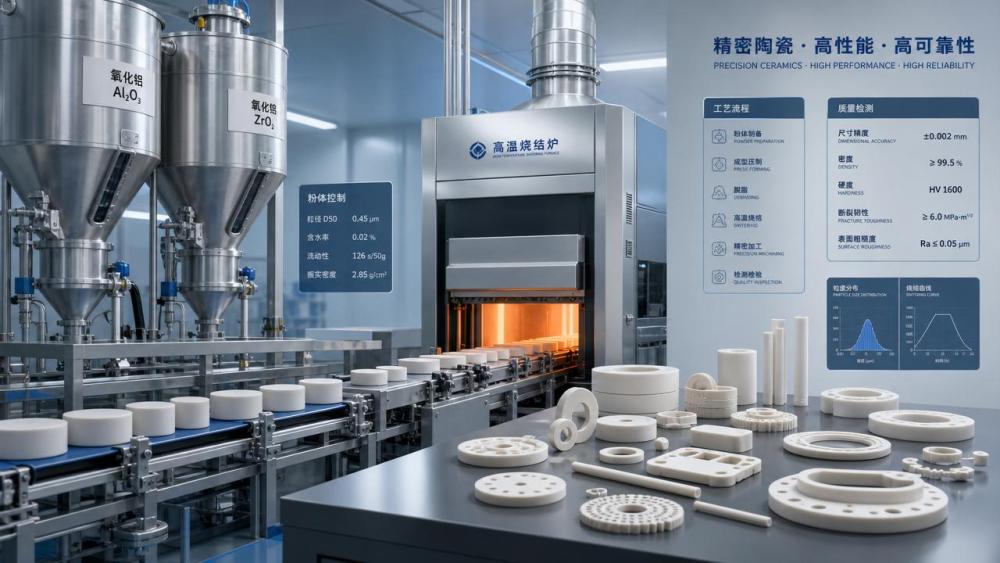
Unlike conventional clay-based products, advanced ceramics production relies on engineered powders such as alumina, zirconia, silicon carbide, silicon nitride, and mixed oxides. Their value comes from precise electrical, thermal, chemical, or mechanical behavior. That precision leaves little room for uncontrolled variation.
The current pressure is not only technical. Plants must also document safe powder handling, reduce thermal energy waste, manage furnace emissions, and keep defect rates low while product designs become thinner, lighter, and more demanding.
In many facilities, the key challenge is that defects do not start where they are discovered. A crack found after final grinding may come from spray drying variability. A density failure may be traced to granule segregation. A safety incident during kiln unloading may be linked to rushed cycle timing.
The process chain is tightly connected
Advanced ceramics production usually follows a recognizable path: powder selection, mixing, granulation, forming, drying, debinding, sintering, finishing, and final inspection. Each stage sets the conditions for the next one.
Raw materials and powder preparation
Performance begins with chemistry and particle size distribution. Incoming powders must be checked for moisture, impurity levels, agglomeration tendency, and lot-to-lot consistency. Even a minor contamination source can alter color, dielectric behavior, wear resistance, or sintering response.
Milling and mixing are meant to create homogeneity, not simply reduce size. Overmilling may introduce media contamination. Undermixing can leave local composition differences that later appear as warpage, density gradients, or weak spots.
Granulation and feedstock control
Spray-dried granules or compounded feedstocks need predictable flow and packing behavior. If the particle structure collapses too easily, pressing becomes unstable. If granules are too hard, lamination defects and internal voids become more likely.
This step often receives less attention than sintering, yet it is a major root cause zone in advanced ceramics production. Stable forming starts with stable feed characteristics.
Forming and green body integrity
Pressing, extrusion, injection molding, tape casting, and isostatic forming each create different risk profiles. The goal is not only shape accuracy. It is uniform green density throughout the part.
Density variation in the green body often survives into firing. That is why die condition, pressing pressure, mold release, lubricant balance, and operator handling matter so much.
Drying, debinding, and thermal transitions
Drying removes liquid. Debinding removes organics. Both steps look simple until internal stress builds faster than the body can relax. Cracks, blistering, delamination, and explosive failures often originate here.
In advanced ceramics production, thermal ramps must match part geometry, binder chemistry, airflow, and stacking design. A fast schedule that works for one product family may be unsuitable for another.
Sintering and furnace discipline
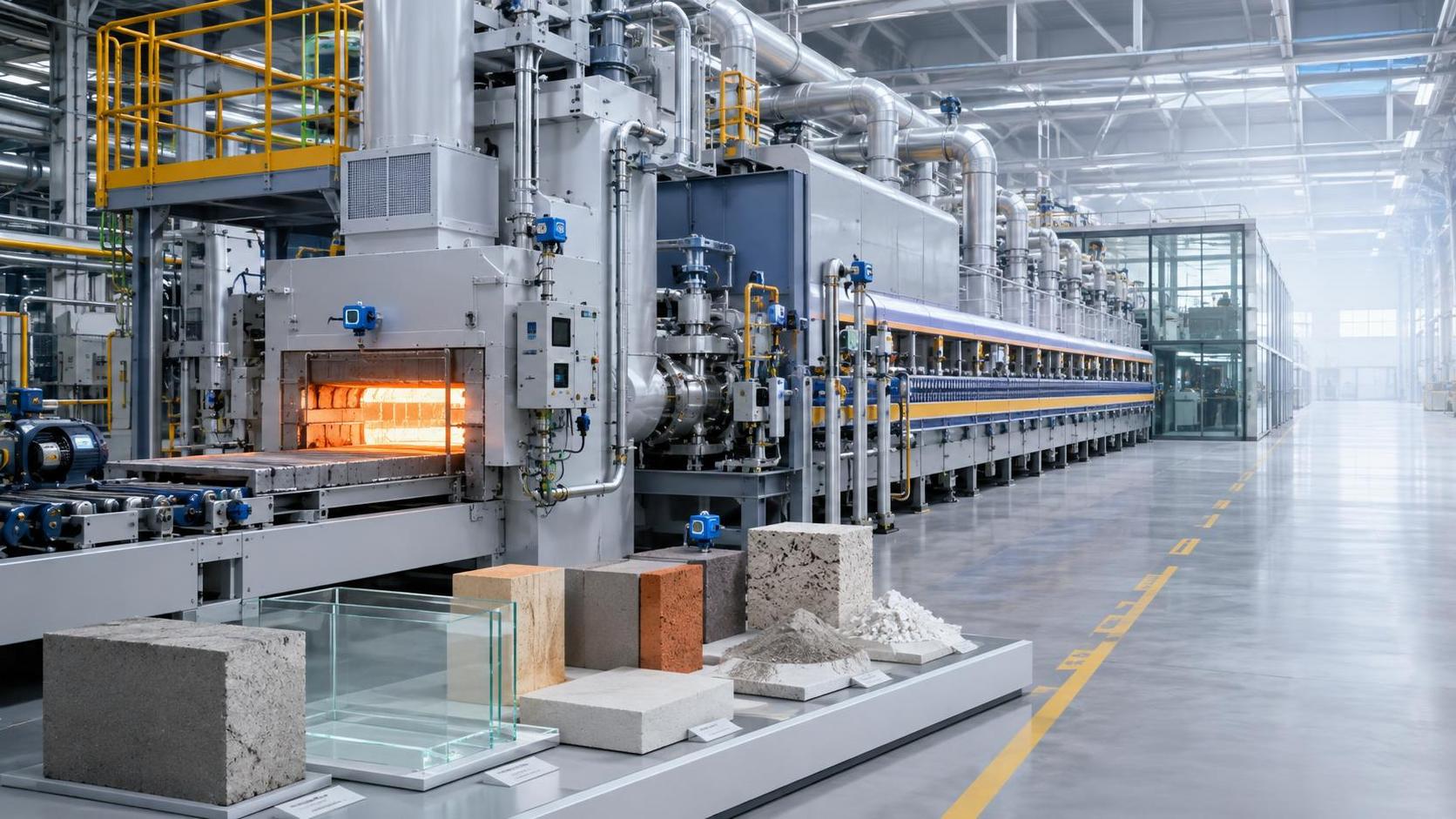
Sintering is where density, microstructure, and final dimensional behavior are fixed. Temperature uniformity, soak time, atmosphere composition, setter quality, and loading pattern all influence the outcome.
This is also the point where lessons from kilns, refractories, and thermal barriers become highly relevant. CF-Elite’s focus on high-temperature process intelligence aligns closely with the realities of advanced ceramics production, especially when furnace efficiency and lining condition affect both quality and energy use.
Where the main quality risks emerge
Many defects appear familiar, but their causes are usually layered. Good investigations connect visible failure modes with upstream material and process data.
One practical lesson stands out. In advanced ceramics production, defect prevention is usually cheaper than defect sorting. Once a part reaches post-sinter machining, the cost of failure has already multiplied.
Safety risks often follow the same fault lines
Quality and safety are often treated separately, yet they are linked by the same process weaknesses. Fine powders create inhalation and housekeeping concerns. Solvents and binders introduce fire or exposure risks. High-temperature equipment raises burn hazards, thermal shock events, and maintenance planning issues.
In facilities handling oxide and non-oxide systems, atmosphere management deserves special attention. Nitrogen, argon, hydrogen, and vacuum operations change both product behavior and operational risk. Furnace interlocks, gas monitoring, and lockout procedures must be aligned with the production schedule, not added as an afterthought.
- Control dust at transfer, sieving, and reclaim points.
- Track binder burnout gases during thermal processing.
- Review setter loading and unloading ergonomics.
- Verify refractory condition in critical furnace zones.
- Separate scrap analysis from routine waste handling.
These measures support both compliance and stable yield. A cleaner, better-controlled line usually produces more reliable ceramic parts.
What stronger process control looks like in practice
The most resilient advanced ceramics production systems do not depend on final inspection alone. They build checkpoints into the full thermal and material journey.
Use upstream indicators, not only end results
Track moisture, tap density, granule strength, green density, binder loss profile, and kiln temperature mapping. These indicators often reveal instability before visible defects appear.
Treat furnace data as quality data
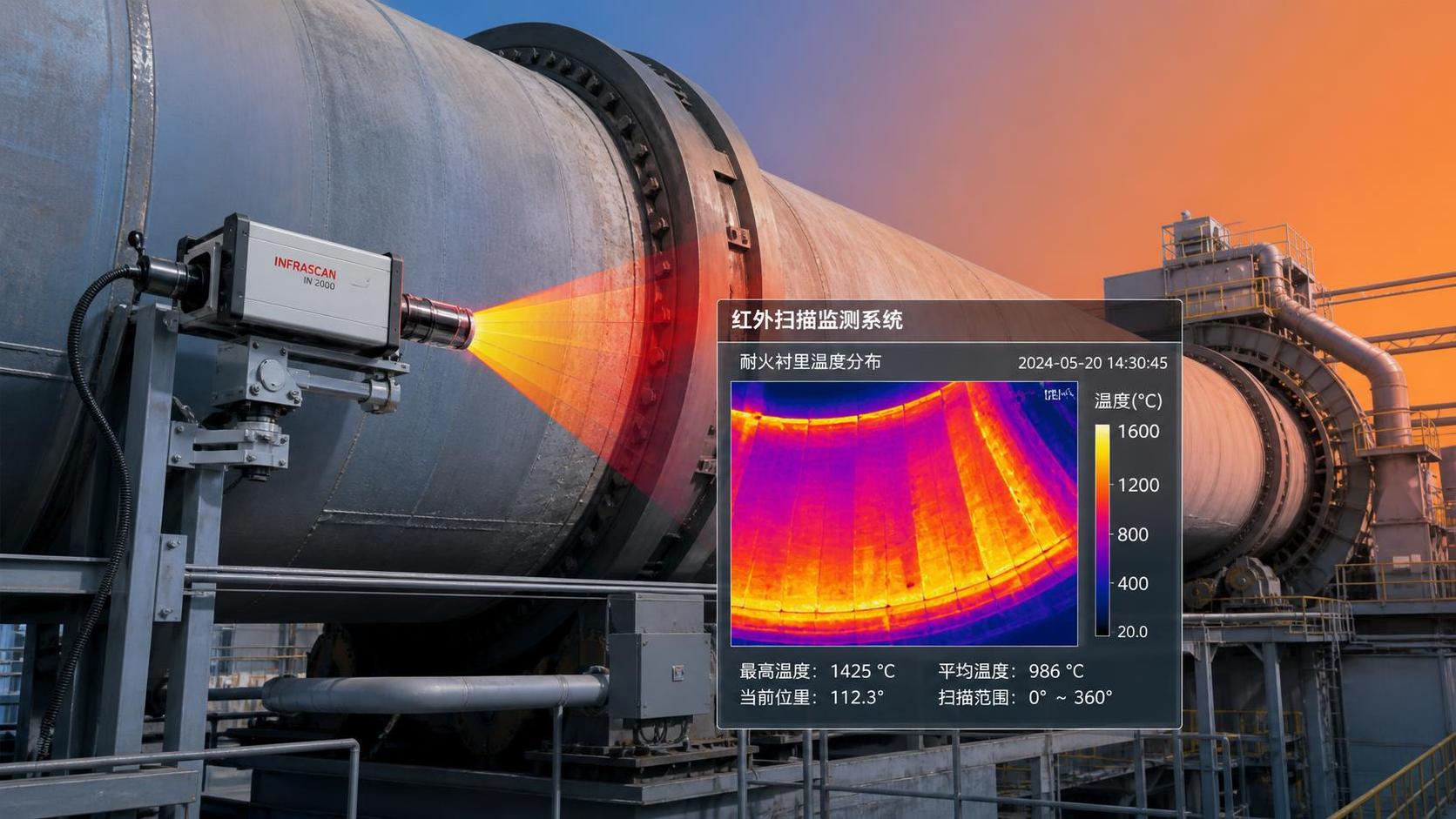
Thermocouple drift, atmosphere leakage, refractory wear, and loading imbalance should feed into quality review, not remain trapped in maintenance records. This is especially important where tight sintering windows define product acceptance.
Build traceability across lots and thermal cycles
When a failure occurs, the investigation should quickly connect supplier lot, batch recipe, forming settings, kiln cycle, and inspection outcome. Without that link, the same defect often returns under a different label.
This is one reason digital monitoring is gaining ground. Insights drawn from kiln analytics, online refractory observation, and process simulation are no longer limited to cement or glass. They increasingly support advanced ceramics production as well.
How to evaluate the next improvement step
Improvement efforts work best when they focus on the narrowest unstable point in the chain. In one plant, that may be incoming powder variation. In another, it may be debinding speed, setter contamination, or post-sinter handling damage.
A useful review can start with a few grounded questions:
- Which defect mode drives the highest hidden cost?
- Which thermal step shows the weakest repeatability?
- Where does contamination most likely enter the process?
- Which safety control depends too heavily on operator memory?
- What data is collected but not used for prevention?
For operations comparing new equipment, revised firing strategies, or tighter inspection plans, broader industrial context also matters. Energy prices, emissions rules, refractory life, and digitalization trends can reshape the economics of advanced ceramics production faster than a single yield report suggests.
A practical next move is to map one product family from powder receipt to final inspection, then rank each step by defect risk, thermal sensitivity, contamination potential, and safety exposure. That kind of disciplined review creates a clearer basis for process changes, supplier checks, furnace upgrades, and more reliable production decisions.
Related News
 Thermal Energy ArchitectHow to Evaluate a Thermal Energy Optimization Company for High-Temperature PlantsChoose a thermal energy optimization company with proven process expertise, measurable savings, and reliable delivery for high-temperature plants. Learn what to assess.Sep 15, 2026
 Thermal Energy ArchitectRotary Kiln Efficiency: How Feed Rate, Fuel Use, and Heat Loss Affect OutputRotary kiln efficiency explained: discover how feed rate, fuel use, heat loss, combustion, and cooling performance shape output, quality, and energy costs.Sep 14, 2026
 Thermal Energy ArchitectHow to Select Heat-Resistant Materials That Maintain Abrasion Resistance in KilnsHeat-resistant materials abrasion resistance: learn how to select kiln linings that withstand heat, wear, thermal cycling, and chemical attack for longer service life.Sep 13, 2026
 Thermal Energy ArchitectHow Rotary Kiln Automation Improves Temperature Control and Fuel EfficiencyRotary kiln technology automation enhances temperature control, stabilizes combustion, and improves fuel efficiency with smarter data, predictive control, and safer operations.Sep 12, 2026
 Silicate Process EngineerCement Plant Emission Control: Selecting Systems for Dust, NOx, and SO2 LimitsCement plant emission control guide: compare dust collectors, NOx reduction, and SO2 systems for reliable compliance across kiln modes, fuel changes, and operating upsets.Sep 11, 2026
 Thermal Energy ArchitectSelecting Abrasion-Resistant High-Temperature Materials for Kiln and Conveyor Wear ZonesHigh-temp material engineering guide to abrasion-resistant kiln and conveyor solutions—match wear, heat, chemistry, and installation design for longer service life.Sep 10, 2026
 Dr. Alistair VaughnIndustrial Process Engineering: How to Map Processes for Safer, More Efficient PlantsIndustrial process engineering reveals bottlenecks, safety risks, and energy losses through practical process mapping for safer, more efficient plants.Sep 09, 2026
 Optical Glass Tech FellowHow to Evaluate a Glass Annealing Equipment Manufacturer for Production StabilityChoose a glass annealing equipment manufacturer with proven thermal uniformity, reliable controls, lifecycle value, and responsive service for stable production.Sep 08, 2026
 Prof. Marcus ChenThermal Energy Architecture in North America: Strategies for Lower Building Energy UseThermal energy architecture North America helps project leaders cut building energy use through stronger envelopes, right-sized HVAC, storage, and smart commissioning.Sep 07, 2026
 Ms. Elena RodriguezHow Should Buyers Evaluate Building Material Industry Intelligence Pricing?Building material industry intelligence pricing: learn how to compare coverage, technical depth, and ROI to choose intelligence that reduces procurement risk.Sep 07, 2026
 Ms. Elena RodriguezHow to Use Building Material Intelligence Data for Market and Investment DecisionsBuilding material industry intelligence data helps leaders evaluate demand, costs, regulation, capacity, and technology to make smarter market and investment decisions.Sep 05, 2026
 Thermal Energy ArchitectHow PLC Control Improves Energy Efficiency and Temperature Stability in KilnsEnergy efficient kilns PLC control improves temperature stability, cuts fuel waste, and optimizes combustion, draft, and material flow. Explore proven strategies for smarter kiln modernization.Sep 04, 2026
 Optical Glass Tech FellowEuropean Glass Melting Processes: Furnace Choices, Energy Use, and Quality ControlGlass melting process Europe: explore furnace choices, energy efficiency, cullet strategy, and quality control to improve output, compliance, and long-term glass performance.Sep 03, 2026
 Thermal Energy ArchitectWhat Determines Refractory Lining Monitoring Price for Industrial Kilns?Refractory lining monitoring price depends on kiln size, sensor technology, installation, software, and support. Compare total lifecycle costs and choose the right solution.Sep 02, 2026
 Silicate Process EngineerCement Production System Costs: A Plant Buyer’s Guide to Budgeting and ROICement production systems cost planning made clear: compare CAPEX, operating costs, compliance, and ROI to build a resilient, profitable cement plant investment.Sep 01, 2026
 Dr. Alistair VaughnWhat Should a Process Technology Database Track for High-Temperature Plants?Process technology database essentials for high-temperature plants: track thermal profiles, feed chemistry, refractory wear, emissions, energy, and maintenance for safer, data-driven decisions.Aug 31, 2026
 Ms. Elena RodriguezHow to Evaluate a Silicate Processing Equipment Manufacturer for Plant ProjectsSilicate processing equipment manufacturer selection: assess process fit, guarantees, energy, compliance, delivery risk, and lifecycle support for dependable plant performance.Aug 30, 2026
 Dr. Alistair VaughnHow to Specify Custom Agricultural Processing Equipment for Throughput and HygieneEquipment customization services for agricultural processing: learn to specify hygienic, high-throughput lines that improve yield, reliability, and long-term efficiency.Aug 29, 2026
 Dr. Alistair VaughnHow to Select Process Plant Equipment for High-Temperature, Abrasive Production LinesProcess plant equipment selection for high-temperature, abrasive lines: reduce downtime, improve durability, and optimize lifecycle performance.Aug 28, 2026
 Silicate Process EngineerHow Kiln Heat Recovery Systems Cut Fuel Use in Cement and Lime ProductionKiln heat recovery helps cement and lime plants cut fuel use, improve thermal stability, and build practical, reliable decarbonization strategies.Aug 27, 2026



Related News
- 00
0000-00
What Determines Refractory Production Line Price in a Turnkey Plant Project? - 00
0000-00
How to Evaluate a Silicate Production Line for Capacity, Energy Use, and Product Quality - 00
0000-00
Silicate Production Line Process Explained: Key Stages, Equipment, and Quality Control - 00
0000-00
How to Evaluate a Refractory Production Line in Southeast Asia: Capacity, Fuel, and Raw Material Factors - 00
0000-00
How to Evaluate a Silicate Production Lines Supplier for Capacity, Automation, and Raw Material Fit
Weekly Insights
Stay ahead with our curated technology reports delivered every Monday.