
What really drives cement plant optimization results




What really determines cement plant optimization success: equipment upgrades, process control, or data-driven decision-making? For project managers and engineering leaders, the answer lies in how these factors work together to improve output, energy efficiency, emissions performance, and long-term asset reliability. This article explores the core drivers behind cement plant optimization and how to turn technical improvements into measurable operational results.
Search intent behind “cement plant optimization” is rarely academic. Most readers want to know what actually moves plant performance, where to invest first, and how to avoid expensive projects with weak returns.
For project managers and engineering leads, the key concern is not whether optimization matters. It is which levers create measurable gains in throughput, fuel use, stability, maintenance exposure, and compliance risk.
The short answer is clear: strong cement plant optimization results come from coordinated action across process discipline, equipment condition, automation quality, and management execution. Technology alone does not deliver sustained improvement without operating alignment.
What project leaders are really trying to solve in cement plant optimization
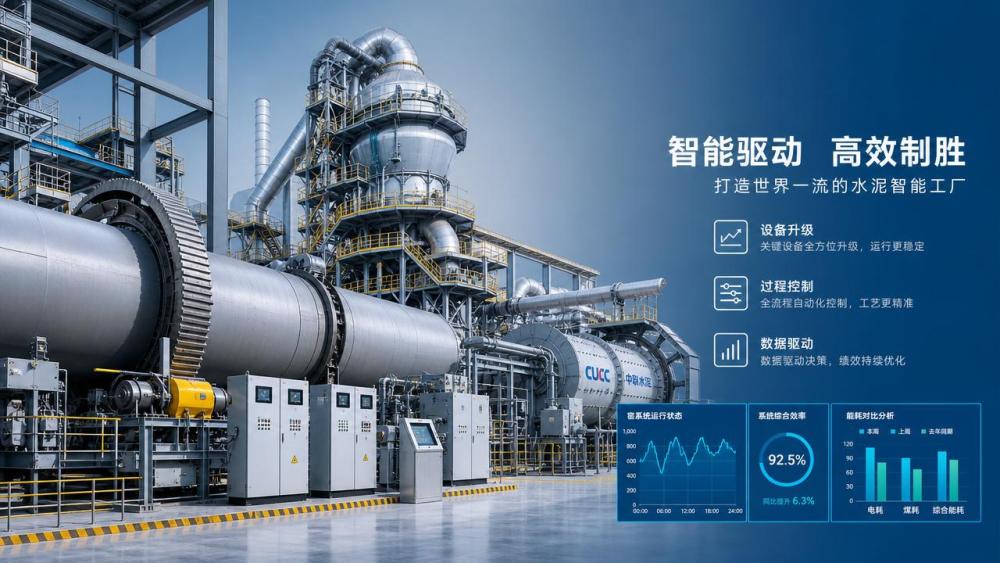
In most plants, optimization begins because performance gaps are already visible. Clinker output is unstable, specific heat consumption is too high, power costs are rising, or emissions variation is threatening compliance.
Some facilities also face a more difficult combination: aging assets, pressure to increase alternative fuel use, tighter environmental standards, and limited shutdown windows. In that context, optimization becomes a strategic operations decision, not a narrow technical exercise.
That is why the best optimization programs start by defining the business problem first. Is the plant trying to increase kiln utilization, lower thermal energy use, reduce bag filter loading, improve quality consistency, or extend equipment life?
Without that clarity, teams often launch fragmented initiatives. One department pushes instrumentation upgrades, another requests mechanical revamps, while operations asks for control tuning. The plant spends capital, but the result stays below expectation.
For decision-makers, useful optimization content must therefore answer practical questions: Which bottleneck matters most? What data proves it? What improvement range is realistic? How fast can benefits appear? What risks come with implementation?
Why equipment upgrades alone rarely deliver the full optimization result
Equipment modernization can be essential, especially in plants with outdated fans, inefficient separators, unstable burners, worn refractory systems, or poor raw mix handling. But new hardware does not automatically create optimized operation.
Many projects underperform because the plant treats equipment replacement as the optimization itself. In reality, a new preheater component, cooler retrofit, or variable speed drive only creates potential. Results depend on how the system is operated afterward.
For example, a high-efficiency separator may improve particle classification and reduce grinding energy. However, if feed uniformity is poor or process control remains inconsistent, the full performance gain will never be captured.
The same logic applies in pyroprocessing. A better burner or upgraded cooler can improve thermal efficiency, but kiln feed chemistry instability, poor draft balance, and inadequate operator response can still limit the overall result.
Project leaders should therefore evaluate equipment investment through an integrated lens. Ask not only whether the machine is more efficient, but whether upstream and downstream conditions allow that efficiency to be realized in daily production.
A strong capital case links hardware upgrades to process constraints, operating practices, maintenance capability, and expected control response. That is what turns a procurement decision into a genuine cement plant optimization strategy.
Process stability is often the hidden driver of output, cost, and emissions
If one factor consistently separates average plants from high-performing ones, it is process stability. Stable operations improve production rate, reduce heat losses, limit quality swings, and lower stress on critical equipment.
In cement manufacturing, instability is expensive. Variations in raw meal chemistry, kiln feed rate, combustion conditions, false air levels, and cooler performance create chain reactions that affect fuel use, free lime, coating behavior, and maintenance frequency.
From a project management perspective, process stability matters because it multiplies the value of every other improvement. A plant with stable kiln and mill operation can benefit more from digital tools, upgraded sensors, and mechanical improvements.
By contrast, unstable plants often misread symptoms as root causes. They may blame one mechanical component while the true issue lies in feed variability, delayed operator intervention, or poor interdepartmental coordination.
That is why optimization programs should prioritize root-cause mapping of instability. Review process trends, upset frequency, alarm patterns, quality deviations, downtime records, and energy data together rather than in isolated reports.
For many sites, the first major gain does not come from a large retrofit. It comes from reducing variation: tighter raw mix control, better combustion tuning, improved fan balance, cleaner data signals, and more disciplined operating windows.
Data matters, but only when it supports faster and better decisions
Data-driven decision-making is now central to modern cement plant optimization, but data by itself is not a result. Plants often collect more information than ever while still struggling to convert it into operational action.
The core question is whether data helps teams make better decisions at the right speed. Can operators detect instability earlier? Can engineers identify real bottlenecks instead of assumptions? Can managers link process changes to financial outcomes?
High-value data systems usually improve three areas. First, they increase visibility into process behavior through reliable instrumentation and trend analysis. Second, they strengthen control through optimization logic, alerts, and predictive models.
Third, they improve accountability by making performance transparent across departments. When production, maintenance, quality, and energy teams work from the same plant reality, optimization becomes easier to govern and sustain.
However, digital investments fail when data quality is weak, tags are poorly structured, sensors are not maintained, or staff do not trust the dashboards. In that situation, more analytics can create confusion rather than improvement.
For engineering leaders, the practical test is simple: every digital or automation initiative should be tied to a defined decision loop. What action will this data change, who will act on it, and what measurable KPI should improve?
Which KPIs best show whether optimization is truly working
One reason optimization programs lose momentum is that success is measured too broadly. If the plant only says it wants to “run better,” teams cannot align effort, evaluate trade-offs, or defend investment priorities.
Effective KPI design should connect technical performance to business value. In most cement plants, that means tracking a focused set of indicators across throughput, energy, quality, reliability, and environmental performance.
Typical production and efficiency indicators include kiln output, mill throughput, specific heat consumption, specific power consumption, and alternative fuel substitution rate. These show whether the plant is producing more with less energy input.
Quality and stability indicators should include clinker variability, cement fineness consistency, free lime trends, and process deviation frequency. These metrics help reveal whether improvements are structurally stable or only temporarily achieved.
Reliability indicators such as unscheduled downtime, refractory life, fan availability, and mean time between failures are equally important. A plant that boosts output briefly but increases maintenance exposure is not truly optimized.
Environmental metrics, including NOx, SOx, dust levels, and CO spikes, also belong in the optimization scorecard. In today’s regulatory environment, emissions performance is not a side issue. It is part of operational competitiveness.
Project managers should resist KPI overload. A shorter set of plant-wide indicators, reviewed consistently and tied to ownership, is far more effective than a long dashboard that nobody uses for decision-making.
How to prioritize optimization projects when budgets and shutdown time are limited
Most plants cannot optimize everything at once. Capital constraints, production commitments, and maintenance schedules force trade-offs. The challenge is choosing projects that generate the highest combined operational and financial value.
A practical prioritization model starts with bottleneck economics. Which problem causes the greatest loss in output, energy cost, compliance exposure, or maintenance burden? And which corrective action is realistic within available time and resources?
Projects should then be screened across five dimensions: expected benefit, implementation complexity, required shutdown impact, operational risk, and sustainability of gains. This approach helps avoid technically attractive projects with poor execution feasibility.
For example, a major cooler retrofit may promise strong efficiency gains, but if the plant lacks outage flexibility, a staged control and airflow optimization program may deliver faster and safer returns in the near term.
Likewise, advanced process control can be highly effective, but only if instrumentation integrity and operator engagement are strong enough to support it. Otherwise, foundational process discipline may deserve priority before software layers are added.
The best project portfolios usually combine quick wins with structural improvements. Quick wins build confidence and release value early. Structural projects address deeper constraints that define long-term competitiveness and decarbonization capability.
Why people, routines, and governance decide whether gains will last
Even the most technically sound optimization initiative can fade if plant routines do not change. Lasting results depend on governance: who reviews performance, who owns corrective action, and how quickly deviations are escalated and resolved.
This is especially important in cement plants because performance is shaped by interaction across departments. Production may push output, maintenance may protect equipment, quality may tighten specifications, and energy teams may pursue efficiency targets.
If those objectives are not aligned, optimization stalls. Teams make local decisions that weaken plant-wide performance. One department improves its own KPI while the total system becomes less stable or more costly.
Strong governance creates shared operating priorities and a repeatable review structure. Daily production meetings, weekly KPI reviews, and disciplined root-cause analysis routines help convert optimization from a one-time project into a management habit.
Training also matters more than many capital plans assume. Operators, control room staff, and maintenance teams need to understand not just what changed, but why the new operating logic matters and how to respond during disturbances.
For project leaders, this means optimization planning should include change management from the start. Commissioning, SOP updates, accountability mapping, and operator capability development must be treated as value drivers, not administrative afterthoughts.
What a realistic cement plant optimization roadmap looks like
A credible roadmap usually begins with diagnosis, not procurement. Start by establishing a baseline of production, energy, quality, emissions, and reliability performance. Then identify the constraints with the highest operational and financial impact.
Next, separate issues into three categories: process and control improvements, equipment and mechanical upgrades, and data or digital enablement. This structure helps plants sequence actions logically rather than chasing disconnected opportunities.
In many cases, the right order is foundational first. Stabilize process conditions, restore measurement reliability, and tighten operating discipline. Then implement targeted hardware improvements and advanced optimization layers where they can be fully effective.
Every stage should include benefit tracking. Compare actual post-implementation performance against baseline assumptions, and verify whether gains are sustained over weeks and months rather than only during startup or consultant observation periods.
Leaders should also build flexibility into the roadmap. Market conditions, fuel mix changes, emissions rules, and raw material variability can all reshape priorities. Optimization is most successful when it is managed as a dynamic performance system.
Conclusion: the biggest optimization gains come from integration, not single-point fixes
What really drives cement plant optimization results is not one isolated factor. It is the integration of stable process operation, fit-for-purpose equipment, reliable data, disciplined execution, and clear management ownership.
For project managers and engineering leaders, the most important takeaway is that optimization should be evaluated as a business system. The question is not simply what technology to buy, but what combination of actions will deliver measurable and sustainable performance.
When plants align technical upgrades with process control, KPI governance, and operator capability, the results are far stronger: higher throughput, lower energy intensity, better emissions control, and more reliable long-term asset performance.
In other words, successful cement plant optimization is not driven by equipment alone, process control alone, or data alone. It is driven by how well those elements are connected, prioritized, and managed to produce real operational outcomes.
Related News
 Optical Glass Tech FellowHow to Evaluate a Glass Annealing Equipment Manufacturer for Production StabilityChoose a glass annealing equipment manufacturer with proven thermal uniformity, reliable controls, lifecycle value, and responsive service for stable production.Sep 08, 2026
 Prof. Marcus ChenThermal Energy Architecture in North America: Strategies for Lower Building Energy UseThermal energy architecture North America helps project leaders cut building energy use through stronger envelopes, right-sized HVAC, storage, and smart commissioning.Sep 07, 2026
 Ms. Elena RodriguezHow Should Buyers Evaluate Building Material Industry Intelligence Pricing?Building material industry intelligence pricing: learn how to compare coverage, technical depth, and ROI to choose intelligence that reduces procurement risk.Sep 07, 2026
 Ms. Elena RodriguezHow to Use Building Material Intelligence Data for Market and Investment DecisionsBuilding material industry intelligence data helps leaders evaluate demand, costs, regulation, capacity, and technology to make smarter market and investment decisions.Sep 05, 2026
 Thermal Energy ArchitectHow PLC Control Improves Energy Efficiency and Temperature Stability in KilnsEnergy efficient kilns PLC control improves temperature stability, cuts fuel waste, and optimizes combustion, draft, and material flow. Explore proven strategies for smarter kiln modernization.Sep 04, 2026
 Optical Glass Tech FellowEuropean Glass Melting Processes: Furnace Choices, Energy Use, and Quality ControlGlass melting process Europe: explore furnace choices, energy efficiency, cullet strategy, and quality control to improve output, compliance, and long-term glass performance.Sep 03, 2026
 Thermal Energy ArchitectWhat Determines Refractory Lining Monitoring Price for Industrial Kilns?Refractory lining monitoring price depends on kiln size, sensor technology, installation, software, and support. Compare total lifecycle costs and choose the right solution.Sep 02, 2026
 Silicate Process EngineerCement Production System Costs: A Plant Buyer’s Guide to Budgeting and ROICement production systems cost planning made clear: compare CAPEX, operating costs, compliance, and ROI to build a resilient, profitable cement plant investment.Sep 01, 2026
 Dr. Alistair VaughnWhat Should a Process Technology Database Track for High-Temperature Plants?Process technology database essentials for high-temperature plants: track thermal profiles, feed chemistry, refractory wear, emissions, energy, and maintenance for safer, data-driven decisions.Aug 31, 2026
 Ms. Elena RodriguezHow to Evaluate a Silicate Processing Equipment Manufacturer for Plant ProjectsSilicate processing equipment manufacturer selection: assess process fit, guarantees, energy, compliance, delivery risk, and lifecycle support for dependable plant performance.Aug 30, 2026
 Dr. Alistair VaughnHow to Specify Custom Agricultural Processing Equipment for Throughput and HygieneEquipment customization services for agricultural processing: learn to specify hygienic, high-throughput lines that improve yield, reliability, and long-term efficiency.Aug 29, 2026
 Dr. Alistair VaughnHow to Select Process Plant Equipment for High-Temperature, Abrasive Production LinesProcess plant equipment selection for high-temperature, abrasive lines: reduce downtime, improve durability, and optimize lifecycle performance.Aug 28, 2026
 Silicate Process EngineerHow Kiln Heat Recovery Systems Cut Fuel Use in Cement and Lime ProductionKiln heat recovery helps cement and lime plants cut fuel use, improve thermal stability, and build practical, reliable decarbonization strategies.Aug 27, 2026
 Ms. Elena RodriguezProcess Equipment Comparison: Which Metrics Matter Most for Reliable Selection?Process equipment comparison made practical: discover which metrics truly drive reliable selection, from energy efficiency and control stability to wear life, maintainability, and uptime.Aug 26, 2026
 Ms. Elena RodriguezWhat Buyers Should Check Before Sourcing Precision Alloy Bars for Critical PartsPrecision Alloy Bars buyers should verify grade, chemistry, tolerances, surface quality, traceability, and lead time before sourcing for critical parts. Learn what prevents costly machining and reliability risks.Aug 27, 2026
 Ms. Elena RodriguezHow to Evaluate Thermal Management Solutions Insulation for High-Heat Industrial SystemsThermal management solutions insulation: learn how to assess high-heat industrial systems by thermal performance, durability, lifecycle cost, and supplier data for smarter decisions.Aug 25, 2026
 Ms. Elena RodriguezWhat Drives Waste Recycling Cost in Industrial Projects and How to Estimate It?Waste recycling cost in industrial projects depends on composition, moisture, transport, pre-treatment, and compliance. Learn how to estimate it accurately and compare suppliers with confidence.Aug 24, 2026
 Silicate Process EngineerHow to Evaluate Cement Production Plants in the Middle East for Capacity, Fuel Flexibility, and ROIcement production plants Middle East: Learn how to assess true capacity, fuel flexibility, and ROI risks to identify resilient assets and smarter investment opportunities.Aug 23, 2026
 Structural Material AnalystHow to Evaluate Lightweight Material Machinery for Output, Energy Use, and Product QualityLightweight material machinery evaluation guide: compare stable output, energy use, and product quality to choose equipment that cuts waste, lowers costs, and improves production confidence.Aug 22, 2026
 Material Heat-Resist ExpertWhat Determines Refractory Production Line Price in a Turnkey Plant Project?Refractory production line price depends on raw materials, forming method, kiln and drying design, automation, utilities, and scope. Learn what really drives turnkey plant cost before you invest.Aug 21, 2026

Related News
- 00
0000-00
Cement Production System Costs: A Plant Buyer’s Guide to Budgeting and ROI - 00
0000-00
How Kiln Heat Recovery Systems Cut Fuel Use in Cement and Lime Production - 00
0000-00
How to Evaluate Cement Production Plants in the Middle East for Capacity, Fuel Flexibility, and ROI - 00
0000-00
What Drives Cement Plant Upgrade Cost and How to Estimate ROI Before Investing - 00
0000-00
How Cement Grinding Technology Affects Energy Use, Fineness, and Plant Output
Weekly Insights
Stay ahead with our curated technology reports delivered every Monday.