
Cement Production Innovations: Which Process Upgrades Matter Most for Output and Energy Use?




Cement production innovations now sit at the center of industrial competitiveness. Output growth, fuel security, emissions pressure, and maintenance risk meet inside the kiln system, so process upgrades are no longer isolated technical projects. They shape plant economics, market resilience, and long-term compliance at the same time.
That is why the current discussion has moved beyond simple capacity expansion. The more relevant question is which upgrades change throughput and thermal efficiency in measurable ways, and which ones only add complexity. In heavy process industries, disciplined choices matter more than broad modernization language.
From the perspective of CF-Elite and its focus on thermal management, silicate processing, and carbon-aware industrial intelligence, cement production innovations are best understood as linked decisions. Raw mix design, preheater behavior, kiln combustion, cooler performance, refractory stability, and data visibility all influence one another.
Why the upgrade debate has become more urgent
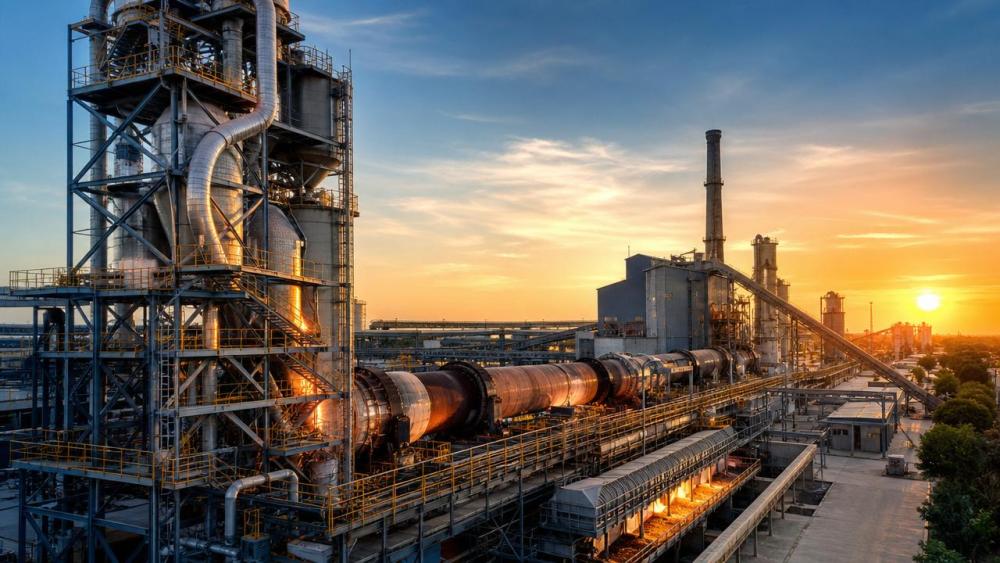
A modern cement line operates under tighter constraints than it did a decade ago. Fuel prices fluctuate, clinker demand can shift suddenly, and environmental rules increasingly target both direct combustion emissions and total process intensity.
At the same time, many plants still carry legacy bottlenecks. These can include unstable feed chemistry, cyclone pressure losses, incomplete combustion, cooler inefficiency, or poor control coordination between process islands.
In practical terms, cement production innovations matter most when they improve one of three outcomes: more tons through the same line, lower heat and power use per ton, or greater operating stability. The best projects usually improve all three together.
This is also why benchmarking across related high-temperature sectors has become useful. Lessons from incineration, refractory monitoring, and advanced thermal control often transfer into cement operations, especially where heat recovery and lining life affect cost.
Where the biggest output gains usually come from
Not every upgrade lifts production in the same way. Some projects raise the ceiling for output, while others reduce the frequency of rate reductions, process trips, or hidden thermal losses.
Preheater and calciner optimization
For many lines, the strongest early gains come from the preheater tower and calciner. Better gas-solid contact, lower false air, cleaner cyclones, and improved meal distribution can unlock both higher feed rates and lower specific heat consumption.
When calcination becomes more complete before material enters the kiln, the burning zone carries less burden. That usually supports steadier clinker quality and better kiln output.
Combustion system upgrades
A well-designed burner, better primary air control, and stable fuel dosing can deliver noticeable gains. The main value is not only flame temperature. It is flame shape, momentum, mixing quality, and consistent heat release along the required reaction profile.
Plants pursuing alternative fuels especially need this level of control. Without it, substitution can hurt output even when fuel cost falls.
Clinker cooler modernization
Cooler performance is often underestimated in discussions about cement production innovations. Yet secondary air temperature, clinker transport behavior, and recuperation efficiency directly affect kiln fuel demand and line stability.
A more efficient grate cooler can improve heat recovery, reduce wear pressure on downstream equipment, and support higher kiln feed without destabilizing the system.
Which upgrades have the strongest energy impact
Energy performance in cement depends on both thermal and electrical efficiency. The most effective plants do not treat them separately, because airflow, material transport, grinding load, and process control are tightly connected.
Among these, airflow discipline often delivers the most overlooked value. Excess false air can quietly weaken tower efficiency, overload fans, disturb combustion, and reduce waste heat recovery potential.
Grinding also deserves attention. In some plants, kiln heat dominates the conversation while mills remain the larger electrical burden. That makes separator efficiency, grinding media strategy, and variable speed control relevant parts of cement production innovations.
The shift from isolated equipment to integrated process thinking
One common mistake is to evaluate upgrades one machine at a time. A stronger burner may not deliver expected value if tertiary air is unstable. A digital dashboard may not help if sensors drift or data is not linked to control action.
The more reliable approach is to view the line as a thermal and chemical system. CF-Elite’s cross-sector perspective is useful here because kiln operations, incineration co-processing, refractory durability, and online monitoring all intersect in the same decision space.
For example, a plant increasing alternative fuel rates must also revisit residence time, calciner design, build-up risk, chlorine circulation, and lining stress. The upgrade is not just about fuel replacement. It is about system balance.
Digital monitoring as an enabling layer
Digital tools are most valuable when they improve operational decisions, not when they simply generate more screens. Advanced process control, kiln shell scanning, refractory condition tracking, and predictive maintenance can reduce instability before it becomes lost output.
This matters because the highest energy penalty often comes from unstable operation. Frequent correction moves, coating problems, ring formation, or stop-start patterns can erase the savings promised by new hardware.
Lower clinker factor, lower carbon, different economics
Not all cement production innovations sit inside the pyro line. Product strategy also matters. Lower clinker factor cements, supported by supplementary cementitious materials, can reduce thermal demand and direct process emissions significantly.
Still, the business case depends on local material availability, standards acceptance, logistics, and grinding performance. A lower clinker ratio can look attractive on paper, yet underperform if substitute materials are inconsistent or market specifications are narrow.
This is where broader market intelligence becomes important. Technical feasibility must be matched with regulatory direction, construction demand patterns, and the long-cycle economics of equipment adaptation.
How to judge which project should move first
The strongest investment sequence usually starts with operational constraints, not vendor categories. A plant should first identify what limits value today: thermal bottleneck, electrical intensity, fuel risk, downtime, emission pressure, or product mix rigidity.
- Map losses by section, including preheater, kiln, cooler, mills, fans, and transport systems.
- Separate chronic bottlenecks from occasional disturbances caused by raw materials or maintenance.
- Test whether a proposed upgrade improves throughput, energy, and stability together.
- Check refractory, dust control, and emissions effects before scaling alternative fuels.
- Use digital monitoring only where response protocols and accountability already exist.
Usually, the highest-return path is a staged one. First correct air leaks, unstable combustion, and cooler losses. Then expand into deeper process control, fuel substitution, waste heat recovery, or clinker factor optimization.
That sequence avoids a common outcome in cement production innovations: expensive modernization layered onto unresolved process fundamentals.
What the next round of decisions should focus on
The most durable gains will come from combining equipment upgrades with better process intelligence. In other words, the future is not only hotter flames or larger units. It is clearer visibility into how heat, chemistry, airflow, and material variability interact every hour.
For organizations comparing cement production innovations, the practical next step is to build a ranked opportunity map. Link each option to expected tonnage impact, specific heat reduction, electrical savings, carbon effect, outage risk, and implementation difficulty.
That kind of structured review makes it easier to separate strategic upgrades from attractive but marginal additions. It also aligns plant decisions with the wider industrial transition that CF-Elite tracks across kilns, thermal systems, and material production networks.
When the evaluation is grounded in real bottlenecks and measured energy flows, the answer becomes clearer: the process upgrades that matter most are the ones that strengthen output, protect thermal stability, and keep future carbon constraints from becoming tomorrow’s cost shock.
Related News
![]() Ms. Elena RodriguezTechnical Comparison of Material Processing Methods: Key Factors for Process SelectionTechnical comparison for material processing made practical: learn how to evaluate energy, quality, maintenance, emissions, and feed variability to choose the right process with confidence.Jul 29, 2026
Ms. Elena RodriguezTechnical Comparison of Material Processing Methods: Key Factors for Process SelectionTechnical comparison for material processing made practical: learn how to evaluate energy, quality, maintenance, emissions, and feed variability to choose the right process with confidence.Jul 29, 2026![]() Silicate Process EngineerHow Cement Grinding Technology Affects Energy Use, Fineness, and Plant OutputCement grinding technology shapes energy use, fineness, and plant output. Learn how to compare mills, separators, drying, and control systems for smarter upgrades.Jul 28, 2026
Silicate Process EngineerHow Cement Grinding Technology Affects Energy Use, Fineness, and Plant OutputCement grinding technology shapes energy use, fineness, and plant output. Learn how to compare mills, separators, drying, and control systems for smarter upgrades.Jul 28, 2026![]() Ms. Elena RodriguezHeavy Equipment Trade Cost Trends: What Buyers Should Track in 2025Heavy equipment trade cost trends in 2025 reveal how freight, energy, lead times, and compliance reshape total equipment costs. Learn what buyers must track to reduce risk and protect budgets.Jul 27, 2026
Ms. Elena RodriguezHeavy Equipment Trade Cost Trends: What Buyers Should Track in 2025Heavy equipment trade cost trends in 2025 reveal how freight, energy, lead times, and compliance reshape total equipment costs. Learn what buyers must track to reduce risk and protect budgets.Jul 27, 2026![]() Material Heat-Resist ExpertSilicate Production Line Process Explained: Key Stages, Equipment, and Quality ControlSilicate production line process explained with key stages, core equipment, quality control, and energy checks—helping buyers and engineers assess stability, efficiency, and supplier capability.Jul 26, 2026
Material Heat-Resist ExpertSilicate Production Line Process Explained: Key Stages, Equipment, and Quality ControlSilicate production line process explained with key stages, core equipment, quality control, and energy checks—helping buyers and engineers assess stability, efficiency, and supplier capability.Jul 26, 2026 Optical Glass Tech FellowRefractory Material Science for Glass Furnaces: Key Properties That Drive Furnace LifeRefractory material science for glass furnaces explains how corrosion resistance, thermal shock, creep, and microstructure shape furnace life, glass quality, and campaign reliability.Jul 25, 2026
![]() Silicate Process EngineerCement Plant Equipment Price Guide: What Drives Cost and How to Budget WiselyCement plant equipment price explained: discover what drives costs, compare quotes wisely, spot hidden expenses, and build a smarter budget for long-term plant value.Jul 24, 2026
Silicate Process EngineerCement Plant Equipment Price Guide: What Drives Cost and How to Budget WiselyCement plant equipment price explained: discover what drives costs, compare quotes wisely, spot hidden expenses, and build a smarter budget for long-term plant value.Jul 24, 2026![]() Dr. Alistair VaughnHow Digital Twin Simulations Improve Process Plant Design, Safety, and UptimeDigital twin simulations for process plants help teams improve plant design, reduce safety risks, and protect uptime by validating thermal, control, and retrofit decisions before costly failures occur.Jul 23, 2026
Dr. Alistair VaughnHow Digital Twin Simulations Improve Process Plant Design, Safety, and UptimeDigital twin simulations for process plants help teams improve plant design, reduce safety risks, and protect uptime by validating thermal, control, and retrofit decisions before costly failures occur.Jul 23, 2026![]() Thermal Energy ArchitectRotary Kilns Price Guide: What Determines Cost and How to Compare Quotes?Rotary kilns price varies by capacity, fuel, refractory, automation, and emissions scope. Learn what drives cost, what cheap quotes may miss, and how to compare suppliers wisely.Jul 22, 2026
Thermal Energy ArchitectRotary Kilns Price Guide: What Determines Cost and How to Compare Quotes?Rotary kilns price varies by capacity, fuel, refractory, automation, and emissions scope. Learn what drives cost, what cheap quotes may miss, and how to compare suppliers wisely.Jul 22, 2026 Ms. Elena RodriguezHow to Evaluate Green Building Material Equipment Suppliers in Europe?Green building material equipment Europe buyers: learn how to evaluate suppliers by technical fit, compliance, lifecycle cost, and after-sales support for smarter sourcing decisions.Jul 21, 2026
![]() Thermal Energy ArchitectHow to Evaluate an Energy Efficient Tunnel Kiln for Lower Fuel Costs and Stable OutputEnergy efficient tunnel kiln evaluation starts with fuel cost, but real value comes from thermal stability, heat recovery, and consistent output. Learn what truly lowers cost per qualified ton.Jul 20, 2026
Thermal Energy ArchitectHow to Evaluate an Energy Efficient Tunnel Kiln for Lower Fuel Costs and Stable OutputEnergy efficient tunnel kiln evaluation starts with fuel cost, but real value comes from thermal stability, heat recovery, and consistent output. Learn what truly lowers cost per qualified ton.Jul 20, 2026![]() Ms. Elena RodriguezSustainable Material Production Compliance: Key Standards, Risks, and Audit ChecksSustainable material production compliance explained: key standards, audit checks, and hidden plant risks across cement, glass, and thermal lines—learn how to spot gaps before audits fail.Jul 19, 2026
Ms. Elena RodriguezSustainable Material Production Compliance: Key Standards, Risks, and Audit ChecksSustainable material production compliance explained: key standards, audit checks, and hidden plant risks across cement, glass, and thermal lines—learn how to spot gaps before audits fail.Jul 19, 2026![]() Thermal Energy ArchitectProcess Monitoring for Incinerators: Key Parameters, Sensors, and Compliance ChecksProcess monitoring for incinerators covers key parameters, sensor selection, and compliance checks to improve combustion stability, emissions control, and plant performance.Jul 18, 2026
Thermal Energy ArchitectProcess Monitoring for Incinerators: Key Parameters, Sensors, and Compliance ChecksProcess monitoring for incinerators covers key parameters, sensor selection, and compliance checks to improve combustion stability, emissions control, and plant performance.Jul 18, 2026![]() Thermal Energy ArchitectWhat Is Industrial Co-Processing? Process, Acceptable Waste Types, and Kiln Use CasesIndustrial co-processing explained: learn the process, acceptable waste types, and kiln use cases in cement and thermal industries to improve efficiency, compliance, and resource recovery.Jul 17, 2026
Thermal Energy ArchitectWhat Is Industrial Co-Processing? Process, Acceptable Waste Types, and Kiln Use CasesIndustrial co-processing explained: learn the process, acceptable waste types, and kiln use cases in cement and thermal industries to improve efficiency, compliance, and resource recovery.Jul 17, 2026![]() Ms. Elena RodriguezGlass Industry Intelligence in Europe: Key Market Signals Buyers Should TrackGlass industry intelligence Europe reveals the key market signals buyers should track, from energy and carbon exposure to furnace upgrades and usable capacity for smarter sourcing decisions.Jul 16, 2026
Ms. Elena RodriguezGlass Industry Intelligence in Europe: Key Market Signals Buyers Should TrackGlass industry intelligence Europe reveals the key market signals buyers should track, from energy and carbon exposure to furnace upgrades and usable capacity for smarter sourcing decisions.Jul 16, 2026![]() Ms. Elena RodriguezIndustrial Market Intelligence in North America: What Buyers Should Track in Supply, Pricing, and DemandIndustrial market intelligence North America reveals what buyers must track in supply, pricing, demand, and compliance to reduce risk and time smarter industrial investments.Jul 15, 2026
Ms. Elena RodriguezIndustrial Market Intelligence in North America: What Buyers Should Track in Supply, Pricing, and DemandIndustrial market intelligence North America reveals what buyers must track in supply, pricing, demand, and compliance to reduce risk and time smarter industrial investments.Jul 15, 2026![]() Optical Glass Tech FellowCommon Problems in Glass Annealing Lehr Systems and How to Improve Temperature UniformityGlass annealing lehr systems often suffer from uneven cooling, stress, and defects. Learn common causes and practical fixes to improve temperature uniformity, quality, and line stability.Jul 15, 2026
Optical Glass Tech FellowCommon Problems in Glass Annealing Lehr Systems and How to Improve Temperature UniformityGlass annealing lehr systems often suffer from uneven cooling, stress, and defects. Learn common causes and practical fixes to improve temperature uniformity, quality, and line stability.Jul 15, 2026![]() Optical Glass Tech FellowOxy Fuel Glass Melting Furnace vs Air-Fuel Systems: Which Fits Your Glass Plant Better?Oxy fuel glass melting furnace or air-fuel system? Compare energy use, NOx, melt quality, oxygen cost, and ROI to choose the best-fit furnace for your glass plant.Jul 15, 2026
Optical Glass Tech FellowOxy Fuel Glass Melting Furnace vs Air-Fuel Systems: Which Fits Your Glass Plant Better?Oxy fuel glass melting furnace or air-fuel system? Compare energy use, NOx, melt quality, oxygen cost, and ROI to choose the best-fit furnace for your glass plant.Jul 15, 2026![]() Dr. Alistair VaughnSilicate Processing Equipment Production Line: Key Machines, Layout Options, and Output PlanningSilicate processing equipment production line guide covering key machines, layout models, output planning, and control strategies to help improve efficiency, stability, and project ROI.Jul 15, 2026
Dr. Alistair VaughnSilicate Processing Equipment Production Line: Key Machines, Layout Options, and Output PlanningSilicate processing equipment production line guide covering key machines, layout models, output planning, and control strategies to help improve efficiency, stability, and project ROI.Jul 15, 2026![]() Material Heat-Resist ExpertHow to Evaluate a Refractory Production Line in Southeast Asia: Capacity, Fuel, and Raw Material FactorsRefractory production Southeast Asia: learn how to assess capacity, fuel strategy, and raw material stability to reduce risk, improve efficiency, and build a scalable, compliant plant.Jul 15, 2026
Material Heat-Resist ExpertHow to Evaluate a Refractory Production Line in Southeast Asia: Capacity, Fuel, and Raw Material FactorsRefractory production Southeast Asia: learn how to assess capacity, fuel strategy, and raw material stability to reduce risk, improve efficiency, and build a scalable, compliant plant.Jul 15, 2026![]() Ms. Elena RodriguezIndustrial Solution Comparison for Procurement: How to Compare CAPEX, OPEX, and Delivery RiskIndustrial solution comparison procurement made practical: compare CAPEX, OPEX, and delivery risk with a lifecycle approach to reduce downtime, control cost, and choose suppliers with confidence.Jul 14, 2026
Ms. Elena RodriguezIndustrial Solution Comparison for Procurement: How to Compare CAPEX, OPEX, and Delivery RiskIndustrial solution comparison procurement made practical: compare CAPEX, OPEX, and delivery risk with a lifecycle approach to reduce downtime, control cost, and choose suppliers with confidence.Jul 14, 2026

Related News
- 00
0000-00
How Cement Grinding Technology Affects Energy Use, Fineness, and Plant Output - 00
0000-00
Cement Plant Equipment Price Guide: What Drives Cost and How to Budget Wisely - 00
0000-00
How to Evaluate a Cement Plant Optimization Solutions Provider for Output and Energy Savings - 00
0000-00
Cement Production Plant Layout Explained: Key Zones, Material Flow, and Bottlenecks - 00
0000-00
Cement Plant Dust Control in North America: Compliance Options and System Selection
Weekly Insights
Stay ahead with our curated technology reports delivered every Monday.