
Is high-pressure molding technology worth the extra cost?




For procurement teams evaluating capital efficiency, high-pressure molding technology often raises a critical question: does the performance justify the premium? In sectors tied to green building materials, thermal processing, and large-scale extrusion, the answer depends on output stability, energy use, maintenance demands, and long-term ROI. This article explores where the extra investment creates measurable value—and where it may not.
For buyers serving silicate production, refractory processing, industrial kiln-linked material chains, or lightweight construction materials, this is rarely a simple equipment-price comparison. A line that costs 15% to 35% more upfront may still reduce unit cost over 3 to 7 years if it improves density consistency, lowers scrap rates, and shortens downstream drying or firing cycles.
That is why high-pressure molding technology is increasingly assessed not as a stand-alone machine feature, but as a process decision. In the CF-Elite decision context, procurement teams need to connect molding pressure, material behavior, thermal efficiency, maintenance exposure, and carbon-related operating pressure into one purchase model.
Where High-Pressure Molding Technology Delivers Real Procurement Value
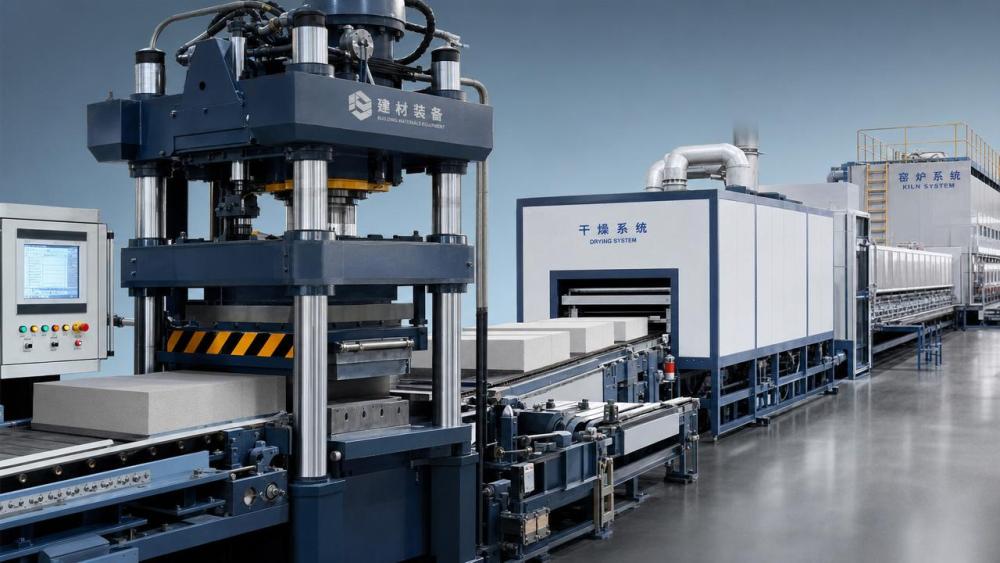
High-pressure molding technology is most valuable when product quality depends on compact structure, tight dimensional control, and repeatable forming across long production runs. In industrial building materials, common target ranges include dimensional tolerance within ±0.5 mm to ±2.0 mm, moisture consistency within 1% to 3%, and stable density distribution across thousands of cycles per shift.
These gains matter because molding quality affects the entire line. A better-formed green body can lower cracking risk during drying, reduce thermal stress in kilns, and improve packaging yield. For procurement personnel, the premium is easier to justify when one upstream investment removes 2 or 3 downstream process losses.
Core performance advantages buyers should measure
The first advantage is density uniformity. In blocks, panels, refractory shapes, or extruded silicate-based products, higher compaction can improve green strength and reduce edge failure. In many production environments, scrap reduction of 3% to 8% is already enough to materially improve annual procurement economics.
The second advantage is production stability. Lines operating 16 to 24 hours per day need fewer stoppages caused by underfilled molds, inconsistent feed distribution, or post-form deformation. Stable molding also supports easier coordination with dryers, conveyors, stackers, and firing equipment.
The third advantage is process integration. In green building material extrusion and thermal-management product manufacturing, high-pressure molding technology often helps create more predictable residence times in drying and heating stages. Even a 5% to 10% reduction in rework can offset a significant part of the equipment premium over a medium investment cycle.
Typical situations where the premium makes sense
- When the line runs above 70% capacity utilization for at least 10 months per year.
- When output uniformity directly affects kiln efficiency, fuel use, or packaging acceptance.
- When labor costs rise because manual intervention is needed more than 3 to 5 times per shift.
- When finished products target premium construction, insulation, or refractory applications.
The table below helps procurement teams compare where high-pressure molding technology usually creates stronger value than standard-pressure forming in industrial material applications.
The key conclusion is not that higher pressure is always better. It is that premium forming equipment pays off fastest when poor shaping quality cascades into multiple cost centers, including fuel, labor, rejects, and customer complaints. Procurement teams should therefore model savings across the full line, not only at the press section.
Why this matters in thermal-process industries
In sectors observed by CF-Elite, the connection between molding and thermal management is often underestimated. A denser or more uniform product can affect drying time, airflow balance, burner loading, and refractory wear patterns. On a kiln-linked line, even a 2% improvement in input consistency can deliver noticeable stability across a 30 to 90 day production campaign.
This is especially relevant for lightweight wall materials, special silicate shapes, and certain refractory bodies where downstream heat treatment is expensive. In those cases, high-pressure molding technology may support both cost control and decarbonization by reducing avoidable thermal waste.
When the Extra Cost Is Not Worth It
There are also clear cases where high-pressure molding technology is over-specified. If product tolerance is relatively broad, annual volume is low, or the raw mix changes frequently without stable process control, the premium may not translate into reliable savings. Procurement should avoid paying for pressure capability that operations cannot use consistently.
For example, if line utilization remains below 45% to 50%, annual SKU switching is high, and downstream drying is already the dominant bottleneck, forming upgrades alone may not improve plant economics. In such settings, investments in raw material dosing, moisture control, or operator training may create faster returns.
Common overinvestment signals
- The plant has no stable baseline for scrap, density, or cycle-time measurement.
- Maintenance teams lack hydraulic, tooling, or sealing support for higher-load equipment.
- Product mix changes every 1 to 2 weeks, making fixed process optimization difficult.
- Energy losses are mainly in kilns, dryers, or dust systems rather than shaping quality.
Another risk is underestimating wear. Higher pressure usually means greater load on molds, hydraulic systems, seals, and mechanical frames. If spare-part lead times stretch to 4 to 8 weeks, or if service response is slow, the production risk can erase part of the theoretical efficiency gain.
Look beyond purchase price and power rating
Buyers sometimes focus too heavily on motor size, pressure range, or nominal output. Those figures matter, but they do not reveal whether the system can maintain performance after 6 months of abrasive raw material exposure or after 1 million to 3 million pressing cycles. Long-cycle heavy equipment should be judged on serviceability as much as on headline capacity.
A practical procurement review should include tooling life, hydraulic oil cleanliness requirements, seal replacement intervals, and mold-change time. If changing a mold takes 3 hours instead of 45 minutes, the real throughput picture changes significantly.
How Procurement Teams Should Evaluate ROI
A disciplined ROI review for high-pressure molding technology should cover at least 4 dimensions: capital cost, operating efficiency, maintenance exposure, and revenue protection. This approach is more useful than asking whether the machine is simply “advanced” or “high performance.”
For most industrial buyers, the investment window should be modeled over 36 to 84 months. That period is long enough to reflect spare-part cycles, tooling replacement, and the seasonal volatility common in construction materials and industrial production chains.
A practical ROI checklist
Before approving a procurement plan, teams should quantify 6 variables: line utilization, reject rate, labor intervention frequency, energy intensity in downstream heat treatment, spare-part turnover, and customer quality claims. These indicators are easier to validate than broad promises about “intelligent manufacturing.”
The following matrix can be used during bid comparison to determine whether high-pressure molding technology supports a stronger purchasing decision.
This matrix shows that procurement decisions improve when buyers translate equipment claims into measurable plant effects. A premium press is easier to justify when it reduces both quality loss and thermal-process instability, not when it only offers a higher nominal pressure value.
Questions to ask suppliers before issuing a purchase order
- What pressure range is actually used in comparable material systems, not just the maximum machine rating?
- What is the expected tooling life under abrasive or high-silica feed conditions?
- How many hours are needed for preventive maintenance every 500, 1,000, or 2,000 operating hours?
- Can the system integrate with existing dryers, conveyors, feeders, and MES or PLC architecture?
- What operator skill level is required during the first 30 to 90 days after commissioning?
Do not separate procurement from process engineering
High-pressure molding technology should never be evaluated by procurement in isolation. The most accurate decisions come from joint review by process engineers, maintenance leaders, energy managers, and commercial teams. In heavy industrial environments, the wrong specification can lock in inefficiency for 5 years or more.
CF-Elite’s broader market view supports this approach because equipment choices increasingly sit at the intersection of output economics, environmental compliance, and long-cycle service risk. A press that improves shape quality but increases unplanned downtime is not a strategic win.
Application Scenarios, Risk Control, and Implementation Advice
The strongest use cases for high-pressure molding technology usually appear in green lightweight building materials, selected refractory products, dense silicate shapes, and extrusion-linked applications where uniformity determines downstream heat behavior. In these cases, the purchase decision should include implementation planning from day 1.
A realistic rollout often has 3 stages: process validation, line integration, and stabilization. Depending on line complexity, this may take 4 to 12 weeks before stable operating data is available. Buyers should avoid assuming full performance in the first few shifts.
Implementation steps that reduce risk
- Confirm raw material particle-size distribution, moisture window, and binder behavior before final specification.
- Match pressure capability with mold design, not just output target.
- Align the press with dryer and kiln bottlenecks to avoid shifting the constraint downstream.
- Set acceptance standards for density, dimensions, cycle time, and stoppage frequency within the first 30 days.
Common procurement mistakes
One common mistake is choosing high-pressure molding technology only because competitors use it. Another is selecting the highest available pressure class without confirming whether the material system benefits from that load. In some formulations, excessive pressure can increase tool wear or create unwanted stress patterns.
A third mistake is neglecting service infrastructure. If the supplier cannot support commissioning, spare parts, and troubleshooting within agreed response times such as 24 to 72 hours for critical issues, the cost of downtime may outweigh any projected production advantage.
Who should invest first
The best candidates are plants with stable volume, measurable scrap losses, strong thermal-process costs, and a need for tighter product consistency. Procurement teams in these environments usually see a clearer payback path than plants with variable formulations, unstable demand, or weak maintenance readiness.
If your operation already tracks OEE, defect causes, fuel intensity, and tooling replacement cycles, you are in a better position to decide whether high-pressure molding technology is worth the extra cost. If not, establish those baselines first, then compare vendors using the same operating assumptions.
The real value of high-pressure molding technology lies in whether it improves the economics of the whole production chain. For procurement teams in silicate materials, thermal-processing industries, and advanced building material lines, the premium is justified when it reduces rejects, supports downstream heat efficiency, and lowers intervention over a 3 to 7 year horizon.
If you are evaluating new forming equipment, line upgrades, or process optimization for green material production, CF-Elite can help you frame the decision around technical fit, lifecycle cost, and strategic market direction. Contact us to discuss your application, request a tailored evaluation framework, or explore more solutions for efficient high-temperature industrial systems.
Related News
 Optical Glass Tech FellowHow to Evaluate a Glass Annealing Equipment Manufacturer for Production StabilityChoose a glass annealing equipment manufacturer with proven thermal uniformity, reliable controls, lifecycle value, and responsive service for stable production.Sep 08, 2026
 Prof. Marcus ChenThermal Energy Architecture in North America: Strategies for Lower Building Energy UseThermal energy architecture North America helps project leaders cut building energy use through stronger envelopes, right-sized HVAC, storage, and smart commissioning.Sep 07, 2026
 Ms. Elena RodriguezHow Should Buyers Evaluate Building Material Industry Intelligence Pricing?Building material industry intelligence pricing: learn how to compare coverage, technical depth, and ROI to choose intelligence that reduces procurement risk.Sep 07, 2026
 Ms. Elena RodriguezHow to Use Building Material Intelligence Data for Market and Investment DecisionsBuilding material industry intelligence data helps leaders evaluate demand, costs, regulation, capacity, and technology to make smarter market and investment decisions.Sep 05, 2026
 Thermal Energy ArchitectHow PLC Control Improves Energy Efficiency and Temperature Stability in KilnsEnergy efficient kilns PLC control improves temperature stability, cuts fuel waste, and optimizes combustion, draft, and material flow. Explore proven strategies for smarter kiln modernization.Sep 04, 2026
 Optical Glass Tech FellowEuropean Glass Melting Processes: Furnace Choices, Energy Use, and Quality ControlGlass melting process Europe: explore furnace choices, energy efficiency, cullet strategy, and quality control to improve output, compliance, and long-term glass performance.Sep 03, 2026
 Thermal Energy ArchitectWhat Determines Refractory Lining Monitoring Price for Industrial Kilns?Refractory lining monitoring price depends on kiln size, sensor technology, installation, software, and support. Compare total lifecycle costs and choose the right solution.Sep 02, 2026
 Silicate Process EngineerCement Production System Costs: A Plant Buyer’s Guide to Budgeting and ROICement production systems cost planning made clear: compare CAPEX, operating costs, compliance, and ROI to build a resilient, profitable cement plant investment.Sep 01, 2026
 Dr. Alistair VaughnWhat Should a Process Technology Database Track for High-Temperature Plants?Process technology database essentials for high-temperature plants: track thermal profiles, feed chemistry, refractory wear, emissions, energy, and maintenance for safer, data-driven decisions.Aug 31, 2026
 Ms. Elena RodriguezHow to Evaluate a Silicate Processing Equipment Manufacturer for Plant ProjectsSilicate processing equipment manufacturer selection: assess process fit, guarantees, energy, compliance, delivery risk, and lifecycle support for dependable plant performance.Aug 30, 2026
 Dr. Alistair VaughnHow to Specify Custom Agricultural Processing Equipment for Throughput and HygieneEquipment customization services for agricultural processing: learn to specify hygienic, high-throughput lines that improve yield, reliability, and long-term efficiency.Aug 29, 2026
 Dr. Alistair VaughnHow to Select Process Plant Equipment for High-Temperature, Abrasive Production LinesProcess plant equipment selection for high-temperature, abrasive lines: reduce downtime, improve durability, and optimize lifecycle performance.Aug 28, 2026
 Silicate Process EngineerHow Kiln Heat Recovery Systems Cut Fuel Use in Cement and Lime ProductionKiln heat recovery helps cement and lime plants cut fuel use, improve thermal stability, and build practical, reliable decarbonization strategies.Aug 27, 2026
 Ms. Elena RodriguezProcess Equipment Comparison: Which Metrics Matter Most for Reliable Selection?Process equipment comparison made practical: discover which metrics truly drive reliable selection, from energy efficiency and control stability to wear life, maintainability, and uptime.Aug 26, 2026
 Ms. Elena RodriguezWhat Buyers Should Check Before Sourcing Precision Alloy Bars for Critical PartsPrecision Alloy Bars buyers should verify grade, chemistry, tolerances, surface quality, traceability, and lead time before sourcing for critical parts. Learn what prevents costly machining and reliability risks.Aug 27, 2026
 Ms. Elena RodriguezHow to Evaluate Thermal Management Solutions Insulation for High-Heat Industrial SystemsThermal management solutions insulation: learn how to assess high-heat industrial systems by thermal performance, durability, lifecycle cost, and supplier data for smarter decisions.Aug 25, 2026
 Ms. Elena RodriguezWhat Drives Waste Recycling Cost in Industrial Projects and How to Estimate It?Waste recycling cost in industrial projects depends on composition, moisture, transport, pre-treatment, and compliance. Learn how to estimate it accurately and compare suppliers with confidence.Aug 24, 2026
 Silicate Process EngineerHow to Evaluate Cement Production Plants in the Middle East for Capacity, Fuel Flexibility, and ROIcement production plants Middle East: Learn how to assess true capacity, fuel flexibility, and ROI risks to identify resilient assets and smarter investment opportunities.Aug 23, 2026
 Structural Material AnalystHow to Evaluate Lightweight Material Machinery for Output, Energy Use, and Product QualityLightweight material machinery evaluation guide: compare stable output, energy use, and product quality to choose equipment that cuts waste, lowers costs, and improves production confidence.Aug 22, 2026
 Material Heat-Resist ExpertWhat Determines Refractory Production Line Price in a Turnkey Plant Project?Refractory production line price depends on raw materials, forming method, kiln and drying design, automation, utilities, and scope. Learn what really drives turnkey plant cost before you invest.Aug 21, 2026

Related News
- 00
0000-00
What Should a Process Technology Database Track for High-Temperature Plants? - 00
0000-00
How to Specify Custom Agricultural Processing Equipment for Throughput and Hygiene - 00
0000-00
How to Select Process Plant Equipment for High-Temperature, Abrasive Production Lines - 00
0000-00
What Causes Thermal Shock Failure in Heat-Resistant Materials During Development? - 00
0000-00
How Digital Twin Simulations Improve Process Plant Design, Safety, and Uptime
Weekly Insights
Stay ahead with our curated technology reports delivered every Monday.