
High-Temperature Materials Explained: How to Compare Thermal Stability, Wear Resistance, and Cost




Why do high-temperature materials become a cost issue so quickly?
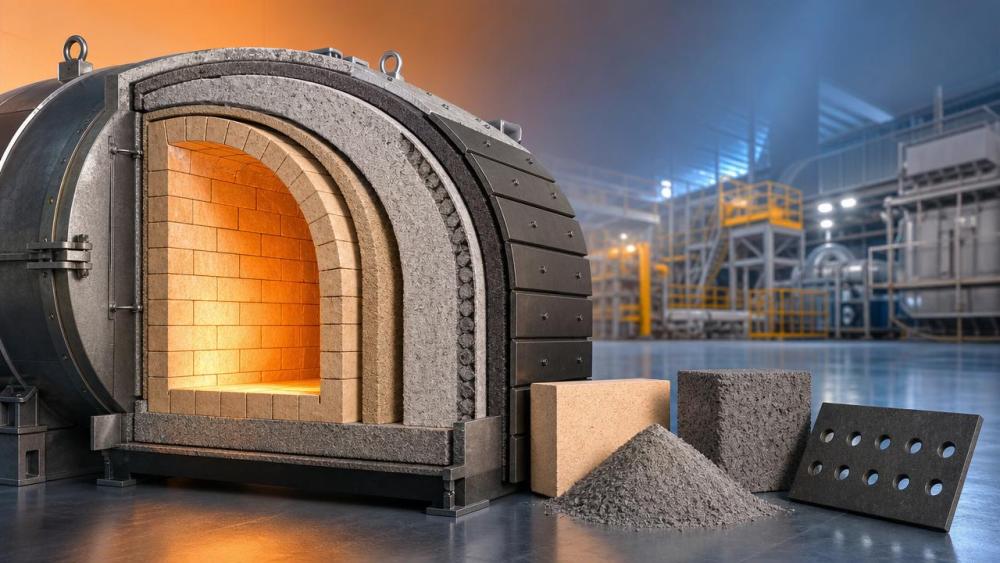
High-temperature materials rarely fail as isolated parts. They affect uptime, fuel use, product quality, maintenance windows, and environmental compliance at the same time.
That is why a cheaper lining, board, brick, castable, or wear insert can become the most expensive option after installation.
In cement plants, glass furnaces, incineration systems, refractory lines, and extrusion equipment, the operating environment is never defined by temperature alone.
Thermal cycling, alkali attack, abrasion, dust load, slag chemistry, flame instability, and shutdown frequency often decide material life faster than the nameplate temperature.
For that reason, comparing high-temperature materials needs a broader frame: thermal stability, wear resistance, installation complexity, and total lifecycle cost.
This is also where sector intelligence matters. Platforms such as CF-Elite follow how thermal management choices perform across heavy silicate and heat-intensive systems.
The useful takeaway is simple. Good purchasing decisions come from matching material behavior to process reality, not from comparing unit price in isolation.
What should be checked first: thermal stability or wear resistance?
Most teams want a single answer, but the better question is what failure mode appears first in the actual process zone.
Thermal stability matters most where temperatures swing, heating rates are uneven, or emergency stops are common. Think kiln inlets, burner zones, transfer points, and access doors.
Wear resistance dominates where particle impact, raw meal friction, ash flow, clinker contact, or high-velocity gas entrainment causes steady surface loss.
In practice, many high-temperature materials fail because buyers optimize for one property and underweight the second one.
A dense, hard material may resist abrasion well, yet crack under repeated thermal shock. A more shock-tolerant option may survive heating cycles, but erode too fast.
A quick screening table helps narrow the field before requesting detailed technical offers.
If the process has two severe stressors, treat the zone as a hybrid case. That usually justifies a layered design, not a one-material answer.
How can similar high-temperature materials perform very differently in real plants?
Datasheets often look close. Field performance often does not. The gap comes from application detail.
Two materials with similar service temperature ratings may behave very differently when exposed to reducing atmospheres, alkali vapors, molten glass contact, or waste-derived fuel residues.
This is common in industrial kilns and incineration lines, where heat history and chemical loading change from campaign to campaign.
The same issue appears in refractory production lines and extrusion systems, where local pressure, friction, and thermal gradients create uneven damage.
More realistic comparison usually depends on five checks:
- Maximum continuous temperature versus short excursion temperature.
- Heating and cooling rate sensitivity.
- Resistance to process-specific chemistry, not generic corrosion claims.
- Mechanical retention after long exposure, not only fresh-state strength.
- Installation tolerance, curing, dry-out, and anchoring requirements.
This is why high-temperature materials should be benchmarked against a process map. Zone temperature alone is an incomplete purchasing tool.
CF-Elite frequently frames this as an intelligence problem rather than a catalog problem. Process context changes material value more than labels do.
When does the lower-priced option actually raise total cost?
Usually when replacement frequency, lost production, and energy leakage are not quantified early.
For many high-temperature materials, purchase price may represent only a small share of total ownership cost over one maintenance cycle.
A lower-cost refractory or thermal barrier may require more shutdowns, thicker safety stock, extra dry-out time, or more labor-intensive repair methods.
The result is not only direct spending. It can also mean unstable output quality, higher fuel burn, dust escape, or shorter campaign length.
A practical way to compare offers is to use a lifecycle table instead of a quote-only table.
This broader comparison is increasingly important as energy efficiency and carbon reduction targets influence material selection across heavy thermal industries.
Which mistakes show up most often when comparing high-temperature materials?
One common mistake is treating service temperature as the master parameter. It is important, but rarely decisive on its own.
Another is comparing only base composition. Alumina level, ceramic phase, or density can signal performance, yet they do not replace field behavior data.
Some evaluations also miss the installation factor. A technically strong material can underperform because curing, drying, expansion joints, or anchoring were not matched to the site.
There is also a planning error that appears in global sourcing: delivery risk is ignored until shutdown windows are already fixed.
In real procurement work, the safest approach is to challenge every offer with a short checklist:
- What exact process zone is this material designed for?
- Which failure mode is it proven to resist first?
- What campaign life has been achieved in similar operating chemistry?
- What installation controls are mandatory for the warranty or expected life?
- How stable is supply for shutdown-critical quantities?
These questions help separate promising high-temperature materials from options that only look competitive on paper.
So how should the final decision be made when several options still look credible?
At that stage, move from material comparison to decision structure.
Start with the process zone, then rank the main stressors. After that, assign weight to thermal stability, wear resistance, chemical compatibility, installation complexity, and expected lifecycle cost.
For many heavy-process applications, a weighted matrix gives a cleaner answer than technical debate alone.
It also helps when different departments prioritize different risks, such as outage duration, energy consumption, emissions, or spare inventory.
A balanced shortlist often includes one premium option, one mid-range option with proven field history, and one alternative optimized for a specific local condition.
Where possible, request evidence from comparable lines in cement, glass, incineration, refractory processing, or advanced building material production.
That kind of cross-sector validation is especially useful because many high-temperature materials behave differently once atmosphere, feed chemistry, and maintenance culture change.
CF-Elite’s wider industry lens is relevant here. Intelligence from adjacent thermal sectors often reveals risks that a single plant history cannot show.
In the end, the best choice is rarely the cheapest or the most advanced. It is the option that keeps thermal performance, wear life, and operating cost in workable balance.
A sensible next step is to build a zone-based comparison sheet, verify process chemistry, and recalculate cost on a campaign-life basis before issuing the final order.
Related News
![]() Ms. Elena RodriguezTechnical Comparison of Material Processing Methods: Key Factors for Process SelectionTechnical comparison for material processing made practical: learn how to evaluate energy, quality, maintenance, emissions, and feed variability to choose the right process with confidence.Jul 29, 2026
Ms. Elena RodriguezTechnical Comparison of Material Processing Methods: Key Factors for Process SelectionTechnical comparison for material processing made practical: learn how to evaluate energy, quality, maintenance, emissions, and feed variability to choose the right process with confidence.Jul 29, 2026![]() Silicate Process EngineerHow Cement Grinding Technology Affects Energy Use, Fineness, and Plant OutputCement grinding technology shapes energy use, fineness, and plant output. Learn how to compare mills, separators, drying, and control systems for smarter upgrades.Jul 28, 2026
Silicate Process EngineerHow Cement Grinding Technology Affects Energy Use, Fineness, and Plant OutputCement grinding technology shapes energy use, fineness, and plant output. Learn how to compare mills, separators, drying, and control systems for smarter upgrades.Jul 28, 2026![]() Ms. Elena RodriguezHeavy Equipment Trade Cost Trends: What Buyers Should Track in 2025Heavy equipment trade cost trends in 2025 reveal how freight, energy, lead times, and compliance reshape total equipment costs. Learn what buyers must track to reduce risk and protect budgets.Jul 27, 2026
Ms. Elena RodriguezHeavy Equipment Trade Cost Trends: What Buyers Should Track in 2025Heavy equipment trade cost trends in 2025 reveal how freight, energy, lead times, and compliance reshape total equipment costs. Learn what buyers must track to reduce risk and protect budgets.Jul 27, 2026![]() Material Heat-Resist ExpertSilicate Production Line Process Explained: Key Stages, Equipment, and Quality ControlSilicate production line process explained with key stages, core equipment, quality control, and energy checks—helping buyers and engineers assess stability, efficiency, and supplier capability.Jul 26, 2026
Material Heat-Resist ExpertSilicate Production Line Process Explained: Key Stages, Equipment, and Quality ControlSilicate production line process explained with key stages, core equipment, quality control, and energy checks—helping buyers and engineers assess stability, efficiency, and supplier capability.Jul 26, 2026 Optical Glass Tech FellowRefractory Material Science for Glass Furnaces: Key Properties That Drive Furnace LifeRefractory material science for glass furnaces explains how corrosion resistance, thermal shock, creep, and microstructure shape furnace life, glass quality, and campaign reliability.Jul 25, 2026
![]() Silicate Process EngineerCement Plant Equipment Price Guide: What Drives Cost and How to Budget WiselyCement plant equipment price explained: discover what drives costs, compare quotes wisely, spot hidden expenses, and build a smarter budget for long-term plant value.Jul 24, 2026
Silicate Process EngineerCement Plant Equipment Price Guide: What Drives Cost and How to Budget WiselyCement plant equipment price explained: discover what drives costs, compare quotes wisely, spot hidden expenses, and build a smarter budget for long-term plant value.Jul 24, 2026![]() Dr. Alistair VaughnHow Digital Twin Simulations Improve Process Plant Design, Safety, and UptimeDigital twin simulations for process plants help teams improve plant design, reduce safety risks, and protect uptime by validating thermal, control, and retrofit decisions before costly failures occur.Jul 23, 2026
Dr. Alistair VaughnHow Digital Twin Simulations Improve Process Plant Design, Safety, and UptimeDigital twin simulations for process plants help teams improve plant design, reduce safety risks, and protect uptime by validating thermal, control, and retrofit decisions before costly failures occur.Jul 23, 2026![]() Thermal Energy ArchitectRotary Kilns Price Guide: What Determines Cost and How to Compare Quotes?Rotary kilns price varies by capacity, fuel, refractory, automation, and emissions scope. Learn what drives cost, what cheap quotes may miss, and how to compare suppliers wisely.Jul 22, 2026
Thermal Energy ArchitectRotary Kilns Price Guide: What Determines Cost and How to Compare Quotes?Rotary kilns price varies by capacity, fuel, refractory, automation, and emissions scope. Learn what drives cost, what cheap quotes may miss, and how to compare suppliers wisely.Jul 22, 2026 Ms. Elena RodriguezHow to Evaluate Green Building Material Equipment Suppliers in Europe?Green building material equipment Europe buyers: learn how to evaluate suppliers by technical fit, compliance, lifecycle cost, and after-sales support for smarter sourcing decisions.Jul 21, 2026
![]() Thermal Energy ArchitectHow to Evaluate an Energy Efficient Tunnel Kiln for Lower Fuel Costs and Stable OutputEnergy efficient tunnel kiln evaluation starts with fuel cost, but real value comes from thermal stability, heat recovery, and consistent output. Learn what truly lowers cost per qualified ton.Jul 20, 2026
Thermal Energy ArchitectHow to Evaluate an Energy Efficient Tunnel Kiln for Lower Fuel Costs and Stable OutputEnergy efficient tunnel kiln evaluation starts with fuel cost, but real value comes from thermal stability, heat recovery, and consistent output. Learn what truly lowers cost per qualified ton.Jul 20, 2026![]() Ms. Elena RodriguezSustainable Material Production Compliance: Key Standards, Risks, and Audit ChecksSustainable material production compliance explained: key standards, audit checks, and hidden plant risks across cement, glass, and thermal lines—learn how to spot gaps before audits fail.Jul 19, 2026
Ms. Elena RodriguezSustainable Material Production Compliance: Key Standards, Risks, and Audit ChecksSustainable material production compliance explained: key standards, audit checks, and hidden plant risks across cement, glass, and thermal lines—learn how to spot gaps before audits fail.Jul 19, 2026![]() Thermal Energy ArchitectProcess Monitoring for Incinerators: Key Parameters, Sensors, and Compliance ChecksProcess monitoring for incinerators covers key parameters, sensor selection, and compliance checks to improve combustion stability, emissions control, and plant performance.Jul 18, 2026
Thermal Energy ArchitectProcess Monitoring for Incinerators: Key Parameters, Sensors, and Compliance ChecksProcess monitoring for incinerators covers key parameters, sensor selection, and compliance checks to improve combustion stability, emissions control, and plant performance.Jul 18, 2026![]() Thermal Energy ArchitectWhat Is Industrial Co-Processing? Process, Acceptable Waste Types, and Kiln Use CasesIndustrial co-processing explained: learn the process, acceptable waste types, and kiln use cases in cement and thermal industries to improve efficiency, compliance, and resource recovery.Jul 17, 2026
Thermal Energy ArchitectWhat Is Industrial Co-Processing? Process, Acceptable Waste Types, and Kiln Use CasesIndustrial co-processing explained: learn the process, acceptable waste types, and kiln use cases in cement and thermal industries to improve efficiency, compliance, and resource recovery.Jul 17, 2026![]() Ms. Elena RodriguezGlass Industry Intelligence in Europe: Key Market Signals Buyers Should TrackGlass industry intelligence Europe reveals the key market signals buyers should track, from energy and carbon exposure to furnace upgrades and usable capacity for smarter sourcing decisions.Jul 16, 2026
Ms. Elena RodriguezGlass Industry Intelligence in Europe: Key Market Signals Buyers Should TrackGlass industry intelligence Europe reveals the key market signals buyers should track, from energy and carbon exposure to furnace upgrades and usable capacity for smarter sourcing decisions.Jul 16, 2026![]() Ms. Elena RodriguezIndustrial Market Intelligence in North America: What Buyers Should Track in Supply, Pricing, and DemandIndustrial market intelligence North America reveals what buyers must track in supply, pricing, demand, and compliance to reduce risk and time smarter industrial investments.Jul 15, 2026
Ms. Elena RodriguezIndustrial Market Intelligence in North America: What Buyers Should Track in Supply, Pricing, and DemandIndustrial market intelligence North America reveals what buyers must track in supply, pricing, demand, and compliance to reduce risk and time smarter industrial investments.Jul 15, 2026![]() Optical Glass Tech FellowCommon Problems in Glass Annealing Lehr Systems and How to Improve Temperature UniformityGlass annealing lehr systems often suffer from uneven cooling, stress, and defects. Learn common causes and practical fixes to improve temperature uniformity, quality, and line stability.Jul 15, 2026
Optical Glass Tech FellowCommon Problems in Glass Annealing Lehr Systems and How to Improve Temperature UniformityGlass annealing lehr systems often suffer from uneven cooling, stress, and defects. Learn common causes and practical fixes to improve temperature uniformity, quality, and line stability.Jul 15, 2026![]() Optical Glass Tech FellowOxy Fuel Glass Melting Furnace vs Air-Fuel Systems: Which Fits Your Glass Plant Better?Oxy fuel glass melting furnace or air-fuel system? Compare energy use, NOx, melt quality, oxygen cost, and ROI to choose the best-fit furnace for your glass plant.Jul 15, 2026
Optical Glass Tech FellowOxy Fuel Glass Melting Furnace vs Air-Fuel Systems: Which Fits Your Glass Plant Better?Oxy fuel glass melting furnace or air-fuel system? Compare energy use, NOx, melt quality, oxygen cost, and ROI to choose the best-fit furnace for your glass plant.Jul 15, 2026![]() Dr. Alistair VaughnSilicate Processing Equipment Production Line: Key Machines, Layout Options, and Output PlanningSilicate processing equipment production line guide covering key machines, layout models, output planning, and control strategies to help improve efficiency, stability, and project ROI.Jul 15, 2026
Dr. Alistair VaughnSilicate Processing Equipment Production Line: Key Machines, Layout Options, and Output PlanningSilicate processing equipment production line guide covering key machines, layout models, output planning, and control strategies to help improve efficiency, stability, and project ROI.Jul 15, 2026![]() Material Heat-Resist ExpertHow to Evaluate a Refractory Production Line in Southeast Asia: Capacity, Fuel, and Raw Material FactorsRefractory production Southeast Asia: learn how to assess capacity, fuel strategy, and raw material stability to reduce risk, improve efficiency, and build a scalable, compliant plant.Jul 15, 2026
Material Heat-Resist ExpertHow to Evaluate a Refractory Production Line in Southeast Asia: Capacity, Fuel, and Raw Material FactorsRefractory production Southeast Asia: learn how to assess capacity, fuel strategy, and raw material stability to reduce risk, improve efficiency, and build a scalable, compliant plant.Jul 15, 2026![]() Ms. Elena RodriguezIndustrial Solution Comparison for Procurement: How to Compare CAPEX, OPEX, and Delivery RiskIndustrial solution comparison procurement made practical: compare CAPEX, OPEX, and delivery risk with a lifecycle approach to reduce downtime, control cost, and choose suppliers with confidence.Jul 14, 2026
Ms. Elena RodriguezIndustrial Solution Comparison for Procurement: How to Compare CAPEX, OPEX, and Delivery RiskIndustrial solution comparison procurement made practical: compare CAPEX, OPEX, and delivery risk with a lifecycle approach to reduce downtime, control cost, and choose suppliers with confidence.Jul 14, 2026

Related News
- 00
0000-00
How Digital Twin Simulations Improve Process Plant Design, Safety, and Uptime - 00
0000-00
Silicate Processing Equipment Production Line: Key Machines, Layout Options, and Output Planning - 00
0000-00
Industrial Thermal Management Controls: Which Parameters Matter Most in Daily Operation? - 00
0000-00
Glass Industry Intelligence in the Middle East: What Buyers Should Track Before Sourcing - 00
0000-00
When Do Bio Processing Equipment Customization Services Make Sense for New Lines?
Weekly Insights
Stay ahead with our curated technology reports delivered every Monday.