
Can Heat-Resistant Materials Fail After Rapid Temperature Cycling?




Heat-resistant materials can fail after rapid temperature cycling, including materials that perform well at very high steady temperatures. A refractory lining, furnace component, kiln furniture, insulation board, or castable may carry its rated temperature without difficulty and still crack, spall, distort, or lose strength when heating and cooling occur too quickly or too often.
For plant operators and equipment buyers, the practical question is not simply whether a material is “heat resistant.” It is whether its structure, installation method, geometry, and operating profile can tolerate the specific thermal gradients created by startup, shutdown, batch changes, burner trips, cold-air ingress, water exposure, and cleaning cycles. High temperature capability and resistance to thermal cycling overlap, but they are not the same property.
Why thermal cycling causes failure
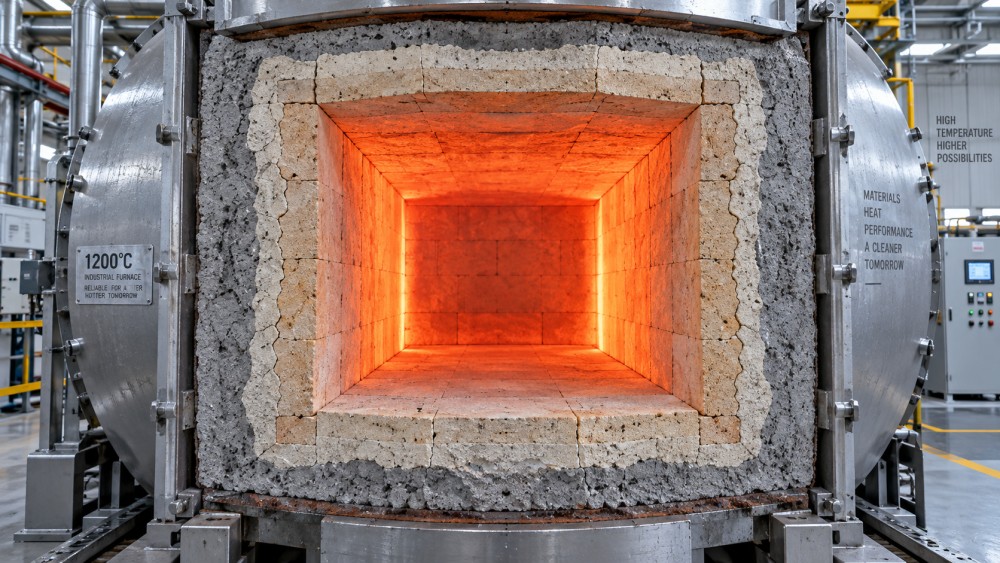
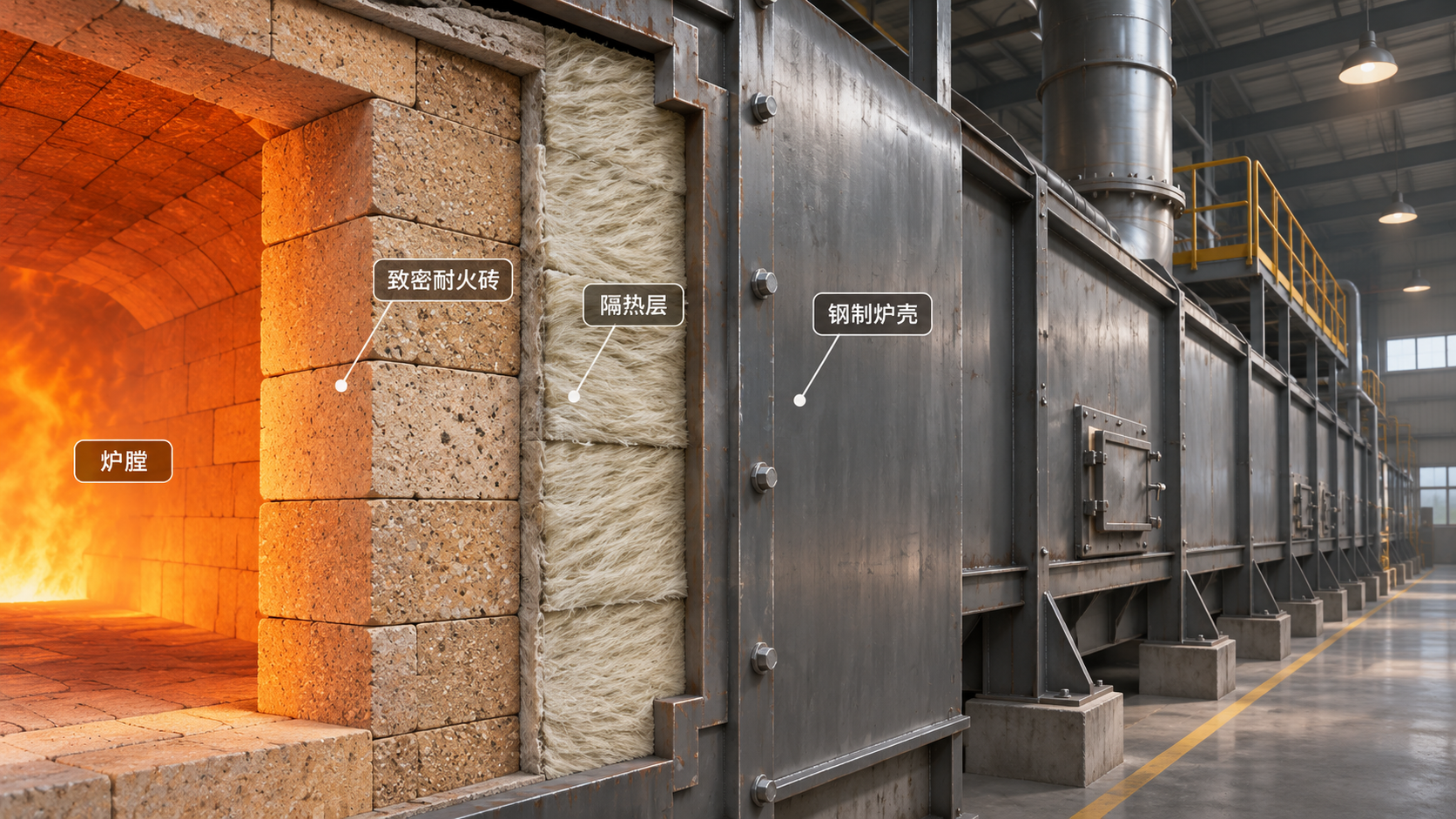
Every solid expands when heated and contracts when cooled, but it rarely does so evenly. The hot face of a furnace lining may rise in temperature far faster than the colder material behind it. A thick refractory brick can have a hot surface exposed to flame or molten material while its cold face remains hundreds of degrees cooler. That temperature difference creates internal stress.
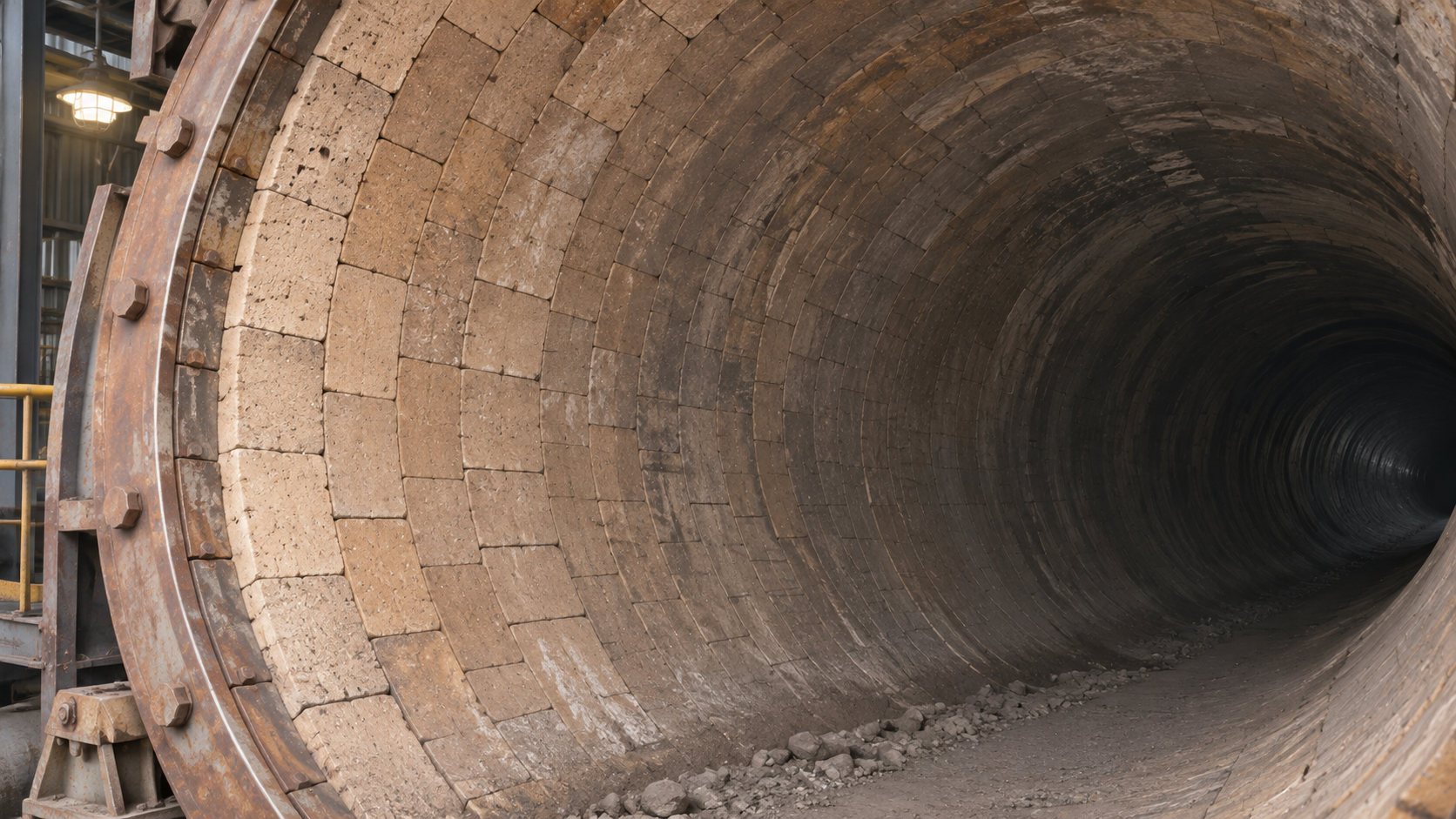
If the stress exceeds the material’s ability to deform, redistribute stress, or arrest a crack, damage begins. The first damage is often microscopic: grain-boundary separation, small cracks around pores, debonding between aggregate and matrix, or weakening at joints. Repeated cycles can turn these initially invisible defects into open cracks, surface flaking, loss of dense hot-face material, and eventually a local lining failure.
Rapid cooling is frequently more damaging than controlled heating. During a sudden temperature drop, the exposed surface contracts while hotter material underneath remains expanded. The surface is pulled into tension, and brittle ceramics generally tolerate tensile stress poorly. A material may survive many heating cycles yet fail shortly after an unplanned air leak, cold feed surge, washdown event, or emergency shutdown.
Thermal shock is therefore a system condition, not a material label. The same alumina-based refractory may have a long life in a continuously operated kiln and a short life in a batch furnace that is opened repeatedly. The difference can come from thermal ramp rate, component thickness, mechanical restraint, chemical exposure, and the way the lining was dried and installed.
Temperature rating is not a thermal-shock rating
A common selection error is to treat maximum service temperature as a proxy for durability. It is useful, but incomplete. A material rated for a higher temperature may be less suitable for severe cycling than a lower-rated alternative with better thermal shock resistance.
Dense, high-strength refractories often resist abrasion, slag penetration, and mechanical impact well. However, their density and stiffness can make them vulnerable where fast temperature changes dominate. More porous insulating materials can accommodate thermal gradients better in some situations, but they may not survive abrasion, load, gas velocity, or chemical attack. There is no universal “best” heat-resistant material because the dominant failure mechanism changes by location.
For this reason, a complete material comparison should separate at least four questions: maximum operating temperature, resistance to thermal shock, resistance to chemical attack, and ability to carry mechanical load. A lining selected solely for one of these may fail through one of the others.
Where cycling damage is most likely to appear
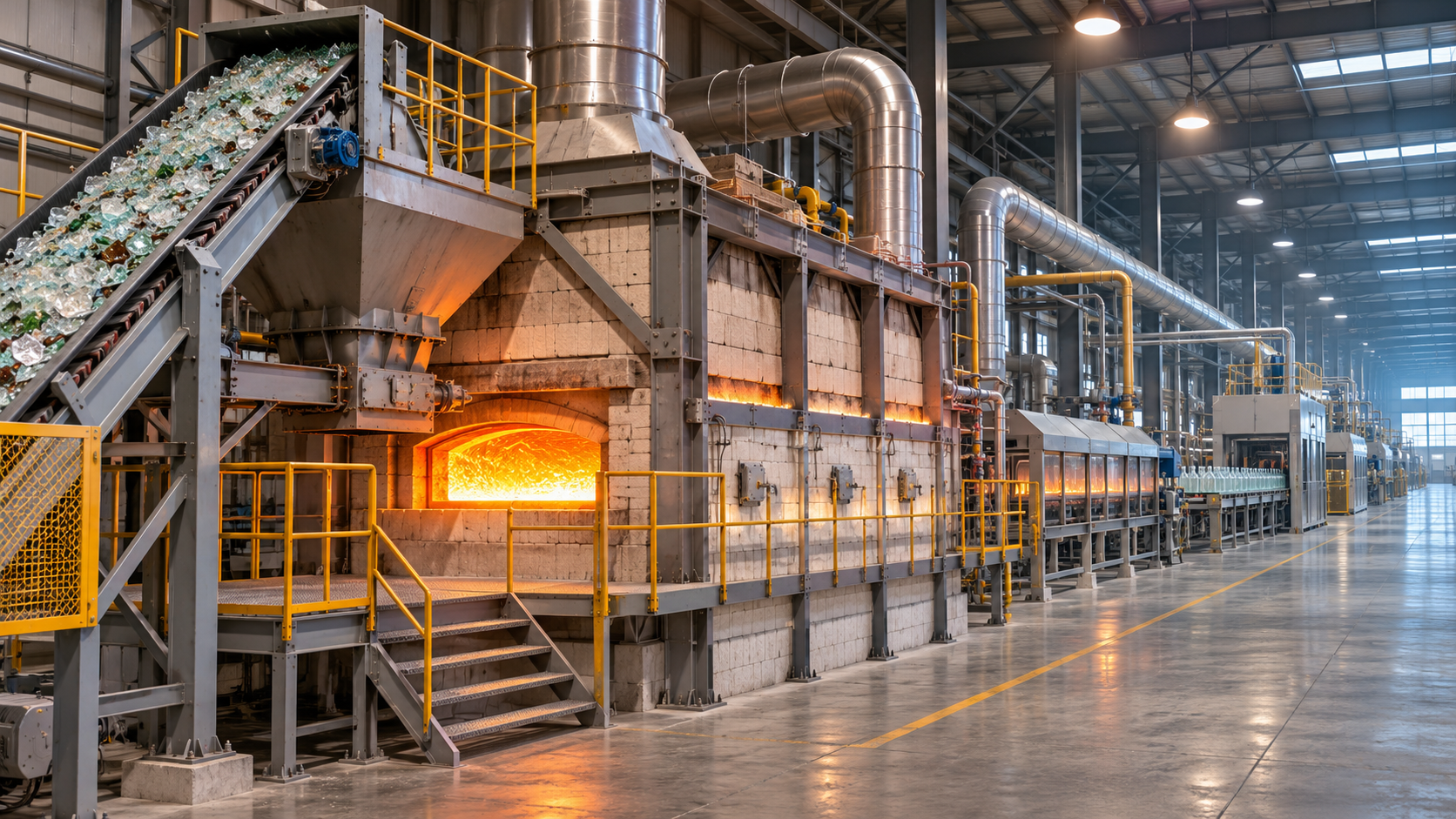
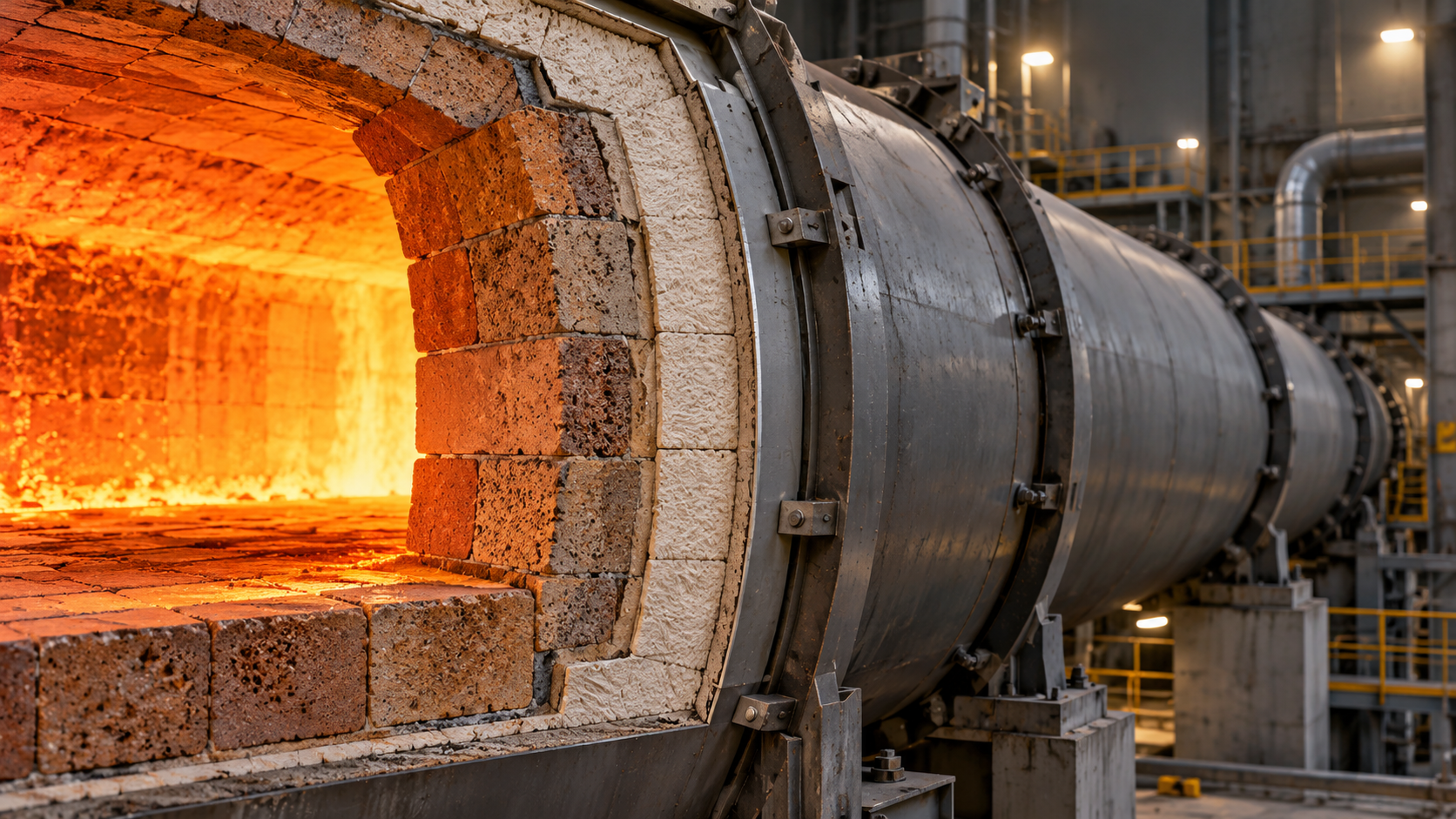
Thermal-cycling failures are concentrated at locations where temperature changes are both fast and uneven. In cement and lime systems, this can include kiln inlets, hood areas, burner zones, tertiary-air interfaces, and sections affected by unstable coating conditions. In glass production, severe local gradients may arise around ports, regenerators, charging areas, forehearth transitions, or during furnace heat-up and cooldown. Incineration systems face additional exposure from variable waste composition, fluctuating combustion conditions, ash deposition, and corrosive deposits that enter cracks once they form.
Extrusion and firing operations present a different pattern. Components may see repeated cycles because production schedules vary, molds are changed, or equipment is opened for inspection and maintenance. A material can remain structurally intact but lose dimensional stability, creating alignment problems, leakage paths, or product-quality variation before an obvious break occurs.
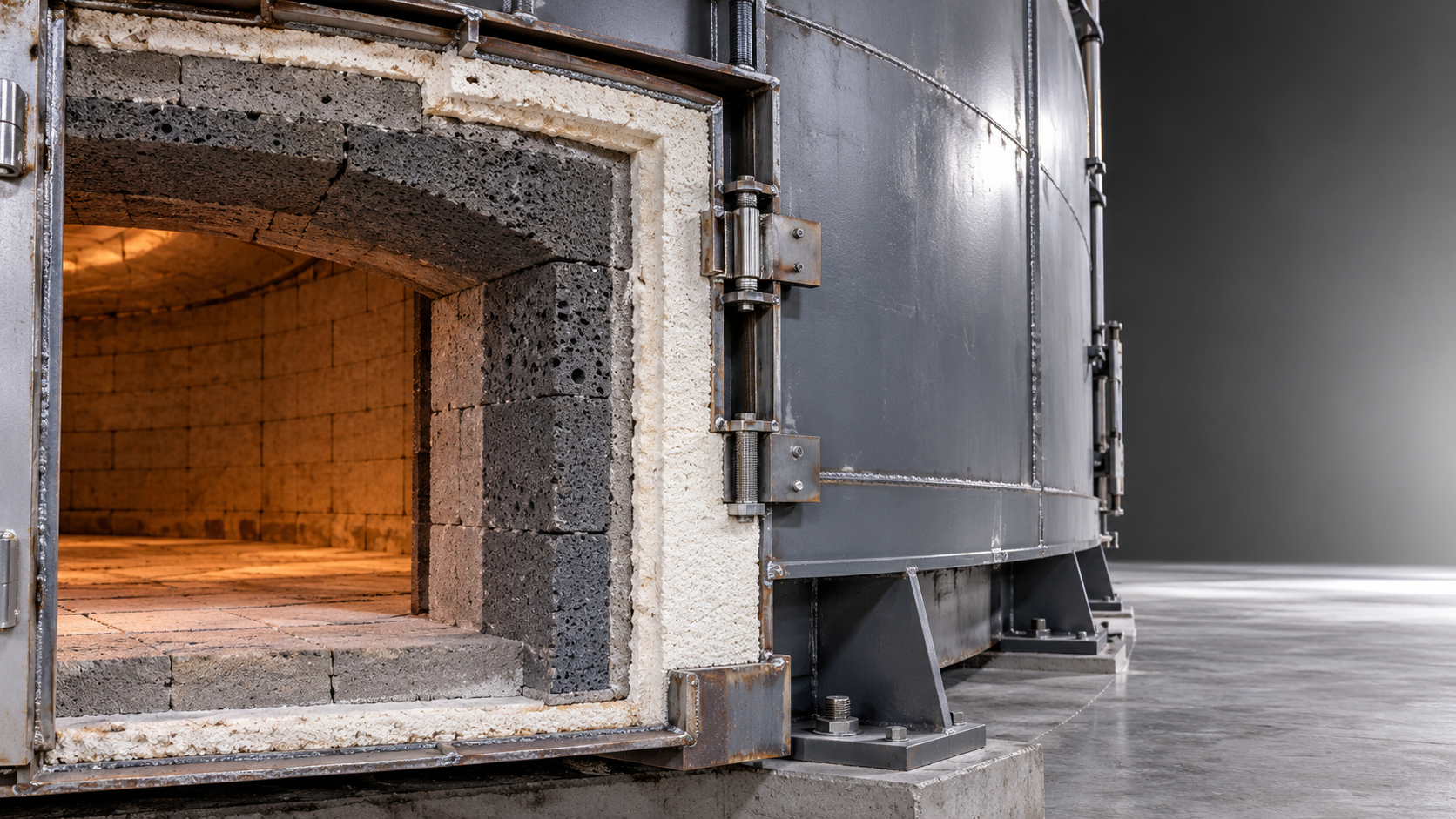
Transitions deserve special attention. These include interfaces between dense brick and insulating backup, castable repairs adjacent to older brickwork, burner blocks, expansion joints, anchors, door jambs, and regions where steel shells or hardware restrain expansion. A lining rarely expands as a free, uniform body. If neighboring components expand at different rates, stress can accumulate at the interface even under a controlled furnace cycle.
The material may not be the original cause
When spalling or cracking occurs, replacing the failed grade with a “more heat-resistant” product can be an expensive misdiagnosis. The damage may originate in operating conditions or installation quality rather than an inherently unsuitable material.
- Excessive heat-up or cool-down rates: A commissioning schedule that is acceptable for thin brickwork may be too aggressive for thick castables, repairs, or wet-installed materials.
- Residual moisture: Water trapped in castables or insulation can turn to steam during heat-up, causing explosive spalling that resembles thermal shock but has a different origin.
- Cold-air leakage: Door gaps, shell openings, and unplanned dilution air can create local cooling far sharper than the average furnace temperature suggests.
- Water contact: Washdowns, leaks, cooling-water failures, and wet feed contact can subject a hot surface to extreme localized shock.
- Mechanical constraint: Missing expansion allowance, bridged joints, improperly placed anchors, or a distorted shell can prevent normal movement.
- Chemical penetration: Slag, alkali compounds, chlorides, sulfur-bearing species, or molten glass can penetrate small cracks and weaken the structure from within.
The sequence of damage can help distinguish the cause. Broad surface peeling after a rapid shutdown points toward thermal shock. Cracking concentrated around anchors or repairs may indicate restraint or installation design. Deep damage accompanied by discoloration, deposits, or softened material can indicate chemical attack acting alongside cycling. In many industrial linings, failure is combined rather than singular: cycling opens cracks, process chemistry penetrates them, and mechanical wear removes the weakened surface.
Comparing common material approaches
Different material families manage rapid temperature cycling in different ways. The comparison should focus on failure trade-offs rather than broad claims of superiority.
Dense alumina and high-alumina systems
High-alumina refractories are widely used where elevated temperature strength, abrasion resistance, and chemical durability are important. Their cycling performance depends heavily on formulation, grain size distribution, bond system, porosity, and installed geometry. A dense high-alumina brick can be reliable in stable, hot service, yet suffer when exposed to abrupt cooling or strong temperature differentials. Grades engineered with more crack-arresting microstructure may improve thermal shock behavior, but this can involve compromises in other properties.
Silica-based materials
Silica refractories are associated with applications that maintain relatively stable high-temperature conditions. Their thermal behavior is strongly influenced by phase changes at particular temperature ranges. This does not make them unsuitable by definition, but it makes heat-up and cool-down discipline particularly important. A material that is effective in a stable zone should not automatically be moved into a position with repeated low-temperature cycling or frequent cold starts.
Basic refractories
Magnesia-based and related basic systems are selected where process chemistry demands compatibility with alkaline slags, clinker phases, or specific metallurgical conditions. Their cycling resistance varies substantially by formulation and bonding approach. In addition, hydration sensitivity during storage or shutdown can complicate their service behavior. Where thermal cycling and chemically aggressive deposits occur together, the selection process has to account for both mechanisms rather than treating thermal shock in isolation.
Castables, monolithics, and repair materials
Monolithic systems offer flexibility for complex shapes, repairs, and large continuous surfaces, but their performance is closely tied to mixing, placement, curing, drying, and heat-up practice. A castable that is chemically appropriate can fail early if moisture removal is rushed. Repair zones also face a difficult interface problem: new material may expand differently from aged surrounding lining, concentrating stress at the boundary. The repair design should consider joint geometry and transition conditions, not only material chemistry.
What to ask before selecting or approving a material
A useful evaluation begins with the temperature history, not the furnace nameplate. Record how quickly the location heats and cools, how often cycles occur, and whether the cycle is intentional or event-driven. The average process temperature is less informative than the local temperature swing and the time over which it happens.
For a proposed material, technical teams should ask for evidence relevant to the intended duty: thermal shock test method and conditions, thermal expansion behavior, thermal conductivity, modulus, density, cold and hot strength, permanent linear change, and chemical compatibility with the actual process atmosphere. A single laboratory thermal-shock figure should be interpreted carefully. Test specimens are smaller and more uniform than installed linings, and test conditions may not reproduce a plant’s temperature gradient, load, infiltration, or repair interfaces.
Installation details need equal scrutiny. Determine whether adequate expansion joints are specified; whether anchors, metal components, and shell conditions permit movement; whether dryout instructions fit the installed thickness; and whether the plant can follow the prescribed schedule during commissioning. The strongest material specification cannot compensate for a lining locked into place without room to expand.
It is also useful to classify the location by its dominant threat. A burner quarrel may need strong resistance to flame impingement and thermal shock. A waste-incineration wall may need cycling resistance combined with deposit and corrosion tolerance. A glass-contact component may prioritize chemical compatibility and dimensional stability. Once the failure environment is named precisely, material comparisons become more defensible.
Operating practices that protect lining life
Material selection matters, but operating discipline determines whether the selection can deliver its expected life. Controlled ramps reduce internal temperature gradients. Even when a process interruption is unavoidable, a managed cooldown may prevent the localized shock associated with opening doors, introducing excess air, or applying water to hot surfaces.
Inspection should move beyond visible hot-face damage. Early warning signs include widening joints, loose fragments, local shell-temperature changes, recurring hot spots, dust accumulation from spalling, and uneven wear around burner blocks or repair boundaries. Monitoring these patterns allows maintenance teams to address a limited damaged area before it creates shell exposure, process instability, or a forced shutdown.
Rapid temperature cycling does not make heat-resistant materials unreliable by default. It exposes whether the installed material system matches the real operating cycle. The most durable solution is usually the one that aligns material microstructure, lining design, installation practice, and thermal operation at the specific point of use. Where those conditions are treated as one decision, thermal cycling becomes a manageable design constraint rather than a recurring surprise.
Related News
 Ms. Elena RodriguezProcess Equipment Pricing: How to Compare Quotes and Total CostsMaster process equipment comparison pricing: compare supplier quotes, uncover hidden costs, and evaluate lifetime expenses to make a confident buying decision.Nov 17, 2026
 Prof. Marcus ChenGlobal Cement Industry Decarbonization: Key Technologies and Cost BarriersExplore global cement industry decarbonization technologies, cost barriers, and practical investment strategies to cut emissions while protecting competitiveness.Nov 16, 2026
 Structural Material AnalystChoosing Specification Preparation Support for North American ProjectsChoose specification preparation support North America projects can rely on. Compare technical expertise, compliance, interfaces, and supplier acceptance criteria.Nov 14, 2026
 Structural Material AnalystSpecialty Ceramic Extrusion: How Material Properties Affect FormingExplore how ceramic specialized material extrusion is shaped by particle size, binders, and solids loading—and learn to improve forming and reduce defects.Nov 13, 2026
 Ms. Elena RodriguezHigh-Pressure Molding Equipment Prices in Europe: What Affects the Total Cost?Explore high pressure molding equipment price Europe buyers can expect to assess, from tooling and installation to running costs. Compare quotes with confidence.Nov 12, 2026
 Structural Material AnalystChoosing a Vacuum Extrusion System: Capacity, Materials and Vacuum LevelsChoosing a vacuum extrusion system? Compare capacity, material behavior and vacuum levels to improve product quality and select the right equipment.Nov 11, 2026
 Optical Glass Tech FellowGlass Melting Innovations: Comparing Electric and Hybrid Furnace TechnologiesExplore glass melting innovations and compare electric and hybrid furnaces by energy use, emissions, glass quality and operating costs to find the right fit.Nov 10, 2026
 Thermal Energy ArchitectHow Thermal Barrier Technology for Kilns Reduces Heat LossDiscover how thermal barrier technology for kilns reduces heat loss, and learn how to select insulation and assess savings without compromising lining durability.Nov 09, 2026
 Prof. Marcus ChenGlobal Materials Trends: What North American Manufacturers Need to KnowExplore global material trends North America manufacturers need to know, from energy costs and supply chains to lower-carbon materials and smarter investment decisions.Nov 08, 2026
 Thermal Energy ArchitectSelecting Abrasion-Resistant Refractories for High-Wear Kiln LiningsExplore advanced refractory materials abrasion resistant enough for high-wear kiln linings. Compare wear mechanisms, thermal stability, installation and lifecycle costs.Nov 06, 2026
 Dr. Alistair VaughnIndustrial Energy Efficiency Certification: ISO 50001 Requirements for PlantsExplore industrial energy efficiency certification with ISO 50001. Learn how plants define scope, measure performance and prepare credible evidence for audits.Nov 05, 2026
 Ms. Elena RodriguezWhat Is an Industrial Intelligence Database and How Is It Used?Discover how an industrial intelligence database helps researchers map markets, track projects, compare technologies, and assess evidence with confidence.Nov 04, 2026
 Ms. Elena RodriguezIndustrial Material Pricing: How Freight and Order Volume Affect QuotesExplore industrial material pricing and learn how freight, order volume, and inventory costs affect quotes. Compare suppliers and make smarter purchasing decisions.Nov 03, 2026
 Structural Material AnalystSingle- vs. Twin-Screw Extrusion Systems: Which Suits Your Material?Choose the right specialized extrusion systems screw type for your material. Compare single- and twin-screw options to improve quality and control costs.Nov 02, 2026
 Thermal Energy ArchitectChoosing Thermal Barrier Materials for Kilns: Temperature and Heat LossExplore thermal barrier materials for kilns and learn how to balance temperature resistance, heat loss, durability and operating costs when selecting a lining.Nov 01, 2026
 Ms. Elena RodriguezSupplier Reference Platform Pricing: Fees and Contract Terms to CompareCompare supplier reference platform pricing, hidden fees, verification costs and contract terms to choose the right solution for your sourcing team.Oct 31, 2026
 Ms. Elena RodriguezSupplier Comparison Metrics: How to Score Cost, Quality, and DeliveryUse supplier comparison metrics to score cost, quality, and delivery with a practical weighted scorecard. Make more confident equipment sourcing decisions.Oct 30, 2026
 Ms. Elena RodriguezWhat Does Industrial Waste Heat Recovery Cost, and When Does It Pay Back?Understand industrial waste heat recovery cost, from equipment and installation to net savings. Learn how to compare quotes, assess risks, and calculate realistic payback before investing.Oct 29, 2026
 Thermal Energy ArchitectChoosing Industrial Waste-to-Energy Equipment by Waste Moisture and Heating ValueChoose industrial waste to energy equipment by moisture and heating value. Compare technologies, fuel needs, and supplier guarantees to make a confident investment.Oct 28, 2026
 Thermal Energy ArchitectChoosing Industrial Kiln Insulation for High Heat and Repeated Thermal CyclingExplore high temperature industry solutions for kiln insulation under repeated thermal cycling. Compare materials, reduce heat loss, and select the right lining for your operating conditions.Oct 27, 2026

Related News
- 00
0000-00
Can Heat-Resistant Materials Fail After Rapid Temperature Cycling? - 00
0000-00
How Often Should High-Temperature Linings Be Inspected? - 00
0000-00
How to Evaluate Refractory Production Lines for Output, Quality, and Energy Use - 00
0000-00
What Determines Refractory Production Line Price in a Turnkey Plant Project? - 00
0000-00
How to Evaluate a Silicate Production Line for Capacity, Energy Use, and Product Quality
0000-00
Weekly Insights
Stay ahead with our curated technology reports delivered every Monday.