
Cement Production Innovations That Improve Clinker Quality and Reduce Energy Loss




Why cement production innovations now shape daily plant decisions
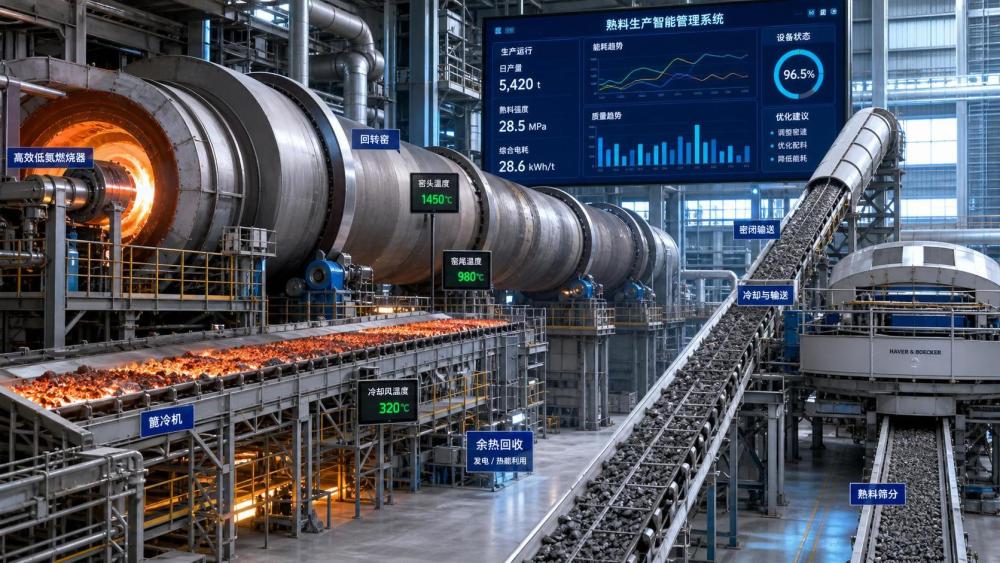
Cement production innovations now influence more than fuel savings.
They affect clinker reactivity, coating stability, refractory life, emission control, and the ability to run through variable feed conditions.
In practice, the most useful upgrades are rarely the most visible ones.
A new burner, an improved cooler, or better online analytics only works when the kiln system around it can absorb the change.
That is why cement production innovations should be judged by operating scenario, not by brochure claims.
This is also where a platform like CF-Elite adds value.
Its view across cement plants, industrial kilns, refractories, and thermal management makes it easier to connect process chemistry with energy behavior.
For plants chasing lower heat loss and steadier clinker quality, that cross-sector perspective matters.
The same upgrade behaves differently under different kiln realities
Not every line loses energy in the same place.
Some plants struggle with unstable raw meal chemistry.
Others lose efficiency through poor flame shape, tertiary air imbalance, or cooler underperformance.
There are also plants where clinker quality drifts because instruments lag behind process changes.
In actual operation, cement production innovations should answer one question first.
Is the plant trying to correct a thermal bottleneck, a chemistry bottleneck, or a control bottleneck?
A line with high alternative fuel use may need stronger combustion control and residence time discipline.
A line using variable limestone may benefit more from raw mix stabilization and faster feedback loops.
Treating those situations as identical usually creates disappointing results.
Where kiln optimization delivers the clearest return
One common scenario is a plant producing acceptable volume but inconsistent clinker mineralogy.
Here, kiln optimization matters less for headline capacity and more for burnability control.
The judging points are flame momentum, heat profile, calcination stability, and the consistency of feed movement through the burning zone.
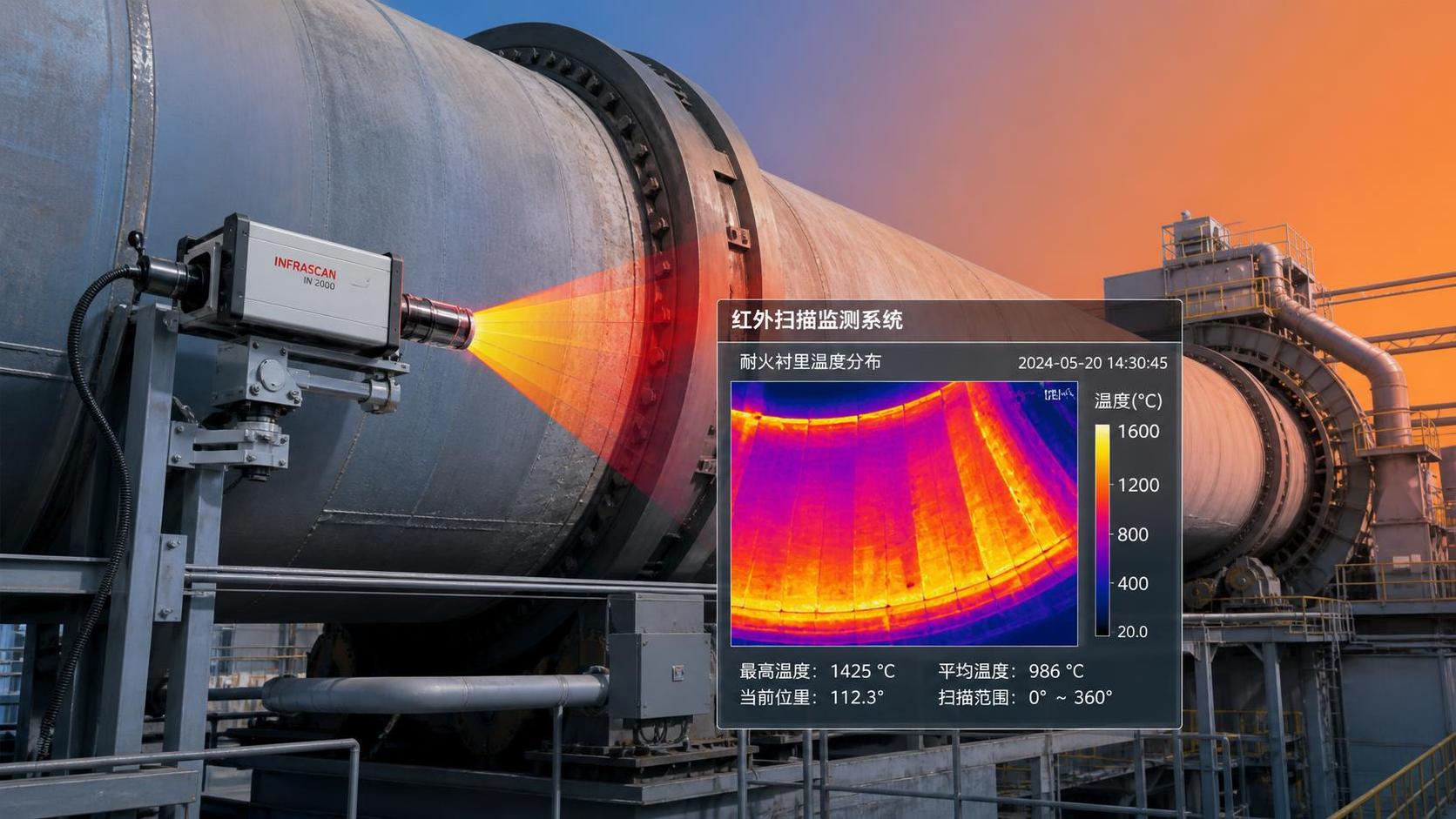
In this setting, cement production innovations such as advanced burner control, shell temperature mapping, and process digital twins can tighten the thermal window.
That usually leads to more uniform alite formation and fewer overburned or underburned nodules.
A different scenario appears in lines already running close to design capacity.
There, the aim is often to reduce specific heat consumption without harming coating stability.
The better approach is selective optimization.
Improve combustion air distribution, seal leakage points, and synchronize burner settings with cooler recovery before replacing major hardware.
What to examine before changing the kiln system
- Whether free lime variation comes from chemistry drift or flame instability.
- Whether false air is raising fuel demand more than burner inefficiency.
- Whether refractory wear is changing the thermal profile faster than operators can respond.
- Whether the cooler is recovering enough heat to justify kiln-side tuning.
When raw mix control matters more than adding heat
Another high-frequency situation is the plant that keeps raising fuel input to solve a clinker quality problem.
Often, the real issue starts earlier.
If limestone variability, moisture swings, or poor blending distort the kiln feed, extra heat only masks the instability.
In these cases, cement production innovations in proportioning, online analyzers, and predictive raw mix adjustment create better results than aggressive burning.
The practical goal is a feed that behaves predictably inside the calciner and kiln.
That reduces thermal shock, lowers ring risk, and helps maintain stable liter weight and strength development.
This matters even more where supply chains force plants to use mixed quarry sources.
In those lines, the best cement production innovations are usually the ones that shorten the time between feed variation and process correction.
Plants using alternative fuels need a different judgment framework
Alternative fuel projects are often presented as direct carbon wins.
Operationally, they are more demanding.
Fuel particle size, moisture, ash chemistry, and feeding point all reshape the heat balance.
That means cement production innovations must be checked against combustion completeness and clinker chemistry together.
A plant co-processing waste-derived fuel may accept higher control complexity if the calciner has enough mixing quality.
A line with limited gas retention time may need a narrower fuel specification instead of a higher substitution rate.
This is where insight from industrial incineration and thermal destruction systems becomes useful.
CF-Elite’s broader intelligence model helps compare combustion behavior across related high-temperature sectors.
That broader lens reduces the risk of copying a fuel strategy from a plant with very different retention and mixing conditions.
Digital monitoring works best when paired with clear process thresholds
Many plants invest in dashboards but still react late.
The reason is simple.
Data without operating thresholds does not create stable clinker.
The more useful cement production innovations combine sensors with decision logic.
Examples include alerts linked to coating loss patterns, cooler bed anomalies, or unusual NOx and CO relationships.
This is especially effective in plants where process shifts happen faster than lab confirmation.
Digital tools are also stronger when tied to maintenance planning.
A kiln shell scanner, for example, becomes far more valuable when its trends guide refractory shutdown timing.
Without that link, the tool may inform but not improve outcomes.
Misjudgments that often weaken clinker quality gains
A frequent mistake is treating all heat losses as burner problems.
In many lines, cooler inefficiency or air infiltration causes the larger penalty.
Another mistake is evaluating cement production innovations only by short payback.
An upgrade that improves coating stability and refractory life may outperform a faster project over a full operating cycle.
There is also a tendency to copy solutions from similar kiln sizes.
Yet feed chemistry, cooler design, and fuel mix can make two similar lines behave very differently.
The safer approach is to compare heat balance, material variability, and control response speed before selecting a retrofit path.
Points that are often overlooked before implementation
- Whether existing operators can act on the new data in real time.
- Whether the downstream cooler or finish grinding circuit limits the gain.
- Whether maintenance intervals will shorten during the transition period.
- Whether emission limits change the usable optimization window.
A practical route for matching innovations to plant conditions
The strongest results usually come from sequencing, not from one dramatic retrofit.
Start by separating thermal losses, chemistry instability, and control delay as different causes.
Then rank cement production innovations by how directly they address the limiting factor.
For some lines, the first move is raw mix stabilization.
For others, it is cooler recovery, seal integrity, or burner modernization.
Where fuel diversification is planned, confirm retention time, gas mixing quality, and ash compatibility before scaling substitution targets.
It also helps to review kiln, refractory, and monitoring decisions together rather than as isolated projects.
That integrated view reflects the broader industrial logic CF-Elite tracks across high-temperature production systems.
A useful next step is to map one plant line against three questions.
Where is energy actually being lost, where does clinker variability begin, and which innovation can be implemented without shifting risk elsewhere?
That kind of disciplined comparison usually leads to better clinker quality and more durable energy savings than chasing isolated upgrades.
Related News
 Thermal Energy ArchitectHow European Plants Can Evaluate Energy Recovery Equipment for High-Temperature ProcessesIndustrial energy recovery equipment Europe: learn how high-temperature plants can assess waste-heat sources, integration risks, lifecycle value, and reliable recovery routes.Sep 20, 2026
 Thermal Energy ArchitectIndustrial Furnace Process Optimization: Reducing Fuel Use Without Sacrificing ThroughputIndustrial process optimization furnace strategies that cut fuel use while protecting throughput. Explore combustion control, heat recovery, refractory performance, and data-driven efficiency gains.Sep 19, 2026
 Ms. Elena RodriguezWhat Drives High-Pressure Extrusion Equipment Cost in Industrial Projects?High pressure extrusion equipment cost explained: compare pressure, die design, automation, wear, energy, and installation factors for smarter industrial investments.Sep 18, 2026
 Thermal Energy ArchitectHow to Size a Waste Heat Recovery Exchanger for High-Temperature Kiln Exhaust?Waste heat recovery exchanger sizing for high-temperature kiln exhaust: balance recoverable duty, fouling, corrosion limits, pressure drop, and reliable heat use.Sep 17, 2026
 Thermal Energy ArchitectWhy Heat-Resistant Materials Lose Abrasion Resistance at High TemperaturesHeat-resistant materials abrasion resistance can decline at high temperatures. Discover the thermal, chemical, and mechanical causes of wear—and how to choose longer-lasting linings.Sep 16, 2026
 Thermal Energy ArchitectHow to Evaluate a Thermal Energy Optimization Company for High-Temperature PlantsChoose a thermal energy optimization company with proven process expertise, measurable savings, and reliable delivery for high-temperature plants. Learn what to assess.Sep 15, 2026
 Thermal Energy ArchitectRotary Kiln Efficiency: How Feed Rate, Fuel Use, and Heat Loss Affect OutputRotary kiln efficiency explained: discover how feed rate, fuel use, heat loss, combustion, and cooling performance shape output, quality, and energy costs.Sep 14, 2026
 Thermal Energy ArchitectHow to Select Heat-Resistant Materials That Maintain Abrasion Resistance in KilnsHeat-resistant materials abrasion resistance: learn how to select kiln linings that withstand heat, wear, thermal cycling, and chemical attack for longer service life.Sep 13, 2026
 Thermal Energy ArchitectHow Rotary Kiln Automation Improves Temperature Control and Fuel EfficiencyRotary kiln technology automation enhances temperature control, stabilizes combustion, and improves fuel efficiency with smarter data, predictive control, and safer operations.Sep 12, 2026
 Silicate Process EngineerCement Plant Emission Control: Selecting Systems for Dust, NOx, and SO2 LimitsCement plant emission control guide: compare dust collectors, NOx reduction, and SO2 systems for reliable compliance across kiln modes, fuel changes, and operating upsets.Sep 11, 2026
 Thermal Energy ArchitectSelecting Abrasion-Resistant High-Temperature Materials for Kiln and Conveyor Wear ZonesHigh-temp material engineering guide to abrasion-resistant kiln and conveyor solutions—match wear, heat, chemistry, and installation design for longer service life.Sep 10, 2026
 Dr. Alistair VaughnIndustrial Process Engineering: How to Map Processes for Safer, More Efficient PlantsIndustrial process engineering reveals bottlenecks, safety risks, and energy losses through practical process mapping for safer, more efficient plants.Sep 09, 2026
 Optical Glass Tech FellowHow to Evaluate a Glass Annealing Equipment Manufacturer for Production StabilityChoose a glass annealing equipment manufacturer with proven thermal uniformity, reliable controls, lifecycle value, and responsive service for stable production.Sep 08, 2026
 Prof. Marcus ChenThermal Energy Architecture in North America: Strategies for Lower Building Energy UseThermal energy architecture North America helps project leaders cut building energy use through stronger envelopes, right-sized HVAC, storage, and smart commissioning.Sep 07, 2026
 Ms. Elena RodriguezHow Should Buyers Evaluate Building Material Industry Intelligence Pricing?Building material industry intelligence pricing: learn how to compare coverage, technical depth, and ROI to choose intelligence that reduces procurement risk.Sep 07, 2026
 Ms. Elena RodriguezHow to Use Building Material Intelligence Data for Market and Investment DecisionsBuilding material industry intelligence data helps leaders evaluate demand, costs, regulation, capacity, and technology to make smarter market and investment decisions.Sep 05, 2026
 Thermal Energy ArchitectHow PLC Control Improves Energy Efficiency and Temperature Stability in KilnsEnergy efficient kilns PLC control improves temperature stability, cuts fuel waste, and optimizes combustion, draft, and material flow. Explore proven strategies for smarter kiln modernization.Sep 04, 2026
 Optical Glass Tech FellowEuropean Glass Melting Processes: Furnace Choices, Energy Use, and Quality ControlGlass melting process Europe: explore furnace choices, energy efficiency, cullet strategy, and quality control to improve output, compliance, and long-term glass performance.Sep 03, 2026
 Thermal Energy ArchitectWhat Determines Refractory Lining Monitoring Price for Industrial Kilns?Refractory lining monitoring price depends on kiln size, sensor technology, installation, software, and support. Compare total lifecycle costs and choose the right solution.Sep 02, 2026
 Silicate Process EngineerCement Production System Costs: A Plant Buyer’s Guide to Budgeting and ROICement production systems cost planning made clear: compare CAPEX, operating costs, compliance, and ROI to build a resilient, profitable cement plant investment.Sep 01, 2026



Related News
- 00
0000-00
Cement Plant Emission Control: Selecting Systems for Dust, NOx, and SO2 Limits - 00
0000-00
Cement Production System Costs: A Plant Buyer’s Guide to Budgeting and ROI - 00
0000-00
How Kiln Heat Recovery Systems Cut Fuel Use in Cement and Lime Production - 00
0000-00
How to Evaluate Cement Production Plants in the Middle East for Capacity, Fuel Flexibility, and ROI - 00
0000-00
What Drives Cement Plant Upgrade Cost and How to Estimate ROI Before Investing
Weekly Insights
Stay ahead with our curated technology reports delivered every Monday.