
What makes glass production automation worth upgrading?




For technical evaluators, the value of glass production automation is no longer limited to labor reduction. It now determines melt stability, annealing precision, energy intensity, defect control, and carbon performance across the entire float or specialty glass line.
As digital twins, inline sensors, AI-based process control, and predictive maintenance mature, upgrading automation becomes a strategic decision tied to yield, compliance, and long-term equipment competitiveness.
This article examines what makes glass production automation worth upgrading and how to assess its real operational impact across high-temperature silicate production environments.
What does glass production automation really include today?
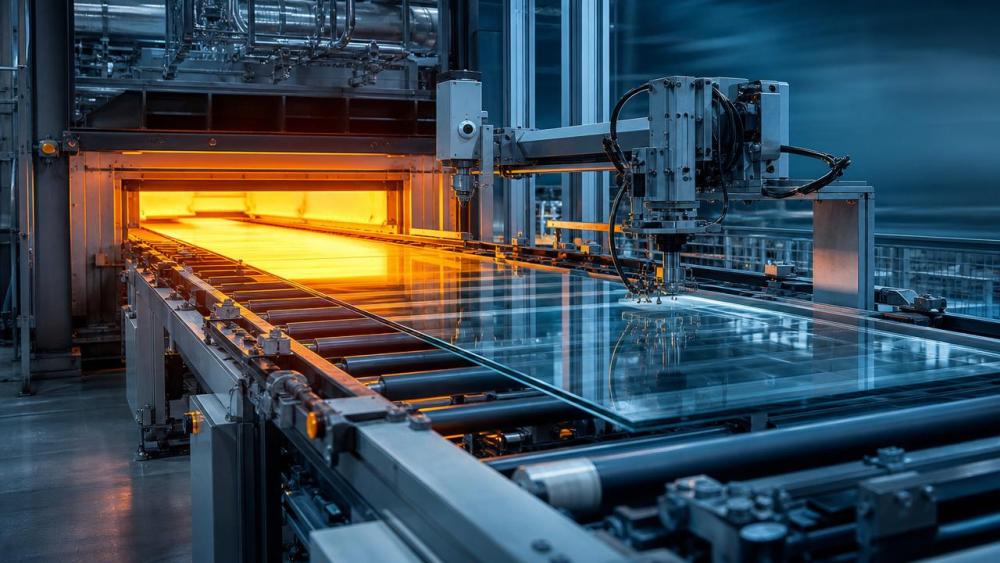
Modern glass production automation covers far more than basic programmable logic control. It links furnace control, batch handling, forming, annealing, inspection, packaging, and energy systems.
In a float line, automation stabilizes batch charging, combustion ratio, tin bath atmosphere, ribbon thickness, lehr temperature, and cutting synchronization.
In specialty glass, the same concept extends to ultra-thin substrates, optical glass, photovoltaic glass, container glass, and technical glass products.
The upgrade value appears when each control island becomes part of one process intelligence layer. Data stops being fragmented and starts supporting decisions.
A strong glass production automation system usually includes sensors, control algorithms, SCADA, MES connectivity, recipe management, historian databases, and quality analytics.
Digital twins add another layer. They simulate thermal behavior, residence time, energy balance, and expected quality response before operators adjust the live process.
For CF-Elite’s high-temperature intelligence scope, this matters because glass lines sit at the intersection of material chemistry, thermal management, and carbon reduction.
Why does glass production automation improve melt stability?
Melt stability is the first reason many plants consider glass production automation upgrades. Furnace variation quickly becomes downstream quality variation.
Manual correction often reacts too late. Automated control detects smaller deviations in temperature, pressure, fuel flow, oxygen balance, and batch feed consistency.
A stable melt reduces bubbles, stones, cords, color drift, and thickness instability. These defects directly affect yield and customer acceptance.
Advanced glass production automation also improves furnace atmosphere control. This is critical where redox balance, volatilization, and surface quality must remain predictable.
Oxy-fuel combustion, electric boosting, and hybrid heating create new control complexity. Automation helps coordinate these systems without overcorrecting one variable.
The practical benefit is not only fewer defects. It is also a narrower process window, less emergency adjustment, and more consistent production campaigns.
- More stable furnace temperature profiles.
- Lower risk of batch carryover and unmelted inclusions.
- Better coordination between melting and forming zones.
- Faster response to raw material variation.
When glass production automation is designed well, it converts furnace behavior into measurable, repeatable, and optimizable operating patterns.
How does automation affect energy use and carbon performance?
Energy intensity is a decisive upgrade driver. Glass melting remains one of the most energy-demanding operations in foundation material production.
Glass production automation improves energy performance by controlling combustion efficiency, waste heat recovery, electric boosting, cullet ratio, and furnace loading balance.
Small deviations can carry large costs. Excess air, poor flame geometry, unstable pressure, or uneven pull rate may increase fuel consumption silently.
Automated energy dashboards help expose these losses. They connect production output, defect rate, specific energy consumption, and emissions intensity.
This is especially important as carbon reporting becomes more detailed. Plants increasingly need traceable evidence, not only annual estimates.
Glass production automation supports this shift by recording process data linked to fuel use, electricity demand, oxygen consumption, and production tonnage.
For hybrid furnaces, automation helps decide when electric assistance is economically and thermally justified. It also prevents unstable transitions between energy modes.
The result is more than lower utility cost. It strengthens compliance, decarbonization planning, and competitiveness in green building material supply chains.
When is a glass production automation upgrade worth the investment?
An upgrade is worth considering when process variation, energy loss, downtime, or quality claims create repeated hidden costs.
The decision should not begin with software features. It should begin with operational pain points and measurable production constraints.
Glass production automation is usually most valuable when a line has complex recipes, high defect sensitivity, long furnace campaigns, or strict customer specifications.
It is also valuable when skilled process knowledge is concentrated in too few individuals. Automation helps preserve that knowledge in controlled workflows.
A practical assessment can use the following decision signals.
Return on investment should include scrap reduction, energy savings, downtime avoidance, labor safety, compliance efficiency, and longer asset life.
Glass production automation can also protect market position. Consistent quality supports higher-value products and reduces risk in demanding applications.
What risks and misconceptions should be avoided?
One common mistake is treating glass production automation as an IT project. It is a process engineering project supported by digital tools.
If furnace physics, glass chemistry, and forming logic are not understood, even advanced software may produce weak results.
Another misconception is expecting immediate full autonomy. Most successful upgrades move in stages, from visibility to advisory control, then closed-loop optimization.
Data quality is another risk. Bad sensor calibration, inconsistent tags, and missing maintenance records limit automation value.
Cybersecurity also matters. Connected furnaces, inspection systems, and maintenance platforms require controlled access and segmentation.
- Do not automate unstable practices without reviewing root causes.
- Do not ignore operator interface design.
- Do not separate energy targets from quality targets.
- Do not overlook spare parts and lifecycle support.
The best glass production automation projects combine process modeling, plant data, maintenance discipline, and realistic change management.
How should an upgrade roadmap be planned?
A strong roadmap begins with a baseline study. Current defect rates, pull rate variation, energy intensity, downtime, and alarm history should be reviewed.
Next, critical control points should be ranked. Furnace, forming, annealing, inspection, and packaging rarely need equal investment at the same time.
Glass production automation should then be phased around production risk. Pilot areas can prove value before full-line deployment.
- Map existing control architecture and data gaps.
- Define measurable targets for quality, energy, and uptime.
- Upgrade sensors and historian reliability first.
- Deploy analytics, dashboards, and advisory control.
- Expand into closed-loop optimization where stable.
Integration with MES, ERP, laboratory systems, and emissions monitoring should be planned early. Later integration often costs more and disrupts operations.
CF-Elite’s intelligence perspective emphasizes linking thermal parameters, reaction kinetics, and carbon strategy. That linkage defines the strongest upgrade cases.
FAQ: Key questions about glass production automation upgrades
Conclusion: What makes the upgrade worthwhile?
Glass production automation becomes worth upgrading when it improves decisions, not just machine responses.
The strongest value appears where thermal stability, defect reduction, energy control, and carbon reporting are connected in one operational framework.
A well-planned upgrade strengthens yield, compliance, safety, and long-term equipment competitiveness across float glass and specialty glass production.
The next step is to audit current process data, rank loss drivers, and define a phased glass production automation roadmap with measurable targets.
For high-temperature industries, this is where intelligence becomes practical: stable furnaces, efficient energy use, reliable quality, and stronger green material performance.
Related News
 Optical Glass Tech FellowHow to Evaluate a Glass Annealing Equipment Manufacturer for Production StabilityChoose a glass annealing equipment manufacturer with proven thermal uniformity, reliable controls, lifecycle value, and responsive service for stable production.Sep 08, 2026
 Prof. Marcus ChenThermal Energy Architecture in North America: Strategies for Lower Building Energy UseThermal energy architecture North America helps project leaders cut building energy use through stronger envelopes, right-sized HVAC, storage, and smart commissioning.Sep 07, 2026
 Ms. Elena RodriguezHow Should Buyers Evaluate Building Material Industry Intelligence Pricing?Building material industry intelligence pricing: learn how to compare coverage, technical depth, and ROI to choose intelligence that reduces procurement risk.Sep 07, 2026
 Ms. Elena RodriguezHow to Use Building Material Intelligence Data for Market and Investment DecisionsBuilding material industry intelligence data helps leaders evaluate demand, costs, regulation, capacity, and technology to make smarter market and investment decisions.Sep 05, 2026
 Thermal Energy ArchitectHow PLC Control Improves Energy Efficiency and Temperature Stability in KilnsEnergy efficient kilns PLC control improves temperature stability, cuts fuel waste, and optimizes combustion, draft, and material flow. Explore proven strategies for smarter kiln modernization.Sep 04, 2026
 Optical Glass Tech FellowEuropean Glass Melting Processes: Furnace Choices, Energy Use, and Quality ControlGlass melting process Europe: explore furnace choices, energy efficiency, cullet strategy, and quality control to improve output, compliance, and long-term glass performance.Sep 03, 2026
 Thermal Energy ArchitectWhat Determines Refractory Lining Monitoring Price for Industrial Kilns?Refractory lining monitoring price depends on kiln size, sensor technology, installation, software, and support. Compare total lifecycle costs and choose the right solution.Sep 02, 2026
 Silicate Process EngineerCement Production System Costs: A Plant Buyer’s Guide to Budgeting and ROICement production systems cost planning made clear: compare CAPEX, operating costs, compliance, and ROI to build a resilient, profitable cement plant investment.Sep 01, 2026
 Dr. Alistair VaughnWhat Should a Process Technology Database Track for High-Temperature Plants?Process technology database essentials for high-temperature plants: track thermal profiles, feed chemistry, refractory wear, emissions, energy, and maintenance for safer, data-driven decisions.Aug 31, 2026
 Ms. Elena RodriguezHow to Evaluate a Silicate Processing Equipment Manufacturer for Plant ProjectsSilicate processing equipment manufacturer selection: assess process fit, guarantees, energy, compliance, delivery risk, and lifecycle support for dependable plant performance.Aug 30, 2026
 Dr. Alistair VaughnHow to Specify Custom Agricultural Processing Equipment for Throughput and HygieneEquipment customization services for agricultural processing: learn to specify hygienic, high-throughput lines that improve yield, reliability, and long-term efficiency.Aug 29, 2026
 Dr. Alistair VaughnHow to Select Process Plant Equipment for High-Temperature, Abrasive Production LinesProcess plant equipment selection for high-temperature, abrasive lines: reduce downtime, improve durability, and optimize lifecycle performance.Aug 28, 2026
 Silicate Process EngineerHow Kiln Heat Recovery Systems Cut Fuel Use in Cement and Lime ProductionKiln heat recovery helps cement and lime plants cut fuel use, improve thermal stability, and build practical, reliable decarbonization strategies.Aug 27, 2026
 Ms. Elena RodriguezProcess Equipment Comparison: Which Metrics Matter Most for Reliable Selection?Process equipment comparison made practical: discover which metrics truly drive reliable selection, from energy efficiency and control stability to wear life, maintainability, and uptime.Aug 26, 2026
 Ms. Elena RodriguezWhat Buyers Should Check Before Sourcing Precision Alloy Bars for Critical PartsPrecision Alloy Bars buyers should verify grade, chemistry, tolerances, surface quality, traceability, and lead time before sourcing for critical parts. Learn what prevents costly machining and reliability risks.Aug 27, 2026
 Ms. Elena RodriguezHow to Evaluate Thermal Management Solutions Insulation for High-Heat Industrial SystemsThermal management solutions insulation: learn how to assess high-heat industrial systems by thermal performance, durability, lifecycle cost, and supplier data for smarter decisions.Aug 25, 2026
 Ms. Elena RodriguezWhat Drives Waste Recycling Cost in Industrial Projects and How to Estimate It?Waste recycling cost in industrial projects depends on composition, moisture, transport, pre-treatment, and compliance. Learn how to estimate it accurately and compare suppliers with confidence.Aug 24, 2026
 Silicate Process EngineerHow to Evaluate Cement Production Plants in the Middle East for Capacity, Fuel Flexibility, and ROIcement production plants Middle East: Learn how to assess true capacity, fuel flexibility, and ROI risks to identify resilient assets and smarter investment opportunities.Aug 23, 2026
 Structural Material AnalystHow to Evaluate Lightweight Material Machinery for Output, Energy Use, and Product QualityLightweight material machinery evaluation guide: compare stable output, energy use, and product quality to choose equipment that cuts waste, lowers costs, and improves production confidence.Aug 22, 2026
 Material Heat-Resist ExpertWhat Determines Refractory Production Line Price in a Turnkey Plant Project?Refractory production line price depends on raw materials, forming method, kiln and drying design, automation, utilities, and scope. Learn what really drives turnkey plant cost before you invest.Aug 21, 2026

Related News
- 00
0000-00
How to Evaluate a Glass Annealing Equipment Manufacturer for Production Stability - 00
0000-00
European Glass Melting Processes: Furnace Choices, Energy Use, and Quality Control - 00
0000-00
How Glass Melting Furnace Design Impacts Energy Use and Glass Quality - 00
0000-00
How Can Glass Manufacturing Technology Improve Furnace Efficiency and Cut Energy Costs? - 00
0000-00
How to Evaluate Continuous Glass Annealing Equipment for Stable Throughput?
Weekly Insights
Stay ahead with our curated technology reports delivered every Monday.