
What glass production automation fixes in daily operations




In daily plant operations, glass production automation fixes more than isolated bottlenecks—it improves yield stability, energy control, traceability, and response speed across the entire line. For business decision-makers facing rising quality demands, labor pressure, and decarbonization targets, understanding where automation creates measurable operational value is becoming essential to smarter investment and long-term competitiveness.
For most decision-makers, the core question is not whether automation matters. It is where automation solves recurring operating problems, how fast value appears, and which upgrades reduce risk without disrupting the line.
The search intent behind this topic is highly practical. Readers want to connect automation with daily plant realities such as defect reduction, operator dependence, process instability, maintenance delays, rising energy costs, and inconsistent production data.
That means a useful article should not stay at the level of Industry 4.0 slogans. It should explain what automation fixes in normal operations, what business outcomes follow, and how leaders can judge investment priorities by production pain point.
What decision-makers are really asking about glass production automation
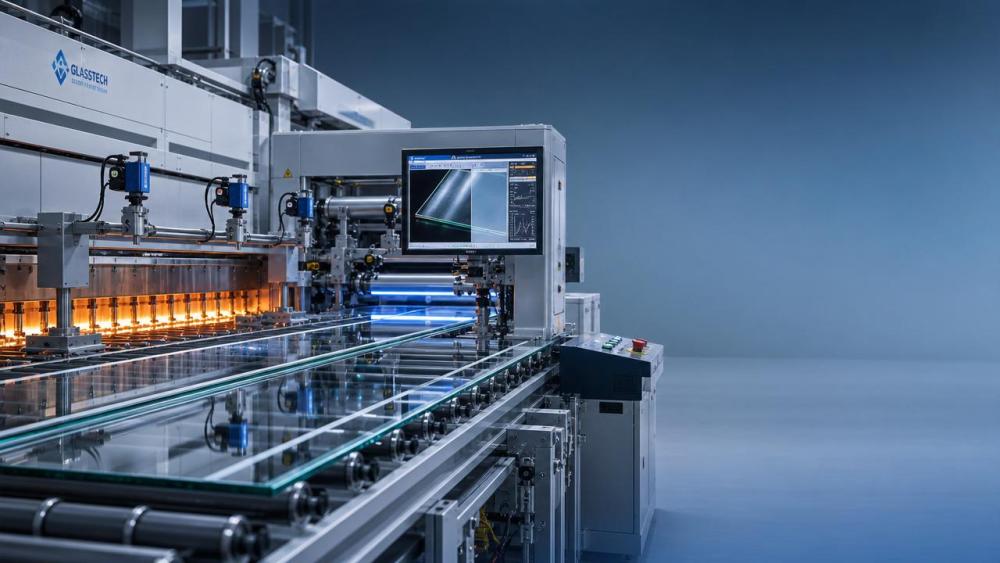
Business leaders in glass manufacturing rarely begin with technology alone. They begin with symptoms: too much variation between shifts, too many manual corrections, too many unplanned stops, and too little confidence in real-time process visibility.
In float, container, architectural, solar, or specialty glass production, daily operations are sensitive to furnace conditions, batch consistency, forming stability, annealing discipline, and inspection accuracy. Small variations can create disproportionate quality losses and energy waste.
As a result, the real value of glass production automation is operational correction. It addresses repetitive weaknesses that humans alone struggle to manage consistently across 24/7 high-temperature, high-speed, and quality-sensitive production environments.
For executives, the key concerns are straightforward: Will automation improve throughput and quality at the same time? Will it lower energy intensity? Can it reduce dependence on hard-to-replace operators? And can it provide traceable data for faster decisions?
These questions matter even more as customers demand tighter specifications, regulators raise environmental expectations, and labor markets make experienced process talent harder to recruit and retain. Automation is increasingly a resilience decision, not just an efficiency project.
It fixes unstable process control that quietly erodes yield every day
One of the most common hidden losses in glass plants is process drift. Temperatures, feed rates, pressure conditions, line speeds, and cooling parameters may remain within acceptable ranges while still moving away from optimum performance.
Manual supervision can catch major problems, but it often struggles with subtle deviations across a continuous line. Automation improves this by coordinating sensors, control logic, and setpoint adjustments to keep operations closer to target conditions.
In melting and forming, this can mean more stable furnace control, better combustion balance, tighter viscosity-related outcomes, and fewer disturbances transferred downstream. In annealing, it can mean more consistent temperature profiles and lower residual stress risk.
The daily result is not only fewer dramatic failures. It is the reduction of minor instability that causes recurring yield leakage: edge defects, thickness variation, optical inconsistency, reject growth, and avoidable downstream rework.
For leadership teams, this matters because the biggest financial impact often comes from cumulative micro-losses. Automation helps recover value that traditional reporting may underestimate because each individual defect event seems too small to escalate.
It reduces operator dependence in areas where consistency matters most
Many glass plants still rely heavily on experienced operators to interpret process signals, make timing judgments, and manually correct abnormal conditions. That experience is valuable, but it can also become an operational vulnerability.
When performance depends too much on a few skilled individuals, plants face shift-to-shift inconsistency, slower onboarding, and elevated risk during absences, turnover, or expansion. Automation does not replace expertise; it standardizes its most repeatable decisions.
For example, automated recipe handling, closed-loop control, machine vision inspection, and alarm prioritization help ensure that critical responses follow best-practice logic rather than personal habit. That improves repeatability without removing human oversight.
For executives, this creates a direct labor resilience benefit. The question is not only labor cost. It is whether the plant can sustain output quality despite hiring challenges, aging workforces, or geographic limitations in technical talent availability.
Automation also strengthens training efficiency. New operators can work within better-defined control systems, clearer interfaces, and more structured responses. That shortens the time required to reach dependable performance in complex process environments.
It improves quality assurance before defects become customer problems
In daily operations, quality issues are expensive not only because of scrap, but because of delay. If defects are detected late, the plant may have already produced a large volume of off-spec material before intervention begins.
Glass production automation improves this by integrating online inspection, process data capture, and faster exception signaling. Instead of relying mainly on downstream discovery, the line becomes better equipped to identify and respond to defect patterns in real time.
Automated inspection systems can support detection of bubbles, inclusions, thickness irregularities, surface defects, dimensional deviations, and optical anomalies, depending on product type and equipment configuration. The business gain is earlier containment and lower defect spread.
Just as important, automation connects quality events with process conditions. When a defect rises, teams can trace the likely relationship to upstream temperature zones, feeder behavior, forming parameters, or annealing deviations more quickly.
This traceability matters to decision-makers because it changes quality management from reactive sorting to preventive control. Over time, the plant gains a more reliable basis for root-cause analysis, customer assurance, and continuous process optimization.
It fixes fragmented production data that slows management decisions
Another daily operational problem in many facilities is data fragmentation. Production numbers, quality records, energy readings, maintenance logs, and operator observations often sit in separate systems or spreadsheets with limited integration.
That makes it harder for management to answer basic but critical questions: Why did yield fall on one shift? Which zone drove the energy spike? Was the stoppage mechanical, process-related, or operator-triggered? What changed before defect rates increased?
Glass production automation helps solve this by creating a more connected data environment. Sensors, PLCs, SCADA platforms, MES layers, and analytics tools can turn isolated signals into operational intelligence that supports faster judgment.
The practical value is speed and clarity. Supervisors can detect abnormal trends earlier. Maintenance teams can prioritize action using actual condition signals. Plant leaders can compare line performance with more confidence and less manual reconciliation.
For decision-makers, better data is not an abstract digital goal. It is what enables disciplined capacity planning, targeted troubleshooting, stronger KPI management, and more credible investment decisions across the production system.
It cuts energy waste by controlling variation, not just consumption
Energy is one of the largest and most strategic cost categories in glass manufacturing. But many plants approach energy improvement mainly through equipment efficiency, fuel choice, or utility management without addressing process variation deeply enough.
Automation fixes part of this gap by improving control quality. Stable combustion, coordinated temperature management, optimized line speed relationships, and better response to disturbances can reduce energy waste embedded in unstable production behavior.
In other words, plants do not only lose energy through inefficient hardware. They also lose energy when the process overshoots, idles, recovers poorly, produces avoidable scrap, or requires repeated correction because upstream conditions were not controlled tightly enough.
Automation supports better thermal discipline, better load matching, and better production continuity. These improvements often contribute to lower specific energy consumption per ton of acceptable output, which is the metric executives care about most.
For companies facing decarbonization pressure, this is especially relevant. Lower process variation can support carbon reduction goals while also improving profitability, making automation a practical bridge between operational and sustainability agendas.
It helps maintenance move from reactive firefighting to planned intervention
Unplanned downtime remains one of the most disruptive daily problems in glass operations. Because production lines are continuous and thermally sensitive, even short interruptions can trigger quality loss, schedule disruption, and expensive recovery sequences.
Automation improves this area by enabling better condition monitoring, alarm logic, and equipment performance tracking. Motors, drives, fans, burners, conveyors, inspection units, and cooling systems can be observed more systematically for early warning signs.
This does not eliminate failures entirely. But it gives maintenance teams more time to act before minor abnormalities become stoppages. It also helps distinguish urgent intervention from normal variation, which reduces wasted maintenance effort.
For executives, the advantage is broader than repair cost. Better maintenance visibility supports higher availability, more predictable output, lower spare-parts waste, and less commercial risk from missed delivery commitments or unstable production scheduling.
When paired with historical performance data, automation can also improve shutdown planning. Teams can align interventions with actual equipment behavior rather than intuition alone, improving both maintenance productivity and production continuity.
It strengthens traceability, compliance, and customer confidence
As glass products move into higher-value applications, traceability becomes more important. Customers increasingly expect clearer evidence of process control, quality consistency, and problem resolution discipline, especially in technical and regulated segments.
Automation helps create digital records of process conditions, inspection outcomes, batch references, alarms, and operator interventions. That makes it easier to investigate complaints, support audits, and demonstrate that quality management is process-based rather than purely manual.
This can be strategically important for suppliers serving solar glass, electronics-related glass, architectural systems, pharmaceutical packaging, or export-oriented markets where documentation expectations are rising alongside product complexity.
For decision-makers, stronger traceability reduces both operational and commercial exposure. It supports faster containment when issues appear, more defensible customer communication, and better protection of brand credibility in competitive supply relationships.
In this sense, automation does not only optimize production. It also improves the plant’s ability to prove control, which is increasingly valuable in procurement negotiations and long-cycle customer partnerships.
Where automation usually delivers the fastest operational returns
Not every automation project creates equal value. The best starting points are usually the areas where instability is frequent, losses are measurable, and decisions are still too manual for the speed of the process.
In many plants, high-return targets include furnace and combustion control, batch charging consistency, forming parameter stabilization, annealing lehr control, automated inspection, plant-wide data integration, and predictive maintenance for critical assets.
Another strong candidate is production reporting automation. While less visible than process control, it often unlocks quick value by improving OEE accuracy, downtime classification, shift accountability, and decision speed across operations and management teams.
Leaders should also look for points where one improvement influences multiple outcomes. A better-controlled thermal process, for example, may reduce defects, lower energy use, stabilize throughput, and simplify operator intervention at the same time.
That multiplier effect is what makes some automation investments strategically stronger than others. The goal is not to automate everything first. It is to automate the operating constraints that currently shape business performance.
How leaders should evaluate automation without overbuying technology
A common mistake is treating automation as a single capital upgrade rather than a staged operational strategy. Plants may buy advanced systems but fail to capture value because problem definition, integration planning, and KPI ownership were weak.
Decision-makers should start with a disciplined question set: Which daily losses are most expensive? Which ones are frequent enough to justify automation? Which losses can be measured before and after implementation? And what organizational changes are required?
It is also important to assess data readiness, existing control architecture, workforce capability, and supplier support. A technically impressive solution creates limited value if the plant cannot maintain it, interpret it, or integrate it into decision routines.
Strong evaluation should include both direct returns and strategic returns. Direct returns may include yield improvement, labor efficiency, energy savings, and lower downtime. Strategic returns may include talent resilience, compliance strength, and future scalability.
For many enterprises, the smartest path is phased deployment. Pilot a high-impact area, validate operational gains, build internal confidence, and then expand into adjacent functions where data and process control can generate compounding benefits.
Conclusion: automation fixes daily operating friction that leadership can no longer ignore
At the plant level, glass production automation fixes recurring problems that often look separate but are closely connected: unstable control, inconsistent quality, labor dependence, delayed maintenance response, fragmented data, and avoidable energy loss.
For business decision-makers, that makes automation more than an engineering initiative. It is a tool for protecting margin, improving execution discipline, supporting decarbonization, and building a production system that is more predictable under growing market pressure.
The most effective investments are not the ones with the most features. They are the ones that solve the plant’s most expensive daily operating problems with measurable impact and manageable implementation risk.
In that sense, the value of glass production automation is clear. It helps manufacturers move from reactive correction to controlled performance, which is exactly what long-term competitiveness now requires in modern glass operations.
Related News
 Optical Glass Tech FellowHow to Evaluate a Glass Annealing Equipment Manufacturer for Production StabilityChoose a glass annealing equipment manufacturer with proven thermal uniformity, reliable controls, lifecycle value, and responsive service for stable production.Sep 08, 2026
 Prof. Marcus ChenThermal Energy Architecture in North America: Strategies for Lower Building Energy UseThermal energy architecture North America helps project leaders cut building energy use through stronger envelopes, right-sized HVAC, storage, and smart commissioning.Sep 07, 2026
 Ms. Elena RodriguezHow Should Buyers Evaluate Building Material Industry Intelligence Pricing?Building material industry intelligence pricing: learn how to compare coverage, technical depth, and ROI to choose intelligence that reduces procurement risk.Sep 07, 2026
 Ms. Elena RodriguezHow to Use Building Material Intelligence Data for Market and Investment DecisionsBuilding material industry intelligence data helps leaders evaluate demand, costs, regulation, capacity, and technology to make smarter market and investment decisions.Sep 05, 2026
 Thermal Energy ArchitectHow PLC Control Improves Energy Efficiency and Temperature Stability in KilnsEnergy efficient kilns PLC control improves temperature stability, cuts fuel waste, and optimizes combustion, draft, and material flow. Explore proven strategies for smarter kiln modernization.Sep 04, 2026
 Optical Glass Tech FellowEuropean Glass Melting Processes: Furnace Choices, Energy Use, and Quality ControlGlass melting process Europe: explore furnace choices, energy efficiency, cullet strategy, and quality control to improve output, compliance, and long-term glass performance.Sep 03, 2026
 Thermal Energy ArchitectWhat Determines Refractory Lining Monitoring Price for Industrial Kilns?Refractory lining monitoring price depends on kiln size, sensor technology, installation, software, and support. Compare total lifecycle costs and choose the right solution.Sep 02, 2026
 Silicate Process EngineerCement Production System Costs: A Plant Buyer’s Guide to Budgeting and ROICement production systems cost planning made clear: compare CAPEX, operating costs, compliance, and ROI to build a resilient, profitable cement plant investment.Sep 01, 2026
 Dr. Alistair VaughnWhat Should a Process Technology Database Track for High-Temperature Plants?Process technology database essentials for high-temperature plants: track thermal profiles, feed chemistry, refractory wear, emissions, energy, and maintenance for safer, data-driven decisions.Aug 31, 2026
 Ms. Elena RodriguezHow to Evaluate a Silicate Processing Equipment Manufacturer for Plant ProjectsSilicate processing equipment manufacturer selection: assess process fit, guarantees, energy, compliance, delivery risk, and lifecycle support for dependable plant performance.Aug 30, 2026
 Dr. Alistair VaughnHow to Specify Custom Agricultural Processing Equipment for Throughput and HygieneEquipment customization services for agricultural processing: learn to specify hygienic, high-throughput lines that improve yield, reliability, and long-term efficiency.Aug 29, 2026
 Dr. Alistair VaughnHow to Select Process Plant Equipment for High-Temperature, Abrasive Production LinesProcess plant equipment selection for high-temperature, abrasive lines: reduce downtime, improve durability, and optimize lifecycle performance.Aug 28, 2026
 Silicate Process EngineerHow Kiln Heat Recovery Systems Cut Fuel Use in Cement and Lime ProductionKiln heat recovery helps cement and lime plants cut fuel use, improve thermal stability, and build practical, reliable decarbonization strategies.Aug 27, 2026
 Ms. Elena RodriguezProcess Equipment Comparison: Which Metrics Matter Most for Reliable Selection?Process equipment comparison made practical: discover which metrics truly drive reliable selection, from energy efficiency and control stability to wear life, maintainability, and uptime.Aug 26, 2026
 Ms. Elena RodriguezWhat Buyers Should Check Before Sourcing Precision Alloy Bars for Critical PartsPrecision Alloy Bars buyers should verify grade, chemistry, tolerances, surface quality, traceability, and lead time before sourcing for critical parts. Learn what prevents costly machining and reliability risks.Aug 27, 2026
 Ms. Elena RodriguezHow to Evaluate Thermal Management Solutions Insulation for High-Heat Industrial SystemsThermal management solutions insulation: learn how to assess high-heat industrial systems by thermal performance, durability, lifecycle cost, and supplier data for smarter decisions.Aug 25, 2026
 Ms. Elena RodriguezWhat Drives Waste Recycling Cost in Industrial Projects and How to Estimate It?Waste recycling cost in industrial projects depends on composition, moisture, transport, pre-treatment, and compliance. Learn how to estimate it accurately and compare suppliers with confidence.Aug 24, 2026
 Silicate Process EngineerHow to Evaluate Cement Production Plants in the Middle East for Capacity, Fuel Flexibility, and ROIcement production plants Middle East: Learn how to assess true capacity, fuel flexibility, and ROI risks to identify resilient assets and smarter investment opportunities.Aug 23, 2026
 Structural Material AnalystHow to Evaluate Lightweight Material Machinery for Output, Energy Use, and Product QualityLightweight material machinery evaluation guide: compare stable output, energy use, and product quality to choose equipment that cuts waste, lowers costs, and improves production confidence.Aug 22, 2026
 Material Heat-Resist ExpertWhat Determines Refractory Production Line Price in a Turnkey Plant Project?Refractory production line price depends on raw materials, forming method, kiln and drying design, automation, utilities, and scope. Learn what really drives turnkey plant cost before you invest.Aug 21, 2026

Related News
- 00
0000-00
How to Evaluate a Glass Annealing Equipment Manufacturer for Production Stability - 00
0000-00
European Glass Melting Processes: Furnace Choices, Energy Use, and Quality Control - 00
0000-00
How Glass Melting Furnace Design Impacts Energy Use and Glass Quality - 00
0000-00
How Can Glass Manufacturing Technology Improve Furnace Efficiency and Cut Energy Costs? - 00
0000-00
How to Evaluate Continuous Glass Annealing Equipment for Stable Throughput?
Weekly Insights
Stay ahead with our curated technology reports delivered every Monday.