
Is glass production automation worth the upfront cost?




For financial decision-makers, the real question is not whether glass production automation is advanced, but whether it can deliver measurable returns. As energy costs, labor pressure, quality requirements, and carbon targets continue to rise, evaluating the upfront investment against long-term efficiency, yield stability, and risk reduction has become essential for profitable glass manufacturing.
Why a checklist is the smartest way to assess glass production automation
Glass production automation often involves batch charging, furnace control, forming, inspection, conveying, annealing, and data integration. The cost is high because the process is continuous, heat-intensive, and quality-sensitive.
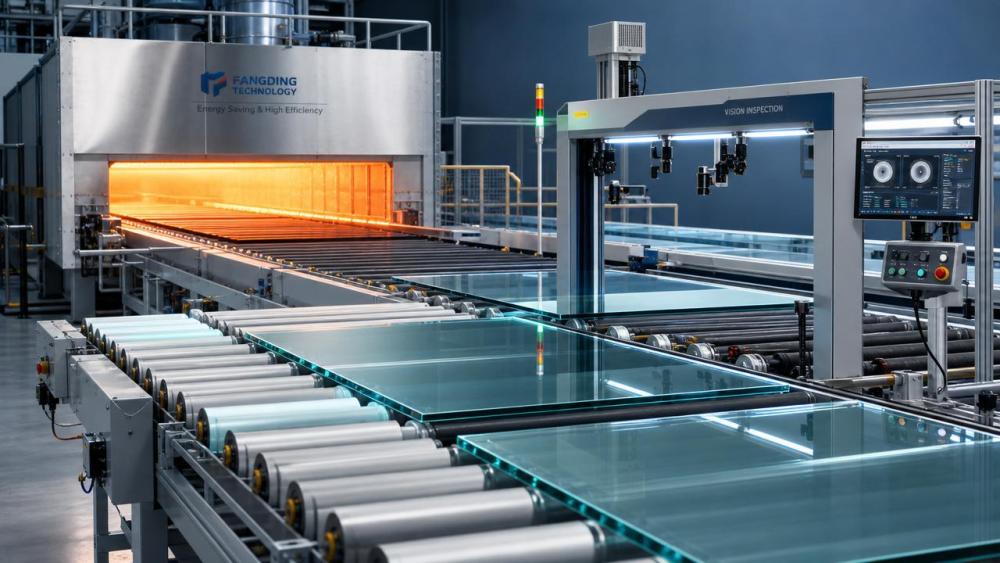
That is why a checklist-based review works better than a simple price comparison. It connects capital expense with throughput, energy intensity, defect reduction, maintenance predictability, and compliance performance.
In large-scale silicate production, decisions should reflect plant realities. A float line, container glass furnace, and solar glass line can all benefit from glass production automation, but the payback logic differs.
CF-Elite closely tracks thermal process intelligence, digital twin development, refractory life monitoring, and high-temperature efficiency trends. These factors shape whether automation creates durable value or just adds complexity.
Core checklist: how to judge if glass production automation is worth the upfront cost
Use the following checklist before approving investment. Each point helps test the real business case for glass production automation.
- Measure current line losses first. Quantify breakage, reject rates, rework, and unplanned downtime before calculating gains from glass production automation.
- Compare labor intensity by shift. Map manual interventions in loading, inspection, handling, and process adjustment to identify where automation removes hidden operating cost.
- Audit energy variability across the line. Check whether automated control can stabilize furnace temperature, combustion balance, and annealing conditions to cut specific energy consumption.
- Track quality drift over time. Review optical defects, thickness variation, edge damage, and forming inconsistencies that automation could detect or correct earlier.
- Estimate throughput upside realistically. Base projections on actual bottlenecks, not vendor assumptions, especially in hot-end transfer, inspection speed, and packaging flow.
- Check integration readiness. Confirm whether PLCs, SCADA, MES, sensors, and legacy machines can exchange reliable data without excessive retrofit engineering.
- Review maintenance capability. Automated systems only pay back when spare parts, calibration discipline, and troubleshooting support are available over the full asset life.
- Model payback under multiple scenarios. Include energy inflation, wage growth, cullet ratio shifts, downtime risk, and output mix changes when testing return assumptions.
- Verify compliance value. Add the financial effect of better emissions reporting, safety control, traceability, and reduced incident exposure in regulated markets.
- Phase the automation roadmap. Start with the highest-yield control points, then expand toward digital twins, predictive maintenance, and plant-wide optimization.
Where glass production automation delivers the strongest returns
Float glass and architectural glass lines
In float glass, small process instability can create expensive waste over long continuous runs. Here, glass production automation usually pays through thickness consistency, reduced surface defects, and better thermal control.
Automated inspection and closed-loop adjustments are especially valuable when quality standards are tight. The longer the campaign and the larger the tonnage, the greater the value of stable operation.
Container glass production
Bottle and jar production often faces frequent mold changes, speed pressure, and defect sensitivity. In this setting, glass production automation supports repeatability, hot-end monitoring, and reduced handling damage.
Returns are strongest when labor costs are rising and quality claims are expensive. Vision systems, servo controls, and automated ware handling can improve yield without expanding furnace capacity.
Solar glass and high-spec technical glass
For PV glass, display glass, and other high-spec products, the margin impact of defects is severe. Glass production automation becomes less about labor reduction and more about precision and traceability.
When customers demand strict uniformity, automated process monitoring can protect contracts, reduce claims, and support premium pricing. That strategic value often exceeds simple payback calculations.
Commonly overlooked costs and risks
Underestimating retrofit complexity
Older glass plants rarely have clean digital architecture. Wiring upgrades, sensor mounting, refractory constraints, and control logic redesign can expand both budget and shutdown time.
Ignoring data quality problems
Glass production automation depends on trustworthy signals. If temperature, pressure, thickness, or defect data are inconsistent, automated decisions may amplify instability instead of reducing it.
Focusing only on labor savings
Labor reduction is visible, but it is rarely the full story. In many plants, the bigger gains come from fuel efficiency, yield improvement, reduced scrap, and longer campaign stability.
Overlooking training and operator adoption
Even strong systems fail when teams do not trust alarms, setpoints, or dashboards. Budgeting for commissioning, retraining, and standard operating procedures is essential for stable returns.
Using unrealistic payback assumptions
Some projects assume immediate full-capacity improvement. A better model includes ramp-up losses, maintenance learning curves, and temporary disruption during system integration.
Practical execution steps before committing capital
- Benchmark three months of baseline data, including tons per day, cullet rate, defect categories, energy per ton, and downtime causes.
- Rank automation targets by financial impact, starting with areas where instability creates the highest scrap or energy penalty.
- Request a staged proposal that separates core controls, inspection systems, and advanced analytics rather than bundling everything together.
- Run a sensitivity analysis using best-case, expected-case, and stress-case assumptions for output, labor, energy, and maintenance.
- Define success metrics early, such as OEE improvement, defect reduction, fuel savings, alarm response time, and payback period.
- Plan shutdown windows carefully so installation and commissioning do not erase the expected value of glass production automation.
This disciplined approach is particularly important in capital-heavy thermal industries. As CF-Elite’s sector intelligence repeatedly shows, strong projects are usually built on plant-specific data, not generic automation narratives.
So, is glass production automation worth the upfront cost?
Yes, glass production automation is often worth the upfront cost when it addresses a proven bottleneck, protects quality, lowers energy intensity, and fits the plant’s digital maturity. It is less compelling when adopted too broadly, too quickly, or without data discipline.
The strongest investments usually begin with a narrow, high-impact zone, then scale after measurable results. That could mean furnace combustion optimization, automated defect inspection, or annealing control before moving to full line integration.
The next step is simple: build a site-specific business case. Quantify current losses, test the checklist above, and compare phased automation options against clear return thresholds. In modern glass manufacturing, the question is no longer whether automation matters, but where it creates the most defensible value.
Related News
 Optical Glass Tech FellowHow to Evaluate a Glass Annealing Equipment Manufacturer for Production StabilityChoose a glass annealing equipment manufacturer with proven thermal uniformity, reliable controls, lifecycle value, and responsive service for stable production.Sep 08, 2026
 Prof. Marcus ChenThermal Energy Architecture in North America: Strategies for Lower Building Energy UseThermal energy architecture North America helps project leaders cut building energy use through stronger envelopes, right-sized HVAC, storage, and smart commissioning.Sep 07, 2026
 Ms. Elena RodriguezHow Should Buyers Evaluate Building Material Industry Intelligence Pricing?Building material industry intelligence pricing: learn how to compare coverage, technical depth, and ROI to choose intelligence that reduces procurement risk.Sep 07, 2026
 Ms. Elena RodriguezHow to Use Building Material Intelligence Data for Market and Investment DecisionsBuilding material industry intelligence data helps leaders evaluate demand, costs, regulation, capacity, and technology to make smarter market and investment decisions.Sep 05, 2026
 Thermal Energy ArchitectHow PLC Control Improves Energy Efficiency and Temperature Stability in KilnsEnergy efficient kilns PLC control improves temperature stability, cuts fuel waste, and optimizes combustion, draft, and material flow. Explore proven strategies for smarter kiln modernization.Sep 04, 2026
 Optical Glass Tech FellowEuropean Glass Melting Processes: Furnace Choices, Energy Use, and Quality ControlGlass melting process Europe: explore furnace choices, energy efficiency, cullet strategy, and quality control to improve output, compliance, and long-term glass performance.Sep 03, 2026
 Thermal Energy ArchitectWhat Determines Refractory Lining Monitoring Price for Industrial Kilns?Refractory lining monitoring price depends on kiln size, sensor technology, installation, software, and support. Compare total lifecycle costs and choose the right solution.Sep 02, 2026
 Silicate Process EngineerCement Production System Costs: A Plant Buyer’s Guide to Budgeting and ROICement production systems cost planning made clear: compare CAPEX, operating costs, compliance, and ROI to build a resilient, profitable cement plant investment.Sep 01, 2026
 Dr. Alistair VaughnWhat Should a Process Technology Database Track for High-Temperature Plants?Process technology database essentials for high-temperature plants: track thermal profiles, feed chemistry, refractory wear, emissions, energy, and maintenance for safer, data-driven decisions.Aug 31, 2026
 Ms. Elena RodriguezHow to Evaluate a Silicate Processing Equipment Manufacturer for Plant ProjectsSilicate processing equipment manufacturer selection: assess process fit, guarantees, energy, compliance, delivery risk, and lifecycle support for dependable plant performance.Aug 30, 2026
 Dr. Alistair VaughnHow to Specify Custom Agricultural Processing Equipment for Throughput and HygieneEquipment customization services for agricultural processing: learn to specify hygienic, high-throughput lines that improve yield, reliability, and long-term efficiency.Aug 29, 2026
 Dr. Alistair VaughnHow to Select Process Plant Equipment for High-Temperature, Abrasive Production LinesProcess plant equipment selection for high-temperature, abrasive lines: reduce downtime, improve durability, and optimize lifecycle performance.Aug 28, 2026
 Silicate Process EngineerHow Kiln Heat Recovery Systems Cut Fuel Use in Cement and Lime ProductionKiln heat recovery helps cement and lime plants cut fuel use, improve thermal stability, and build practical, reliable decarbonization strategies.Aug 27, 2026
 Ms. Elena RodriguezProcess Equipment Comparison: Which Metrics Matter Most for Reliable Selection?Process equipment comparison made practical: discover which metrics truly drive reliable selection, from energy efficiency and control stability to wear life, maintainability, and uptime.Aug 26, 2026
 Ms. Elena RodriguezWhat Buyers Should Check Before Sourcing Precision Alloy Bars for Critical PartsPrecision Alloy Bars buyers should verify grade, chemistry, tolerances, surface quality, traceability, and lead time before sourcing for critical parts. Learn what prevents costly machining and reliability risks.Aug 27, 2026
 Ms. Elena RodriguezHow to Evaluate Thermal Management Solutions Insulation for High-Heat Industrial SystemsThermal management solutions insulation: learn how to assess high-heat industrial systems by thermal performance, durability, lifecycle cost, and supplier data for smarter decisions.Aug 25, 2026
 Ms. Elena RodriguezWhat Drives Waste Recycling Cost in Industrial Projects and How to Estimate It?Waste recycling cost in industrial projects depends on composition, moisture, transport, pre-treatment, and compliance. Learn how to estimate it accurately and compare suppliers with confidence.Aug 24, 2026
 Silicate Process EngineerHow to Evaluate Cement Production Plants in the Middle East for Capacity, Fuel Flexibility, and ROIcement production plants Middle East: Learn how to assess true capacity, fuel flexibility, and ROI risks to identify resilient assets and smarter investment opportunities.Aug 23, 2026
 Structural Material AnalystHow to Evaluate Lightweight Material Machinery for Output, Energy Use, and Product QualityLightweight material machinery evaluation guide: compare stable output, energy use, and product quality to choose equipment that cuts waste, lowers costs, and improves production confidence.Aug 22, 2026
 Material Heat-Resist ExpertWhat Determines Refractory Production Line Price in a Turnkey Plant Project?Refractory production line price depends on raw materials, forming method, kiln and drying design, automation, utilities, and scope. Learn what really drives turnkey plant cost before you invest.Aug 21, 2026

Related News
- 00
0000-00
How to Evaluate a Glass Annealing Equipment Manufacturer for Production Stability - 00
0000-00
European Glass Melting Processes: Furnace Choices, Energy Use, and Quality Control - 00
0000-00
How Glass Melting Furnace Design Impacts Energy Use and Glass Quality - 00
0000-00
How Can Glass Manufacturing Technology Improve Furnace Efficiency and Cut Energy Costs? - 00
0000-00
How to Evaluate Continuous Glass Annealing Equipment for Stable Throughput?
Weekly Insights
Stay ahead with our curated technology reports delivered every Monday.