
Middle East Cement Industry: How Demand and Capacity Shape Export Opportunities




Export opportunities in the Middle East cement industry depend on how much competitively priced production remains available after domestic demand is served. A country can have substantial installed capacity and still offer limited dependable export supply. Conversely, a producer facing modest domestic growth may become a strong overseas supplier if its operating costs, terminal access, and shipping arrangements support repeat deliveries.
For business evaluators, the strongest opportunity combines three conditions: a durable production surplus, a workable delivered cost, and a destination market able to absorb the product at an acceptable margin. Infrastructure announcements and capacity figures help identify candidates, but neither establishes a commercial case. The assessment must connect construction activity with operating kilns, available clinker, grinding capacity, and the cost of reaching a specific buyer.
Domestic demand determines how much supply can leave
Middle Eastern cement markets should be assessed individually. Saudi Arabia, the UAE, Oman, and other regional markets have different construction pipelines, production footprints, transport options, and trading conditions. A regional demand outlook can provide context, but an export decision needs a country and plant-level view. Even within one country, a coastal producer and an inland producer can face very different economics.
Large infrastructure and urban development programs can support substantial cement consumption. Their commercial significance depends on execution: financing, procurement awards, site preparation, contractor mobilization, and the timing of concrete-intensive work. A project announced today may contribute little to near-term cement orders, while several projects entering structural construction together can tighten supply quickly.
Evaluators therefore need to distinguish announced spending from construction activity that is generating deliveries. Supplier dispatches, order visibility, project progress, and purchasing schedules provide more direct evidence than headline investment values. The location of that activity also matters. Demand near a plant can absorb output that would otherwise travel to an export terminal; demand far inland may have a weaker effect on coastal export availability.
Domestic demand also changes a producer’s willingness to export before it changes physical availability. When local sales offer better margins or faster payment, export customers may receive less attractive quotations, shorter offer validity, or fewer loading windows. A supplier can retain spare production capacity while allocating its most convenient dispatch slots to domestic buyers.
This creates an important distinction between occasional export offers and dependable supply. An attractive cargo offered during a quiet construction period may suit a spot purchase. A distributor building a recurring import program needs evidence that shipments will remain available when domestic orders recover. Contracted allocation, maintenance schedules, stock policies, and access to alternative production lines become commercially relevant.
Installed capacity can overstate the export surplus
Nameplate capacity is a starting point for analysis, but it does not show how much saleable material a producer can deliver. Kiln availability, energy supply, maintenance requirements, grinding capacity, storage, and dispatch infrastructure can each restrict output. Some capacity may be idle because operating it would be uneconomic at achievable selling prices.
Clinker and cement must also be evaluated separately. Clinker is the kiln-produced intermediate material that is ground with gypsum and, depending on the product, other constituents to make cement. A market may have spare grinding capacity but insufficient clinker production, creating demand for clinker imports. Another may have surplus clinker but limited grinding or cement-loading capacity, making clinker exports the more practical route.
Adding a grinding unit therefore has a different trade effect from adding an integrated production line. A grinding investment may increase demand for imported clinker while competing with imported finished cement. A new kiln can increase clinker availability, although its export impact depends on commissioning, operating reliability, domestic consumption, and the producer’s ability to move material to port.
Capacity announcements also require careful interpretation. Planned, under-construction, commissioned, and consistently operating capacity represent different levels of supply confidence. New equipment may need time to reach stable output and product consistency. Replacement capacity may improve efficiency without adding an equivalent amount of net supply if older equipment is retired.
A useful assessment follows the material through the system:
- Production: What can the kiln sustain after maintenance, energy constraints, and operating interruptions?
- Domestic allocation: How much output is committed locally, and how sensitive is that allocation to construction activity?
- Product conversion: Can grinding, blending, and quality-control facilities produce the grade required by the destination?
- Dispatch: Can storage, inland transport, and port facilities support the proposed cargo size and shipment frequency?
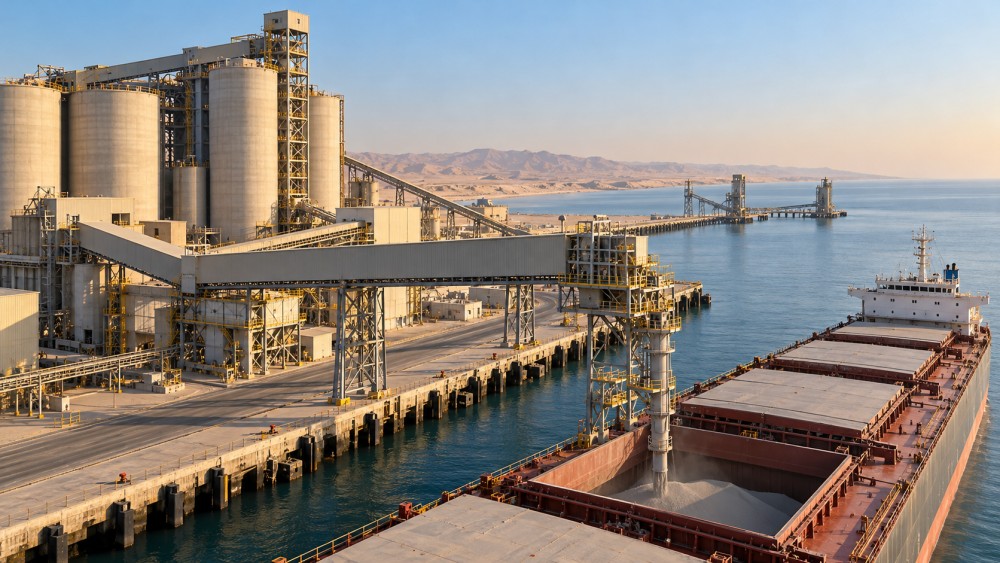
The smallest practical constraint in this chain can determine export availability. A producer with ample clinker stocks may still struggle to fulfill a cement contract if its mills are committed or its terminal cannot segregate the required grade. Adding kiln capacity alone will not resolve those limitations.
The durability of surplus matters as much as its size. A temporary inventory build caused by delayed local projects can produce aggressive offers without supporting a long-term trading relationship. Surplus backed by efficient production, reliable energy access, and established export infrastructure is a stronger basis for recurring business. Buyers should examine the conditions under which that surplus could disappear.
Export competitiveness is decided at the receiving market
A low plant-gate price does not establish an export advantage. Cement is heavy relative to its sales value, making transport and handling central to the transaction. The commercial comparison should extend from the exporting plant to the buyer’s usable inventory, including inland haulage, terminal charges, sea freight, insurance, discharge, storage, duties, and financing where applicable.
Quotes must be compared on the same delivery basis. An FOB offer leaves the buyer responsible for arranging the main sea transport, while a CFR offer includes freight to the named destination port. Neither, by itself, represents the full cost of placing material into local distribution. Differences in discharge terms, port productivity, and permitted laytime can materially change the result.
A coastal plant with direct terminal access may offset a higher production cost through lower logistics expenses. An inland plant offering a cheaper product can lose that advantage through road transport, intermediate storage, and repeated handling. The relevant competitive unit is the complete supply route, including its reliability and working-capital requirements.
Shipment size introduces another trade-off. Larger cargoes may reduce freight cost per tonne, but they require sufficient receiving capacity and demand. If the importer cannot discharge efficiently or sell the inventory promptly, storage costs, vessel delays, and financing can absorb the freight saving. A commercially sound cargo size must fit both ends of the route.
Clinker and finished cement also serve different buyers. Clinker can suit an importer with grinding facilities, suitable raw-material inputs, and access to the local cement market. Finished cement can serve buyers without grinding assets, provided they have the infrastructure to receive and distribute it. Bagged cement introduces packaging and handling costs, while bulk cement requires appropriate enclosed handling and storage.
Product acceptance must be established before treating a price difference as an opportunity. Destination requirements can cover strength development, composition, sulfate resistance, chloride limits, conformity documentation, or other characteristics. A product suitable for one market may require a different formulation or additional approval elsewhere. Trial shipments, testing, and customer qualification can affect the timing and cost of entry.
Decarbonization requirements add a further layer to selected trade routes. Where buyers or authorities require emissions information, producers may need reliable plant-level records and a clear accounting basis. Where carbon-related charges apply, their scope and treatment should be assessed for the actual product and destination. Such obligations cannot safely be assumed to be identical for clinker, cement, and blended products.
For a global cement industry assessment, the Middle East becomes commercially meaningful when these route-level economics are visible. Regional production costs alone cannot explain which supplier will win a tender in a particular overseas market.
Separate repeatable trade from a temporary price opening
An export opportunity can arise because a destination has a persistent supply gap, because its existing suppliers have become less competitive, or because a short-lived disruption has tightened availability. Each situation supports a different commitment. A structural deficit may justify terminal investment or a recurring supply agreement. A temporary shortage may support a cargo purchase while offering little basis for fixed infrastructure.
The destination’s response matters. Higher import prices can encourage local producers to restart idle capacity, improve utilization, or pursue expansion. New grinding capacity can shift demand from finished cement toward clinker. A buyer that models only present import requirements may overestimate the life of the opportunity.
Competition should also include suppliers beyond the Middle East. An exporter’s position depends on the alternative origins available to the receiving market, their product acceptance, shipping distances, and willingness to sell. A favorable regional cost position can weaken when another origin has spare capacity or freight becomes cheaper on a competing route.
Before committing to a recurring program, evaluators should test a small number of commercially meaningful scenarios:
- Domestic recovery: Would stronger local sales reduce allocation or increase the exporter’s required price?
- Freight pressure: Would the route remain viable if shipping costs or port delays increased?
- Destination adjustment: Would restarted local production, new grinding capacity, or competing imports eliminate the buyer’s margin?
- Supply interruption: Could maintenance, energy constraints, or terminal disruption be covered without an expensive replacement cargo?
The purpose is to identify which assumption carries the transaction. If profitability depends almost entirely on an unusually cheap cargo, the opportunity is sensitive to repricing. If it survives reasonable changes in freight and domestic allocation, it provides a firmer basis for repeat business.
Contract structure should follow that assessment. Buyers dependent on continuous deliveries need clear arrangements for shipment windows, quality acceptance, allocation, and supply interruptions. Producers committing capacity over a longer period need pricing terms that account for material changes in agreed cost drivers. Payment security and credit exposure must also fit the expected margin; a nominally profitable export can become unattractive when cash collection is uncertain or slow.
The most useful market signals are therefore connected: construction activity that changes domestic dispatches, capacity that reaches stable operation, logistics improvements that lower delivered cost, and destination investments that alter import requirements. None should be interpreted in isolation. A new kiln may create little export pressure if local consumption absorbs it, while a terminal upgrade can improve competitiveness without adding production.
A Middle Eastern supplier becomes a credible long-term export partner when its available output, product suitability, and delivery economics hold together across these changes. The next commercial step is to establish that case for a named plant, product, destination, and shipment schedule. That is where a broad capacity story becomes an assessable trading opportunity.
Related News
 Ms. Elena RodriguezProcess Equipment Pricing: How to Compare Quotes and Total CostsMaster process equipment comparison pricing: compare supplier quotes, uncover hidden costs, and evaluate lifetime expenses to make a confident buying decision.Nov 17, 2026
 Prof. Marcus ChenGlobal Cement Industry Decarbonization: Key Technologies and Cost BarriersExplore global cement industry decarbonization technologies, cost barriers, and practical investment strategies to cut emissions while protecting competitiveness.Nov 16, 2026
 Structural Material AnalystChoosing Specification Preparation Support for North American ProjectsChoose specification preparation support North America projects can rely on. Compare technical expertise, compliance, interfaces, and supplier acceptance criteria.Nov 14, 2026
 Structural Material AnalystSpecialty Ceramic Extrusion: How Material Properties Affect FormingExplore how ceramic specialized material extrusion is shaped by particle size, binders, and solids loading—and learn to improve forming and reduce defects.Nov 13, 2026
 Ms. Elena RodriguezHigh-Pressure Molding Equipment Prices in Europe: What Affects the Total Cost?Explore high pressure molding equipment price Europe buyers can expect to assess, from tooling and installation to running costs. Compare quotes with confidence.Nov 12, 2026
 Structural Material AnalystChoosing a Vacuum Extrusion System: Capacity, Materials and Vacuum LevelsChoosing a vacuum extrusion system? Compare capacity, material behavior and vacuum levels to improve product quality and select the right equipment.Nov 11, 2026
 Optical Glass Tech FellowGlass Melting Innovations: Comparing Electric and Hybrid Furnace TechnologiesExplore glass melting innovations and compare electric and hybrid furnaces by energy use, emissions, glass quality and operating costs to find the right fit.Nov 10, 2026
 Thermal Energy ArchitectHow Thermal Barrier Technology for Kilns Reduces Heat LossDiscover how thermal barrier technology for kilns reduces heat loss, and learn how to select insulation and assess savings without compromising lining durability.Nov 09, 2026
 Prof. Marcus ChenGlobal Materials Trends: What North American Manufacturers Need to KnowExplore global material trends North America manufacturers need to know, from energy costs and supply chains to lower-carbon materials and smarter investment decisions.Nov 08, 2026
 Thermal Energy ArchitectSelecting Abrasion-Resistant Refractories for High-Wear Kiln LiningsExplore advanced refractory materials abrasion resistant enough for high-wear kiln linings. Compare wear mechanisms, thermal stability, installation and lifecycle costs.Nov 06, 2026
 Dr. Alistair VaughnIndustrial Energy Efficiency Certification: ISO 50001 Requirements for PlantsExplore industrial energy efficiency certification with ISO 50001. Learn how plants define scope, measure performance and prepare credible evidence for audits.Nov 05, 2026
 Ms. Elena RodriguezWhat Is an Industrial Intelligence Database and How Is It Used?Discover how an industrial intelligence database helps researchers map markets, track projects, compare technologies, and assess evidence with confidence.Nov 04, 2026
 Ms. Elena RodriguezIndustrial Material Pricing: How Freight and Order Volume Affect QuotesExplore industrial material pricing and learn how freight, order volume, and inventory costs affect quotes. Compare suppliers and make smarter purchasing decisions.Nov 03, 2026
 Structural Material AnalystSingle- vs. Twin-Screw Extrusion Systems: Which Suits Your Material?Choose the right specialized extrusion systems screw type for your material. Compare single- and twin-screw options to improve quality and control costs.Nov 02, 2026
 Thermal Energy ArchitectChoosing Thermal Barrier Materials for Kilns: Temperature and Heat LossExplore thermal barrier materials for kilns and learn how to balance temperature resistance, heat loss, durability and operating costs when selecting a lining.Nov 01, 2026
 Ms. Elena RodriguezSupplier Reference Platform Pricing: Fees and Contract Terms to CompareCompare supplier reference platform pricing, hidden fees, verification costs and contract terms to choose the right solution for your sourcing team.Oct 31, 2026
 Ms. Elena RodriguezSupplier Comparison Metrics: How to Score Cost, Quality, and DeliveryUse supplier comparison metrics to score cost, quality, and delivery with a practical weighted scorecard. Make more confident equipment sourcing decisions.Oct 30, 2026
 Ms. Elena RodriguezWhat Does Industrial Waste Heat Recovery Cost, and When Does It Pay Back?Understand industrial waste heat recovery cost, from equipment and installation to net savings. Learn how to compare quotes, assess risks, and calculate realistic payback before investing.Oct 29, 2026
 Thermal Energy ArchitectChoosing Industrial Waste-to-Energy Equipment by Waste Moisture and Heating ValueChoose industrial waste to energy equipment by moisture and heating value. Compare technologies, fuel needs, and supplier guarantees to make a confident investment.Oct 28, 2026
 Thermal Energy ArchitectChoosing Industrial Kiln Insulation for High Heat and Repeated Thermal CyclingExplore high temperature industry solutions for kiln insulation under repeated thermal cycling. Compare materials, reduce heat loss, and select the right lining for your operating conditions.Oct 27, 2026








Related News
- 00
0000-00
Middle East Cement Industry: How Demand and Capacity Shape Export Opportunities - 00
0000-00
What Is a Realistic Energy Efficiency Target for a Cement Plant? - 00
0000-00
How Latin American Cement Plants Can Reduce Dust Emissions in Kilns and Transfer Points - 00
0000-00
Cement Plant Emission Control: Selecting Systems for Dust, NOx, and SO2 Limits - 00
0000-00
Cement Production System Costs: A Plant Buyer’s Guide to Budgeting and ROI
0000-00
Weekly Insights
Stay ahead with our curated technology reports delivered every Monday.