
Cement Plant Dust Control Problems: Common Causes of Low Collection Efficiency and Fixes




Cement Plant Dust Control Problems: Common Causes of Low Collection Efficiency and Fixes
In cement plants, poor dust collection rarely begins with one dramatic failure.
More often, it grows from daily issues that slowly reduce system performance.
Air leakage, damaged bags, unstable gas temperature, and fan problems are common starting points.
When these conditions combine, cement plant dust control becomes harder, emissions rise, and equipment life drops.
This guide focuses on practical fault patterns and field-ready fixes that improve collection efficiency without guesswork.
Why cement plant dust control efficiency falls faster than expected
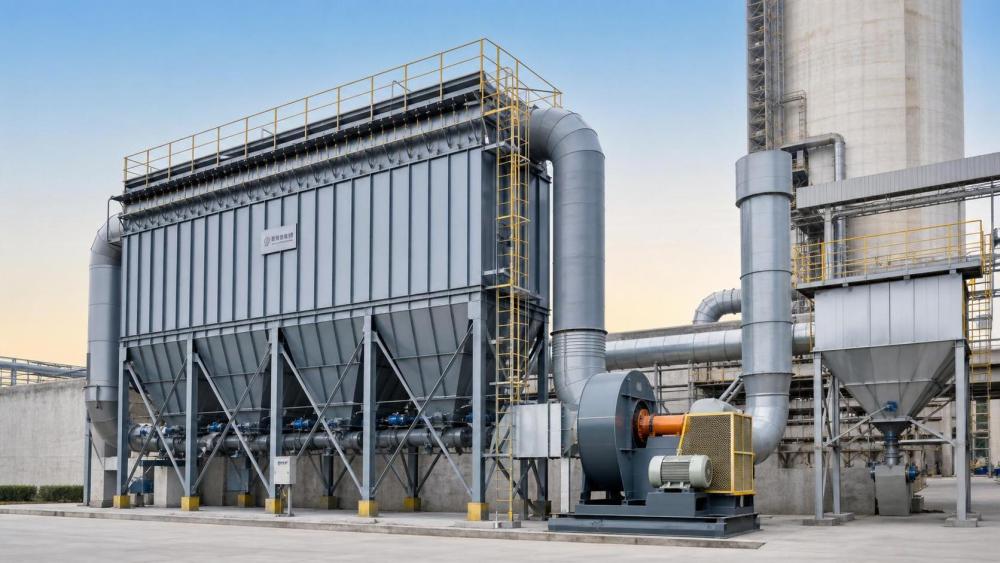
Low collection efficiency usually appears as a system symptom, not a single component problem.
From a maintenance view, the key is linking process changes with equipment behavior.
A dust collector may still run, but pressure, airflow, and cleaning balance can already be drifting.
That is why cement plant dust control problems often remain hidden until visible stack dust appears.
In real plant work, several warning signs tend to show up early:
- Rising differential pressure with unstable fan load.
- More dust around rotary valves, access doors, or hoppers.
- Frequent bag failures after process upsets.
- Outlet opacity spikes during kiln or mill fluctuations.
- Compressed air consumption increasing without better cleaning results.
Once these signs appear together, the dust collection system needs a structured check, not isolated repairs.
Air leakage: the most overlooked cement plant dust control problem
Air leakage is one of the most common reasons for weak cement plant dust control.
It changes airflow distribution, cools gas streams, and increases system volume beyond design conditions.
Leak points often appear around expansion joints, inspection doors, duct flanges, screw conveyors, and worn hopper seals.
The effect is usually stronger on older lines or units exposed to vibration and thermal cycling.
What leakage causes
- Reduced inlet dust concentration consistency.
- Lower gas temperature and possible condensation risk.
- Higher fan power demand from excess false air.
- Weaker capture velocity at pickup points.
What to do first
- Check doors, flanges, and flexible joints during stable operation.
- Compare measured airflow with design values across key sections.
- Use smoke, temperature trend, or ultrasonic methods to locate false air entry.
- Replace failed seals instead of only tightening hardware again.
In many cases, fixing leakage delivers a faster result than changing cleaning settings.
Filter bag wear, blinding, and mismatch with process conditions
Bag condition sits at the center of cement plant dust control performance.
Even a well-designed collector loses efficiency when filter media no longer matches actual process stress.
The problem may be abrasion, chemical attack, moisture-related blinding, or heat damage.
Recent operating shifts often make this worse, especially where fuels, raw mix, or kiln control have changed.
Typical failure patterns
- Top wear from poor cage finish or bag movement.
- Bottom damage from abrasive dust loading.
- Sticky surface deposits from moisture or oil contamination.
- Brittle media caused by temperature peaks or chemical exposure.
Practical fixes
- Inspect removed bags by zone, not only by random sample.
- Check whether failure location matches airflow or dust loading patterns.
- Confirm bag material against actual gas temperature and chemistry.
- Replace damaged cages when changing bags.
- Review startup and shutdown routines that expose bags to moisture.
This matters because repeated bag changeouts treat the symptom, not the cause of low collection efficiency.
Unstable temperature and moisture upset the whole dust collection balance
Temperature control is often the hidden link between process stability and cement plant dust control.
When gas cools below a safe margin, condensation can form on filter surfaces or inside ducts.
Dust then becomes sticky, pulse cleaning weakens, and pressure loss starts climbing.
On the other side, overheating can shrink bag life and distort cages or seals.
Where instability usually begins
- Rapid kiln swings or abrupt mill stoppages.
- Water spray control drift in conditioning towers.
- Cold false air entering upstream ducts.
- Long idle periods without proper purge strategy.
Field response steps
- Trend temperature against dew point margin, not temperature alone.
- Calibrate sensors that influence spray or bypass control.
- Review interlocks for upset conditions and slow transitions.
- Keep insulation and cladding in repair on vulnerable duct sections.
Better temperature discipline usually improves both emissions control and baghouse reliability at the same time.
Pulse cleaning and compressed air problems reduce collection efficiency
Not every cement plant dust control issue comes from the bags themselves.
Many systems underperform because the pulse cleaning system no longer delivers consistent energy.
Low air pressure, wet compressed air, faulty valves, or poor sequencing can all leave dust cake uncontrolled.
That creates a familiar cycle: rising differential pressure, reduced airflow, and finally visible emissions.
Common checks that pay off
- Measure header pressure at load, not only at idle.
- Inspect diaphragm valves for leakage or delayed opening.
- Drain moisture from air tanks and verify dryer performance.
- Confirm blow tubes align correctly over venturis.
- Review pulse interval after process or bag changes.
A stable cleaning system supports lower resistance and steadier cement plant dust control across variable loads.
Fan imbalance, duct restriction, and airflow distribution errors
Dust collection only works when airflow stays close to design intent.
If the fan is unstable or the duct network is restricted, the whole system loses balance.
This is a major reason cement plant dust control problems often return after bag replacement.
The collector improves briefly, but root airflow issues remain.
What to inspect
- Fan vibration, bearing temperature, and impeller dust buildup.
- Damper position feedback and actuator response.
- Duct accumulation at elbows, drops, and transitions.
- Uneven suction between pickup points or process sections.
Corrective approach
- Record airflow, static pressure, and motor load together.
- Clean restrictions before retuning control settings.
- Balance branches where capture points are competing for air.
- Check fan curve match if process volume has changed over time.
Once airflow is balanced, dust pickup becomes more consistent and troubleshooting gets easier.
A practical inspection routine for recurring cement plant dust control issues
When the same problem returns, a fixed inspection order saves time.
It also prevents teams from replacing parts before confirming the real cause.
This sequence keeps cement plant dust control troubleshooting focused and repeatable.
How to turn short-term fixes into lasting dust control performance
The best results come when maintenance data is tied to process events.
That makes future cement plant dust control decisions faster and more accurate.
Keep records for bag life by compartment, leakage points, temperature excursions, pulse valve failures, and fan performance drift.
Over time, those patterns reveal whether the plant needs routine tuning or a larger system upgrade.
For daily work, the most effective approach is simple.
- Fix leakage before changing major operating parameters.
- Match bag media to real conditions, not only nameplate values.
- Protect temperature stability during starts, stops, and upsets.
- Keep pulse cleaning dry, aligned, and properly sequenced.
- Verify airflow balance after every important maintenance action.
When these basics stay under control, cement plant dust control becomes more predictable, emissions compliance becomes easier, and plant reliability improves in a measurable way.
Related News
 Optical Glass Tech FellowSilicate Process Automation: Improving Batch Consistency and Energy ControlSilicate process automation improves batch consistency, energy control, traceability, and operator confidence across high-temperature manufacturing operations.Sep 22, 2026
 Optical Glass Tech FellowHow Silicate Industrial Processes Control Viscosity, Energy Use, and Product QualitySilicate industrial processes: learn how viscosity, chemistry, heat transfer, and atmosphere control reduce energy use, improve stability, and protect product quality.Sep 21, 2026
 Thermal Energy ArchitectHow European Plants Can Evaluate Energy Recovery Equipment for High-Temperature ProcessesIndustrial energy recovery equipment Europe: learn how high-temperature plants can assess waste-heat sources, integration risks, lifecycle value, and reliable recovery routes.Sep 20, 2026
 Thermal Energy ArchitectIndustrial Furnace Process Optimization: Reducing Fuel Use Without Sacrificing ThroughputIndustrial process optimization furnace strategies that cut fuel use while protecting throughput. Explore combustion control, heat recovery, refractory performance, and data-driven efficiency gains.Sep 19, 2026
 Ms. Elena RodriguezWhat Drives High-Pressure Extrusion Equipment Cost in Industrial Projects?High pressure extrusion equipment cost explained: compare pressure, die design, automation, wear, energy, and installation factors for smarter industrial investments.Sep 18, 2026
 Thermal Energy ArchitectHow to Size a Waste Heat Recovery Exchanger for High-Temperature Kiln Exhaust?Waste heat recovery exchanger sizing for high-temperature kiln exhaust: balance recoverable duty, fouling, corrosion limits, pressure drop, and reliable heat use.Sep 17, 2026
 Thermal Energy ArchitectWhy Heat-Resistant Materials Lose Abrasion Resistance at High TemperaturesHeat-resistant materials abrasion resistance can decline at high temperatures. Discover the thermal, chemical, and mechanical causes of wear—and how to choose longer-lasting linings.Sep 16, 2026
 Thermal Energy ArchitectHow to Evaluate a Thermal Energy Optimization Company for High-Temperature PlantsChoose a thermal energy optimization company with proven process expertise, measurable savings, and reliable delivery for high-temperature plants. Learn what to assess.Sep 15, 2026
 Thermal Energy ArchitectRotary Kiln Efficiency: How Feed Rate, Fuel Use, and Heat Loss Affect OutputRotary kiln efficiency explained: discover how feed rate, fuel use, heat loss, combustion, and cooling performance shape output, quality, and energy costs.Sep 14, 2026
 Thermal Energy ArchitectHow to Select Heat-Resistant Materials That Maintain Abrasion Resistance in KilnsHeat-resistant materials abrasion resistance: learn how to select kiln linings that withstand heat, wear, thermal cycling, and chemical attack for longer service life.Sep 13, 2026
 Thermal Energy ArchitectHow Rotary Kiln Automation Improves Temperature Control and Fuel EfficiencyRotary kiln technology automation enhances temperature control, stabilizes combustion, and improves fuel efficiency with smarter data, predictive control, and safer operations.Sep 12, 2026
 Silicate Process EngineerCement Plant Emission Control: Selecting Systems for Dust, NOx, and SO2 LimitsCement plant emission control guide: compare dust collectors, NOx reduction, and SO2 systems for reliable compliance across kiln modes, fuel changes, and operating upsets.Sep 11, 2026
 Thermal Energy ArchitectSelecting Abrasion-Resistant High-Temperature Materials for Kiln and Conveyor Wear ZonesHigh-temp material engineering guide to abrasion-resistant kiln and conveyor solutions—match wear, heat, chemistry, and installation design for longer service life.Sep 10, 2026
 Dr. Alistair VaughnIndustrial Process Engineering: How to Map Processes for Safer, More Efficient PlantsIndustrial process engineering reveals bottlenecks, safety risks, and energy losses through practical process mapping for safer, more efficient plants.Sep 09, 2026
 Optical Glass Tech FellowHow to Evaluate a Glass Annealing Equipment Manufacturer for Production StabilityChoose a glass annealing equipment manufacturer with proven thermal uniformity, reliable controls, lifecycle value, and responsive service for stable production.Sep 08, 2026
 Prof. Marcus ChenThermal Energy Architecture in North America: Strategies for Lower Building Energy UseThermal energy architecture North America helps project leaders cut building energy use through stronger envelopes, right-sized HVAC, storage, and smart commissioning.Sep 07, 2026
 Ms. Elena RodriguezHow Should Buyers Evaluate Building Material Industry Intelligence Pricing?Building material industry intelligence pricing: learn how to compare coverage, technical depth, and ROI to choose intelligence that reduces procurement risk.Sep 07, 2026
 Ms. Elena RodriguezHow to Use Building Material Intelligence Data for Market and Investment DecisionsBuilding material industry intelligence data helps leaders evaluate demand, costs, regulation, capacity, and technology to make smarter market and investment decisions.Sep 05, 2026
 Thermal Energy ArchitectHow PLC Control Improves Energy Efficiency and Temperature Stability in KilnsEnergy efficient kilns PLC control improves temperature stability, cuts fuel waste, and optimizes combustion, draft, and material flow. Explore proven strategies for smarter kiln modernization.Sep 04, 2026
 Optical Glass Tech FellowEuropean Glass Melting Processes: Furnace Choices, Energy Use, and Quality ControlGlass melting process Europe: explore furnace choices, energy efficiency, cullet strategy, and quality control to improve output, compliance, and long-term glass performance.Sep 03, 2026








Related News
- 00
0000-00
Cement Plant Emission Control: Selecting Systems for Dust, NOx, and SO2 Limits - 00
0000-00
Cement Production System Costs: A Plant Buyer’s Guide to Budgeting and ROI - 00
0000-00
How Kiln Heat Recovery Systems Cut Fuel Use in Cement and Lime Production - 00
0000-00
How to Evaluate Cement Production Plants in the Middle East for Capacity, Fuel Flexibility, and ROI - 00
0000-00
What Drives Cement Plant Upgrade Cost and How to Estimate ROI Before Investing
Weekly Insights
Stay ahead with our curated technology reports delivered every Monday.