
Glass Melting Technology Problems: How to Reduce Bubbles, Energy Loss, and Wear




Why glass melting technology problems rarely come from one cause
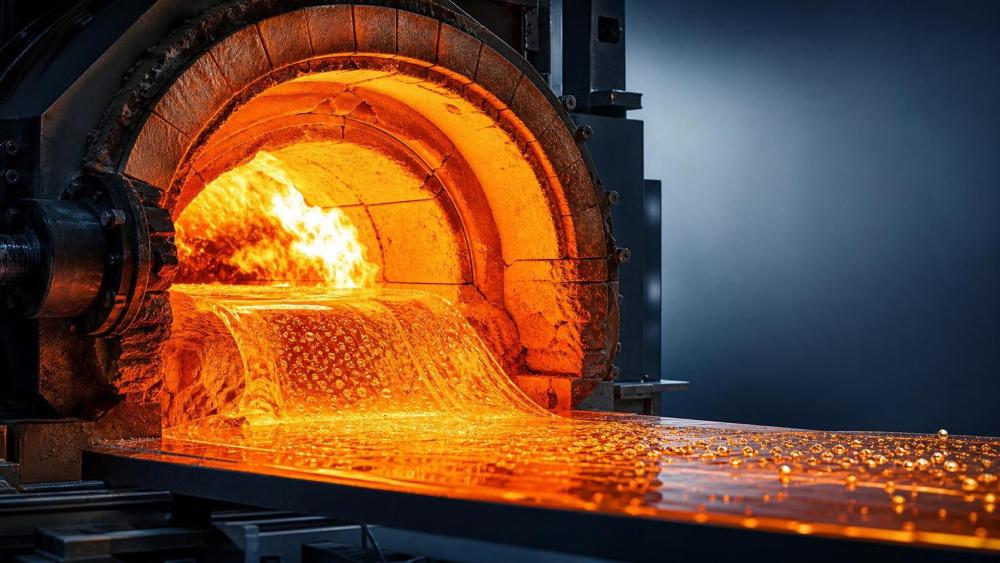
Glass lines seldom lose stability because of one isolated defect.
More often, glass melting technology issues develop where batch chemistry, furnace heat flow, and refractory condition start affecting each other.
That is why bubbles, energy loss, and wear often appear together rather than separately.
In practical operation, the same visible defect can point to very different causes.
A seed bubble in container glass does not always behave like a bubble in PV glass.
A hot crown that raises pull rate may also accelerate checker imbalance or shorten furnace campaign life.
Within the CF-Elite view of foundation materials and thermal management, the better question is not only how to melt faster.
It is how to keep ultra-high temperature reactions, energy efficiency, and lining durability aligned over time.
When glass melting technology is assessed this way, troubleshooting becomes more precise and less reactive.
The operating context changes what “good melting” really means
Different product mixes place very different demands on glass melting technology.
High-volume float production usually values thermal balance, stable redox behavior, and long campaigns above aggressive short-term output gains.
By contrast, specialty or thin glass often reacts more sharply to small temperature swings and fining instability.
Cullet ratio also changes the judgment point.
Higher cullet can reduce specific energy demand, yet it may shift foaming behavior, volatilization patterns, and crown temperature distribution.
Fuel structure matters as well.
Oxy-fuel, gas-fired regenerative, and hybrid electric boosting do not create the same melting profile or refractory stress map.
This is one reason CF-Elite tracks digital twin simulation, online refractory monitoring, and carbon reduction logic together.
The best glass melting technology decision usually sits at the intersection of chemistry, heat management, emissions limits, and maintenance windows.
A quick comparison of what changes by scenario
When bubbles dominate, the real issue is usually upstream
Bubbles are often treated as a fining problem only.
In reality, glass melting technology breaks down earlier in the chain.
Poor batch moisture control, particle size variation, unstable cullet contamination, or mismatched sulfate behavior can all feed the same defect.
This is especially common when production teams raise pull rate without revisiting residence time.
The melt may look hotter, yet fining becomes less complete because gas release, dissolution, and bubble escape no longer stay synchronized.
A useful field check is to compare bubble location, size, and frequency with furnace zones and batch changes.
If defects increase after recipe shifts, the problem may be chemical.
If they increase after firing adjustments, the cause may be thermal circulation or insufficient homogenization.
For this scenario, effective glass melting technology improvements usually include tighter raw material control, better combustion tuning, and a realistic review of pull versus fining capacity.
What usually helps reduce bubble-related instability
- Track cullet chemistry and contamination by source, not only by total percentage.
- Check whether fining additives match the current fuel mode and redox condition.
- Review melt depth, convection path, and residence time before increasing throughput.
- Use defect mapping to connect bubble type with furnace location and timing.
When energy loss becomes visible, furnace balance is already drifting
Energy loss rarely starts with the utility bill.
It usually appears earlier as uneven flame pattern, unstable crown temperature, regenerator imbalance, or more frequent corrective firing.
In regenerative furnaces, one common mistake is to judge thermal efficiency only by average specific fuel consumption.
That can hide local overheating and under-melting at the same time.
A line may meet output targets while losing heat through poor reversal balance, air leakage, or degraded insulation.
In electric boosting systems, the opposite mistake can happen.
Boosting improves melting speed, but if electrode placement and batch blanket behavior are not aligned, local overheating may increase wear and volatilization.
Strong glass melting technology control here depends on trend analysis rather than single snapshots.
It helps to compare fuel, power, pull, crown temperature, exhaust pattern, and defect rate on the same timeline.
That approach supports the decarbonization logic CF-Elite follows across kilns, float lines, and other thermal assets.
Wear problems often reflect chemistry and operating discipline together
Refractory wear is sometimes blamed on material quality alone.
That misses how glass melting technology interacts with corrosion conditions every day.
Volatile alkalis, sulfate carryover, flame impingement, hot repairs, and thermal cycling can all shorten lining life.
The risk is different in each area.
Breastwalls, doghouse zones, crowns, and throat regions do not fail for the same reasons.
A line with frequent campaign disturbances often sees wear accelerate after repeated operational corrections.
Small temperature shocks, pushed too often, become structural damage later.
This is where online lining observation and historical data become more valuable than nameplate refractory data.
In practical terms, better glass melting technology means pairing refractory selection with actual atmosphere, vapor load, and thermal cycling profile.
That is also why refractory production intelligence and glass furnace analysis should not sit in separate decision boxes.
Common misjudgments that increase wear
- Choosing lining materials from catalog data without matching real vapor chemistry.
- Pushing output with higher temperatures instead of checking heat transfer efficiency first.
- Ignoring short thermal shocks because daily production still looks acceptable.
- Treating similar glass products as identical corrosion environments.
The best fix depends on whether the line is chasing output, clarity, or campaign life
One reason glass melting technology projects underperform is that priorities stay vague.
A line focused on premium optical quality should not optimize exactly like a line focused on tonnage stability.
Likewise, a furnace approaching the later campaign stage needs different risk limits than a newly rebuilt furnace.
A practical adaptation path can be organized around three questions.
- Is the main loss coming from incomplete melting, poor fining, or avoidable heat escape?
- Which furnace zone shows the earliest deviation from normal behavior?
- Will the proposed correction shift stress onto refractories, emissions, or downstream forming?
This method keeps troubleshooting rooted in operating reality.
It also reduces the common habit of solving one symptom by creating another.
A grounded adaptation checklist
What to do before the next process adjustment
The strongest glass melting technology decisions begin with a tighter operating picture.
Map the defect pattern, energy trend, and wear signals together rather than reviewing them in separate reports.
Then define which condition truly limits performance today.
In some lines, the constraint is fining time.
In others, it is regenerator efficiency, volatile attack, or unstable raw material quality.
That distinction matters because each path calls for a different correction sequence.
A useful next step is to set a simple scenario-based review standard.
Compare current furnace condition, product mix, thermal method, refractory health, and carbon targets in one decision sheet.
That kind of integrated judgment reflects the CF-Elite approach to heavy thermal industries.
It turns glass melting technology from a narrow furnace topic into a broader control strategy for quality, energy, and campaign life.
Related News
 Thermal Energy ArchitectHow European Plants Can Evaluate Energy Recovery Equipment for High-Temperature ProcessesIndustrial energy recovery equipment Europe: learn how high-temperature plants can assess waste-heat sources, integration risks, lifecycle value, and reliable recovery routes.Sep 20, 2026
 Thermal Energy ArchitectIndustrial Furnace Process Optimization: Reducing Fuel Use Without Sacrificing ThroughputIndustrial process optimization furnace strategies that cut fuel use while protecting throughput. Explore combustion control, heat recovery, refractory performance, and data-driven efficiency gains.Sep 19, 2026
 Ms. Elena RodriguezWhat Drives High-Pressure Extrusion Equipment Cost in Industrial Projects?High pressure extrusion equipment cost explained: compare pressure, die design, automation, wear, energy, and installation factors for smarter industrial investments.Sep 18, 2026
 Thermal Energy ArchitectHow to Size a Waste Heat Recovery Exchanger for High-Temperature Kiln Exhaust?Waste heat recovery exchanger sizing for high-temperature kiln exhaust: balance recoverable duty, fouling, corrosion limits, pressure drop, and reliable heat use.Sep 17, 2026
 Thermal Energy ArchitectWhy Heat-Resistant Materials Lose Abrasion Resistance at High TemperaturesHeat-resistant materials abrasion resistance can decline at high temperatures. Discover the thermal, chemical, and mechanical causes of wear—and how to choose longer-lasting linings.Sep 16, 2026
 Thermal Energy ArchitectHow to Evaluate a Thermal Energy Optimization Company for High-Temperature PlantsChoose a thermal energy optimization company with proven process expertise, measurable savings, and reliable delivery for high-temperature plants. Learn what to assess.Sep 15, 2026
 Thermal Energy ArchitectRotary Kiln Efficiency: How Feed Rate, Fuel Use, and Heat Loss Affect OutputRotary kiln efficiency explained: discover how feed rate, fuel use, heat loss, combustion, and cooling performance shape output, quality, and energy costs.Sep 14, 2026
 Thermal Energy ArchitectHow to Select Heat-Resistant Materials That Maintain Abrasion Resistance in KilnsHeat-resistant materials abrasion resistance: learn how to select kiln linings that withstand heat, wear, thermal cycling, and chemical attack for longer service life.Sep 13, 2026
 Thermal Energy ArchitectHow Rotary Kiln Automation Improves Temperature Control and Fuel EfficiencyRotary kiln technology automation enhances temperature control, stabilizes combustion, and improves fuel efficiency with smarter data, predictive control, and safer operations.Sep 12, 2026
 Silicate Process EngineerCement Plant Emission Control: Selecting Systems for Dust, NOx, and SO2 LimitsCement plant emission control guide: compare dust collectors, NOx reduction, and SO2 systems for reliable compliance across kiln modes, fuel changes, and operating upsets.Sep 11, 2026
 Thermal Energy ArchitectSelecting Abrasion-Resistant High-Temperature Materials for Kiln and Conveyor Wear ZonesHigh-temp material engineering guide to abrasion-resistant kiln and conveyor solutions—match wear, heat, chemistry, and installation design for longer service life.Sep 10, 2026
 Dr. Alistair VaughnIndustrial Process Engineering: How to Map Processes for Safer, More Efficient PlantsIndustrial process engineering reveals bottlenecks, safety risks, and energy losses through practical process mapping for safer, more efficient plants.Sep 09, 2026
 Optical Glass Tech FellowHow to Evaluate a Glass Annealing Equipment Manufacturer for Production StabilityChoose a glass annealing equipment manufacturer with proven thermal uniformity, reliable controls, lifecycle value, and responsive service for stable production.Sep 08, 2026
 Prof. Marcus ChenThermal Energy Architecture in North America: Strategies for Lower Building Energy UseThermal energy architecture North America helps project leaders cut building energy use through stronger envelopes, right-sized HVAC, storage, and smart commissioning.Sep 07, 2026
 Ms. Elena RodriguezHow Should Buyers Evaluate Building Material Industry Intelligence Pricing?Building material industry intelligence pricing: learn how to compare coverage, technical depth, and ROI to choose intelligence that reduces procurement risk.Sep 07, 2026
 Ms. Elena RodriguezHow to Use Building Material Intelligence Data for Market and Investment DecisionsBuilding material industry intelligence data helps leaders evaluate demand, costs, regulation, capacity, and technology to make smarter market and investment decisions.Sep 05, 2026
 Thermal Energy ArchitectHow PLC Control Improves Energy Efficiency and Temperature Stability in KilnsEnergy efficient kilns PLC control improves temperature stability, cuts fuel waste, and optimizes combustion, draft, and material flow. Explore proven strategies for smarter kiln modernization.Sep 04, 2026
 Optical Glass Tech FellowEuropean Glass Melting Processes: Furnace Choices, Energy Use, and Quality ControlGlass melting process Europe: explore furnace choices, energy efficiency, cullet strategy, and quality control to improve output, compliance, and long-term glass performance.Sep 03, 2026
 Thermal Energy ArchitectWhat Determines Refractory Lining Monitoring Price for Industrial Kilns?Refractory lining monitoring price depends on kiln size, sensor technology, installation, software, and support. Compare total lifecycle costs and choose the right solution.Sep 02, 2026
 Silicate Process EngineerCement Production System Costs: A Plant Buyer’s Guide to Budgeting and ROICement production systems cost planning made clear: compare CAPEX, operating costs, compliance, and ROI to build a resilient, profitable cement plant investment.Sep 01, 2026



Related News
- 00
0000-00
How to Evaluate a Glass Annealing Equipment Manufacturer for Production Stability - 00
0000-00
European Glass Melting Processes: Furnace Choices, Energy Use, and Quality Control - 00
0000-00
How Glass Melting Furnace Design Impacts Energy Use and Glass Quality - 00
0000-00
How Can Glass Manufacturing Technology Improve Furnace Efficiency and Cut Energy Costs? - 00
0000-00
How to Evaluate Continuous Glass Annealing Equipment for Stable Throughput?
Weekly Insights
Stay ahead with our curated technology reports delivered every Monday.