
Glass Industry Advancements That Matter to Manufacturers: Energy, Yield, and Quality Control




Glass industry advancements now sit at the center of industrial competitiveness. Energy costs remain volatile, emissions rules are tighter, and downstream buyers expect flatter sheets, cleaner surfaces, and more stable performance across every batch.
That shift matters well beyond glass plants alone. It connects furnace design, refractory life, combustion strategy, waste heat use, inspection systems, and the broader push toward low-carbon manufacturing across high-temperature industries.
Seen through the intelligence lens of CF-Elite, the most relevant glass industry advancements are not isolated gadgets. They are linked process upgrades that improve thermal efficiency, protect yield, and strengthen quality control at production scale.
Why the current wave of change deserves attention
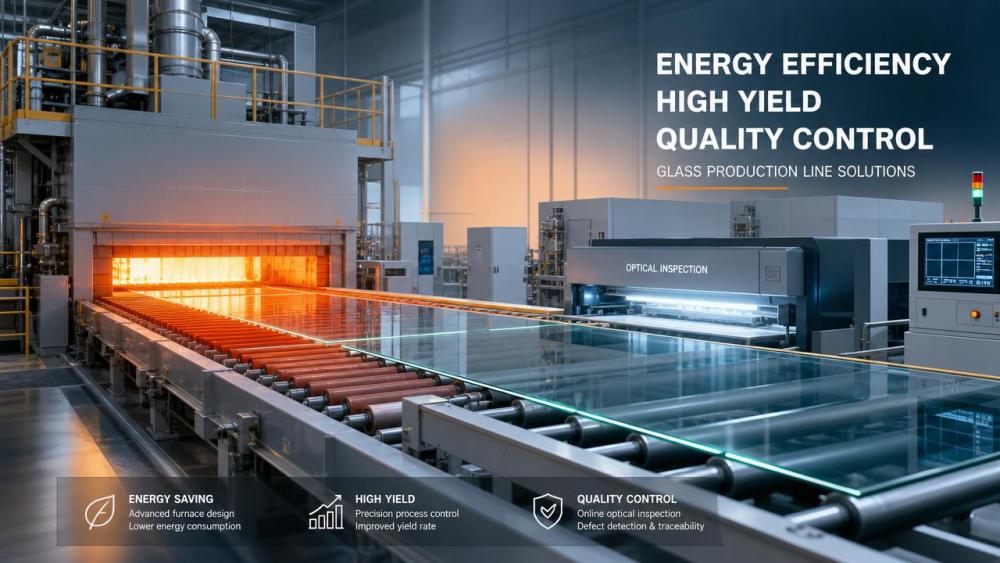
The economics of glass production have changed. Fuel, electricity, raw material variability, and logistics pressure now affect margins more quickly than many legacy operating models can absorb.
At the same time, product requirements are moving upward. Solar glass, architectural glazing, container glass, display applications, and specialty products all demand tighter process discipline and better defect prevention.
This is where glass industry advancements become practical rather than theoretical. A small gain in combustion control, cullet use, pull stability, or online inspection can produce a meaningful financial effect across a continuous line.
The same logic appears across cement kilns, refractory production, and thermal waste systems. Better thermal management usually creates three outcomes together: lower energy intensity, fewer process interruptions, and more predictable product quality.
What manufacturers should mean by glass industry advancements
In practical terms, the phrase covers any improvement that raises process visibility and control from the batch house to the cold end. That includes hardware, software, materials, and operating methods.
Some glass industry advancements are highly visible, such as oxy-fuel upgrades, digital twins, advanced scanners, and electric boosting. Others are less visible but equally important, including crown condition monitoring, burner tuning, and annealing discipline.
The common thread is process linkage. Furnace behavior influences fining. Fining affects defects. Defects influence cutting losses, customer claims, and line reputation. Quality control begins long before final inspection.
Three decision lenses that matter most
- Energy: how much heat is required, how effectively it is transferred, and how much is lost.
- Yield: how much saleable output is produced without breakage, defects, rework, or excessive trim loss.
- Quality control: how early variation is detected, explained, and corrected before it becomes scrap or claims.
Energy efficiency is no longer a side project
Among all glass industry advancements, energy optimization often delivers the fastest strategic value. Glass melting is inherently energy intensive, so even modest percentage improvements can reshape operating economics.
The strongest gains usually come from combining measures rather than chasing one headline technology. Better burner balance, heat recovery, insulation integrity, batch preheating, cullet optimization, and stable furnace loading work best together.
Electric boosting also deserves careful evaluation. In suitable lines, it can improve melting flexibility, support temperature uniformity, and help reduce dependence on fossil fuel combustion, especially where grid decarbonization is progressing.
CF-Elite’s cross-sector perspective is useful here. Lessons from rotary kiln energy management, refractory wear analysis, and thermal barrier performance often translate into better decisions for float furnaces and container glass lines.
Where energy losses often hide
Yield improvement starts with process stability
Many plants still treat yield loss as a downstream issue. In reality, the biggest yield penalties often begin upstream with thermal instability, raw material inconsistency, or incomplete understanding of defect origins.
This is why glass industry advancements increasingly focus on continuity. Stable temperatures, repeatable residence times, controlled redox conditions, and consistent forming behavior reduce the chance of costly variation later.
Yield also depends on how quickly a line returns to normal after disturbance. Stronger data capture, better alarm logic, and root-cause visibility shorten the recovery time after a pull change, equipment drift, or raw material deviation.
Typical yield levers in modern glass production
- Increase cullet quality, not only cullet ratio, to avoid contamination-driven defects.
- Use tighter thermal mapping to reduce local viscosity shifts and forming instability.
- Track defect patterns by zone, time, and recipe rather than by final scrap alone.
- Align maintenance windows with actual condition data instead of fixed intervals only.
Quality control is moving upstream and becoming smarter
One of the most important glass industry advancements is the shift from end-of-line detection to in-process control. Inspection remains essential, but late discovery is always more expensive than early prevention.
Modern quality systems combine optical inspection, thermal sensing, historian data, and process models. The goal is not just to find bubbles, stones, cords, scratches, or warp. The goal is to understand why they appeared.
Digital twins and online monitoring now add another layer. They can connect furnace condition, heat flow, and line behavior in ways that make hidden correlations more visible, especially on complex or high-value product lines.
That approach aligns closely with CF-Elite’s emphasis on stitching together physical parameters, chemical kinetics, and decarbonization strategy. Better quality control emerges when data is interpreted across systems, not in isolated screens.
What stronger quality control looks like in practice
A stronger system usually has three traits. It detects variation early, links it to a process cause, and supports a corrective action before defects spread across a long production window.
That may involve correlating furnace pressure fluctuations with surface defects, connecting annealing drift to breakage, or linking refractory wear signals to contamination events in the melt.
Different segments, different priorities
Not all glass industry advancements create equal value in every segment. The right priorities depend on product mix, line architecture, energy source, quality tolerance, and market pressure.
The key is to avoid adopting technology because it is fashionable. The better question is where a specific line loses value today, and which glass industry advancements remove that loss most directly.
How to evaluate the next move
A useful evaluation starts with baseline clarity. Without reliable data on specific energy consumption, defect categories, campaign condition, and scrap location, improvement projects tend to drift into broad promises.
The next step is to rank opportunities by payback logic and process dependency. Some upgrades deliver quick returns. Others matter because they enable later changes, such as digital control layers or low-carbon fuel transitions.
- Map thermal losses before selecting major capital projects.
- Separate defect symptoms from defect causes in reporting systems.
- Review refractory health alongside fuel strategy and pull targets.
- Treat digital tools as decision support, not as a substitute for process discipline.
- Compare line upgrades against carbon, cost, and quality outcomes together.
This integrated view is increasingly valuable in heavy industry. Energy efficiency, resource circularity, and quality assurance are now interdependent business questions, not separate technical departments.
A practical direction for long-term competitiveness
The most durable glass industry advancements are those that create process understanding as well as process improvement. Better lines do not simply run hotter, faster, or more digitally. They run with clearer cause-and-effect control.
That is why energy, yield, and quality control should be assessed as one operating system. A decision that improves one metric while weakening the others usually creates hidden costs later.
A sensible next step is to review where thermal inefficiency, yield loss, and defect variability intersect on the same line. From there, it becomes easier to compare technology options, prioritize upgrades, and build a more resilient production roadmap.
Related News
 Optical Glass Tech FellowHow to Evaluate a Glass Annealing Equipment Manufacturer for Production StabilityChoose a glass annealing equipment manufacturer with proven thermal uniformity, reliable controls, lifecycle value, and responsive service for stable production.Sep 08, 2026
 Prof. Marcus ChenThermal Energy Architecture in North America: Strategies for Lower Building Energy UseThermal energy architecture North America helps project leaders cut building energy use through stronger envelopes, right-sized HVAC, storage, and smart commissioning.Sep 07, 2026
 Ms. Elena RodriguezHow Should Buyers Evaluate Building Material Industry Intelligence Pricing?Building material industry intelligence pricing: learn how to compare coverage, technical depth, and ROI to choose intelligence that reduces procurement risk.Sep 07, 2026
 Ms. Elena RodriguezHow to Use Building Material Intelligence Data for Market and Investment DecisionsBuilding material industry intelligence data helps leaders evaluate demand, costs, regulation, capacity, and technology to make smarter market and investment decisions.Sep 05, 2026
 Thermal Energy ArchitectHow PLC Control Improves Energy Efficiency and Temperature Stability in KilnsEnergy efficient kilns PLC control improves temperature stability, cuts fuel waste, and optimizes combustion, draft, and material flow. Explore proven strategies for smarter kiln modernization.Sep 04, 2026
 Optical Glass Tech FellowEuropean Glass Melting Processes: Furnace Choices, Energy Use, and Quality ControlGlass melting process Europe: explore furnace choices, energy efficiency, cullet strategy, and quality control to improve output, compliance, and long-term glass performance.Sep 03, 2026
 Thermal Energy ArchitectWhat Determines Refractory Lining Monitoring Price for Industrial Kilns?Refractory lining monitoring price depends on kiln size, sensor technology, installation, software, and support. Compare total lifecycle costs and choose the right solution.Sep 02, 2026
 Silicate Process EngineerCement Production System Costs: A Plant Buyer’s Guide to Budgeting and ROICement production systems cost planning made clear: compare CAPEX, operating costs, compliance, and ROI to build a resilient, profitable cement plant investment.Sep 01, 2026
 Dr. Alistair VaughnWhat Should a Process Technology Database Track for High-Temperature Plants?Process technology database essentials for high-temperature plants: track thermal profiles, feed chemistry, refractory wear, emissions, energy, and maintenance for safer, data-driven decisions.Aug 31, 2026
 Ms. Elena RodriguezHow to Evaluate a Silicate Processing Equipment Manufacturer for Plant ProjectsSilicate processing equipment manufacturer selection: assess process fit, guarantees, energy, compliance, delivery risk, and lifecycle support for dependable plant performance.Aug 30, 2026
 Dr. Alistair VaughnHow to Specify Custom Agricultural Processing Equipment for Throughput and HygieneEquipment customization services for agricultural processing: learn to specify hygienic, high-throughput lines that improve yield, reliability, and long-term efficiency.Aug 29, 2026
 Dr. Alistair VaughnHow to Select Process Plant Equipment for High-Temperature, Abrasive Production LinesProcess plant equipment selection for high-temperature, abrasive lines: reduce downtime, improve durability, and optimize lifecycle performance.Aug 28, 2026
 Silicate Process EngineerHow Kiln Heat Recovery Systems Cut Fuel Use in Cement and Lime ProductionKiln heat recovery helps cement and lime plants cut fuel use, improve thermal stability, and build practical, reliable decarbonization strategies.Aug 27, 2026
 Ms. Elena RodriguezProcess Equipment Comparison: Which Metrics Matter Most for Reliable Selection?Process equipment comparison made practical: discover which metrics truly drive reliable selection, from energy efficiency and control stability to wear life, maintainability, and uptime.Aug 26, 2026
 Ms. Elena RodriguezWhat Buyers Should Check Before Sourcing Precision Alloy Bars for Critical PartsPrecision Alloy Bars buyers should verify grade, chemistry, tolerances, surface quality, traceability, and lead time before sourcing for critical parts. Learn what prevents costly machining and reliability risks.Aug 27, 2026
 Ms. Elena RodriguezHow to Evaluate Thermal Management Solutions Insulation for High-Heat Industrial SystemsThermal management solutions insulation: learn how to assess high-heat industrial systems by thermal performance, durability, lifecycle cost, and supplier data for smarter decisions.Aug 25, 2026
 Ms. Elena RodriguezWhat Drives Waste Recycling Cost in Industrial Projects and How to Estimate It?Waste recycling cost in industrial projects depends on composition, moisture, transport, pre-treatment, and compliance. Learn how to estimate it accurately and compare suppliers with confidence.Aug 24, 2026
 Silicate Process EngineerHow to Evaluate Cement Production Plants in the Middle East for Capacity, Fuel Flexibility, and ROIcement production plants Middle East: Learn how to assess true capacity, fuel flexibility, and ROI risks to identify resilient assets and smarter investment opportunities.Aug 23, 2026
 Structural Material AnalystHow to Evaluate Lightweight Material Machinery for Output, Energy Use, and Product QualityLightweight material machinery evaluation guide: compare stable output, energy use, and product quality to choose equipment that cuts waste, lowers costs, and improves production confidence.Aug 22, 2026
 Material Heat-Resist ExpertWhat Determines Refractory Production Line Price in a Turnkey Plant Project?Refractory production line price depends on raw materials, forming method, kiln and drying design, automation, utilities, and scope. Learn what really drives turnkey plant cost before you invest.Aug 21, 2026

Related News
- 00
0000-00
How to Evaluate a Glass Annealing Equipment Manufacturer for Production Stability - 00
0000-00
European Glass Melting Processes: Furnace Choices, Energy Use, and Quality Control - 00
0000-00
How Glass Melting Furnace Design Impacts Energy Use and Glass Quality - 00
0000-00
How Can Glass Manufacturing Technology Improve Furnace Efficiency and Cut Energy Costs? - 00
0000-00
How to Evaluate Continuous Glass Annealing Equipment for Stable Throughput?
Weekly Insights
Stay ahead with our curated technology reports delivered every Monday.