
Heavy Equipment Trade Costs Explained: What Buyers Should Check Before Importing




Why does the quoted price rarely match the real heavy equipment trade cost?
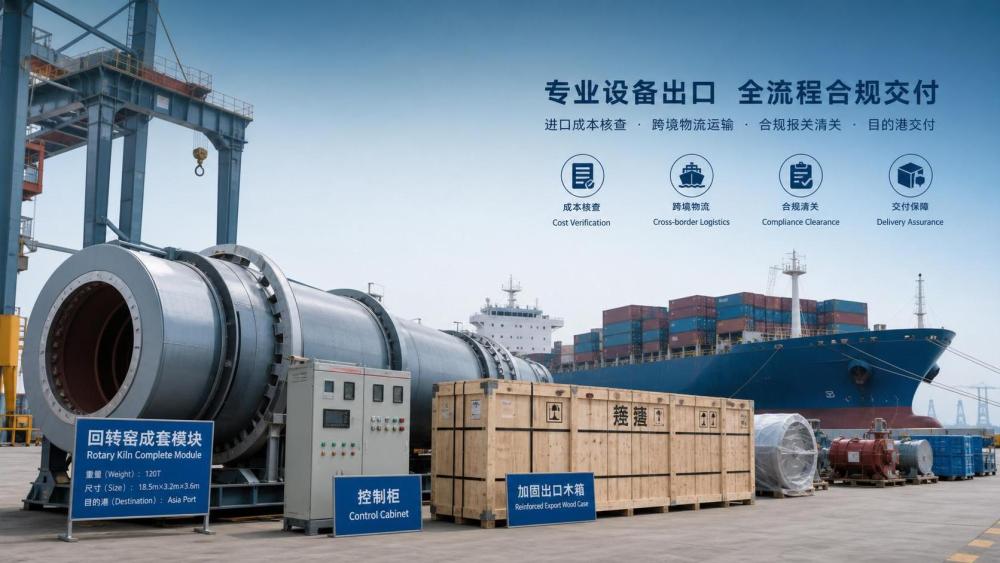
In heavy equipment trade, the quoted machine price is only the visible layer of the investment.
That is especially true for rotary kilns, glass lines, incineration systems, and extrusion equipment shipped across borders.
A lower offer can become the more expensive option once freight, packaging, duties, inland transport, and commissioning are added.
In practice, the biggest mistake is comparing supplier quotes line by line without normalizing the full landed cost.
Heavy equipment trade also involves long-cycle decisions.
If a kiln shell, refractory section, or thermal control package arrives with gaps in documentation, delays multiply quickly.
For that reason, cost control begins before the contract, not after the vessel departs.
CF-Elite often frames this issue through industrial intelligence rather than simple price watching.
For high-temperature industries, equipment value depends on process fit, energy efficiency, compliance, and service depth together.
So the better question is not, “What is the cheapest line?”
It is, “What will this system actually cost to import, install, run, and support over time?”
Which hidden costs change a heavy equipment trade budget most often?
Several cost items appear late, even though they are predictable.
These are the items worth checking before any deposit is released.
- Ocean freight and special transport charges for oversized modules, steel structures, burners, and control cabinets.
- Export packing, fumigation, corrosion protection, and reinforcement for long transit or humid port conditions.
- Import duty, VAT, customs broker fees, and local port handling that vary by HS code and country.
- Site unloading, crane rental, foundation adjustment, and utility connection work not included in the supplier scope.
- Commissioning, trial production materials, operator training, and interpreter support during startup.
- Spare parts packages, refractory consumables, wear components, and emergency stock for the first operating year.
The more customized the equipment, the more these hidden costs matter.
For example, a standard mechanical conveyor is easier to price than a complete thermal process line.
Industrial incineration and silicate production systems usually carry higher design verification and compliance costs.
That is where heavy equipment trade moves beyond purchasing and into risk management.
A quick cost check helps before comparing offers
This kind of checklist makes supplier comparison more realistic.
It also exposes whether a low offer is efficient or simply incomplete.
How should import duties, compliance, and documentation be checked before shipment?
This is where many heavy equipment trade projects lose time.
The equipment may be technically sound, yet customs or local approval issues hold it at the border.
A good starting point is the HS code.
The same production line can face different tax treatment depending on whether it is classified as a complete system or separate modules.
That affects not only duty, but also supporting documents and inspection procedures.
Next comes technical compliance.
For thermal and process equipment, emissions rules, electrical standards, burner approvals, and pressure-related requirements may all apply.
If a line is intended for cement, glass, refractory, or waste-to-energy use, environmental review can be even more sensitive.
More experienced buyers ask for documentation samples before production is finished.
- Packing list with gross and net weights by module
- Commercial invoice aligned with contract terms
- Material certificates and test reports where relevant
- Electrical drawings, P&ID, and installation manuals
- Origin certificate, insurance details, and inspection records
CF-Elite’s industry focus is useful here because documentation quality often reflects process maturity.
For complex kilns or extrusion lines, missing technical detail is rarely a minor paperwork issue.
It usually signals future startup friction as well.
Is the cheapest supplier really cheaper once installation and operation begin?
Not always, and this is one of the most misunderstood parts of heavy equipment trade.
A lower capital price can hide higher operating cost, weaker energy performance, or slower maintenance support.
That matters even more in high-temperature processing, where downtime is expensive and restart cycles are disruptive.
Take a rotary kiln or incineration system as an example.
If refractory life is shorter than promised, fuel consumption is unstable, or controls are not tuned to site conditions, the apparent savings disappear fast.
The same logic applies to glass forming lines and building material extrusion systems.
Precision, thermal balance, and digital monitoring are not luxury features when output consistency affects yield.
A more practical comparison uses total ownership signals, not only the sales quote.
- Expected energy use per ton of output
- Service interval for wear parts and refractories
- Availability of remote diagnostics or digital twin support
- Local or regional spare parts coverage
- Guaranteed throughput and acceptance benchmark
This is why commercial insight and technical insight should stay connected.
In heavy equipment trade, a line that performs steadily often protects margins better than a line that only looks cheaper on paper.
What should be written into the contract before importing heavy process equipment?
A strong contract does not only describe what is being sold.
It defines what happens if delivery, performance, or support falls short.
In heavy equipment trade, unclear scope is one of the costliest problems.
The safest approach is to make commercial language and technical annexes support each other.
Several points deserve close review.
- Exact supply boundary, including utilities, instruments, steel structures, and optional modules
- Incoterm, destination point, and responsibility for damage during transit
- Delivery schedule tied to drawings, inspections, and shipment milestones
- Performance guarantees for output, energy use, and emissions where relevant
- Remedies for delay, failed acceptance, and repeated defects
- Training, startup support days, and spare parts obligations
It also helps to define what counts as completion.
Mechanical completion, hot commissioning, trial output, and final acceptance should not be blended into one vague milestone.
Where projects involve green building materials or waste heat optimization, energy and environmental targets should be measurable.
That keeps the heavy equipment trade decision aligned with long-term operating value, not just delivery speed.
How can buyers reduce risk before the final decision is made?
The most effective risk control usually happens before the final negotiation round.
At that stage, it helps to pause and test the assumptions behind the offer.
A useful method is to review the project through four filters: technical fit, landed cost, compliance readiness, and service resilience.
If one filter is weak, the heavy equipment trade deal may still close, but the operating risk stays high.
For sectors covered by CF-Elite, this broader review is especially relevant.
Silicate production, thermal processing, and specialized extrusion depend on process continuity and energy discipline.
That means market intelligence, regulation tracking, and equipment benchmarking can support better import decisions.
Before moving ahead, it is sensible to prepare a short internal decision sheet.
A disciplined heavy equipment trade process is rarely about moving faster.
It is about seeing cost, risk, and operating value in one frame.
The next sensible step is to map the real project scope, test every hidden cost, and compare offers against measurable long-term performance.
When the review includes logistics, compliance, thermal efficiency, and service depth together, heavy equipment trade becomes far more predictable.
Related News
 Thermal Energy ArchitectHow to Evaluate a Thermal Energy Optimization Company for High-Temperature PlantsChoose a thermal energy optimization company with proven process expertise, measurable savings, and reliable delivery for high-temperature plants. Learn what to assess.Sep 15, 2026
 Thermal Energy ArchitectRotary Kiln Efficiency: How Feed Rate, Fuel Use, and Heat Loss Affect OutputRotary kiln efficiency explained: discover how feed rate, fuel use, heat loss, combustion, and cooling performance shape output, quality, and energy costs.Sep 14, 2026
 Thermal Energy ArchitectHow to Select Heat-Resistant Materials That Maintain Abrasion Resistance in KilnsHeat-resistant materials abrasion resistance: learn how to select kiln linings that withstand heat, wear, thermal cycling, and chemical attack for longer service life.Sep 13, 2026
 Thermal Energy ArchitectHow Rotary Kiln Automation Improves Temperature Control and Fuel EfficiencyRotary kiln technology automation enhances temperature control, stabilizes combustion, and improves fuel efficiency with smarter data, predictive control, and safer operations.Sep 12, 2026
 Silicate Process EngineerCement Plant Emission Control: Selecting Systems for Dust, NOx, and SO2 LimitsCement plant emission control guide: compare dust collectors, NOx reduction, and SO2 systems for reliable compliance across kiln modes, fuel changes, and operating upsets.Sep 11, 2026
 Thermal Energy ArchitectSelecting Abrasion-Resistant High-Temperature Materials for Kiln and Conveyor Wear ZonesHigh-temp material engineering guide to abrasion-resistant kiln and conveyor solutions—match wear, heat, chemistry, and installation design for longer service life.Sep 10, 2026
 Dr. Alistair VaughnIndustrial Process Engineering: How to Map Processes for Safer, More Efficient PlantsIndustrial process engineering reveals bottlenecks, safety risks, and energy losses through practical process mapping for safer, more efficient plants.Sep 09, 2026
 Optical Glass Tech FellowHow to Evaluate a Glass Annealing Equipment Manufacturer for Production StabilityChoose a glass annealing equipment manufacturer with proven thermal uniformity, reliable controls, lifecycle value, and responsive service for stable production.Sep 08, 2026
 Prof. Marcus ChenThermal Energy Architecture in North America: Strategies for Lower Building Energy UseThermal energy architecture North America helps project leaders cut building energy use through stronger envelopes, right-sized HVAC, storage, and smart commissioning.Sep 07, 2026
 Ms. Elena RodriguezHow Should Buyers Evaluate Building Material Industry Intelligence Pricing?Building material industry intelligence pricing: learn how to compare coverage, technical depth, and ROI to choose intelligence that reduces procurement risk.Sep 07, 2026
 Ms. Elena RodriguezHow to Use Building Material Intelligence Data for Market and Investment DecisionsBuilding material industry intelligence data helps leaders evaluate demand, costs, regulation, capacity, and technology to make smarter market and investment decisions.Sep 05, 2026
 Thermal Energy ArchitectHow PLC Control Improves Energy Efficiency and Temperature Stability in KilnsEnergy efficient kilns PLC control improves temperature stability, cuts fuel waste, and optimizes combustion, draft, and material flow. Explore proven strategies for smarter kiln modernization.Sep 04, 2026
 Optical Glass Tech FellowEuropean Glass Melting Processes: Furnace Choices, Energy Use, and Quality ControlGlass melting process Europe: explore furnace choices, energy efficiency, cullet strategy, and quality control to improve output, compliance, and long-term glass performance.Sep 03, 2026
 Thermal Energy ArchitectWhat Determines Refractory Lining Monitoring Price for Industrial Kilns?Refractory lining monitoring price depends on kiln size, sensor technology, installation, software, and support. Compare total lifecycle costs and choose the right solution.Sep 02, 2026
 Silicate Process EngineerCement Production System Costs: A Plant Buyer’s Guide to Budgeting and ROICement production systems cost planning made clear: compare CAPEX, operating costs, compliance, and ROI to build a resilient, profitable cement plant investment.Sep 01, 2026
 Dr. Alistair VaughnWhat Should a Process Technology Database Track for High-Temperature Plants?Process technology database essentials for high-temperature plants: track thermal profiles, feed chemistry, refractory wear, emissions, energy, and maintenance for safer, data-driven decisions.Aug 31, 2026
 Ms. Elena RodriguezHow to Evaluate a Silicate Processing Equipment Manufacturer for Plant ProjectsSilicate processing equipment manufacturer selection: assess process fit, guarantees, energy, compliance, delivery risk, and lifecycle support for dependable plant performance.Aug 30, 2026
 Dr. Alistair VaughnHow to Specify Custom Agricultural Processing Equipment for Throughput and HygieneEquipment customization services for agricultural processing: learn to specify hygienic, high-throughput lines that improve yield, reliability, and long-term efficiency.Aug 29, 2026
 Dr. Alistair VaughnHow to Select Process Plant Equipment for High-Temperature, Abrasive Production LinesProcess plant equipment selection for high-temperature, abrasive lines: reduce downtime, improve durability, and optimize lifecycle performance.Aug 28, 2026
 Silicate Process EngineerHow Kiln Heat Recovery Systems Cut Fuel Use in Cement and Lime ProductionKiln heat recovery helps cement and lime plants cut fuel use, improve thermal stability, and build practical, reliable decarbonization strategies.Aug 27, 2026



Related News
- 00
0000-00
How Should Buyers Evaluate Building Material Industry Intelligence Pricing? - 00
0000-00
How to Use Building Material Intelligence Data for Market and Investment Decisions - 00
0000-00
How to Evaluate a Silicate Processing Equipment Manufacturer for Plant Projects - 00
0000-00
Process Equipment Comparison: Which Metrics Matter Most for Reliable Selection? - 00
0000-00
What Buyers Should Check Before Sourcing Precision Alloy Bars for Critical Parts
Weekly Insights
Stay ahead with our curated technology reports delivered every Monday.