
Global Material Supply Risks: What Buyers Should Check Before Long-Term Contracts




Why does global material supply risk matter more in long-term contracts now?
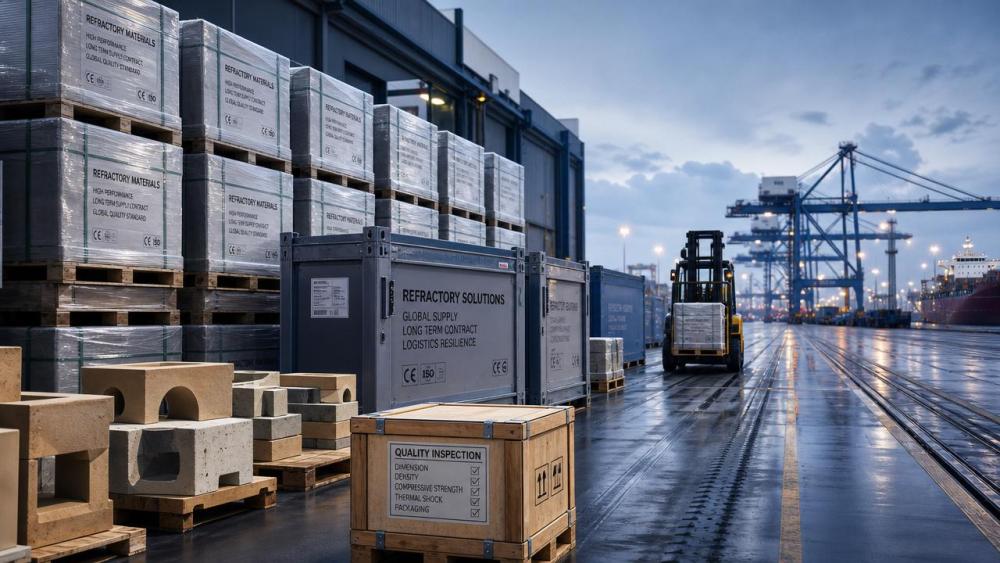
Long-term sourcing used to focus on price locks and volume security. That is no longer enough when global material supply conditions shift faster than contract cycles.
A disruption can start far upstream. Mining restrictions, fuel volatility, shipping bottlenecks, export controls, or carbon rules may all reach the final invoice months later.
In heavy industry, the impact is sharper. Refractories, kiln parts, glass line components, and extrusion materials depend on stable thermal performance, not just nominal availability.
That is why global material supply reviews should go beyond procurement paperwork. The real question is whether the source can hold quality, timing, and compliance under pressure.
For sectors followed by CF-Elite, this issue is practical rather than theoretical. Cement plants, industrial kilns, float glass lines, and refractory systems all rely on continuity across long equipment lifecycles.
A contract may look competitive today, yet become expensive if feedstock chemistry changes, furnace-grade inputs tighten, or environmental rules force a supplier to alter production routes.
What should be checked first before signing multi-year terms?
The first check is not price. It is supply architecture.
Buyers often ask whether a supplier can deliver next quarter. A better question is whether the supplier can still deliver after a policy shock, freight delay, or energy cost surge.
In practice, the most useful review covers four layers.
- Raw material origin: identify mines, recycled inputs, additives, and any single-country dependence.
- Processing resilience: confirm where calcining, melting, shaping, or coating actually happen.
- Compliance exposure: review emissions rules, trade duties, sanctions, waste handling, and product certification obligations.
- Logistics flexibility: test alternative ports, route options, packaging standards, and emergency lead-time assumptions.
This matters because global material supply risk is rarely caused by one failure. More often, several smaller weaknesses line up at the same time.
A supplier may have strong production capacity, yet rely on one critical imported mineral. Another may have local inputs, but weak environmental permitting.
For thermal-process industries, upstream chemistry also deserves close attention. Slight variation in alumina, silica, fluxes, binders, or insulation media can affect campaign life and energy consumption.
A quick judgment table for early-stage review
Before deep negotiation, a compact screening table helps separate manageable issues from structural global material supply risks.
Are raw material origins really that important if specs already match?
Yes, because matching specs on paper do not always mean matching performance in service.
Global material supply decisions in high-temperature industries depend on more than purity percentages. Grain structure, impurity profile, moisture behavior, and thermal cycling response can change actual performance.
That is especially true for refractories, combustion-zone materials, and glass-contact components. Two materials may pass the same test sheet but behave differently under sustained temperature gradients.
Origin tracing also helps buyers see geopolitical exposure. If a key bauxite, magnesia, zircon, or specialty binder stream comes from one sensitive region, contract security becomes fragile.
A useful approach is to request both source disclosure and substitution logic. If the primary source fails, what alternative chemistry is approved, and what performance trade-off should be expected?
This is where intelligence platforms add value. CF-Elite’s coverage of silicate processes, thermal management, and environmental policy helps connect material origin with operating consequences, not just market headlines.
How do compliance and decarbonization risks affect global material supply?
Many supply failures now come from regulation rather than physical shortage.
Carbon pricing, emissions caps, waste disposal rules, and energy reporting can reshape production costs very quickly. A supplier under new pressure may pass costs through or cut output.
In sectors linked to kilns, furnaces, and heavy thermal loads, compliance exposure is often tied to fuel choice, process heat efficiency, and refractory lifecycle.
That means global material supply risk is partly a decarbonization risk. Materials with energy-intensive processing may remain available, but no longer at the assumed cost base.
It also affects imported equipment components. If embedded carbon rules or local content rules tighten, replacement parts may face new documentation demands.
A practical contract should therefore define who carries compliance-change costs, how specification updates are approved, and when requalification is required.
- Ask for current environmental permits and audit status.
- Check whether carbon-related costs are fixed, indexed, or open-ended.
- Confirm traceability for recycled and secondary raw materials.
- Review whether emergency substitutions need prior technical approval.
What contract terms reduce long-term supply surprises without making deals rigid?
The strongest contracts do not pretend volatility will disappear. They define how volatility is handled.
For global material supply, that usually means balancing commitment with controlled flexibility.
Instead of relying on a single headline price, build clauses around the real risk points.
- Index-linked pricing for agreed raw material baskets, not broad discretionary adjustments.
- Source-change notification rules with supporting test data.
- Minimum safety stock or consignment terms for critical wear parts.
- Dual-route logistics commitments for cross-border shipments.
- Performance remedies tied to actual operating outcomes, not only delivery dates.
In actual projects, the most overlooked term is technical escalation. When a material batch behaves differently, who reviews it, how fast, and with what evidence?
For long-cycle assets such as kilns, float lines, and extrusion units, this clause can save weeks of delay. It also keeps commercial discussions aligned with operating reality.
Another useful step is to separate strategic materials from standard consumables. Not every item needs the same depth of control.
Which warning signs are often missed until a disruption happens?
The common mistake is waiting for an obvious crisis. Global material supply problems usually leave smaller clues first.
One clue is repeated micro-delays explained as port congestion or maintenance. Another is sudden reluctance to discuss origin details or plant utilization.
A third sign is data inconsistency. Technical sheets remain unchanged while density, color, packaging weight, or claim language starts to shift.
In energy-intensive sectors, watch for suppliers exposed to unstable electricity or gas markets. Short-term energy pressure can quietly reduce output quality.
It also helps to monitor industry signals beyond direct suppliers. Changes in refractory repair cycles, cement plant shutdowns, glass furnace rebuild timing, or waste-to-energy policy can reshape demand suddenly.
This broader reading is one reason specialist intelligence matters. CF-Elite tracks process technology, market shifts, and regulatory signals together, which is often how real supply risk becomes visible early.
A practical watchlist before renewal
- Lead times extend while price validity shortens.
- Supplier proposes substitutes without full trial evidence.
- Freight terms become more restrictive than last cycle.
- Certification updates lag behind shipment schedules.
- Maintenance, emissions, or expansion news suggests hidden capacity strain.
So what is the smartest next step before committing?
Start by ranking materials and components by operational consequence, not by purchase value alone.
A low-cost item can still create high downtime if it affects combustion stability, lining life, sealing reliability, or temperature control.
Then build a short due-diligence file for each critical line item. Include origin map, backup source, compliance exposure, logistics route, and requalification trigger.
If the market feels unclear, compare contract assumptions with current sector intelligence. For global material supply, timing matters as much as specification.
The most reliable decisions usually combine commercial review with process insight. That is especially true in silicate, kiln, incineration, glass, and extrusion applications where materials and thermal conditions interact closely.
Before signing, confirm one final point: if supply conditions change next year, will the contract help contain the problem or amplify it?
That single question often reveals whether a long-term agreement is genuinely resilient. If not, refine the checks, tighten the clauses, and verify the assumptions again.
Related News
 Optical Glass Tech FellowHow to Evaluate a Glass Annealing Equipment Manufacturer for Production StabilityChoose a glass annealing equipment manufacturer with proven thermal uniformity, reliable controls, lifecycle value, and responsive service for stable production.Sep 08, 2026
 Prof. Marcus ChenThermal Energy Architecture in North America: Strategies for Lower Building Energy UseThermal energy architecture North America helps project leaders cut building energy use through stronger envelopes, right-sized HVAC, storage, and smart commissioning.Sep 07, 2026
 Ms. Elena RodriguezHow Should Buyers Evaluate Building Material Industry Intelligence Pricing?Building material industry intelligence pricing: learn how to compare coverage, technical depth, and ROI to choose intelligence that reduces procurement risk.Sep 07, 2026
 Ms. Elena RodriguezHow to Use Building Material Intelligence Data for Market and Investment DecisionsBuilding material industry intelligence data helps leaders evaluate demand, costs, regulation, capacity, and technology to make smarter market and investment decisions.Sep 05, 2026
 Thermal Energy ArchitectHow PLC Control Improves Energy Efficiency and Temperature Stability in KilnsEnergy efficient kilns PLC control improves temperature stability, cuts fuel waste, and optimizes combustion, draft, and material flow. Explore proven strategies for smarter kiln modernization.Sep 04, 2026
 Optical Glass Tech FellowEuropean Glass Melting Processes: Furnace Choices, Energy Use, and Quality ControlGlass melting process Europe: explore furnace choices, energy efficiency, cullet strategy, and quality control to improve output, compliance, and long-term glass performance.Sep 03, 2026
 Thermal Energy ArchitectWhat Determines Refractory Lining Monitoring Price for Industrial Kilns?Refractory lining monitoring price depends on kiln size, sensor technology, installation, software, and support. Compare total lifecycle costs and choose the right solution.Sep 02, 2026
 Silicate Process EngineerCement Production System Costs: A Plant Buyer’s Guide to Budgeting and ROICement production systems cost planning made clear: compare CAPEX, operating costs, compliance, and ROI to build a resilient, profitable cement plant investment.Sep 01, 2026
 Dr. Alistair VaughnWhat Should a Process Technology Database Track for High-Temperature Plants?Process technology database essentials for high-temperature plants: track thermal profiles, feed chemistry, refractory wear, emissions, energy, and maintenance for safer, data-driven decisions.Aug 31, 2026
 Ms. Elena RodriguezHow to Evaluate a Silicate Processing Equipment Manufacturer for Plant ProjectsSilicate processing equipment manufacturer selection: assess process fit, guarantees, energy, compliance, delivery risk, and lifecycle support for dependable plant performance.Aug 30, 2026
 Dr. Alistair VaughnHow to Specify Custom Agricultural Processing Equipment for Throughput and HygieneEquipment customization services for agricultural processing: learn to specify hygienic, high-throughput lines that improve yield, reliability, and long-term efficiency.Aug 29, 2026
 Dr. Alistair VaughnHow to Select Process Plant Equipment for High-Temperature, Abrasive Production LinesProcess plant equipment selection for high-temperature, abrasive lines: reduce downtime, improve durability, and optimize lifecycle performance.Aug 28, 2026
 Silicate Process EngineerHow Kiln Heat Recovery Systems Cut Fuel Use in Cement and Lime ProductionKiln heat recovery helps cement and lime plants cut fuel use, improve thermal stability, and build practical, reliable decarbonization strategies.Aug 27, 2026
 Ms. Elena RodriguezProcess Equipment Comparison: Which Metrics Matter Most for Reliable Selection?Process equipment comparison made practical: discover which metrics truly drive reliable selection, from energy efficiency and control stability to wear life, maintainability, and uptime.Aug 26, 2026
 Ms. Elena RodriguezWhat Buyers Should Check Before Sourcing Precision Alloy Bars for Critical PartsPrecision Alloy Bars buyers should verify grade, chemistry, tolerances, surface quality, traceability, and lead time before sourcing for critical parts. Learn what prevents costly machining and reliability risks.Aug 27, 2026
 Ms. Elena RodriguezHow to Evaluate Thermal Management Solutions Insulation for High-Heat Industrial SystemsThermal management solutions insulation: learn how to assess high-heat industrial systems by thermal performance, durability, lifecycle cost, and supplier data for smarter decisions.Aug 25, 2026
 Ms. Elena RodriguezWhat Drives Waste Recycling Cost in Industrial Projects and How to Estimate It?Waste recycling cost in industrial projects depends on composition, moisture, transport, pre-treatment, and compliance. Learn how to estimate it accurately and compare suppliers with confidence.Aug 24, 2026
 Silicate Process EngineerHow to Evaluate Cement Production Plants in the Middle East for Capacity, Fuel Flexibility, and ROIcement production plants Middle East: Learn how to assess true capacity, fuel flexibility, and ROI risks to identify resilient assets and smarter investment opportunities.Aug 23, 2026
 Structural Material AnalystHow to Evaluate Lightweight Material Machinery for Output, Energy Use, and Product QualityLightweight material machinery evaluation guide: compare stable output, energy use, and product quality to choose equipment that cuts waste, lowers costs, and improves production confidence.Aug 22, 2026
 Material Heat-Resist ExpertWhat Determines Refractory Production Line Price in a Turnkey Plant Project?Refractory production line price depends on raw materials, forming method, kiln and drying design, automation, utilities, and scope. Learn what really drives turnkey plant cost before you invest.Aug 21, 2026

Related News
- 00
0000-00
How Should Buyers Evaluate Building Material Industry Intelligence Pricing? - 00
0000-00
How to Use Building Material Intelligence Data for Market and Investment Decisions - 00
0000-00
How to Evaluate a Silicate Processing Equipment Manufacturer for Plant Projects - 00
0000-00
Process Equipment Comparison: Which Metrics Matter Most for Reliable Selection? - 00
0000-00
What Buyers Should Check Before Sourcing Precision Alloy Bars for Critical Parts
Weekly Insights
Stay ahead with our curated technology reports delivered every Monday.