
Why Heat-Resistant Materials Lose Abrasion Resistance in High-Temperature Handling Systems




Why Heat-Resistant Materials Abrasion Resistance Drops in Real High-Temperature Service
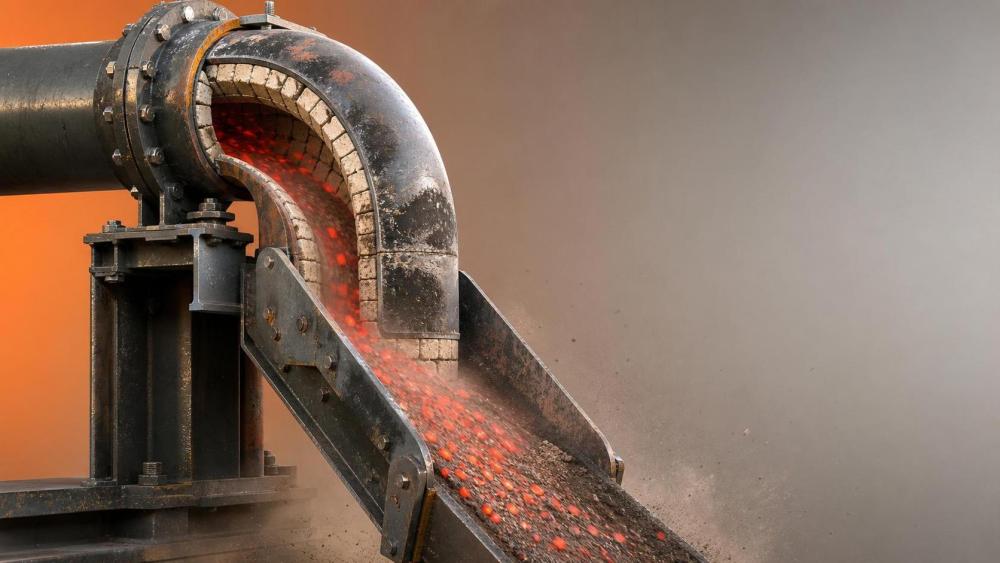
In high-temperature handling systems, durability is often judged by temperature rating alone.
That shortcut looks practical, but it misses how wear actually develops in service.
Many liners, chutes, guides, elbows, and transfer points survive heat well.
Yet their heat-resistant materials abrasion resistance weakens once thermal load combines with impact, dust velocity, and chemistry.
This is common in cement plants, glass batch handling, kilns, incineration lines, and refractory production systems.
The result is rarely one dramatic failure.
More often, wear accelerates quietly until wall thickness, sealing quality, or flow stability falls below a safe margin.
From a risk perspective, that is where the problem becomes expensive.
Heat-resistant materials abrasion resistance depends on microstructure, hardness retention, oxidation behavior, and thermal fatigue resistance.
Once one of those factors shifts, wear rates can rise much faster than inspection teams expect.
This also means material selection should start from operating conditions, not from brochure temperature limits.
What Changes at High Temperature
At room temperature, abrasion is often linked to surface hardness and particle shape.
At elevated temperature, the picture becomes more complicated.
Metals may soften, carbides may destabilize, and protective scales may crack off.
Ceramics and refractories keep strength better in heat, but they can lose toughness under repeated shock or impact.
That trade-off explains why heat-resistant materials abrasion resistance is rarely a fixed property.
It changes with temperature gradients, residence time, atmosphere, and loading cycles.
1. Thermal softening reduces surface defense
Some alloys keep shape at heat but lose enough hardness to resist sliding solids poorly.
When conveyed particles remain angular, softened surfaces plow and micro-cut more easily.
This is one of the fastest ways heat-resistant materials abrasion resistance declines in transfer equipment.
2. Oxide layers are protective, but often fragile
High-temperature oxidation can form a barrier that slows deeper attack.
In abrasive flow, that same scale may spall, exposing fresh substrate again and again.
The wear process then becomes oxidation plus abrasion, not abrasion alone.
3. Thermal cycling drives crack initiation
Startup, shutdown, air leakage, and hot spots create repeated expansion and contraction.
Small cracks open first, then abrasive solids widen them under flow pressure.
That combination makes heat-resistant materials abrasion resistance look acceptable in tests, but weak in operation.
The Main Failure Mechanisms Behind Wear Acceleration
In real plants, several mechanisms usually overlap.
Looking at them separately helps, but failure analysis must reconnect them to the full process.
- High-velocity fines create constant surface cutting in ducts, cyclones, and elbows.
- Coarse particles add impact loading, especially at direction changes and drop points.
- Alkali, chlorides, sulfur compounds, or molten phases chemically weaken the surface.
- Thermal gradients produce stress concentrations near joints, anchors, and dissimilar materials.
- Poor flow design creates local turbulence, which multiplies erosion at a few critical spots.
A useful way to view heat-resistant materials abrasion resistance is as a system property.
Material grade matters, but geometry, flow angle, and process chemistry decide whether that grade will last.
In recent operating reviews, this pattern appears more often in plants pushing higher throughput with older handling lines.
Where the Risk Becomes Most Visible
The decline in heat-resistant materials abrasion resistance is not evenly distributed across a plant.
It usually concentrates in predictable operating zones.
A more obvious signal is uneven wear between nominally identical positions.
That often indicates a local process issue, not just a weak material choice.
When heat-resistant materials abrasion resistance drops only in selected zones, review velocity, angle, and atmosphere first.
How to Diagnose the Real Cause Before Replacing Material
Replacing a worn part with a harder grade may help, but often only briefly.
A better approach is to build a short diagnostic chain.
- Map the exact wear location, shape, and depth.
- Check whether thinning follows flow direction, impact angle, or hot spots.
- Review process data for temperature swings, throughput spikes, and air infiltration.
- Sample deposits or scales for chemical contribution.
- Compare actual service life against design assumptions and shutdown records.
This method usually reveals whether heat-resistant materials abrasion resistance failed because of the grade, the design, or the process.
In practical operations, the answer is often a combination of all three.
That is why isolated purchasing decisions rarely solve recurring wear.
What Actually Improves Heat-Resistant Materials Abrasion Resistance
Improvement usually comes from matching the wear mode to the material system.
That sounds basic, but it is still where many projects drift off course.
Choose for the dominant damage mode
Sliding abrasion favors hardness retention.
Impact abrasion needs more toughness.
Chemically active dust may require corrosion-resistant alloys, engineered ceramics, or composite linings.
Reduce attack intensity through design
Sometimes the most effective fix is a geometry change.
Smoother transitions, larger radii, flow calming, and drop height control can extend service life significantly.
This also lowers the burden on heat-resistant materials abrasion resistance itself.
Control process instability
Stable temperature and stable flow reduce fatigue, spalling, and oxidation cycling.
Even a strong material loses value when the process keeps pushing it across changing damage regimes.
A Practical Prevention Checklist for High-Temperature Handling Systems
The most reliable way to protect heat-resistant materials abrasion resistance is disciplined prevention.
- Set inspection points at elbows, drop zones, joints, and hot transition sections.
- Track wear rate by thickness trend, not by occasional visual checks alone.
- Record temperature fluctuation with wear history in the same maintenance file.
- Review particle size and moisture whenever wear suddenly accelerates.
- Audit gas sealing and false air entry around affected zones.
- Use shutdown findings to refine specification for the next replacement cycle.
For organizations following the high-temperature sectors tracked by CF-Elite, this matters beyond maintenance cost.
Wear control supports stable output, lower dust escape, fewer emergency interventions, and better energy performance.
In other words, stronger heat-resistant materials abrasion resistance is also an operational reliability strategy.
Start with the hottest wear points, verify the real damage mode, and align material, design, and process together. That is where durable results usually begin.
Related News
 Structural Material AnalystHow Sustainable Material Extrusion Can Improve Wall Panel Durability and Design FlexibilityDiscover how sustainable material extrusion for wall panels improves durability, moisture resistance, design flexibility, and installation consistency for high-performing wall systems.Oct 01, 2026
 Thermal Energy ArchitectHow to Evaluate a High-Temperature Materials Manufacturer for Furnace ApplicationsChoose a high-temperature materials manufacturer with confidence: compare thermal performance, chemical resistance, quality controls, installation support, and lifecycle cost.Sep 30, 2026
 Ms. Elena RodriguezHow to Structure Global Specification Data for Faster Industrial Product EvaluationGlobal specification-oriented product information helps industrial teams compare capacity, energy, emissions, automation, and lifecycle data on a like-for-like basis for faster, confident equipment decisions.Sep 29, 2026
 Thermal Energy ArchitectHow to Specify High-Temperature Process Systems for Continuous Thermal OperationsHigh-temperature process engineering systems: learn how to specify resilient continuous thermal operations for efficiency, compliance, reliable uptime, and long-term performance.Sep 28, 2026
 Thermal Energy ArchitectHow to Evaluate a Thermal Engineering Contractor for High-Temperature Plant ProjectsChoose a thermal engineering contractor with proven process expertise, lifecycle value, emissions control, and delivery discipline for reliable high-temperature plant performance.Sep 27, 2026
 Silicate Process EngineerHow Latin American Cement Plants Can Reduce Dust Emissions in Kilns and Transfer PointsCement plant dust control Latin America: reduce kiln and transfer-point emissions with practical airflow, filtration, monitoring, and maintenance strategies.Sep 26, 2026
 Material Heat-Resist ExpertHow to Evaluate Refractory Production Lines for Output, Quality, and Energy UseRefractory production lines: learn how to assess qualified output, consistent quality, and total energy use for smarter, lower-risk investment decisions.Sep 25, 2026
 Dr. Alistair VaughnHow Waste Recycling Technology Improves Material Recovery in Industrial PlantsWaste recycling technology improves material recovery through source segregation, smart separation, thermal treatment, and quality control for industrial plants.Sep 24, 2026
 Optical Glass Tech FellowHow to Specify Glass Annealing Equipment for European Quality and Energy RequirementsGlass annealing equipment Europe: learn how to specify lehrs for consistent glass quality, energy efficiency, compliance, automation, and reliable long-term performance.Sep 23, 2026
 Optical Glass Tech FellowSilicate Process Automation: Improving Batch Consistency and Energy ControlSilicate process automation improves batch consistency, energy control, traceability, and operator confidence across high-temperature manufacturing operations.Sep 22, 2026
 Optical Glass Tech FellowHow Silicate Industrial Processes Control Viscosity, Energy Use, and Product QualitySilicate industrial processes: learn how viscosity, chemistry, heat transfer, and atmosphere control reduce energy use, improve stability, and protect product quality.Sep 21, 2026
 Thermal Energy ArchitectHow European Plants Can Evaluate Energy Recovery Equipment for High-Temperature ProcessesIndustrial energy recovery equipment Europe: learn how high-temperature plants can assess waste-heat sources, integration risks, lifecycle value, and reliable recovery routes.Sep 20, 2026
 Thermal Energy ArchitectIndustrial Furnace Process Optimization: Reducing Fuel Use Without Sacrificing ThroughputIndustrial process optimization furnace strategies that cut fuel use while protecting throughput. Explore combustion control, heat recovery, refractory performance, and data-driven efficiency gains.Sep 19, 2026
 Ms. Elena RodriguezWhat Drives High-Pressure Extrusion Equipment Cost in Industrial Projects?High pressure extrusion equipment cost explained: compare pressure, die design, automation, wear, energy, and installation factors for smarter industrial investments.Sep 18, 2026
 Thermal Energy ArchitectHow to Size a Waste Heat Recovery Exchanger for High-Temperature Kiln Exhaust?Waste heat recovery exchanger sizing for high-temperature kiln exhaust: balance recoverable duty, fouling, corrosion limits, pressure drop, and reliable heat use.Sep 17, 2026
 Thermal Energy ArchitectWhy Heat-Resistant Materials Lose Abrasion Resistance at High TemperaturesHeat-resistant materials abrasion resistance can decline at high temperatures. Discover the thermal, chemical, and mechanical causes of wear—and how to choose longer-lasting linings.Sep 16, 2026
 Thermal Energy ArchitectHow to Evaluate a Thermal Energy Optimization Company for High-Temperature PlantsChoose a thermal energy optimization company with proven process expertise, measurable savings, and reliable delivery for high-temperature plants. Learn what to assess.Sep 15, 2026
 Thermal Energy ArchitectRotary Kiln Efficiency: How Feed Rate, Fuel Use, and Heat Loss Affect OutputRotary kiln efficiency explained: discover how feed rate, fuel use, heat loss, combustion, and cooling performance shape output, quality, and energy costs.Sep 14, 2026
 Thermal Energy ArchitectHow to Select Heat-Resistant Materials That Maintain Abrasion Resistance in KilnsHeat-resistant materials abrasion resistance: learn how to select kiln linings that withstand heat, wear, thermal cycling, and chemical attack for longer service life.Sep 13, 2026
 Thermal Energy ArchitectHow Rotary Kiln Automation Improves Temperature Control and Fuel EfficiencyRotary kiln technology automation enhances temperature control, stabilizes combustion, and improves fuel efficiency with smarter data, predictive control, and safer operations.Sep 12, 2026


Related News
- 00
0000-00
How to Evaluate a High-Temperature Materials Manufacturer for Furnace Applications - 00
0000-00
How to Specify High-Temperature Process Systems for Continuous Thermal Operations - 00
0000-00
How to Evaluate a Thermal Engineering Contractor for High-Temperature Plant Projects - 00
0000-00
How European Plants Can Evaluate Energy Recovery Equipment for High-Temperature Processes - 00
0000-00
Industrial Furnace Process Optimization: Reducing Fuel Use Without Sacrificing Throughput
Weekly Insights
Stay ahead with our curated technology reports delivered every Monday.