
What industrial kiln efficiency means for fuel planning




For procurement teams, industrial kiln efficiency is not just an engineering KPI. It is a purchasing variable that affects fuel budgets, supplier evaluation, production stability, emissions exposure, and lifecycle return.
In practical terms, a more efficient kiln uses less fuel to deliver the same thermal output. That changes annual energy spend, contract structure, maintenance timing, and the margin for coping with fuel volatility.
For buyers comparing kiln systems, retrofit packages, or thermal process partners, the key question is simple. How does industrial kiln efficiency translate into predictable fuel planning and lower operational risk?
The short answer is that efficiency determines how much fuel is required, how stable that fuel demand remains under varying loads, and how exposed the plant becomes to price spikes or carbon costs.
That is why procurement should not treat efficiency claims as a technical appendix. It should be a central decision lens for capital equipment, service contracts, and long-term fuel sourcing strategies.
Why industrial kiln efficiency matters first in fuel planning
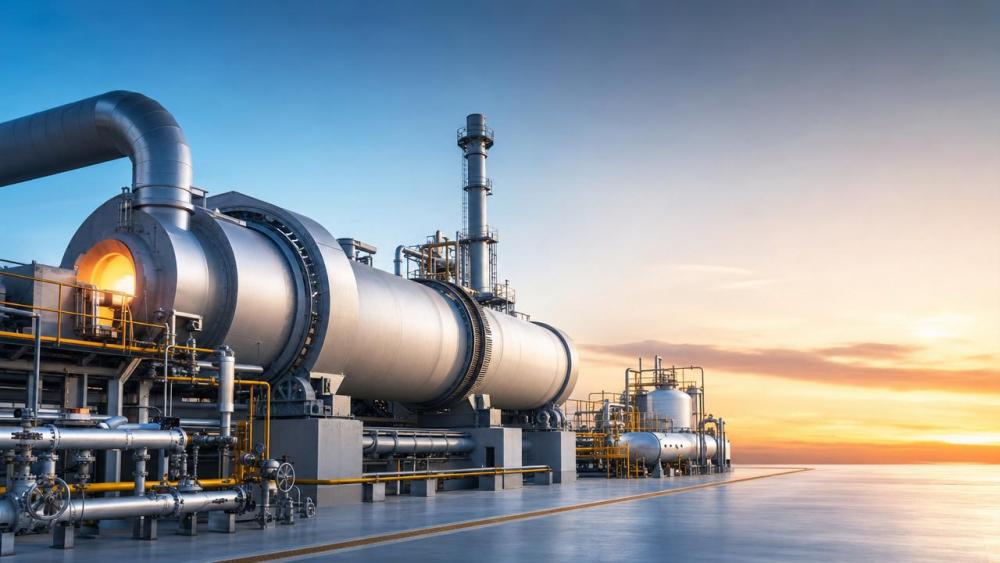
When buyers search for information on industrial kiln efficiency, the core intent is usually commercial rather than academic. They want to understand how performance affects fuel purchasing decisions and total operating economics.
Procurement teams care less about theoretical combustion language and more about annual fuel consumption, budget accuracy, maintenance burden, supplier credibility, and the risk of underperforming equipment.
The most helpful content, therefore, is not a broad overview of kilns. It is a practical framework showing how efficiency influences fuel volume, cost forecasting, uptime, emissions, and investment comparison.
For this audience, the article should focus on measurable buying criteria, typical hidden losses, useful supplier questions, and the financial logic behind efficient kiln selection or retrofit planning.
General descriptions of kiln categories or textbook heat transfer concepts should stay secondary. Buyers need decision support, not a generic process encyclopedia.
What industrial kiln efficiency actually means in commercial terms
In technical language, kiln efficiency describes how effectively a system converts fuel energy into useful process heat. In procurement language, it measures how much paid-for fuel becomes productive output.
If two kilns deliver the same production capacity but one consumes meaningfully less fuel, the more efficient system reduces direct energy costs and often lowers associated carbon and maintenance expenses.
This is especially important in cement, glass, refractory, and waste-to-energy operations, where thermal processes run continuously and fuel is one of the largest variable cost components.
Efficiency also affects planning confidence. A kiln with stable thermal behavior allows more accurate fuel forecasting, while a poorly optimized system creates budget drift through inconsistent energy demand.
For buyers, then, industrial kiln efficiency is best understood as a multiplier. It influences not only energy usage per ton, but also planning reliability across operations, finance, and compliance functions.
How kiln efficiency changes fuel planning outcomes
Fuel planning is more than ordering enough gas, coal, petcoke, RDF, or alternative fuels. It involves forecasting demand, securing supply, managing storage, and protecting the business from price and delivery disruptions.
A highly efficient kiln lowers the baseline fuel needed for each unit of output. That directly reduces annual procurement volume and can improve negotiating flexibility with fuel suppliers.
Lower demand can matter strategically. A plant that needs less fuel has more room to manage market volatility, transportation bottlenecks, or quality variation in available fuel streams.
Efficiency also affects peak consumption behavior. Some kilns perform well at nameplate capacity but lose efficiency sharply during load changes, startups, shutdowns, or mixed-fuel operation.
From a procurement perspective, that means fuel planning must consider not just average consumption, but the consistency of consumption across actual operating conditions.
If a supplier promises low specific heat consumption only under ideal test conditions, buyers may still face elevated annual fuel costs in real production environments.
The procurement questions behind every efficiency claim
Vendors often present industrial kiln efficiency using attractive benchmark figures. Procurement teams should treat those numbers as a starting point, not a conclusion.
The first question is how efficiency was measured. Ask whether the figure reflects continuous operation, design capacity, actual feed characteristics, and the intended fuel mix.
The second question is what system boundary is being used. Some claims focus narrowly on burner performance, while others include heat recovery, insulation quality, air leakage control, and exhaust losses.
The third question is whether the promised efficiency is sustainable over time. Refractory wear, fouling, burner drift, and process instability can reduce real performance after commissioning.
Buyers should also ask for energy consumption data from comparable installations. Reference plants in similar climates, product types, and duty cycles are more meaningful than laboratory values.
Finally, procurement should request an explanation of what operational discipline is required to maintain stated efficiency. Some systems perform well only with very strong process control and maintenance routines.
Which factors most often reduce real-world kiln efficiency
Fuel planning fails when kiln efficiency assumptions are too optimistic. To avoid that, buyers need to understand where energy losses usually happen in thermal systems.
One common issue is heat loss through the shell or weak refractory performance. Poor insulation increases fuel demand and may shorten maintenance intervals, adding both direct and indirect cost.
Another major factor is excess air. If combustion uses more air than necessary, energy is wasted heating unnecessary gas volumes, and stack losses can rise significantly.
Air leakage elsewhere in the system also matters. False air entering through seals, ducts, or access points disturbs temperature control and forces higher fuel input to hold process conditions.
Inconsistent feed moisture or particle size can further reduce efficiency. The kiln must spend extra energy compensating for feed variability, which complicates fuel forecasting.
Operational cycling is another hidden burden. Frequent starts, stops, or rapid load changes usually consume more fuel per ton than stable continuous operation.
For plants using alternative fuels, efficiency can vary with calorific value, ash behavior, and feeding precision. Procurement should understand whether the kiln is genuinely optimized for the planned fuel mix.
How to compare kiln options using fuel planning logic
When reviewing new equipment or retrofit proposals, procurement should evaluate kiln options through a fuel planning model rather than upfront price alone.
Start with specific energy consumption under realistic production conditions. Estimate annual fuel demand using expected throughput, operating hours, feed characteristics, and planned load variability.
Next, model fuel price scenarios. A small efficiency gap may look modest at current prices, but it becomes financially significant when fuel costs rise or carbon pricing tightens.
Then consider fuel flexibility. A kiln that can maintain good efficiency across multiple fuel types may offer strategic value even if its initial capital cost is higher.
Also evaluate maintenance-linked efficiency degradation. A low-cost system can become expensive if performance drops quickly between shutdowns or if critical components are difficult to service.
Procurement should compare the total landed economics of each option, including fuel, electricity for auxiliaries, spare parts, refractory replacement, emissions control impacts, and downtime exposure.
This approach helps buyers avoid a common mistake: selecting equipment with a lower purchase price but a structurally higher lifetime energy burden.
Why efficiency matters for supplier risk and contract strategy
Industrial kiln efficiency influences more than technical performance. It shapes the risk profile of supplier agreements and long-term cost commitments.
If a kiln consumes more fuel than expected, the financial impact can continue for years. That makes performance guarantees, acceptance testing terms, and service support obligations especially important.
Procurement teams should seek contractual clarity on baseline conditions, test methodology, and remedies if energy performance falls short of promised levels.
In some cases, it may be useful to link part of supplier compensation to verified operating results, especially for large upgrades, combustion systems, or digital optimization packages.
Fuel planning contracts can also benefit from efficiency awareness. Better performance may justify different volume commitments, hedging structures, or storage strategies.
For multinational operators, efficiency data can support more disciplined category management by standardizing how plants compare thermal assets and forecast fuel needs across regions.
How efficiency supports carbon goals without losing procurement discipline
In high-temperature industries, lower fuel consumption almost always supports lower direct emissions. That makes industrial kiln efficiency relevant to decarbonization as well as cost control.
However, procurement should avoid treating every low-carbon claim as equal. The key is to connect carbon benefits to verified thermal performance and practical operating conditions.
An efficient kiln can reduce exposure to carbon taxes, emissions trading costs, and customer pressure for lower embodied emissions in building materials and industrial products.
At the same time, buyers should check whether emissions gains depend on premium fuels, demanding maintenance practices, or process constraints that may weaken the business case.
The strongest investments are usually those where fuel savings, production reliability, and carbon reduction reinforce one another rather than competing for priority.
A practical checklist for procurement teams evaluating kiln efficiency
First, ask for specific fuel consumption data under conditions that match your plant’s real product mix, throughput profile, and fuel strategy.
Second, identify the main sources of heat loss and request evidence of how the supplier controls them through design, instrumentation, sealing, refractory, and combustion management.
Third, verify whether efficiency performance holds during partial loads, startups, shutdowns, and alternative fuel substitution, not just during optimized steady-state operation.
Fourth, request reference cases with measured energy results over time. Early commissioning data alone does not prove stable long-term efficiency.
Fifth, calculate total cost of ownership with fuel sensitivity scenarios. Include likely changes in energy price, carbon policy, and maintenance requirements.
Sixth, align technical review with commercial terms. Efficiency promises should connect directly to guarantees, testing, service support, and performance remedies.
Seventh, involve operations and maintenance teams early. The best procurement decisions usually come from combining commercial discipline with practical plant insight.
Conclusion: treat industrial kiln efficiency as a fuel planning decision
For procurement professionals, industrial kiln efficiency should be viewed as a core fuel planning variable, not a secondary engineering statistic.
It determines how much fuel a plant must buy, how predictable that demand will be, how vulnerable budgets are to energy volatility, and how credible supplier ROI claims really are.
Buyers who evaluate efficiency in real operating terms can make better equipment choices, negotiate stronger contracts, and reduce both cost and compliance risk over the asset lifecycle.
In sectors where thermal energy defines competitiveness, the smartest procurement strategy is clear. Treat kiln efficiency as a purchasing decision with direct impact on fuel economics, resilience, and long-term value.
Related News
 Optical Glass Tech FellowHow to Evaluate a Glass Annealing Equipment Manufacturer for Production StabilityChoose a glass annealing equipment manufacturer with proven thermal uniformity, reliable controls, lifecycle value, and responsive service for stable production.Sep 08, 2026
 Prof. Marcus ChenThermal Energy Architecture in North America: Strategies for Lower Building Energy UseThermal energy architecture North America helps project leaders cut building energy use through stronger envelopes, right-sized HVAC, storage, and smart commissioning.Sep 07, 2026
 Ms. Elena RodriguezHow Should Buyers Evaluate Building Material Industry Intelligence Pricing?Building material industry intelligence pricing: learn how to compare coverage, technical depth, and ROI to choose intelligence that reduces procurement risk.Sep 07, 2026
 Ms. Elena RodriguezHow to Use Building Material Intelligence Data for Market and Investment DecisionsBuilding material industry intelligence data helps leaders evaluate demand, costs, regulation, capacity, and technology to make smarter market and investment decisions.Sep 05, 2026
 Thermal Energy ArchitectHow PLC Control Improves Energy Efficiency and Temperature Stability in KilnsEnergy efficient kilns PLC control improves temperature stability, cuts fuel waste, and optimizes combustion, draft, and material flow. Explore proven strategies for smarter kiln modernization.Sep 04, 2026
 Optical Glass Tech FellowEuropean Glass Melting Processes: Furnace Choices, Energy Use, and Quality ControlGlass melting process Europe: explore furnace choices, energy efficiency, cullet strategy, and quality control to improve output, compliance, and long-term glass performance.Sep 03, 2026
 Thermal Energy ArchitectWhat Determines Refractory Lining Monitoring Price for Industrial Kilns?Refractory lining monitoring price depends on kiln size, sensor technology, installation, software, and support. Compare total lifecycle costs and choose the right solution.Sep 02, 2026
 Silicate Process EngineerCement Production System Costs: A Plant Buyer’s Guide to Budgeting and ROICement production systems cost planning made clear: compare CAPEX, operating costs, compliance, and ROI to build a resilient, profitable cement plant investment.Sep 01, 2026
 Dr. Alistair VaughnWhat Should a Process Technology Database Track for High-Temperature Plants?Process technology database essentials for high-temperature plants: track thermal profiles, feed chemistry, refractory wear, emissions, energy, and maintenance for safer, data-driven decisions.Aug 31, 2026
 Ms. Elena RodriguezHow to Evaluate a Silicate Processing Equipment Manufacturer for Plant ProjectsSilicate processing equipment manufacturer selection: assess process fit, guarantees, energy, compliance, delivery risk, and lifecycle support for dependable plant performance.Aug 30, 2026
 Dr. Alistair VaughnHow to Specify Custom Agricultural Processing Equipment for Throughput and HygieneEquipment customization services for agricultural processing: learn to specify hygienic, high-throughput lines that improve yield, reliability, and long-term efficiency.Aug 29, 2026
 Dr. Alistair VaughnHow to Select Process Plant Equipment for High-Temperature, Abrasive Production LinesProcess plant equipment selection for high-temperature, abrasive lines: reduce downtime, improve durability, and optimize lifecycle performance.Aug 28, 2026
 Silicate Process EngineerHow Kiln Heat Recovery Systems Cut Fuel Use in Cement and Lime ProductionKiln heat recovery helps cement and lime plants cut fuel use, improve thermal stability, and build practical, reliable decarbonization strategies.Aug 27, 2026
 Ms. Elena RodriguezProcess Equipment Comparison: Which Metrics Matter Most for Reliable Selection?Process equipment comparison made practical: discover which metrics truly drive reliable selection, from energy efficiency and control stability to wear life, maintainability, and uptime.Aug 26, 2026
 Ms. Elena RodriguezWhat Buyers Should Check Before Sourcing Precision Alloy Bars for Critical PartsPrecision Alloy Bars buyers should verify grade, chemistry, tolerances, surface quality, traceability, and lead time before sourcing for critical parts. Learn what prevents costly machining and reliability risks.Aug 27, 2026
 Ms. Elena RodriguezHow to Evaluate Thermal Management Solutions Insulation for High-Heat Industrial SystemsThermal management solutions insulation: learn how to assess high-heat industrial systems by thermal performance, durability, lifecycle cost, and supplier data for smarter decisions.Aug 25, 2026
 Ms. Elena RodriguezWhat Drives Waste Recycling Cost in Industrial Projects and How to Estimate It?Waste recycling cost in industrial projects depends on composition, moisture, transport, pre-treatment, and compliance. Learn how to estimate it accurately and compare suppliers with confidence.Aug 24, 2026
 Silicate Process EngineerHow to Evaluate Cement Production Plants in the Middle East for Capacity, Fuel Flexibility, and ROIcement production plants Middle East: Learn how to assess true capacity, fuel flexibility, and ROI risks to identify resilient assets and smarter investment opportunities.Aug 23, 2026
 Structural Material AnalystHow to Evaluate Lightweight Material Machinery for Output, Energy Use, and Product QualityLightweight material machinery evaluation guide: compare stable output, energy use, and product quality to choose equipment that cuts waste, lowers costs, and improves production confidence.Aug 22, 2026
 Material Heat-Resist ExpertWhat Determines Refractory Production Line Price in a Turnkey Plant Project?Refractory production line price depends on raw materials, forming method, kiln and drying design, automation, utilities, and scope. Learn what really drives turnkey plant cost before you invest.Aug 21, 2026


Related News
- 00
0000-00
How PLC Control Improves Energy Efficiency and Temperature Stability in Kilns - 00
0000-00
What Determines Refractory Lining Monitoring Price for Industrial Kilns? - 00
0000-00
How Digital Twin Simulations Help Kiln Operators Cut Fuel Use and Stabilize Output - 00
0000-00
What to Evaluate in a Rotary Kiln Technology Manufacturer for High-Temperature Process Projects - 00
0000-00
How to Evaluate an Incineration Equipment Exporter for Compliance, Capacity, and After-Sales Support
Weekly Insights
Stay ahead with our curated technology reports delivered every Monday.