
Thermal energy management mistakes that raise fuel bills




Rising fuel bills in kilns, furnaces, and thermal processing lines often trace back to overlooked thermal energy management errors rather than fuel prices alone. For after-sales maintenance teams, identifying these hidden losses—from insulation failure to poor combustion tuning—is critical to restoring efficiency, reducing downtime, and protecting equipment life. This article highlights the most costly mistakes and how to correct them before energy waste becomes a long-term operational burden.
In cement plants, glass lines, incineration systems, refractory production, and extrusion equipment, energy losses rarely come from one dramatic failure. More often, they build through small thermal deviations: a 30°C shell hotspot, 2% excess oxygen drift, a leaking expansion joint, or an air-fuel imbalance that goes unchecked for weeks.
For after-sales maintenance personnel, strong thermal energy management is not only about lowering fuel use. It also affects refractory life, fan load, throughput stability, emissions compliance, and planned shutdown intervals. When maintenance teams can detect and correct the right heat-loss mechanisms early, the plant gains measurable savings and fewer production interruptions.
Why thermal energy losses escalate faster than most teams expect
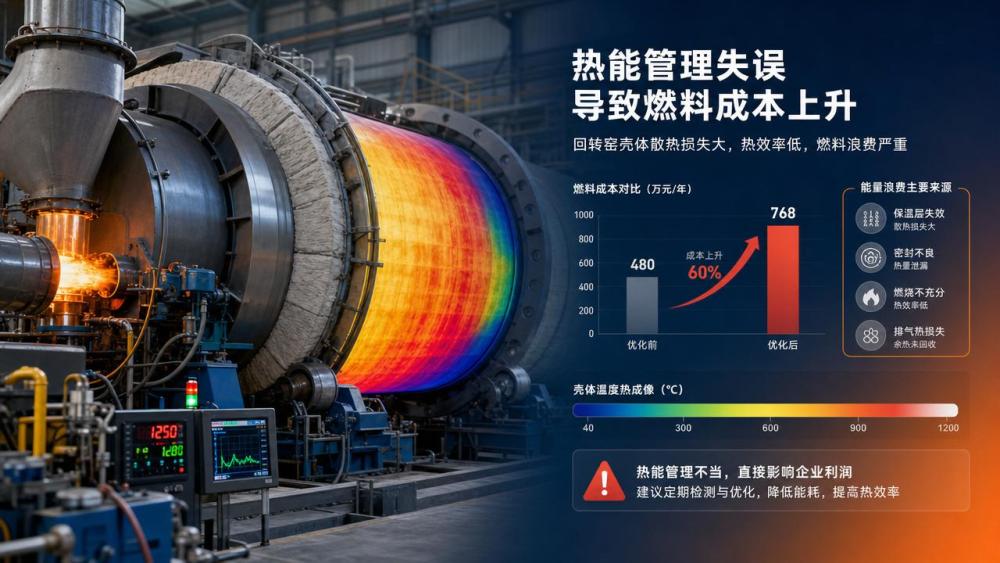
In high-temperature industries, a minor deviation can multiply energy waste across 24-hour operation. A kiln, furnace, or thermal oxidizer running 330 days per year has little room for unnoticed drift. Even a 1% to 3% efficiency loss can turn into a large annual fuel burden when firing temperatures remain above 850°C, 1200°C, or even 1450°C.
This is why thermal energy management should be treated as a continuous maintenance discipline rather than a one-time commissioning exercise. After-sales teams are usually the first to see symptoms in the field: unstable flame shape, uneven product quality, rising stack temperature, or longer heating cycles.
The hidden cost pattern behind rising fuel bills
Fuel cost increases are often blamed on market pricing alone, but plant-level thermal waste usually follows a pattern of five hidden penalties. First comes direct heat loss. Second comes overfiring to maintain output. Third comes refractory stress. Fourth comes auxiliary power increase from fans and blowers. Fifth comes unplanned downtime when neglected thermal faults damage mechanical components.
- Higher shell or casing temperature increases radiation loss.
- Poor combustion tuning raises excess air and stack loss.
- Air infiltration reduces flame efficiency and temperature uniformity.
- Refractory gaps or anchors failures create local hotspots.
- Unstable thermal profiles lower product consistency and throughput.
Typical warning signs maintenance teams should not ignore
Many plants do not need advanced capital upgrades first. They need better thermal inspection discipline. A stack temperature increase of 20°C to 60°C, burner cycling outside the normal range, or shell temperature spread above baseline by 40°C can already indicate poor thermal energy management.
The table below shows common field symptoms and what they often mean in kilns, furnaces, and material processing lines.
The main takeaway is simple: fuel overuse is usually visible before it becomes a finance problem. When after-sales teams monitor 4 to 6 thermal indicators weekly, they can catch losses while corrective action is still low-cost and operationally manageable.
The most common thermal energy management mistakes in the field
Across silicate production lines and thermal processing equipment, several mistakes appear repeatedly. Some happen during routine maintenance. Others result from delayed shutdown decisions, fragmented responsibility, or an overfocus on mechanical reliability without enough attention to heat balance.
Mistake 1: Treating insulation as a static asset
Insulation and refractory systems degrade gradually, not suddenly. Many teams only react when visible cracks or severe hotspots appear. By then, heat loss has often been accumulating for 3 to 12 months. In rotary kilns, tunnel kilns, glass forehearths, and incinerators, small lining failures can raise external surface temperature enough to increase radiation losses day after day.
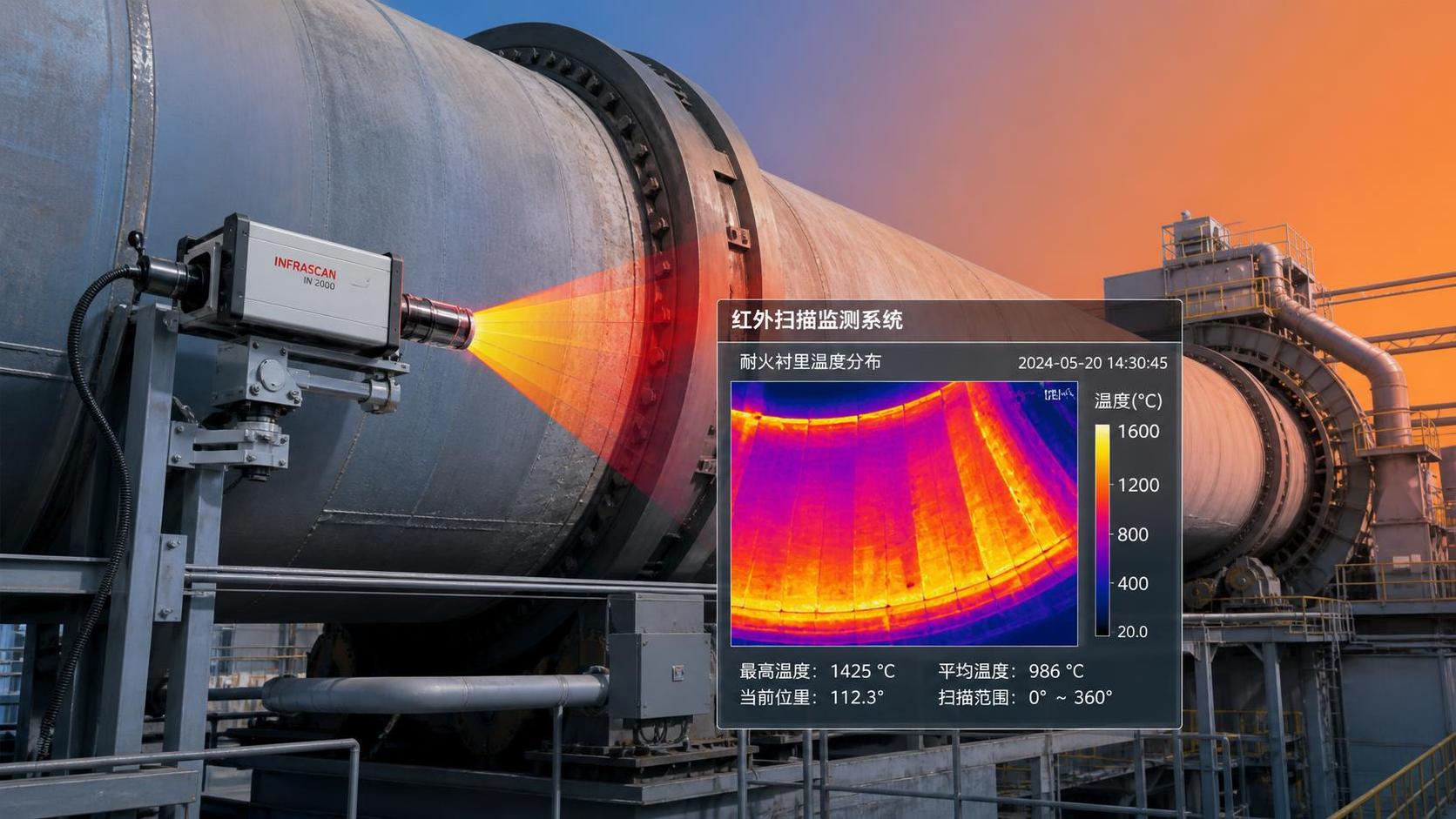
A practical rule is to compare shell or casing temperatures against historical baseline by zone. If a zone runs 15°C to 25°C above baseline over several shifts, it deserves inspection. Waiting until the difference reaches 60°C or more usually means higher repair cost and shorter lining life.
What maintenance teams should do
- Schedule infrared thermal scans every 2 to 4 weeks for critical zones.
- Track hotspot growth rate, not just absolute temperature.
- Inspect burner blocks, door seals, peep holes, and expansion joints together.
- Classify anomalies into monitor, repair soon, and shutdown-required categories.
Mistake 2: Running with poor combustion tuning
Combustion tuning errors are among the fastest ways to increase fuel consumption. Too much excess air cools the flame and sends usable heat up the stack. Too little air risks incomplete combustion, unstable flame conditions, and carbon-related deposits. In many industrial burners, even a modest drift in oxygen control can reduce effective thermal performance.
For after-sales teams, thermal energy management should include routine verification of flame pattern, air-fuel ratio response, pressure stability, and sensor accuracy. Oxygen trim devices, actuators, dampers, and valves all need inspection intervals matched to duty severity, often every 1 to 3 months for demanding applications.
Combustion points that deserve routine checks
- Verify sensor calibration drift on oxygen, temperature, and pressure loops.
- Inspect burner nozzle condition for fouling, distortion, or uneven flow.
- Confirm damper and actuator movement through full operating range.
- Review stack oxygen trend against production load, not in isolation.
- Check whether control logic matches current fuel type and material feed.
Mistake 3: Ignoring air infiltration and sealing failures
False air is one of the most underestimated causes of thermal inefficiency. In kilns, dryers, coolers, and incineration units, leakage through seals, doors, duct joints, and observation ports disrupts process temperature and increases fan duty. The result is often a double penalty: more fuel input and more electrical consumption.
Even a small leak path repeated over several points can alter pressure balance enough to disturb heat transfer. Maintenance teams should pay close attention to inlet and outlet seals, flexible joints, refractory penetrations, and negative-pressure zones where infiltration is common.
The next table outlines frequent loss points and practical inspection methods used across heavy thermal equipment.
The operational lesson is that sealing work is not housekeeping. It is a central part of thermal energy management. In many plants, better seal maintenance can deliver savings faster than larger capital retrofits because the corrective actions are simpler and the response time is shorter.
Mistake 4: Trusting instruments that have quietly drifted
Temperature, oxygen, pressure, and flow measurements drive every thermal control decision. If one key instrument drifts by a small amount, operators may compensate in the wrong direction for weeks. A faulty thermocouple, plugged impulse line, or aging oxygen analyzer can lead to chronic overfiring or false confidence in burner performance.
A disciplined maintenance program should define calibration frequency by criticality. For many thermal processes, critical sensors deserve verification every 30 to 90 days, with faster checks after burner replacement, fuel change, or control-loop instability events.
Mistake 5: Separating thermal efficiency from equipment life
Some plants still view fuel use and equipment reliability as separate topics. In reality, weak thermal energy management shortens component life. Overheated shell zones can strain tires, bearings, supports, or steel casing. Combustion instability can damage burner quarls, refractory faces, and process internals. Uneven heating can also affect product quality, forcing rework or scrap.
For after-sales maintenance teams, the stronger position is to present heat-loss corrections as both an energy measure and an asset protection measure. That approach usually gets faster approval because it addresses maintenance budget, operations continuity, and total cost of ownership together.
A practical correction framework for after-sales maintenance teams
The most effective response is not a single repair but a repeatable field framework. After-sales teams supporting kilns, furnaces, glass heating systems, incinerators, and extrusion lines need a workflow that translates thermal symptoms into action priorities. A simple 5-step model is often enough to start reducing losses within the first maintenance cycle.
Step 1: Establish a thermal baseline
Create a baseline for shell temperature, stack temperature, oxygen range, heating time, and production load under stable operation. Without a baseline, teams only react to visible failures. With a baseline, they can detect small but meaningful drift before fuel bills rise sharply.
Step 2: Rank losses by cost and urgency
Not every anomaly deserves immediate shutdown. A practical ranking method uses three levels: Level 1 for monitor-only issues, Level 2 for planned repair within 7 to 30 days, and Level 3 for urgent intervention due to safety, refractory collapse risk, or severe process instability.
Step 3: Match repair method to root cause
Do not treat all high fuel use as a burner problem. Some losses come from leakage. Others come from heat recovery decline, poor control logic, or material loading changes. Good thermal energy management depends on separating symptom from source before buying parts or scheduling contractors.
Typical corrective priorities
- Repair seals and infiltration points before retuning combustion.
- Validate instruments before rewriting control parameters.
- Fix localized refractory damage before it becomes structural.
- Review fan settings after leakage reduction to avoid excess draft.
Step 4: Verify results over at least one operating cycle
Post-repair verification should last long enough to include normal load variation. In continuous lines, that may mean 72 hours to 7 days of trend review. Measure the same indicators used in the baseline so the team can confirm whether thermal efficiency truly improved or the issue only shifted to another zone.
Step 5: Build maintenance feedback into future service plans
Every repair should improve future troubleshooting speed. If a kiln seal needed adjustment every 4 months, or a burner analyzer drifted twice in one quarter, that pattern belongs in the maintenance plan. This turns field experience into a stronger service model and better lifecycle support for the customer.
How CF-Elite aligned maintenance intelligence supports better decisions
For companies operating in cement production, glass manufacturing, industrial kilns, incineration, refractory lines, and advanced extrusion systems, thermal performance is too interconnected to manage through isolated fixes. Maintenance teams need process-aware guidance that links heat transfer, combustion behavior, refractory condition, equipment duty, and decarbonization goals.
This is where an intelligence-led approach matters. A platform focused on foundation materials and thermal management can help after-sales personnel compare thermal risk patterns across equipment categories, identify common failure modes, and evaluate which corrective actions are most relevant to their actual operating environment.
Where maintenance teams gain the most value
- Tracking operational trends across rotary kilns, furnaces, and float lines.
- Understanding how refractory monitoring and combustion tuning interact.
- Prioritizing upgrades that reduce both fuel use and downtime exposure.
- Aligning service actions with carbon reduction and efficiency targets.
For distributors, service contractors, and plant maintenance teams, that kind of insight improves proposal quality and technical credibility. Instead of offering generic maintenance, teams can recommend targeted thermal energy management actions backed by field logic, practical inspection intervals, and process-specific risk awareness.
Final priorities for reducing avoidable fuel costs
The most expensive thermal mistakes are usually the ones that look minor at first: a drifting sensor, a worn seal, a neglected hotspot, or a burner setting that no longer matches process conditions. In round-the-clock thermal operations, those small issues compound into higher fuel demand, unstable quality, and premature equipment wear.
For after-sales maintenance teams, effective thermal energy management means building a repeatable system of inspection, diagnosis, correction, and verification. Focus first on insulation integrity, combustion tuning, leakage control, and instrument accuracy. These four areas often produce the fastest operational gains with manageable implementation effort.
If your organization supports kilns, furnaces, incineration units, glass heating systems, or specialized extrusion lines, now is the right time to review where hidden thermal losses may be raising fuel bills. Contact CF-Elite to explore more thermal management insights, discuss field challenges, or obtain a more tailored efficiency improvement approach for your equipment and service environment.
Related News
 Optical Glass Tech FellowHow to Evaluate a Glass Annealing Equipment Manufacturer for Production StabilityChoose a glass annealing equipment manufacturer with proven thermal uniformity, reliable controls, lifecycle value, and responsive service for stable production.Sep 08, 2026
 Prof. Marcus ChenThermal Energy Architecture in North America: Strategies for Lower Building Energy UseThermal energy architecture North America helps project leaders cut building energy use through stronger envelopes, right-sized HVAC, storage, and smart commissioning.Sep 07, 2026
 Ms. Elena RodriguezHow Should Buyers Evaluate Building Material Industry Intelligence Pricing?Building material industry intelligence pricing: learn how to compare coverage, technical depth, and ROI to choose intelligence that reduces procurement risk.Sep 07, 2026
 Ms. Elena RodriguezHow to Use Building Material Intelligence Data for Market and Investment DecisionsBuilding material industry intelligence data helps leaders evaluate demand, costs, regulation, capacity, and technology to make smarter market and investment decisions.Sep 05, 2026
 Thermal Energy ArchitectHow PLC Control Improves Energy Efficiency and Temperature Stability in KilnsEnergy efficient kilns PLC control improves temperature stability, cuts fuel waste, and optimizes combustion, draft, and material flow. Explore proven strategies for smarter kiln modernization.Sep 04, 2026
 Optical Glass Tech FellowEuropean Glass Melting Processes: Furnace Choices, Energy Use, and Quality ControlGlass melting process Europe: explore furnace choices, energy efficiency, cullet strategy, and quality control to improve output, compliance, and long-term glass performance.Sep 03, 2026
 Thermal Energy ArchitectWhat Determines Refractory Lining Monitoring Price for Industrial Kilns?Refractory lining monitoring price depends on kiln size, sensor technology, installation, software, and support. Compare total lifecycle costs and choose the right solution.Sep 02, 2026
 Silicate Process EngineerCement Production System Costs: A Plant Buyer’s Guide to Budgeting and ROICement production systems cost planning made clear: compare CAPEX, operating costs, compliance, and ROI to build a resilient, profitable cement plant investment.Sep 01, 2026
 Dr. Alistair VaughnWhat Should a Process Technology Database Track for High-Temperature Plants?Process technology database essentials for high-temperature plants: track thermal profiles, feed chemistry, refractory wear, emissions, energy, and maintenance for safer, data-driven decisions.Aug 31, 2026
 Ms. Elena RodriguezHow to Evaluate a Silicate Processing Equipment Manufacturer for Plant ProjectsSilicate processing equipment manufacturer selection: assess process fit, guarantees, energy, compliance, delivery risk, and lifecycle support for dependable plant performance.Aug 30, 2026
 Dr. Alistair VaughnHow to Specify Custom Agricultural Processing Equipment for Throughput and HygieneEquipment customization services for agricultural processing: learn to specify hygienic, high-throughput lines that improve yield, reliability, and long-term efficiency.Aug 29, 2026
 Dr. Alistair VaughnHow to Select Process Plant Equipment for High-Temperature, Abrasive Production LinesProcess plant equipment selection for high-temperature, abrasive lines: reduce downtime, improve durability, and optimize lifecycle performance.Aug 28, 2026
 Silicate Process EngineerHow Kiln Heat Recovery Systems Cut Fuel Use in Cement and Lime ProductionKiln heat recovery helps cement and lime plants cut fuel use, improve thermal stability, and build practical, reliable decarbonization strategies.Aug 27, 2026
 Ms. Elena RodriguezProcess Equipment Comparison: Which Metrics Matter Most for Reliable Selection?Process equipment comparison made practical: discover which metrics truly drive reliable selection, from energy efficiency and control stability to wear life, maintainability, and uptime.Aug 26, 2026
 Ms. Elena RodriguezWhat Buyers Should Check Before Sourcing Precision Alloy Bars for Critical PartsPrecision Alloy Bars buyers should verify grade, chemistry, tolerances, surface quality, traceability, and lead time before sourcing for critical parts. Learn what prevents costly machining and reliability risks.Aug 27, 2026
 Ms. Elena RodriguezHow to Evaluate Thermal Management Solutions Insulation for High-Heat Industrial SystemsThermal management solutions insulation: learn how to assess high-heat industrial systems by thermal performance, durability, lifecycle cost, and supplier data for smarter decisions.Aug 25, 2026
 Ms. Elena RodriguezWhat Drives Waste Recycling Cost in Industrial Projects and How to Estimate It?Waste recycling cost in industrial projects depends on composition, moisture, transport, pre-treatment, and compliance. Learn how to estimate it accurately and compare suppliers with confidence.Aug 24, 2026
 Silicate Process EngineerHow to Evaluate Cement Production Plants in the Middle East for Capacity, Fuel Flexibility, and ROIcement production plants Middle East: Learn how to assess true capacity, fuel flexibility, and ROI risks to identify resilient assets and smarter investment opportunities.Aug 23, 2026
 Structural Material AnalystHow to Evaluate Lightweight Material Machinery for Output, Energy Use, and Product QualityLightweight material machinery evaluation guide: compare stable output, energy use, and product quality to choose equipment that cuts waste, lowers costs, and improves production confidence.Aug 22, 2026
 Material Heat-Resist ExpertWhat Determines Refractory Production Line Price in a Turnkey Plant Project?Refractory production line price depends on raw materials, forming method, kiln and drying design, automation, utilities, and scope. Learn what really drives turnkey plant cost before you invest.Aug 21, 2026

Related News
- 00
0000-00
How PLC Control Improves Energy Efficiency and Temperature Stability in Kilns - 00
0000-00
What Determines Refractory Lining Monitoring Price for Industrial Kilns? - 00
0000-00
How Digital Twin Simulations Help Kiln Operators Cut Fuel Use and Stabilize Output - 00
0000-00
What to Evaluate in a Rotary Kiln Technology Manufacturer for High-Temperature Process Projects - 00
0000-00
How to Evaluate an Incineration Equipment Exporter for Compliance, Capacity, and After-Sales Support
Weekly Insights
Stay ahead with our curated technology reports delivered every Monday.