
Industrial Kiln Design Guide: Key Thermal, Fuel, and Throughput Factors to Compare




Choosing an industrial kiln design is rarely a matter of matching a maximum temperature to a datasheet. In most projects, the better comparison starts with how heat moves through the process, how fuel quality changes over time, and how stable output must remain under real operating pressure.
That is why industrial kiln design has become a strategic issue across cement, glass support materials, refractories, waste treatment, and new building material lines. The decision affects energy intensity, emissions exposure, maintenance cycles, and the ability to keep product quality consistent when feed conditions are less than ideal.
From the perspective of CF-Elite, where thermal management, silicate processing, and decarbonization trends intersect, kiln selection is best treated as a system question. Thermal behavior, chemical kinetics, refractory life, fuel flexibility, and throughput control need to be evaluated together rather than in isolation.
What industrial kiln design really means in practice
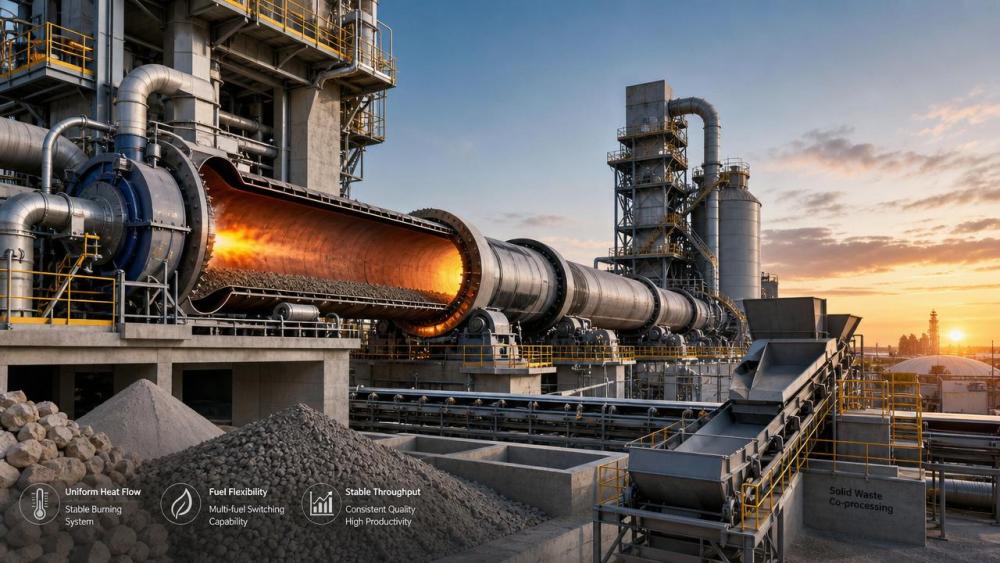
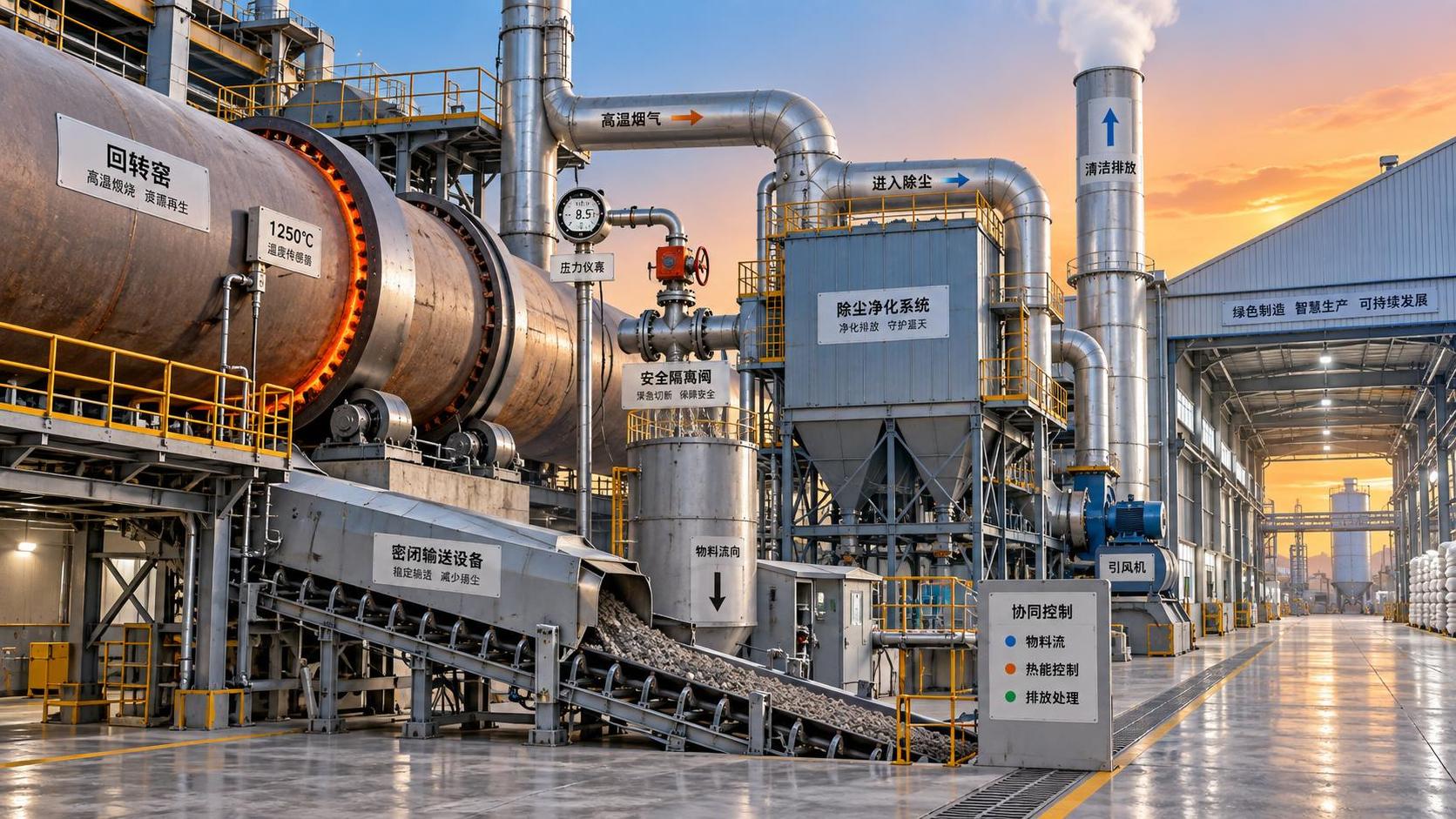
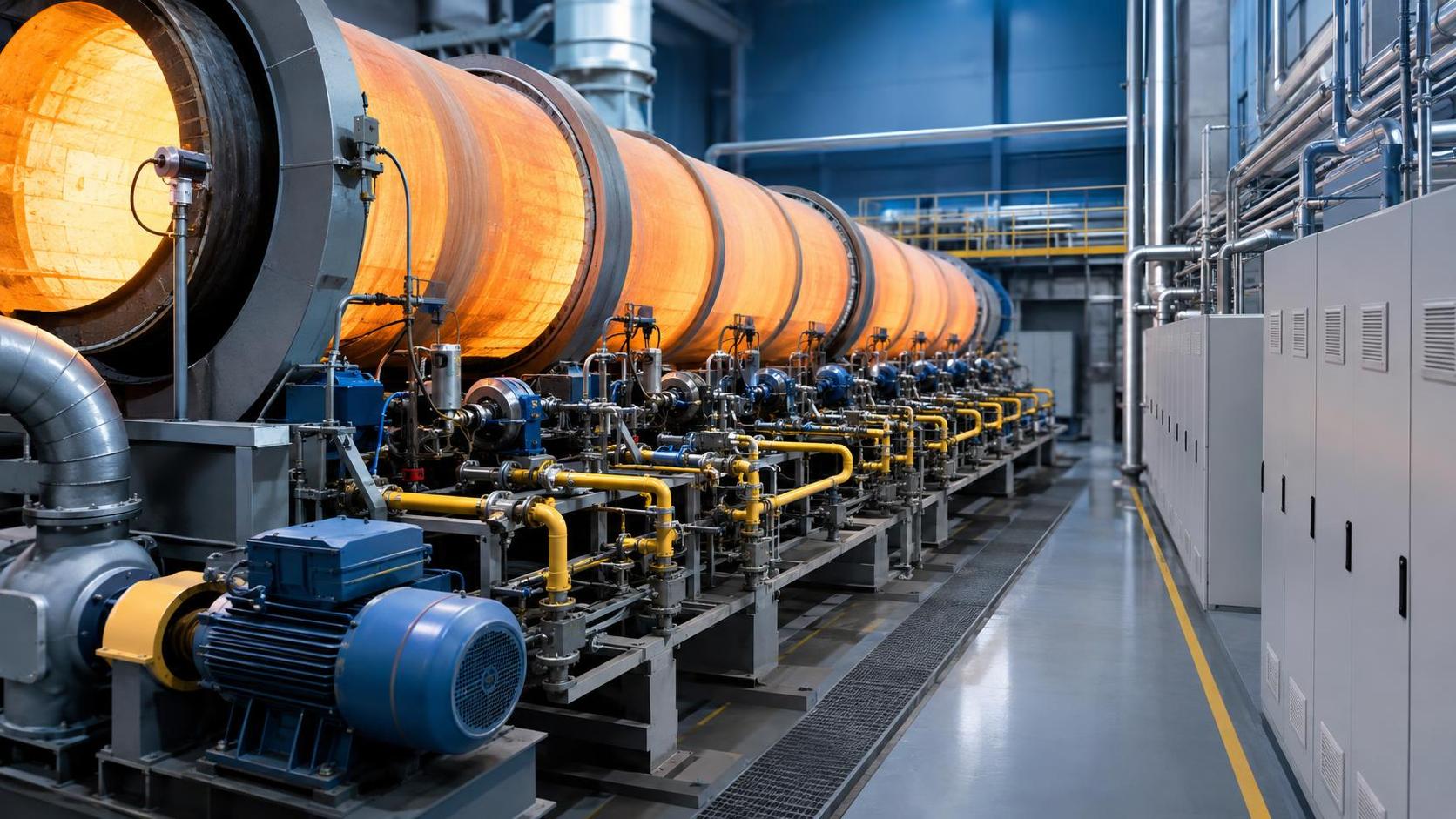
At a basic level, industrial kiln design describes how a high-temperature unit is configured to transform raw or intermediate material under controlled heat. That includes the shell geometry, heat source, airflow pattern, residence time, lining system, and discharge method.
In real plants, however, industrial kiln design also defines how forgiving the process will be. Some kilns tolerate wide feed variation. Others depend on tight particle size, moisture control, and steady energy input to avoid quality drift.
This difference matters because many sectors are no longer operating under stable conditions. Alternative fuels, recycled raw inputs, stricter dust control, and carbon reporting requirements all place new stress on kiln performance.
Why comparison criteria are changing
Older kiln evaluations often focused on nameplate capacity and peak temperature. Those figures still matter, but they do not explain how the unit behaves during partial loads, fuel switching, or feed chemistry fluctuation.
Current market conditions push a broader review. Energy costs remain volatile. Emission limits are tightening. Maintenance windows are shorter. At the same time, producers want more throughput without sacrificing burn quality or refractory survival.
CF-Elite tracks this shift across heavy thermal industries. Whether the line supports clinker, refractory shapes, industrial waste co-processing, or specialty mineral treatment, the same pattern appears: the most resilient industrial kiln design is not always the hottest or the largest, but the one that stays controllable across changing inputs.
Thermal performance is more than temperature
A useful technical comparison starts with heat distribution rather than only setpoint temperature. Uniformity, transfer efficiency, and thermal response time often influence output quality more than the top-end rating.
Key thermal points to examine
- How evenly heat reaches the material bed or product cross-section.
- How quickly the kiln responds to load or recipe changes.
- How much heat is lost through the shell, seals, and exhaust stream.
- How combustion design affects flame shape, hot spots, and cold zones.
- How the refractory system supports insulation without limiting process stability.
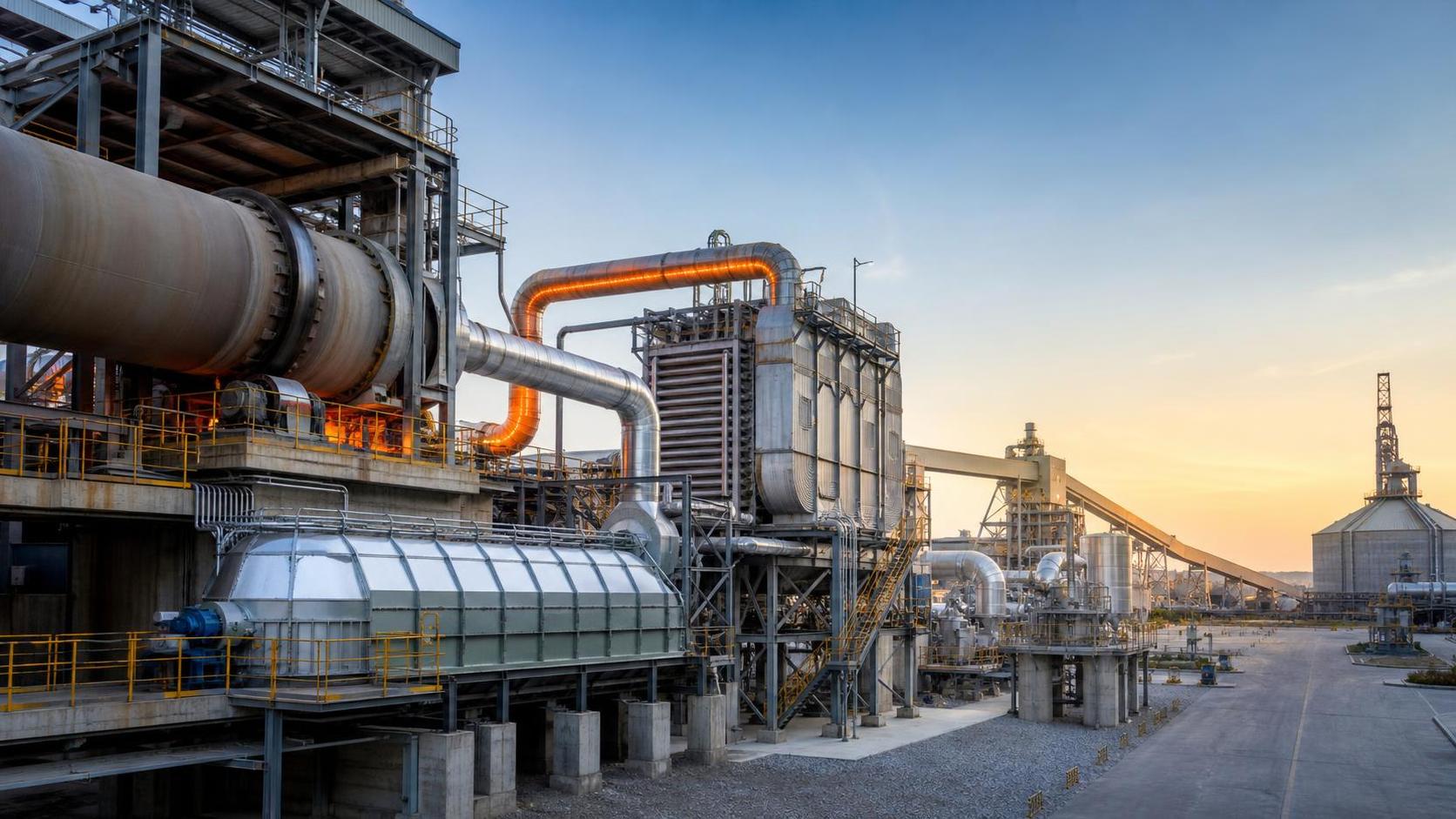
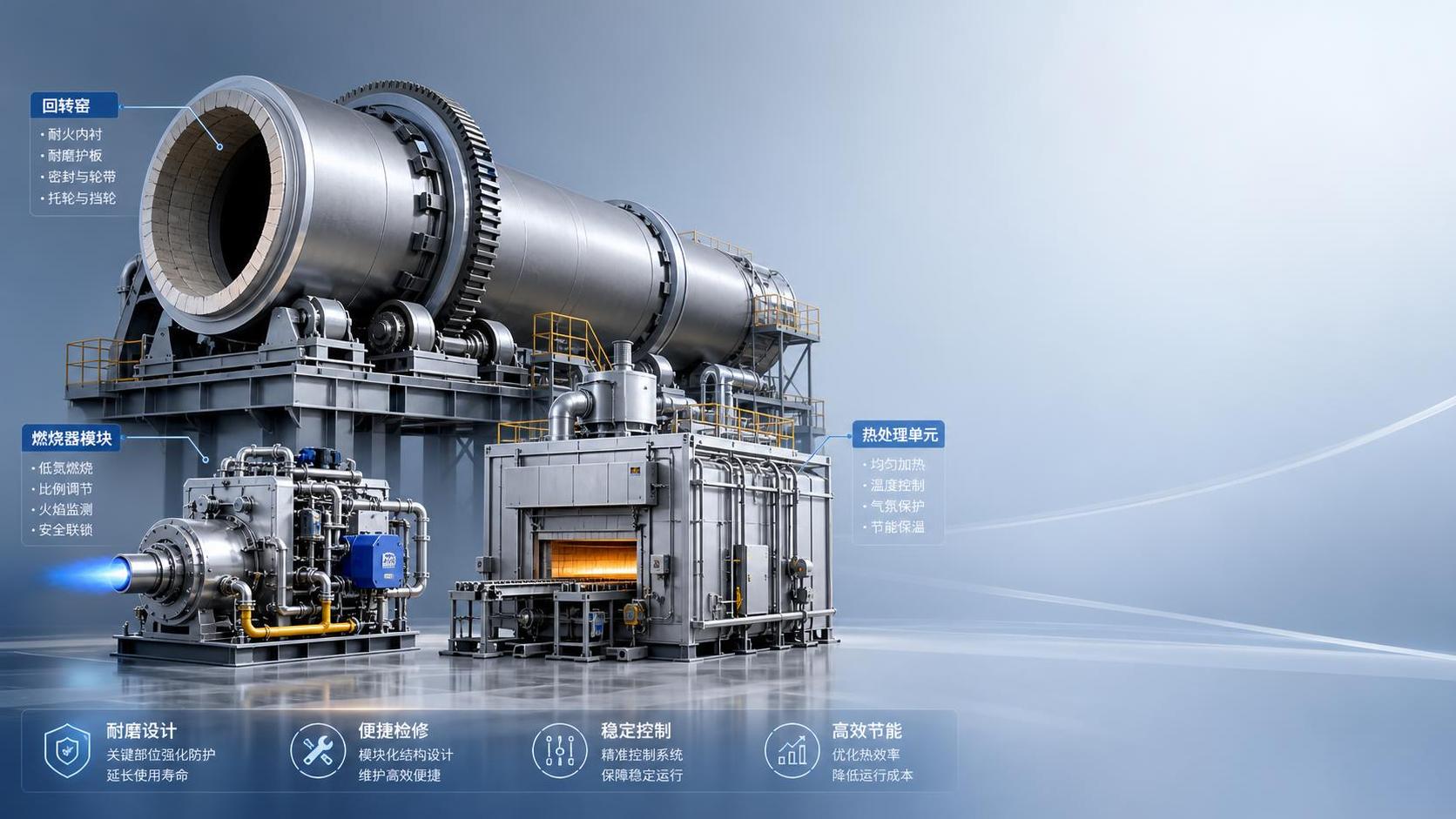
For example, a rotary system may offer strong mixing and long residence time, but that advantage can disappear if seal leakage disturbs draft control. A tunnel or shuttle configuration may deliver better uniformity for shaped products, yet become less flexible when recipes shift frequently.
In industrial kiln design, thermal efficiency should therefore be read as usable heat delivered to the reaction or product, not only as burner power or chamber temperature.
Fuel flexibility now shapes long-term value
Fuel choice increasingly changes the economics of kiln ownership. Natural gas, coal, petcoke, biomass-derived streams, refuse-derived fuel, and mixed alternative fuels each place different demands on burners, airflow, ash handling, and emission control.
A robust industrial kiln design should not be judged only by its preferred fuel. It should also be judged by how much efficiency loss or process instability appears when fuel quality shifts.
This is especially relevant in incineration and co-processing lines, where feed-derived energy value is rarely constant. It is also relevant in silicate sectors that are exploring lower-carbon fuel mixes without compromising heat intensity.
Throughput depends on material behavior, not just machine size
Throughput targets often drive the first round of equipment screening. Even so, actual output is limited by how the material absorbs heat, releases moisture, reacts chemically, and moves through the thermal zone.
In cement-related processing, coating formation, raw meal consistency, and calcination behavior can affect stable tons per hour. In refractory or specialty mineral lines, particle grading and shrinkage profile may decide whether faster firing is realistic.
Questions that improve throughput assessment
- Does the material require long soaking time or rapid thermal shock resistance?
- Will moisture variation slow the heating curve or overload exhaust handling?
- Can the kiln maintain target output during startup, transitions, and reduced loads?
- What bottleneck appears first: heat input, gas flow, material transport, or discharge cooling?
A sound industrial kiln design aligns process residence time with the real kinetics of the material. If the line is oversized for heat but undersized for mass transfer or gas handling, throughput claims can look strong on paper and weak in operation.
The kiln should be compared as part of a wider system
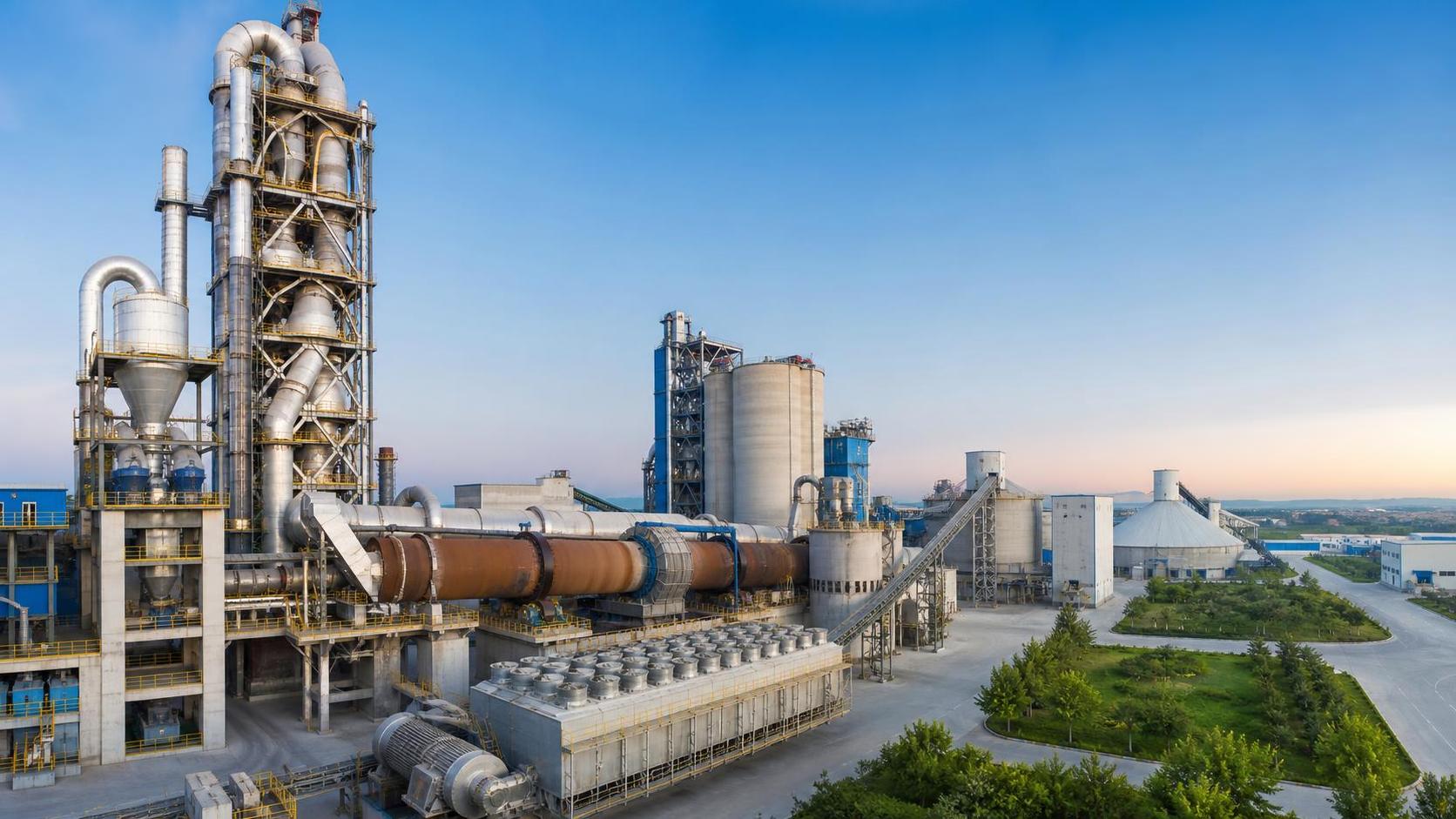
High-temperature equipment does not work alone. Preheating, feeding, combustion air supply, exhaust cleaning, waste heat recovery, instrumentation, and downstream cooling all shape final performance.
This is one reason CF-Elite places kiln analysis inside a broader thermal management framework. A technically attractive kiln may still underperform if the upstream feed preparation is inconsistent or if the control architecture cannot react fast enough.
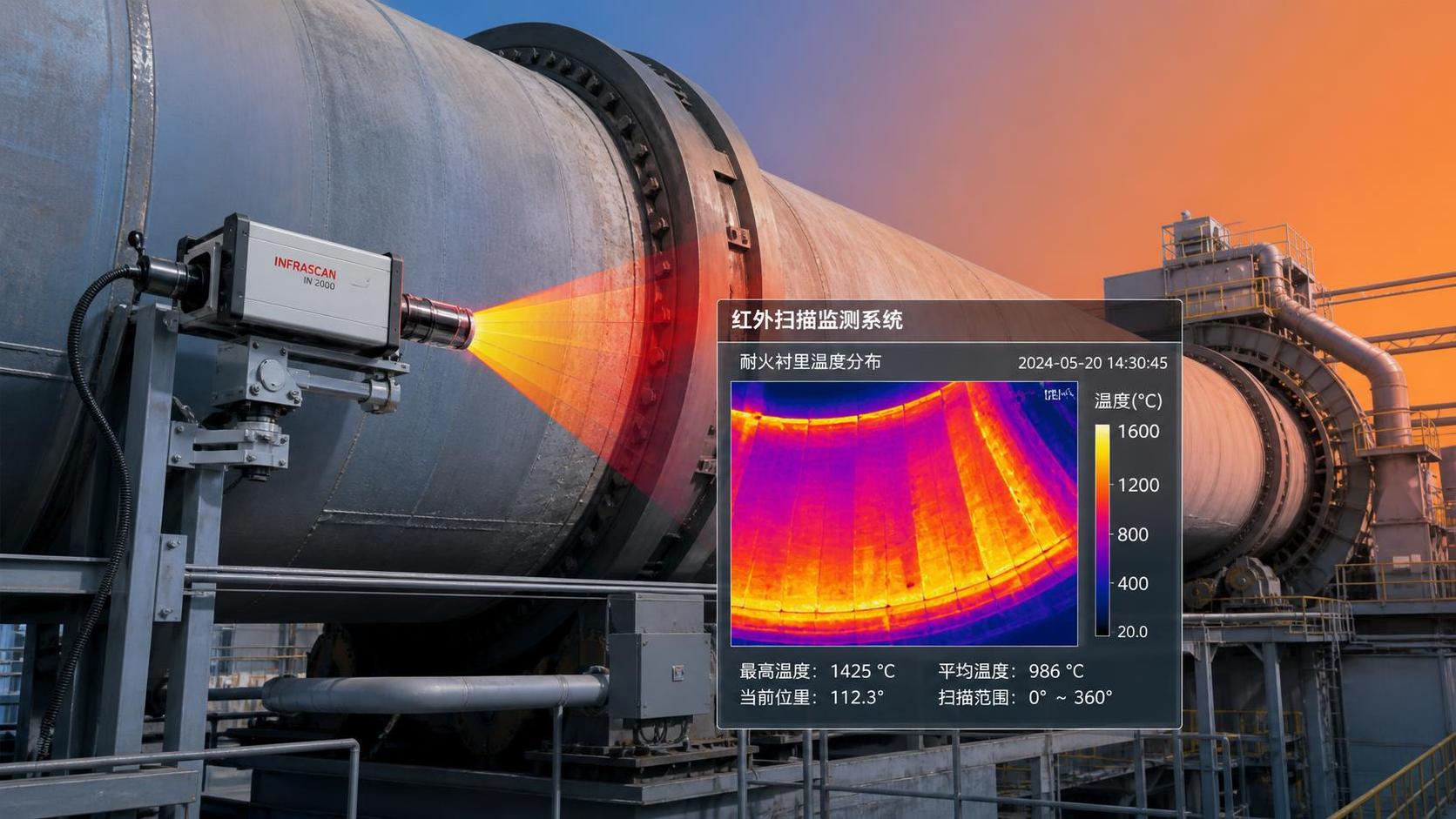
Digital monitoring has become more relevant here. Shell temperature mapping, draft trends, burner diagnostics, refractory wear tracking, and digital twin simulation can reveal whether a proposed industrial kiln design is likely to remain stable after commissioning, not just during acceptance tests.
Typical use cases require different priorities
The same industrial kiln design logic does not apply equally across every sector. Priorities change with product sensitivity, waste characteristics, and environmental obligations.
This is why direct equipment comparison should always be tied to the intended operating window. A kiln optimized for continuous, high-load mineral processing may be a poor fit for a line that needs frequent product changes or variable waste feed.
A practical way to compare options
The most useful comparison method is to build a short evaluation matrix before vendor discussions become too detailed. That keeps the review focused on process fit rather than presentation quality.
A concise checklist for industrial kiln design review
- Define the real feed envelope, not the ideal laboratory feed.
- Compare usable heat efficiency across normal and partial loads.
- Test fuel flexibility against expected future energy scenarios.
- Verify throughput at stable quality, not at short-term peak output.
- Review refractory life assumptions and maintenance access.
- Check whether emission control is integrated or shifted downstream.
- Assess instrumentation depth for thermal and mechanical diagnostics.
Where possible, these points should be supported by operating references, heat and mass balance data, and observed performance under non-ideal conditions. That approach gives industrial kiln design evaluation more predictive value than a generic capacity statement.
Where the next decision should go
A strong kiln decision usually begins with clearer boundaries, not faster selection. Feed variability, target product behavior, fuel roadmap, emission obligations, and maintenance strategy should be mapped before comparing layouts in detail.
From there, industrial kiln design can be judged against a realistic operating scenario rather than a nominal specification. That is the point where thermal data, process intelligence, and commercial judgment start to align.
For teams tracking heavy thermal sectors through platforms like CF-Elite, the next useful step is to turn broad interest into a structured comparison framework. Once the thermal, fuel, throughput, and emissions assumptions are explicit, later equipment decisions become more defensible and far easier to refine.
Related News
 Thermal Energy ArchitectRotary Kiln Efficiency: How Feed Rate, Fuel Use, and Heat Loss Affect OutputRotary kiln efficiency explained: discover how feed rate, fuel use, heat loss, combustion, and cooling performance shape output, quality, and energy costs.Sep 14, 2026
 Thermal Energy ArchitectHow to Select Heat-Resistant Materials That Maintain Abrasion Resistance in KilnsHeat-resistant materials abrasion resistance: learn how to select kiln linings that withstand heat, wear, thermal cycling, and chemical attack for longer service life.Sep 13, 2026
 Thermal Energy ArchitectHow Rotary Kiln Automation Improves Temperature Control and Fuel EfficiencyRotary kiln technology automation enhances temperature control, stabilizes combustion, and improves fuel efficiency with smarter data, predictive control, and safer operations.Sep 12, 2026
 Silicate Process EngineerCement Plant Emission Control: Selecting Systems for Dust, NOx, and SO2 LimitsCement plant emission control guide: compare dust collectors, NOx reduction, and SO2 systems for reliable compliance across kiln modes, fuel changes, and operating upsets.Sep 11, 2026
 Thermal Energy ArchitectSelecting Abrasion-Resistant High-Temperature Materials for Kiln and Conveyor Wear ZonesHigh-temp material engineering guide to abrasion-resistant kiln and conveyor solutions—match wear, heat, chemistry, and installation design for longer service life.Sep 10, 2026
 Dr. Alistair VaughnIndustrial Process Engineering: How to Map Processes for Safer, More Efficient PlantsIndustrial process engineering reveals bottlenecks, safety risks, and energy losses through practical process mapping for safer, more efficient plants.Sep 09, 2026
 Optical Glass Tech FellowHow to Evaluate a Glass Annealing Equipment Manufacturer for Production StabilityChoose a glass annealing equipment manufacturer with proven thermal uniformity, reliable controls, lifecycle value, and responsive service for stable production.Sep 08, 2026
 Prof. Marcus ChenThermal Energy Architecture in North America: Strategies for Lower Building Energy UseThermal energy architecture North America helps project leaders cut building energy use through stronger envelopes, right-sized HVAC, storage, and smart commissioning.Sep 07, 2026
 Ms. Elena RodriguezHow Should Buyers Evaluate Building Material Industry Intelligence Pricing?Building material industry intelligence pricing: learn how to compare coverage, technical depth, and ROI to choose intelligence that reduces procurement risk.Sep 07, 2026
 Ms. Elena RodriguezHow to Use Building Material Intelligence Data for Market and Investment DecisionsBuilding material industry intelligence data helps leaders evaluate demand, costs, regulation, capacity, and technology to make smarter market and investment decisions.Sep 05, 2026
 Thermal Energy ArchitectHow PLC Control Improves Energy Efficiency and Temperature Stability in KilnsEnergy efficient kilns PLC control improves temperature stability, cuts fuel waste, and optimizes combustion, draft, and material flow. Explore proven strategies for smarter kiln modernization.Sep 04, 2026
 Optical Glass Tech FellowEuropean Glass Melting Processes: Furnace Choices, Energy Use, and Quality ControlGlass melting process Europe: explore furnace choices, energy efficiency, cullet strategy, and quality control to improve output, compliance, and long-term glass performance.Sep 03, 2026
 Thermal Energy ArchitectWhat Determines Refractory Lining Monitoring Price for Industrial Kilns?Refractory lining monitoring price depends on kiln size, sensor technology, installation, software, and support. Compare total lifecycle costs and choose the right solution.Sep 02, 2026
 Silicate Process EngineerCement Production System Costs: A Plant Buyer’s Guide to Budgeting and ROICement production systems cost planning made clear: compare CAPEX, operating costs, compliance, and ROI to build a resilient, profitable cement plant investment.Sep 01, 2026
 Dr. Alistair VaughnWhat Should a Process Technology Database Track for High-Temperature Plants?Process technology database essentials for high-temperature plants: track thermal profiles, feed chemistry, refractory wear, emissions, energy, and maintenance for safer, data-driven decisions.Aug 31, 2026
 Ms. Elena RodriguezHow to Evaluate a Silicate Processing Equipment Manufacturer for Plant ProjectsSilicate processing equipment manufacturer selection: assess process fit, guarantees, energy, compliance, delivery risk, and lifecycle support for dependable plant performance.Aug 30, 2026
 Dr. Alistair VaughnHow to Specify Custom Agricultural Processing Equipment for Throughput and HygieneEquipment customization services for agricultural processing: learn to specify hygienic, high-throughput lines that improve yield, reliability, and long-term efficiency.Aug 29, 2026
 Dr. Alistair VaughnHow to Select Process Plant Equipment for High-Temperature, Abrasive Production LinesProcess plant equipment selection for high-temperature, abrasive lines: reduce downtime, improve durability, and optimize lifecycle performance.Aug 28, 2026
 Silicate Process EngineerHow Kiln Heat Recovery Systems Cut Fuel Use in Cement and Lime ProductionKiln heat recovery helps cement and lime plants cut fuel use, improve thermal stability, and build practical, reliable decarbonization strategies.Aug 27, 2026
 Ms. Elena RodriguezProcess Equipment Comparison: Which Metrics Matter Most for Reliable Selection?Process equipment comparison made practical: discover which metrics truly drive reliable selection, from energy efficiency and control stability to wear life, maintainability, and uptime.Aug 26, 2026



Related News
- 00
0000-00
Rotary Kiln Efficiency: How Feed Rate, Fuel Use, and Heat Loss Affect Output - 00
0000-00
How to Select Heat-Resistant Materials That Maintain Abrasion Resistance in Kilns - 00
0000-00
How Rotary Kiln Automation Improves Temperature Control and Fuel Efficiency - 00
0000-00
Selecting Abrasion-Resistant High-Temperature Materials for Kiln and Conveyor Wear Zones - 00
0000-00
How PLC Control Improves Energy Efficiency and Temperature Stability in Kilns
Weekly Insights
Stay ahead with our curated technology reports delivered every Monday.