
How to Choose Thermal Shock Resistant Materials for Kilns, Furnaces, and Rapid Heating Cycles




How to Choose Thermal Shock Resistant Materials for Kilns, Furnaces, and Rapid Heating Cycles
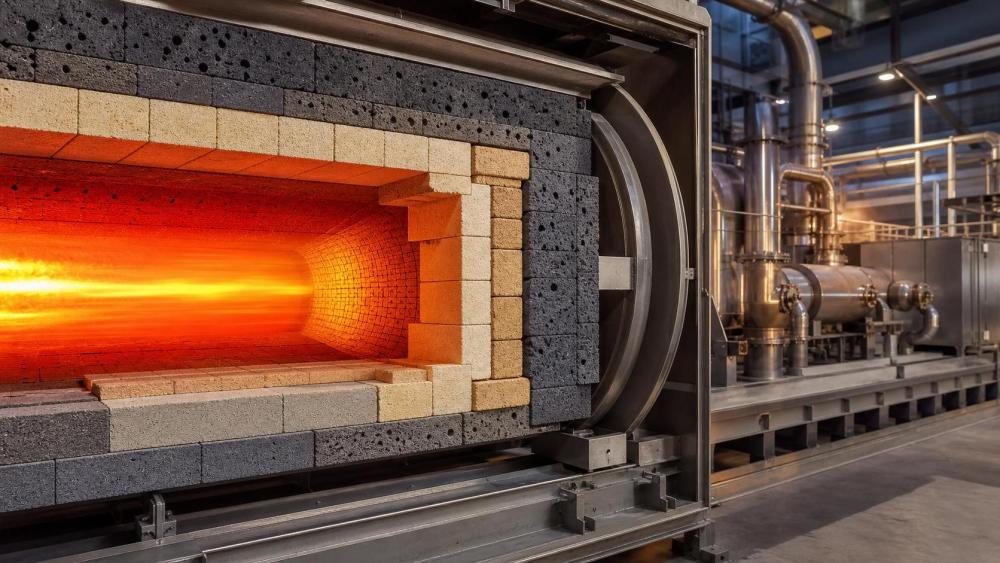
Choosing thermal shock resistant materials starts with the real operating profile, not the catalog headline.
In kilns, furnaces, and rapid heating zones, failure rarely comes from peak temperature alone.
It usually begins when hot surfaces and colder cores expand at different speeds.
That mismatch creates stress, crack growth, spalling, and sudden lining loss.
For that reason, selecting thermal shock resistant materials means balancing heat transfer, elasticity, strength, chemistry, and maintenance economics.
A strong choice supports uptime, predictable campaigns, and better fuel efficiency across high-temperature operations.
This is especially relevant in the industrial sectors tracked by CF-Elite, where refractory performance affects energy use, emissions, and process stability.
Start with the Thermal Shock Mechanism
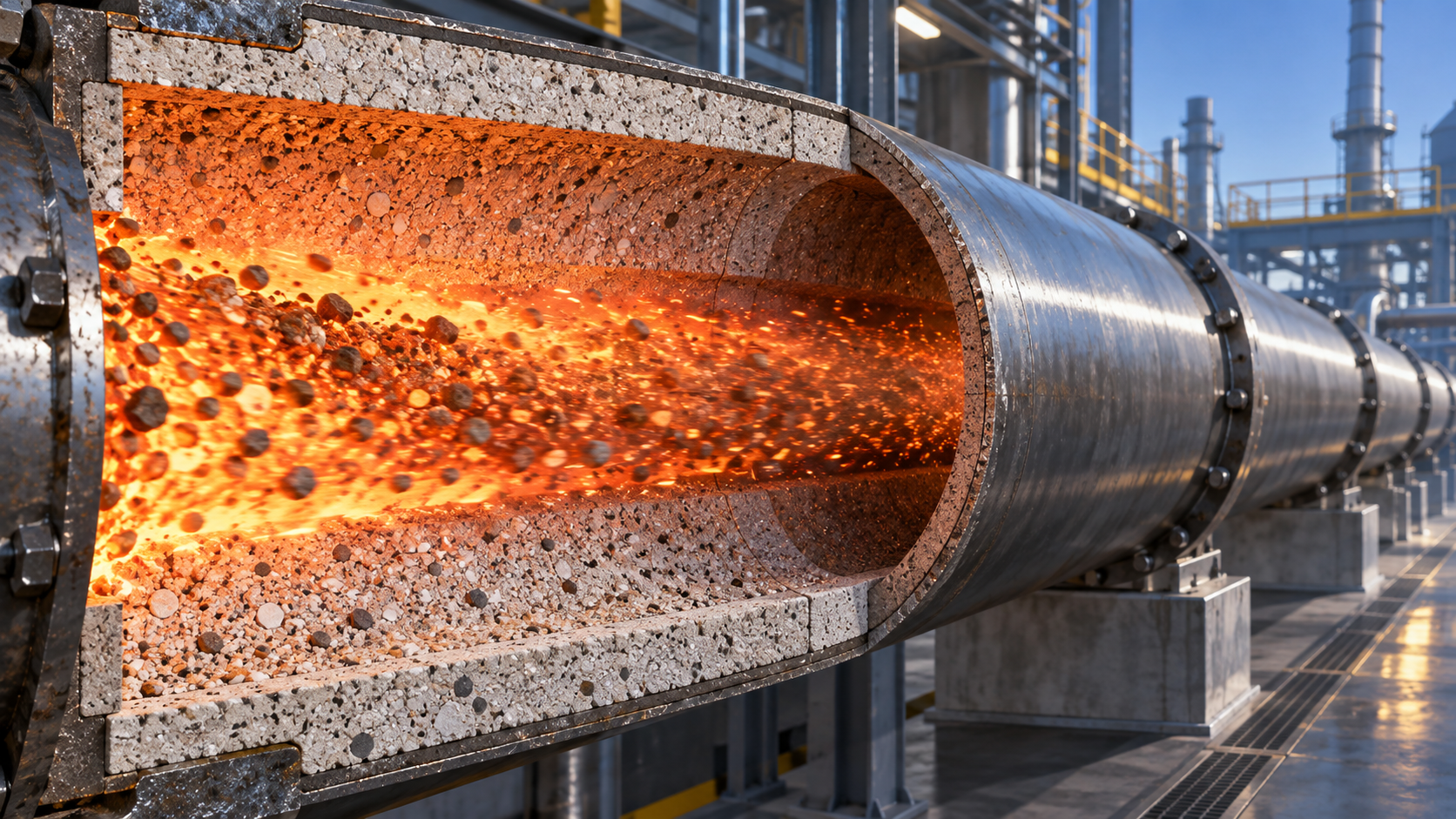
Thermal shock happens when temperature changes faster than the material can redistribute heat.
The outer layer expands or contracts first, while the interior lags behind.
If stress exceeds the local tolerance, microcracks appear and then connect.
In rapid heating cycles, repeated stress can be more damaging than a single extreme event.
This is why thermal shock resistant materials are often evaluated by crack resistance, not only by refractoriness.
A material may survive 1600 degrees Celsius in steady service, yet fail early during frequent startup and shutdown.
From a decision standpoint, the key question is simple.
Will the lining face stable soak conditions, or aggressive cycling with steep thermal gradients?
Define the Service Conditions Before Comparing Grades
Good selection work begins with a disciplined process description.
Without that, even premium thermal shock resistant materials can be misapplied.
Capture operating variables in a short selection sheet:
- Maximum operating temperature and average working temperature
- Heating and cooling rate per cycle
- Number of cycles per day or per week
- Atmosphere, including oxidizing, reducing, vacuum, or steam-rich conditions
- Mechanical loading, vibration, abrasion, and product contact
- Chemical exposure from ash, alkalis, slag, volatiles, or molten glass
- Target campaign life and planned shutdown intervals
This step often changes the shortlist.
For example, an incinerator roof, a shuttle kiln car deck, and a rapid-cycle furnace door need different thermal shock resistant materials.
They may share a similar temperature range, but their damage modes are not the same.
Focus on the Properties That Actually Drive Survival
Datasheets often highlight bulk density, refractoriness, and cold crushing strength.
Those numbers matter, but they do not tell the full story for thermal cycling.
1. Coefficient of Thermal Expansion
Lower expansion usually means lower stress during fast temperature change.
This is one reason cordierite and some silicon carbide systems perform well in thermal shock resistant materials selection.
2. Thermal Conductivity
Higher conductivity can reduce temperature gradients by moving heat through the section faster.
That often helps thermal shock resistant materials, especially in rapid heating furnaces.
But it can also increase heat loss, so system efficiency must be checked.
3. Elastic Modulus and Fracture Behavior
Stiff materials store stress quickly.
Materials with better crack deflection or controlled microstructure may last longer, even with lower nominal strength.
4. Hot Strength and Creep Resistance
Thermal shock resistant materials still need to hold shape under load at temperature.
A lining that resists cracking but deforms in service is not a successful choice.
5. Chemical Compatibility
Fast failure often starts after chemical attack weakens the structure.
Alkali, sulfur, chlorides, and molten phases can sharply reduce the value of otherwise strong thermal shock resistant materials.
Common Material Families and Where They Fit Best
There is no universal winner.
The right thermal shock resistant materials depend on process chemistry, cycling severity, and structural demand.
In actual selection work, hybrid lining design is often more effective than a single material family.
A dense hot face, a compliant intermediate layer, and lighter backup insulation can improve both durability and energy efficiency.
Evaluate the Whole Component, Not Just the Material
Thermal shock resistant materials can still fail when the component design is wrong.
Thickness, anchoring, joint spacing, and edge geometry all change stress distribution.
Thicker sections heat more slowly and often see higher internal gradients.
Sharp corners act as stress concentrators.
Rigid anchoring can block normal expansion and trigger premature cracking.
This also explains why field performance may differ from laboratory rankings.
When comparing thermal shock resistant materials, review the installed geometry and restraint conditions at the same time.
Use a Practical Screening Method for Faster Decisions
A clear screening method makes material decisions more defensible.
It also helps when several suppliers claim similar thermal shock resistant materials performance.
- Remove any option that cannot handle the real chemistry.
- Screen for temperature capability with a margin above normal operation.
- Rank candidates by thermal shock behavior under the expected cycle rate.
- Check mechanical needs such as load, abrasion, and dimensional stability.
- Compare installation complexity, dry-out requirements, and repairability.
- Calculate total lifecycle cost, not only purchase price.
This approach usually leads to more reliable decisions than choosing the strongest or most expensive grade.
In many plants, the best thermal shock resistant materials are the ones that simplify restarts and reduce unplanned repair hours.
Watch for These Selection Mistakes
Several mistakes appear again and again in kiln and furnace projects.
- Using peak temperature as the only selection criterion
- Ignoring startup frequency and emergency cooling events
- Assuming laboratory values transfer directly to installed service life
- Selecting dense materials where lower mass would reduce stress
- Overlooking alkali or vapor attack in combustion and waste handling units
- Underestimating the impact of anchors, joints, and thermal expansion gaps
From recent industry changes, one clearer signal stands out.
More plants are operating with variable loads, fuel changes, and tighter energy targets.
That makes thermal shock resistant materials even more important because process stability is less forgiving than before.
Why Testing and Supplier Evidence Matter
When candidate materials look similar, ask for evidence tied to your duty cycle.
That evidence may include thermal cycling tests, retained strength data, field references, or failure analysis from comparable assets.
The most useful supplier conversations are specific.
Ask how the thermal shock resistant materials behave after repeated cycles, not just in a fresh sample condition.
Ask what installation controls are required to preserve that performance.
This is where intelligence-led evaluation becomes valuable.
CF-Elite’s industry focus reflects the same principle: technical decisions improve when physical data, process behavior, and lifecycle risk are read together.
A Practical Decision Framework for Final Selection
A good final decision usually answers five questions.
- Can the material tolerate the real heating and cooling profile?
- Will it remain chemically stable in the actual atmosphere and deposits?
- Does the component design support the material’s expansion behavior?
- Can the plant install, dry, and repair it consistently?
- Will total ownership cost improve across the full campaign?
If one answer is weak, the material is not fully selected yet.
That discipline helps avoid expensive decisions hidden behind attractive data sheets.
In practice, the best thermal shock resistant materials are those matched to the process, the geometry, and the maintenance strategy together.
For kilns, furnaces, and rapid heating cycles, that is the path to longer lining life, steadier thermal efficiency, and fewer surprises during operation.
Related News
 Thermal Energy ArchitectHow to Specify High-Temperature Process Systems for Continuous Thermal OperationsHigh-temperature process engineering systems: learn how to specify resilient continuous thermal operations for efficiency, compliance, reliable uptime, and long-term performance.Sep 28, 2026
 Thermal Energy ArchitectHow to Evaluate a Thermal Engineering Contractor for High-Temperature Plant ProjectsChoose a thermal engineering contractor with proven process expertise, lifecycle value, emissions control, and delivery discipline for reliable high-temperature plant performance.Sep 27, 2026
 Silicate Process EngineerHow Latin American Cement Plants Can Reduce Dust Emissions in Kilns and Transfer PointsCement plant dust control Latin America: reduce kiln and transfer-point emissions with practical airflow, filtration, monitoring, and maintenance strategies.Sep 26, 2026
 Material Heat-Resist ExpertHow to Evaluate Refractory Production Lines for Output, Quality, and Energy UseRefractory production lines: learn how to assess qualified output, consistent quality, and total energy use for smarter, lower-risk investment decisions.Sep 25, 2026
 Dr. Alistair VaughnHow Waste Recycling Technology Improves Material Recovery in Industrial PlantsWaste recycling technology improves material recovery through source segregation, smart separation, thermal treatment, and quality control for industrial plants.Sep 24, 2026
 Optical Glass Tech FellowHow to Specify Glass Annealing Equipment for European Quality and Energy RequirementsGlass annealing equipment Europe: learn how to specify lehrs for consistent glass quality, energy efficiency, compliance, automation, and reliable long-term performance.Sep 23, 2026
 Optical Glass Tech FellowSilicate Process Automation: Improving Batch Consistency and Energy ControlSilicate process automation improves batch consistency, energy control, traceability, and operator confidence across high-temperature manufacturing operations.Sep 22, 2026
 Optical Glass Tech FellowHow Silicate Industrial Processes Control Viscosity, Energy Use, and Product QualitySilicate industrial processes: learn how viscosity, chemistry, heat transfer, and atmosphere control reduce energy use, improve stability, and protect product quality.Sep 21, 2026
 Thermal Energy ArchitectHow European Plants Can Evaluate Energy Recovery Equipment for High-Temperature ProcessesIndustrial energy recovery equipment Europe: learn how high-temperature plants can assess waste-heat sources, integration risks, lifecycle value, and reliable recovery routes.Sep 20, 2026
 Thermal Energy ArchitectIndustrial Furnace Process Optimization: Reducing Fuel Use Without Sacrificing ThroughputIndustrial process optimization furnace strategies that cut fuel use while protecting throughput. Explore combustion control, heat recovery, refractory performance, and data-driven efficiency gains.Sep 19, 2026
 Ms. Elena RodriguezWhat Drives High-Pressure Extrusion Equipment Cost in Industrial Projects?High pressure extrusion equipment cost explained: compare pressure, die design, automation, wear, energy, and installation factors for smarter industrial investments.Sep 18, 2026
 Thermal Energy ArchitectHow to Size a Waste Heat Recovery Exchanger for High-Temperature Kiln Exhaust?Waste heat recovery exchanger sizing for high-temperature kiln exhaust: balance recoverable duty, fouling, corrosion limits, pressure drop, and reliable heat use.Sep 17, 2026
 Thermal Energy ArchitectWhy Heat-Resistant Materials Lose Abrasion Resistance at High TemperaturesHeat-resistant materials abrasion resistance can decline at high temperatures. Discover the thermal, chemical, and mechanical causes of wear—and how to choose longer-lasting linings.Sep 16, 2026
 Thermal Energy ArchitectHow to Evaluate a Thermal Energy Optimization Company for High-Temperature PlantsChoose a thermal energy optimization company with proven process expertise, measurable savings, and reliable delivery for high-temperature plants. Learn what to assess.Sep 15, 2026
 Thermal Energy ArchitectRotary Kiln Efficiency: How Feed Rate, Fuel Use, and Heat Loss Affect OutputRotary kiln efficiency explained: discover how feed rate, fuel use, heat loss, combustion, and cooling performance shape output, quality, and energy costs.Sep 14, 2026
 Thermal Energy ArchitectHow to Select Heat-Resistant Materials That Maintain Abrasion Resistance in KilnsHeat-resistant materials abrasion resistance: learn how to select kiln linings that withstand heat, wear, thermal cycling, and chemical attack for longer service life.Sep 13, 2026
 Thermal Energy ArchitectHow Rotary Kiln Automation Improves Temperature Control and Fuel EfficiencyRotary kiln technology automation enhances temperature control, stabilizes combustion, and improves fuel efficiency with smarter data, predictive control, and safer operations.Sep 12, 2026
 Silicate Process EngineerCement Plant Emission Control: Selecting Systems for Dust, NOx, and SO2 LimitsCement plant emission control guide: compare dust collectors, NOx reduction, and SO2 systems for reliable compliance across kiln modes, fuel changes, and operating upsets.Sep 11, 2026
 Thermal Energy ArchitectSelecting Abrasion-Resistant High-Temperature Materials for Kiln and Conveyor Wear ZonesHigh-temp material engineering guide to abrasion-resistant kiln and conveyor solutions—match wear, heat, chemistry, and installation design for longer service life.Sep 10, 2026
 Dr. Alistair VaughnIndustrial Process Engineering: How to Map Processes for Safer, More Efficient PlantsIndustrial process engineering reveals bottlenecks, safety risks, and energy losses through practical process mapping for safer, more efficient plants.Sep 09, 2026


Related News
- 00
0000-00
How to Specify High-Temperature Process Systems for Continuous Thermal Operations - 00
0000-00
How to Evaluate a Thermal Engineering Contractor for High-Temperature Plant Projects - 00
0000-00
How European Plants Can Evaluate Energy Recovery Equipment for High-Temperature Processes - 00
0000-00
Industrial Furnace Process Optimization: Reducing Fuel Use Without Sacrificing Throughput - 00
0000-00
How to Size a Waste Heat Recovery Exchanger for High-Temperature Kiln Exhaust?
Weekly Insights
Stay ahead with our curated technology reports delivered every Monday.