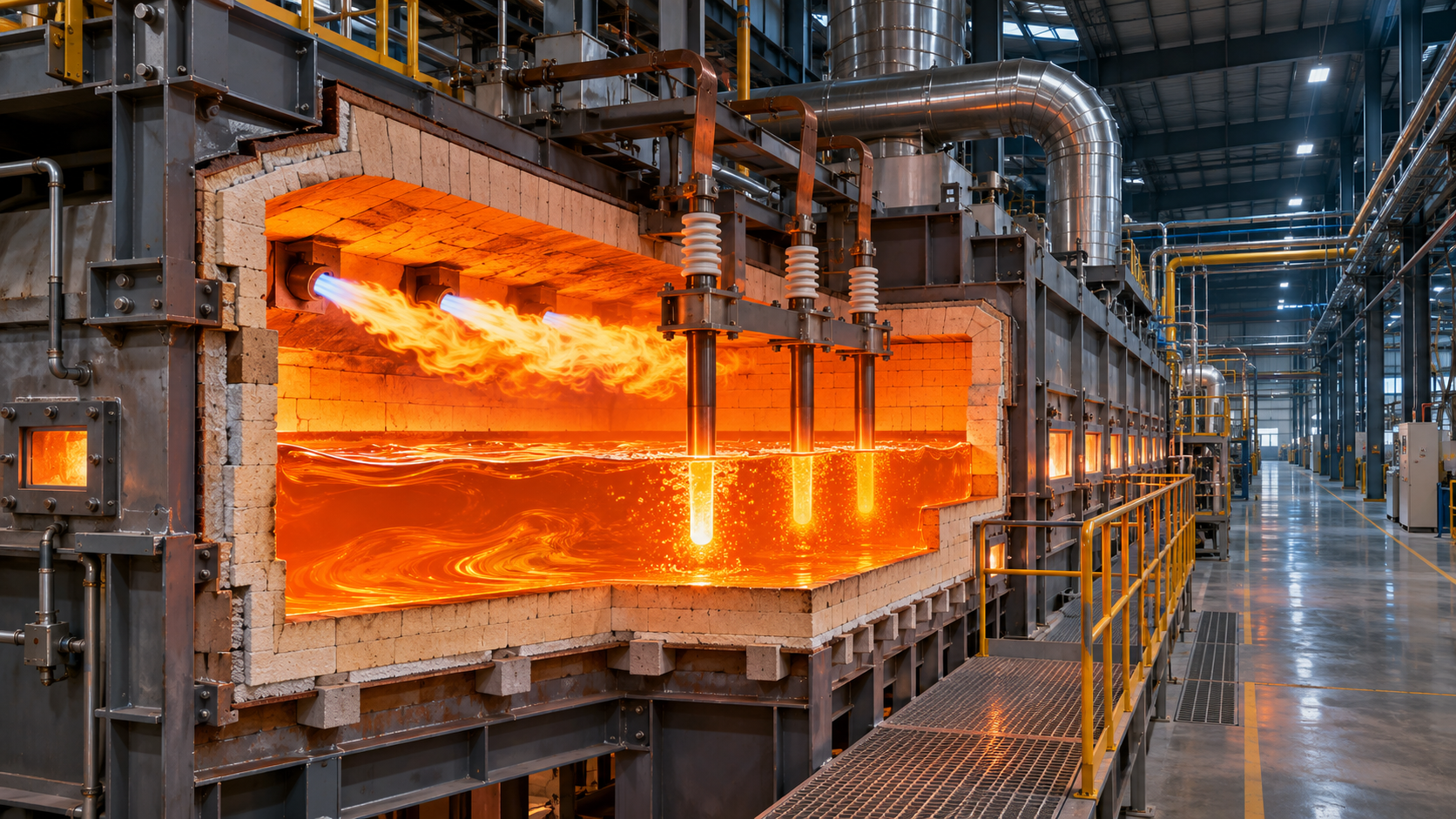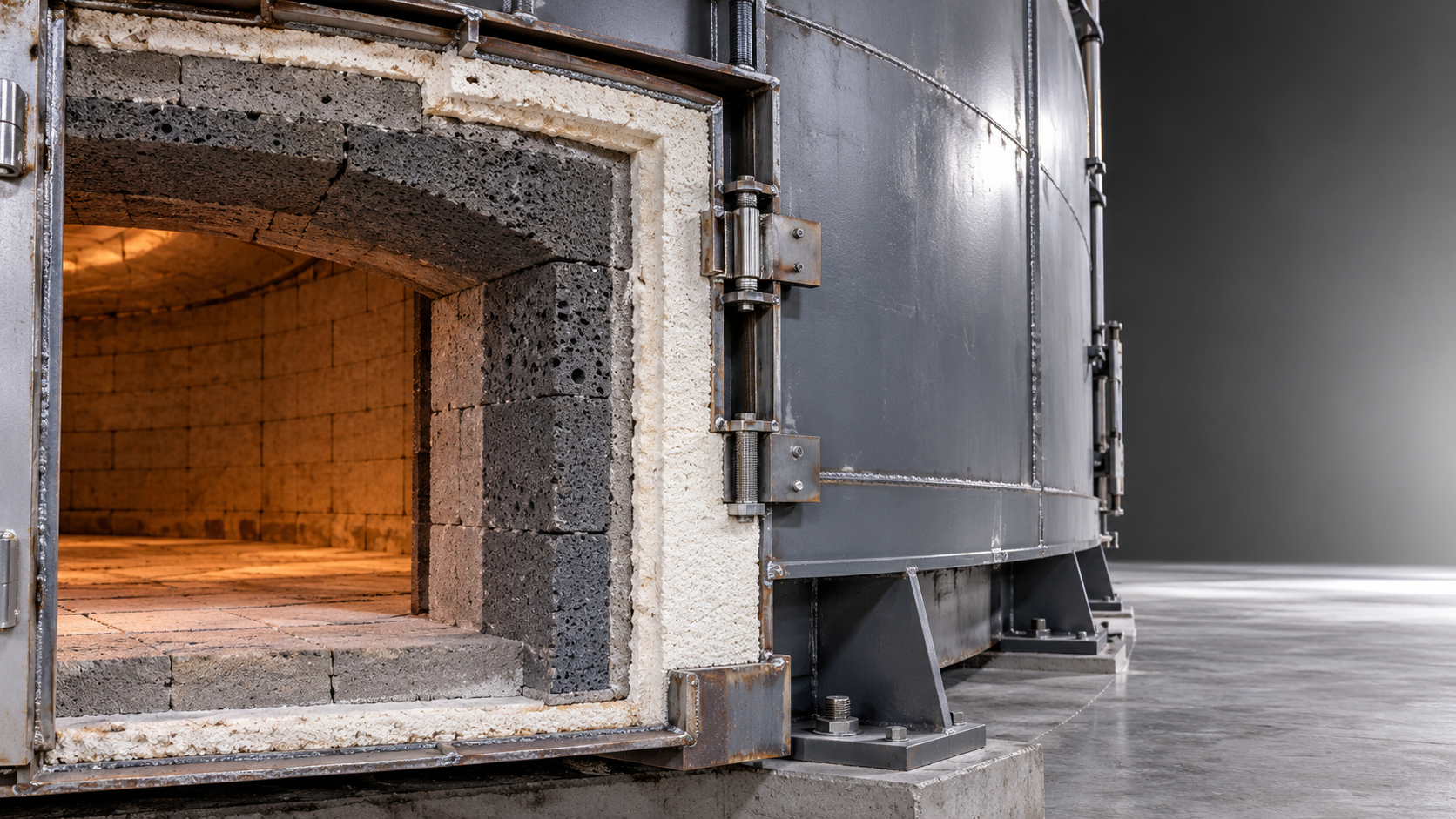




Repeated heating and cooling can damage kiln linings long before their rated temperature limit is reached. Temperature ratings alone cannot establish suitability for cycling service.
For technical evaluators, selecting high temperature kiln materials means matching thermal shock resistance, expansion behavior, chemical compatibility, and installation requirements to actual operating conditions.
The strongest specification evaluates the complete lining system under representative cycles. A higher temperature rating or higher alumina content does not automatically deliver longer life.
This guide explains how to compare refractory families, identify failure mechanisms, assess supplier evidence, and balance durability against heat loss, maintenance demands, and lifecycle cost.
What Actually Causes a Kiln Lining to Fail During Thermal Cycling?
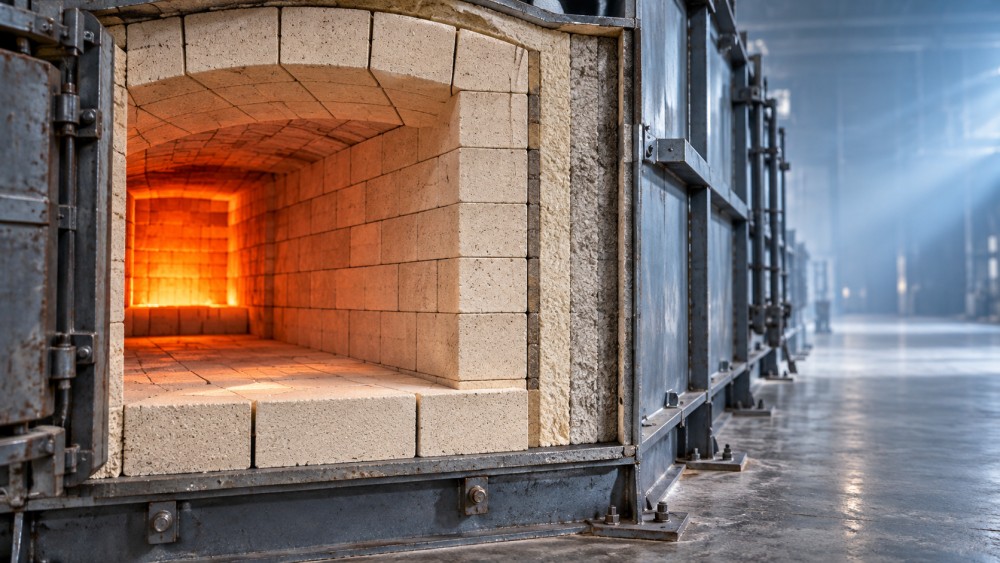
Thermal cycling creates temperature differences through the lining thickness. The hot face expands or contracts before the colder interior, generating stresses within the refractory.
Damage becomes more likely when these stresses exceed local strength or when repeated cycles extend existing cracks. Restraint from surrounding construction can intensify stress.
Rapid cooling can place the exposed surface in tension, encouraging cracking. Heating can create different stress patterns, depending on geometry, restraint, and temperature distribution.
Thermal shock describes damage associated with abrupt temperature changes. Thermal fatigue describes progressive damage accumulated across repeated cycles, including cycles without dramatic temperature swings.
Chemical penetration can compound both mechanisms. Infiltrated salts, slags, or glass may change local expansion behavior, weaken bonds, or create layers vulnerable to spalling.
Consequently, laboratory thermal shock rankings need context. Specimen geometry, cooling method, test temperature, and damage criteria can change which material appears to perform best.
Define the Operating Cycle Before Comparing Material Grades
Start with measured operating conditions rather than the kiln’s nameplate temperature. Capture normal cycles, shutdowns, emergency cooling events, and localized exposure near burners or doors.
Record peak hot-face temperature, dwell time, heating rate, cooling rate, and cycle frequency. Include the temperatures at which loading, unloading, or ventilation changes occur.
Specify where each temperature is measured. Gas temperature, product temperature, refractory surface temperature, and shell temperature represent different conditions and should not be treated interchangeably.
Document atmosphere composition and its variation throughout each cycle. Oxidizing, reducing, steam-rich, sulfur-bearing, and alkali-bearing environments can require different material choices within one installation.
Map mechanical demands separately: abrasion from moving solids, impact during charging, vibration, and structural loads. A thermally resilient insulating material may lack adequate erosion resistance.
Finally, divide the kiln into exposure zones. Burner blocks, door surrounds, roofs, sidewalls, and discharge areas rarely justify identical refractory compositions or lining thicknesses.
Which Refractory Families Deserve a Place on the Shortlist?
Shortlist materials by their dominant exposure conditions, then compare cycling performance. The following families offer useful starting points, but individual grades can behave very differently.
High-alumina content can improve certain temperature and corrosion capabilities, but it is not a universal measure of thermal shock resistance. Microstructure and bonding remain decisive.
Andalusite-containing products can develop mullite during firing or service. Their performance depends on formulation and thermal history, so request dimensional-change data for relevant temperatures.
Silicon carbide’s thermal conductivity can reduce temperature gradients within a component. However, the complete wall may require additional insulation to control shell temperatures and losses.
Basic refractories may be necessary where process chemistry demands them. Their expansion behavior requires deliberate joint design, compatible neighboring materials, and appropriate storage controls.
Fiber products offer low thermal mass, supporting faster cycling and lower stored heat. Their suitability depends on shrinkage, gas velocity, contamination, and mechanical exposure.
Distinguish classification temperature from recommended continuous-use temperature for insulation products. Confirm the supplier’s operating limit under the actual atmosphere, loading, and expected service duration.
Which Properties Predict Performance Beyond the Temperature Rating?
Request thermal expansion across the operating range, including any phase-related changes. A single room-temperature coefficient can conceal behavior that matters during startup or shutdown.
Compare permanent linear change after representative heat treatments. Irreversible shrinkage can open joints, while irreversible growth can increase compression and disrupt adjacent lining sections.
Evaluate thermal conductivity as a temperature-dependent property. Lower conductivity reduces steady heat flow, but steeper internal temperature gradients can increase local thermal stress.
Strength data also require context. Cold crushing strength helps characterize handling and compression resistance, but it does not directly predict resistance to cyclic spalling.
Where relevant, request hot strength, creep, elastic modulus, and fracture-related data. Lower stiffness or controlled microcracking may improve strain accommodation, provided structural integrity remains sufficient.
Review apparent porosity alongside chemical exposure. Greater pore accessibility can promote penetration, while very dense products may offer different compromises in stiffness and thermal response.
A useful comparison therefore combines properties, representative testing, and service history. No isolated datasheet value reliably captures the interaction between temperature gradients, corrosion, and restraint.
Design the Complete Lining to Accommodate Movement
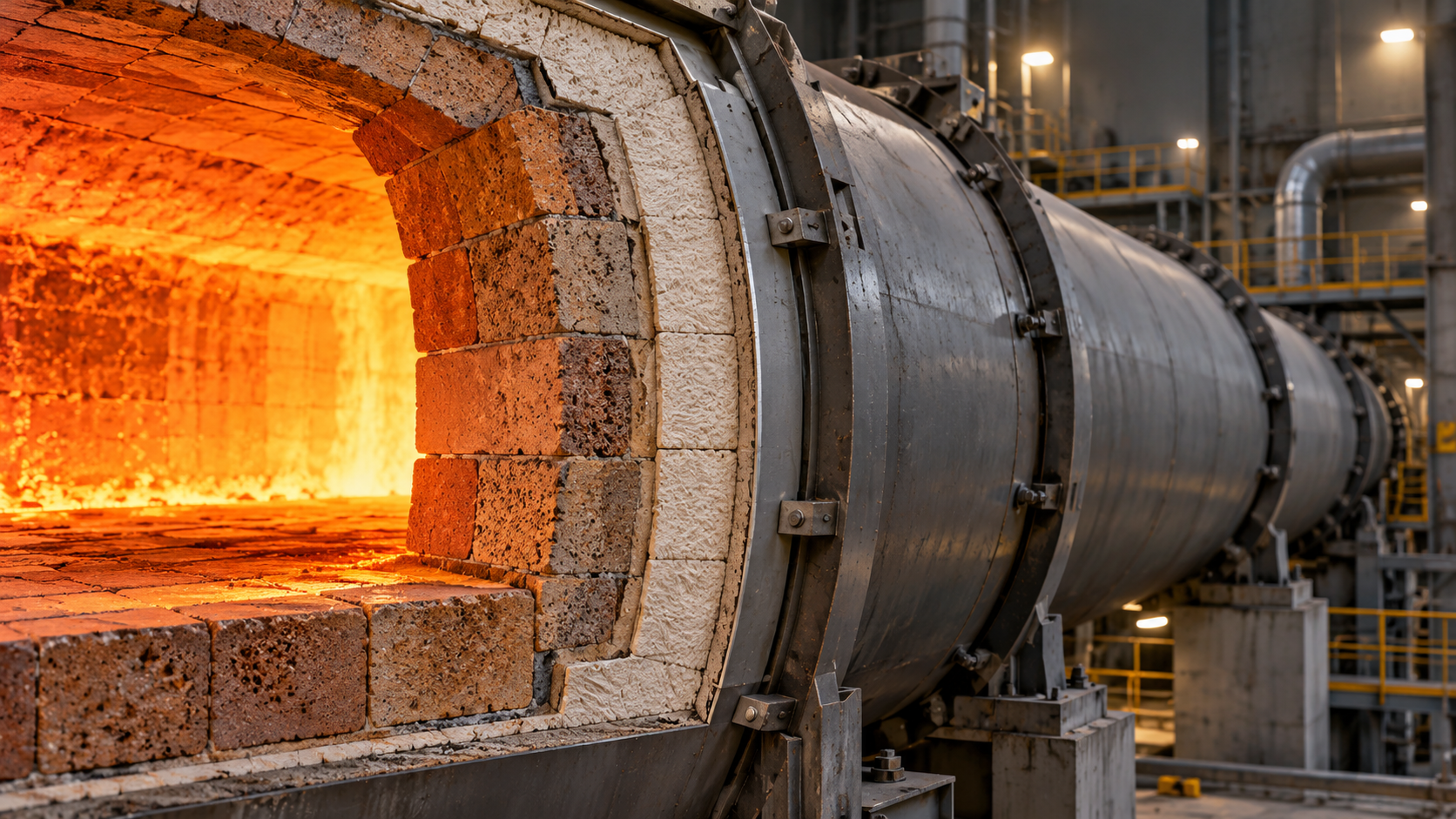
A refractory that performs well as a test specimen can fail in a constrained assembly. Expansion joints, anchors, interfaces, and backup layers influence operating life.
Calculate thermal movement for the actual geometry and temperature profile. Joint allowances should reflect material expansion, construction tolerances, and the expected closure during operation.
Excessively tight joints can cause crushing or buckling; excessive openings can admit hot gases and process deposits. Follow a documented design for each zone.
For anchored castables, assess anchor alloy or ceramic selection, spacing, embedment, and expected metal temperature. Account for anchor expansion and oxidation within the design.
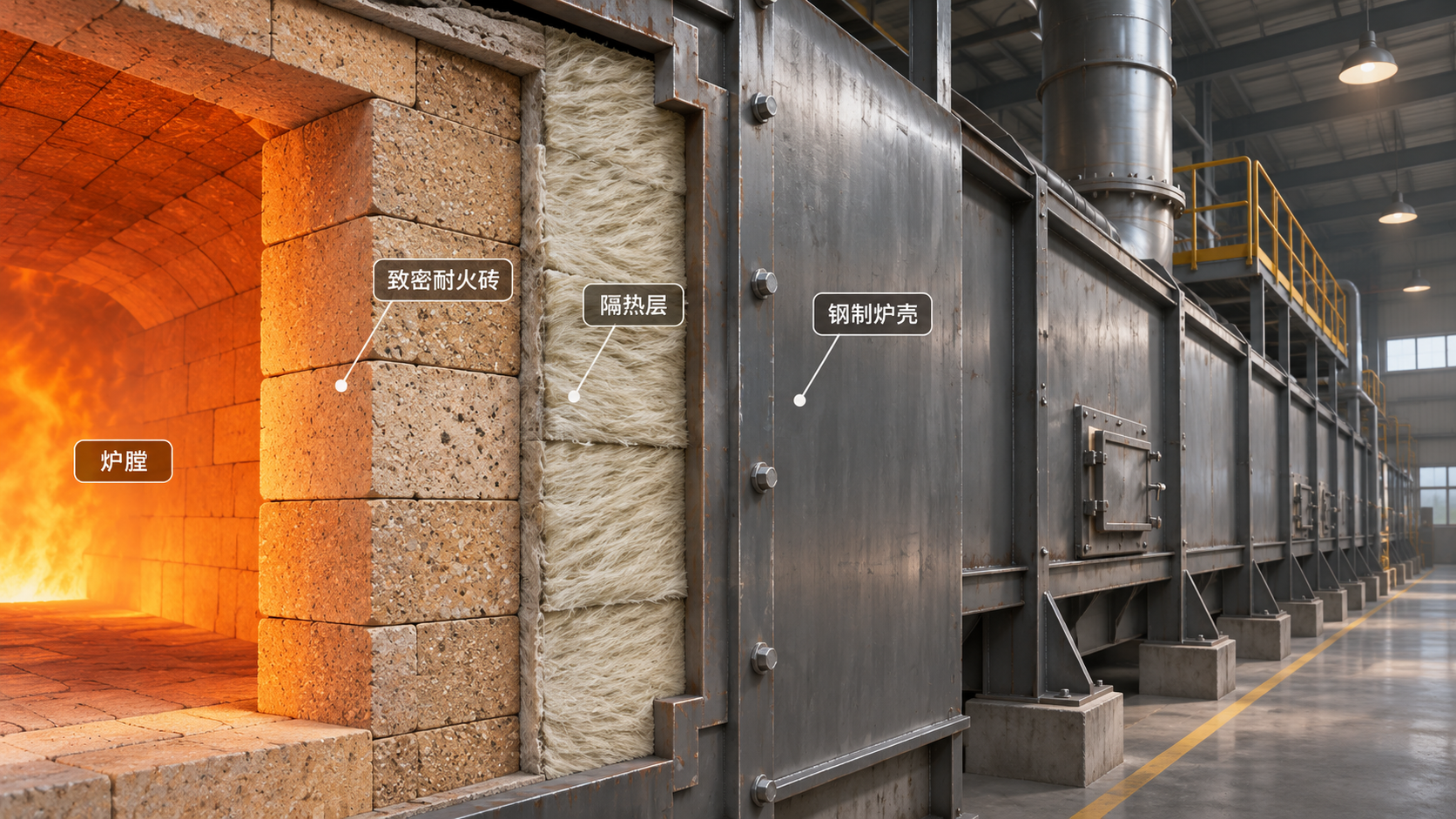
Layered linings need compatible movement and adequate support. Differential expansion between the working lining and backup insulation can create shear stresses or open pathways.
Model heat flow using temperature-dependent properties and realistic boundary conditions. Include doors, penetrations, supports, and other thermal bridges when estimating local shell temperatures.
For frequently cycled batch kilns, evaluate stored heat as well as steady losses. Lower thermal mass can reduce reheating energy when operational demands permit.
How Should Suppliers Demonstrate Resistance to Repeated Cycling?
Ask suppliers to explain why their proposed grade fits the operating profile. Require a documented connection between service conditions, material properties, and expected failure mechanisms.
Compare thermal cycling results only when methods are sufficiently aligned. Establish specimen dimensions, heating conditions, cooling medium, cycle duration, and the definition of failure.
Useful outcomes include retained strength, mass loss, visible spalling, crack development, and dimensional change. Choose acceptance criteria that correspond to the component’s actual function.
Where deposits or vapors drive damage, combine thermal cycling assessment with chemical compatibility testing. Clean laboratory specimens may overstate performance in contaminated industrial service.
Ask for references from installations with comparable chemistry, geometry, and shutdown frequency. Similar peak temperatures alone do not establish that operating experience is transferable.
For critical zones, consider a controlled trial with baseline inspection records. Track cycle count, exposure conditions, wear, and repair needs before expanding the installation.
Agree on inspection intervals and rejection criteria before commissioning. This makes supplier comparisons more defensible and helps distinguish material limitations from installation or operational problems.
Installation and Startup Can Determine Whether the Material Survives
For monolithic linings, water addition, mixing, placement, consolidation, and curing affect final properties. Excess water can increase porosity and compromise strength after drying.
Dryout must remove moisture without generating destructive internal pressure. Use the product supplier’s schedule, adjusted by qualified personnel for lining thickness, geometry, and ventilation.
Initial dryout and subsequent operating cycles are different requirements. A lining that survives commissioning may still deteriorate under repeated rapid shutdowns or uneven reheating.
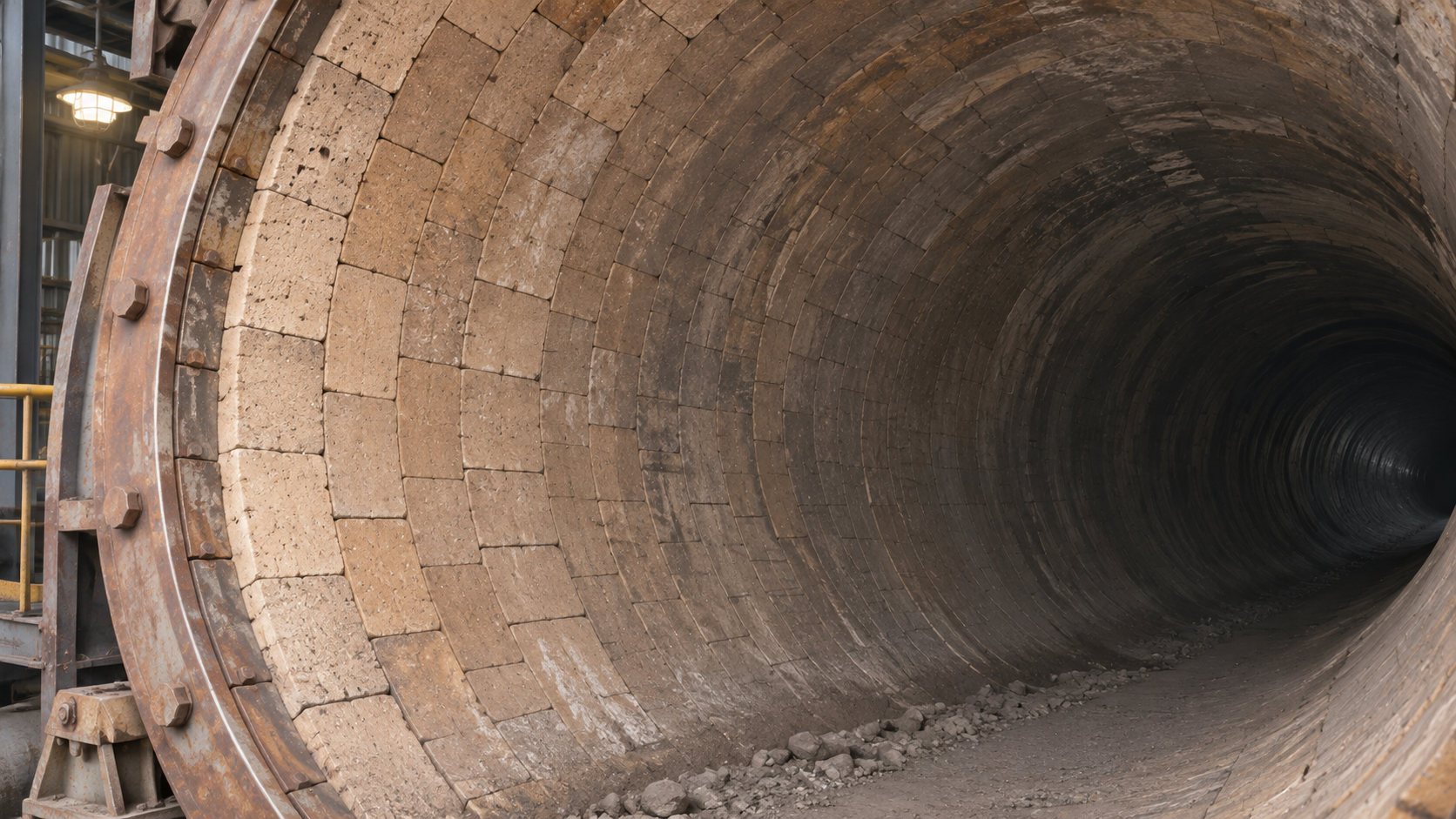
Brick systems also need controlled workmanship. Joint thickness, mortar compatibility, bonding pattern, and expansion provisions should match the approved design and installation instructions.
During operation, avoid directing cold air or water onto hot refractory unless the system is specifically engineered for it. Local cooling can produce severe gradients.
Use shell temperature trends, inspection photographs, and repair maps together. A rising shell temperature may indicate lining loss, open joints, or altered operating conditions.
When spalling occurs, preserve samples and record their location. Fracture patterns, penetration depth, and layer separation can guide more effective changes than simply increasing grade.
Make the Final Decision on Cost per Reliable Operating Cycle
Compare installed lining cost, expected cycle life, energy consumption, repair frequency, and outage consequences. Purchase price per tonne rarely identifies the most economical system.
Estimate cost per acceptable production cycle using realistic availability assumptions. Include installation labor, controlled dryout, disposal, and lost contribution during planned or unplanned shutdowns.
Keep uncertainty visible by comparing conservative and expected service-life scenarios. A premium material becomes attractive when credible improvements outweigh its additional installed cost.
Before approval, require a complete package: zone-specific materials, thermal calculations, joint and anchor details, installation procedures, operating limits, and inspection criteria tied to acceptance.
Selecting high temperature kiln materials ultimately means matching chemistry, thermal response, and construction to the duty cycle. Maximum temperature is only the starting constraint.
The strongest choice combines representative evidence with an installation the plant can execute consistently. Judge success through stable production, manageable heat losses, and predictable maintenance.