
Industrial Furnace Optimization: Heat Recovery Retrofit Costs and Payback




A furnace heat recovery retrofit is worth pursuing when the plant can use recovered heat consistently, reduce purchased energy measurably, and install the system without creating unacceptable production risk. Exhaust temperature alone does not establish investment value. A high-temperature exhaust stream with no dependable heat user can produce a weaker return than a cooler stream connected to a continuous process demand.
The decisive cost is not the heat exchanger purchase price. It is the complete installed investment—including ductwork, controls, structural modifications, commissioning, and incremental shutdown losses—measured against annual savings after electricity, cleaning, maintenance, and operating constraints. A credible payback calculation must connect these costs to the furnace’s actual operating schedule, not its nameplate capacity.
Establish how much heat can become a real saving
A useful starting point is the exhaust heat balance: gas flow multiplied by its temperature-dependent heat capacity and the permitted temperature reduction. This estimates available sensible heat, but not the amount that can be recovered economically. Heat exchanger performance, fouling, leakage, bypass operation, and the receiving process all reduce the usable quantity.
The permitted exhaust outlet temperature is particularly important. Cooling below an appropriate limit can cause condensation and corrosion, depending on fuel composition, moisture, and contaminants. Dust-bearing gases introduce another constraint: deposits can reduce heat transfer and increase pressure drop. A proposal based only on clean-gas performance may overstate both savings and operating availability.
The heat user must also be characterized. Combustion air preheating provides an internal destination tied to furnace operation. Hot water, thermal oil, steam, or feedstock preheating require compatible demand at the right temperature and time. Heat that is available during production but needed only during winter should not receive a full-year savings credit.
For industrial furnace optimization, the baseline should therefore include:
- Fuel consumption and production output across representative loads and product grades.
- Exhaust temperature, flow, oxygen content, and relevant dust or corrosive constituents.
- Operating hours, shutdown frequency, and expected future utilization.
- The receiving process’s temperature requirement and hourly heat demand.
- Existing furnace pressure control, fan capacity, and emission-control arrangements.
Correct excessive air infiltration, poor burner tuning, and avoidable insulation losses before freezing the heat recovery design. These measures can change exhaust conditions and reduce the size of the recovery system required. Otherwise, the retrofit may be designed around losses that should have been eliminated.
Select the heat destination before selecting the equipment
A recuperator transfers heat continuously through a separating surface. A regenerative system stores and releases heat through alternating operation. These are not interchangeable purchases: a regenerative retrofit can involve substantial combustion-system reconstruction, while a recuperator still needs compatible burners, ducts, and pressure control.
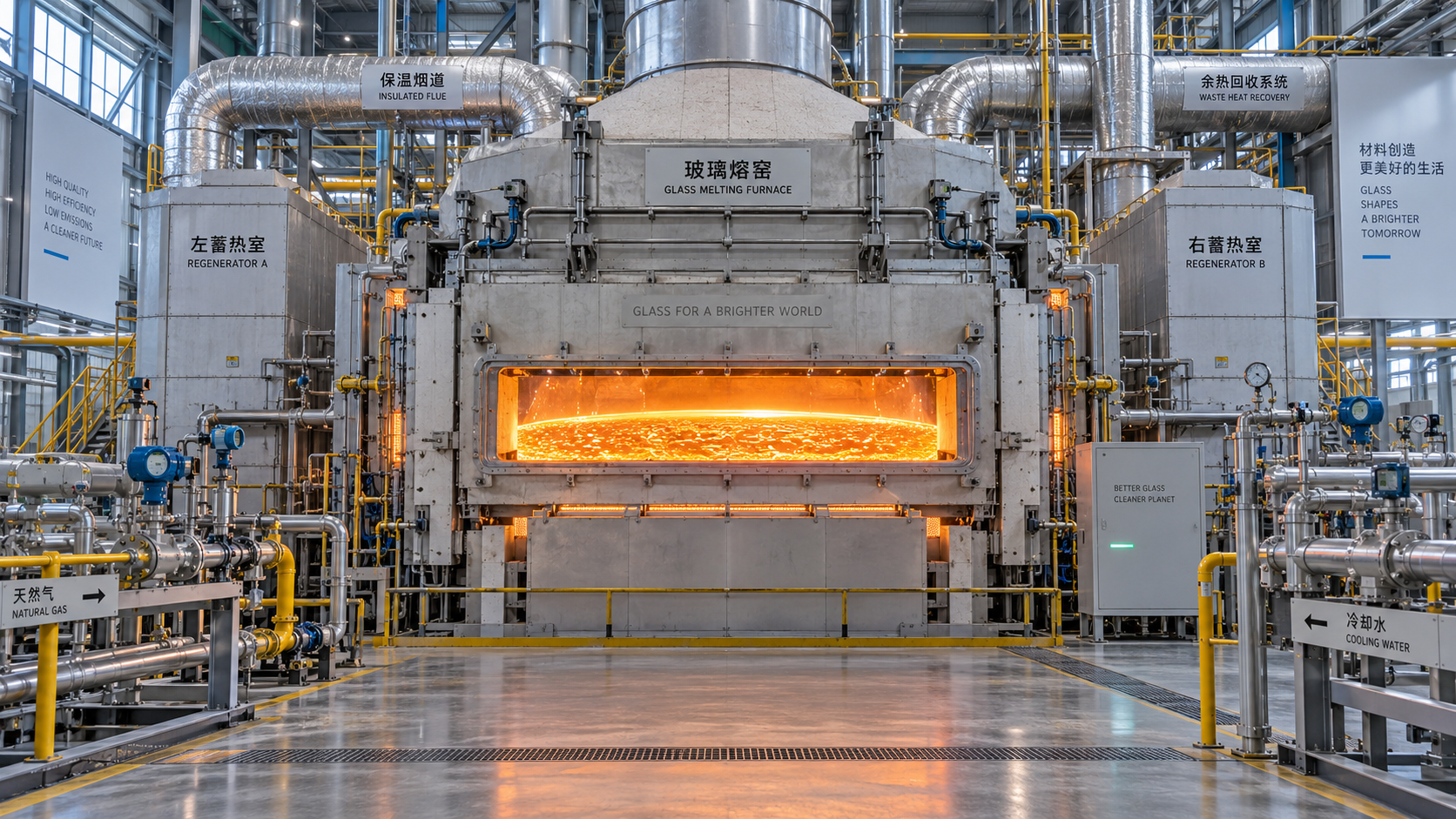
Application details can outweigh nominal efficiency. Glass furnace exhaust can present deposit and corrosion challenges. Cement production requires attention to existing preheater recovery and the heat already needed for raw-material drying. Ceramic kilns may offer opportunities to route cooling-zone heat to dryers, but product schedules and moisture loads determine the useful demand. Incineration systems must preserve required combustion conditions and account for contaminant-related corrosion.
Electricity generation from waste heat deserves separate evaluation when no useful thermal demand exists. It adds conversion equipment and rejects part of the recovered energy. Its economics cannot be inferred directly from the payback of a thermal recovery system.
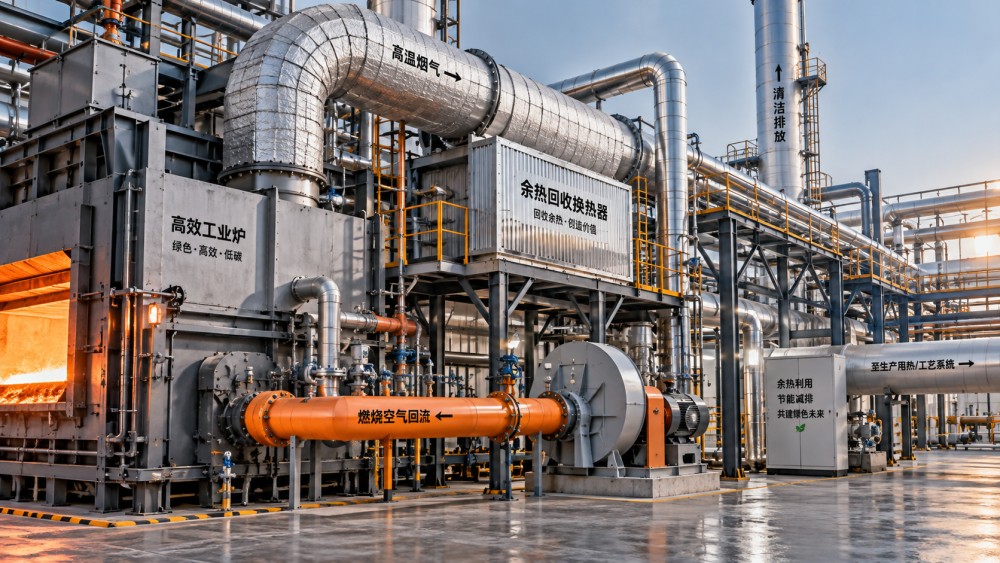
Build an installed-cost estimate, not an equipment-price comparison
There is no defensible universal price per furnace for heat recovery retrofits. Two systems recovering the same thermal output can have very different costs if one fits beside an accessible exhaust duct and the other requires a new structure, long piping runs, refractory alterations, and fan replacement.
Quotes become comparable only when their scope boundaries match. An equipment-only offer may exclude the most site-dependent expenditure. The capital estimate should distinguish:
- Recovery equipment: exchanger surfaces, housings, insulation, cleaning provisions, and material upgrades.
- Mechanical integration: ducts, dampers, bypasses, expansion joints, piping, pumps, and fans.
- Site work: foundations, support steel, access platforms, lifting, demolition, and refractory restoration.
- Electrical and control work: instrumentation, drives, interlocks, control-system integration, and power distribution.
- Engineering and delivery: surveys, design, transport, duties where applicable, commissioning, training, and spares.
Contingency should reflect the estimate’s maturity. Unverified structural capacity, uncertain gas composition, and incomplete tie-in drawings create different risks from a project with detailed engineering and confirmed interfaces. A single unexplained contingency percentage conceals these differences rather than resolving them.
Cross-border procurement also changes the landed cost. Currency exposure, shipping dimensions, import charges, local inspection requirements, and specialist commissioning travel can materially separate a supplier’s quoted price from the approved project budget. Responsibility for these items should be explicit before commercial bids are ranked.
Downtime can outweigh a lower purchase price
The relevant shutdown cost is the incremental economic loss caused by the retrofit. If installation fits entirely within an already planned outage, charging the project for the whole shutdown overstates its cost. If it extends that outage, the additional days, restart losses, scrap, and temporary operating arrangements belong in the investment case.
Lost sales revenue is not automatically the correct measure. The calculation should reflect lost contribution margin, recoverable production, inventory coverage, contractual delivery exposure, and any additional restart expenditure. A plant able to rebuild inventory before installation faces a different cost from one operating continuously at constrained capacity.
Installation planning should identify what can be completed while the furnace runs: foundations, support structures, control panels, and some duct fabrication may be prepared in advance. The critical outage activities are the tie-ins, burner or refractory changes, inspections, and functional tests that cannot be performed safely during operation.
A bypass arrangement can protect production when the recovery system needs cleaning or repair. However, its dampers, controls, and space requirements must be included in the budget. Savings assumptions should also recognize that bypass operation produces no recovery benefit during those periods.
Calculate payback from net savings
The basic relationship is straightforward:
Simple payback = total project investment ÷ annual net operating savings.
The difficult part is defining the denominator. For heat delivered to a separate process, avoided fuel depends on the efficiency of the heating system being displaced. For combustion air preheating, use a furnace heat balance or validated performance model; do not apply a generic boiler-efficiency assumption.
The following hypothetical example illustrates the calculation. These figures are calculation inputs, not market quotations or a reported project.
Assume the system delivers an average of 1 MW of useful heat during 6,000 recovery hours annually, after accounting for expected performance deterioration and interruptions. That produces 6,000 MWh of useful heat. If it displaces a fuel-fired heater with 80% efficiency, avoided fuel purchases equal 7,500 MWh.
At an assumed fuel price of $45/MWh, gross annual savings are $337,500. Deduct $22,000 for additional electricity, $20,000 for maintenance and cleaning, and $5,500 for other incremental operating costs. Net annual savings are $290,000, giving a simple payback of approximately 4.1 years.
The fuel price and efficiency must use a consistent higher- or lower-heating-value basis. Fuel savings should reflect avoidable charges: fixed supply costs that remain after the retrofit are not savings. Carbon benefits should be monetized only where they reduce an actual payment obligation or create a realizable credit, without double counting costs already included in the fuel price.
Test whether the return survives less favorable operation
A single payback figure hides exposure to fuel prices and plant utilization. In the example, reducing the fuel price to $30/MWh lowers net savings to $177,500 and extends payback to approximately 6.8 years. Increasing it to $60/MWh raises net savings to $402,500 and shortens payback to about 3.0 years, with other assumptions unchanged.
Reducing recovery operation to 4,000 hours also extends payback to approximately 6.8 years if annual incremental costs are conservatively held unchanged. This matters where production forecasts are uncertain or the heat user operates fewer hours than the furnace.
Simple payback is a screening tool, not a complete investment appraisal. Net present value should incorporate the expected operating life, discount rate, replacement expenditure, maintenance escalation, and the remaining life of the furnace itself. A recovery package expected to last longer than the host furnace needs a credible relocation or replacement plan before those later savings receive value.
Make performance guarantees match the business case
A guarantee of exchanger efficiency alone does not guarantee financial savings. Contractual performance conditions should specify exhaust flow and temperature, gas composition, furnace load, heat-user conditions, pressure drop, and auxiliary electricity consumption. The acceptance method should distinguish measured useful heat from theoretical heat availability.
For fuel-saving guarantees, compare production-normalized consumption under agreed conditions. Product mix, feed moisture, furnace loading, and ambient conditions can otherwise obscure the result. Cleaning intervals and performance between cleanings matter more economically than a short acceptance test immediately after commissioning.
The purchase decision should turn on whether a fully scoped installation delivers an acceptable return under conservative operating assumptions while preserving output, quality, and safe furnace control. Where the economics depend on maximum load, permanently clean surfaces, or an unconfirmed heat demand, the appropriate next expenditure is better measurement or engineering—not a premature equipment order.
Related News
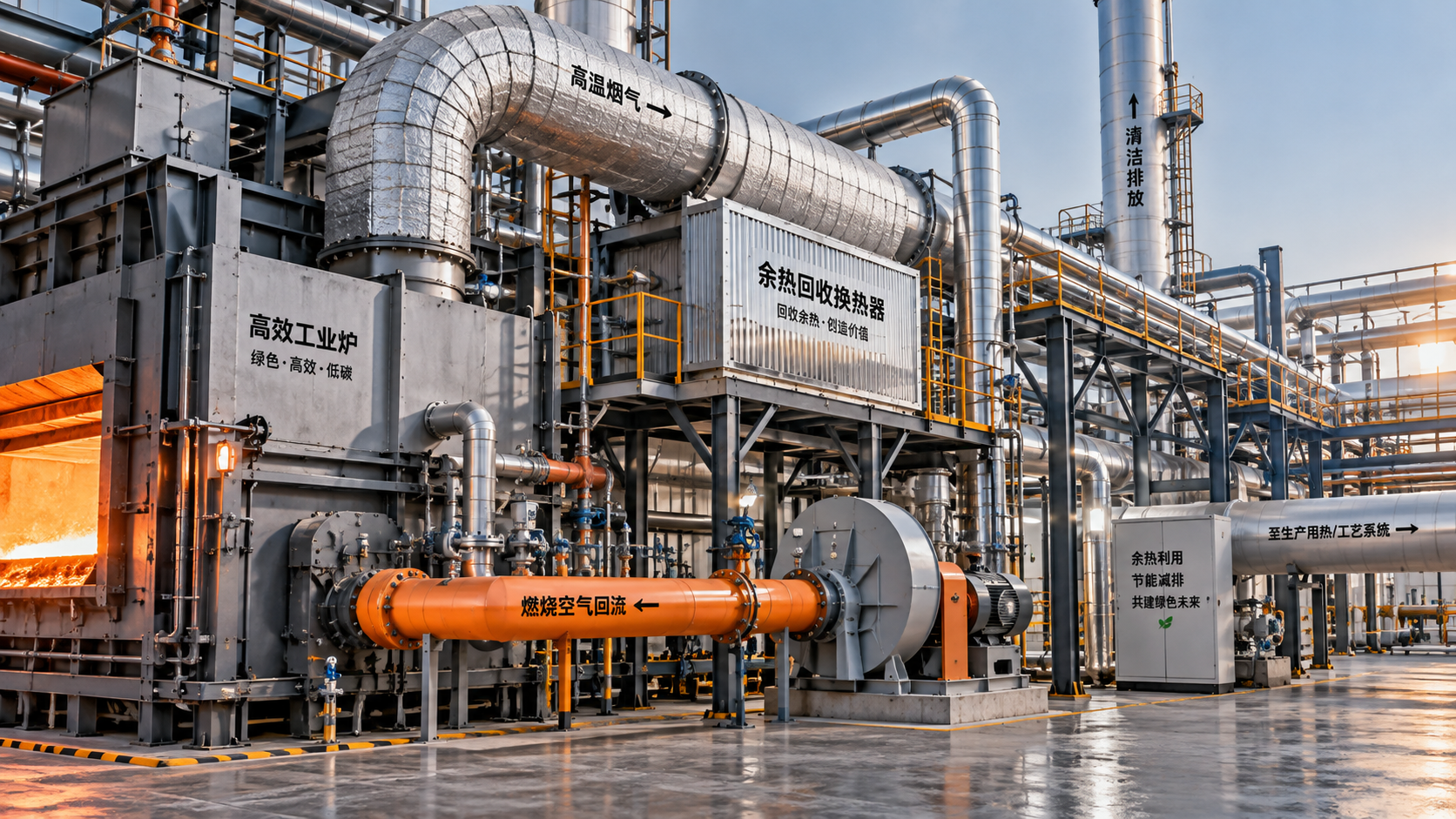
 Thermal Energy ArchitectIndustrial Furnace Optimization: Heat Recovery Retrofit Costs and PaybackExplore industrial process optimization furnace strategies to assess heat recovery retrofit costs, calculate realistic payback and cut energy bills while protecting production.Oct 15, 2026
 Dr. Alistair VaughnIndustrial Waste Recycling: Selecting Conversion Systems by Feedstock and OutputCompare industrial waste conversion systems recycling teams can match to feedstock and output. Explore recovery routes, quality criteria, and costs to choose with confidence.Oct 14, 2026
 Ms. Elena RodriguezHigh-Pressure Molding Innovations: How Automation and Tooling Affect PriceExplore the high-pressure molding innovations price equation: compare automation, tooling, and ownership costs to find upgrades that cut waste and deliver measurable value.Oct 13, 2026
 Ms. Elena RodriguezIndustrial Process Optimization: Where to Target Energy, Yield, and Throughput LossesIndustrial process optimization: identify energy, yield, and throughput losses to improve plant stability, reduce costs, and unlock measurable performance gains.Oct 12, 2026
 Ms. Elena RodriguezGlass Market Intelligence: How to Assess Demand, Capacity, and Regional Growth RisksGlass market intelligence for evaluating demand, effective capacity, energy exposure, trade dynamics, and regional growth risks before investing in glass manufacturing.Oct 11, 2026
 Silicate Process EngineerWhat Is a Realistic Energy Efficiency Target for a Cement Plant?What energy efficiency target is realistic for a cement plant? Explore practical thermal and electrical benchmarks, savings opportunities, and phased strategies to reduce costs, improve reliability, and build a credible decarbonization roadmap.Oct 14, 2026
 Ms. Elena RodriguezAre Green Building Materials More Expensive to Manufacture?Are green building materials more expensive to manufacture? Explore cost drivers, savings opportunities, and how sustainable production can strengthen long-term competitiveness.Oct 13, 2026
 Structural Material AnalystWhich Sustainable Construction Materials Are Suitable for Extrusion?Which sustainable construction materials are suitable for extrusion? Explore recycled clay, cementitious mixes, geopolymers, and bio-composites for reliable, lower-impact building products.Oct 12, 2026
 Optical Glass Tech FellowWhat Should a Glass Furnace Energy Specification Include?What should be included in a glass furnace energy specification? Explore performance, fuel flexibility, heat recovery, emissions, and monitoring essentials.Oct 11, 2026
 Dr. Alistair VaughnHow Process Technology Platforms Improve Control Across Multi-Line ManufacturingDiscover how a process technology platform strengthens cross-line control, connects operational data, and improves energy, quality, and maintenance decisions.Oct 10, 2026
 Optical Glass Tech FellowHow Glass Furnace Emissions Are Measured and Controlled for Regulatory ComplianceGlass furnace emissions: learn how to measure, monitor, and control NOx, SOx, particulate, CO, and CO2 for reliable regulatory compliance.Oct 08, 2026
 Prof. Marcus ChenIndustrial Decarbonization Strategies in Europe: A Roadmap for Energy-Intensive PlantsIndustrial decarbonization strategies Europe: explore practical pathways for energy-intensive plants to cut emissions, improve efficiency, and protect performance.Oct 07, 2026
 Thermal Energy ArchitectEnergy-Efficient Silicate Production Lines: What to Compare Before SelectionSilicate production lines energy efficient selection guide: compare thermal performance, stability, emissions, controls, and lifecycle value before investing.Oct 06, 2026
 Optical Glass Tech FellowHow to Evaluate Automated Float Glass Lines for Capacity, Quality, and Energy UseEvaluate automated float glass lines for net capacity, consistent quality, energy efficiency, automation reliability, and lifecycle value. Explore key criteria for smarter investment decisions.Oct 05, 2026
 Thermal Energy ArchitectWhat Does CE Marking Require for an Energy-Efficient Industrial Kiln?Energy efficient kiln CE requirements explained: assess safety, technical files, energy performance, and EU compliance before purchase or commissioning.Oct 04, 2026
 Thermal Energy ArchitectRefractory Manufacturing Solutions for Brick Plants: How to Extend Kiln LifeRefractory manufacturing solutions for brick plant operations: discover proven strategies to extend kiln life, reduce heat loss, prevent lining failures, and plan cost-effective repairs.Oct 03, 2026
 Thermal Energy ArchitectHow to Specify Heavy Industrial Process Systems for High-Temperature PlantsHeavy industrial processes systems: learn how to specify high-temperature plants for efficiency, emissions control, maintainability, and lifecycle performance.Oct 02, 2026
 Structural Material AnalystHow Sustainable Material Extrusion Can Improve Wall Panel Durability and Design FlexibilityDiscover how sustainable material extrusion for wall panels improves durability, moisture resistance, design flexibility, and installation consistency for high-performing wall systems.Oct 01, 2026
 Thermal Energy ArchitectHow to Evaluate a High-Temperature Materials Manufacturer for Furnace ApplicationsChoose a high-temperature materials manufacturer with confidence: compare thermal performance, chemical resistance, quality controls, installation support, and lifecycle cost.Sep 30, 2026
 Ms. Elena RodriguezHow to Structure Global Specification Data for Faster Industrial Product EvaluationGlobal specification-oriented product information helps industrial teams compare capacity, energy, emissions, automation, and lifecycle data on a like-for-like basis for faster, confident equipment decisions.Sep 29, 2026



Related News
- 00
0000-00
Industrial Furnace Optimization: Heat Recovery Retrofit Costs and Payback - 00
0000-00
Energy-Efficient Silicate Production Lines: What to Compare Before Selection - 00
0000-00
What Does CE Marking Require for an Energy-Efficient Industrial Kiln? - 00
0000-00
Refractory Manufacturing Solutions for Brick Plants: How to Extend Kiln Life - 00
0000-00
How to Specify Heavy Industrial Process Systems for High-Temperature Plants
Weekly Insights
Stay ahead with our curated technology reports delivered every Monday.