
Which Sustainable Construction Materials Are Suitable for Extrusion?




Which Sustainable Construction Materials Are Suitable for Extrusion?
Extrusion is often discussed as if it were simply a shaping method: material enters one end, a continuous profile leaves the other. In construction materials, it is rarely that simple. A sustainable formulation may look promising on a laboratory bench yet fail on an extrusion line because it tears at the die exit, slumps before curing, traps too much air, or places an impractical drying burden on the factory.
The better question is not merely which sustainable construction materials are suitable for extrusion? It is whether a material can hold a stable shape after shear, survive drying and thermal treatment, meet the intended building-performance requirement, and do so without shifting environmental impact upstream into energy-intensive processing or difficult-to-manage additives.
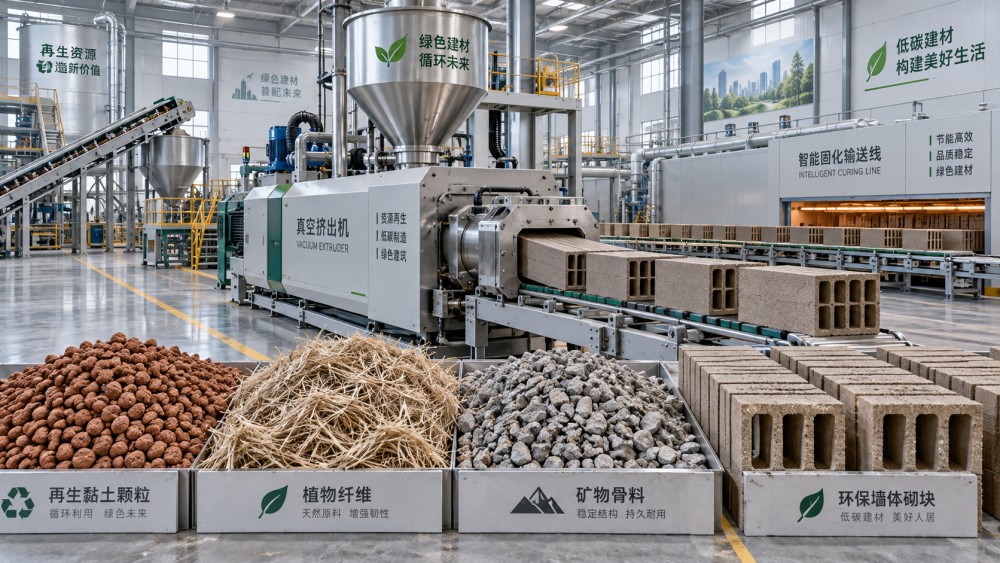
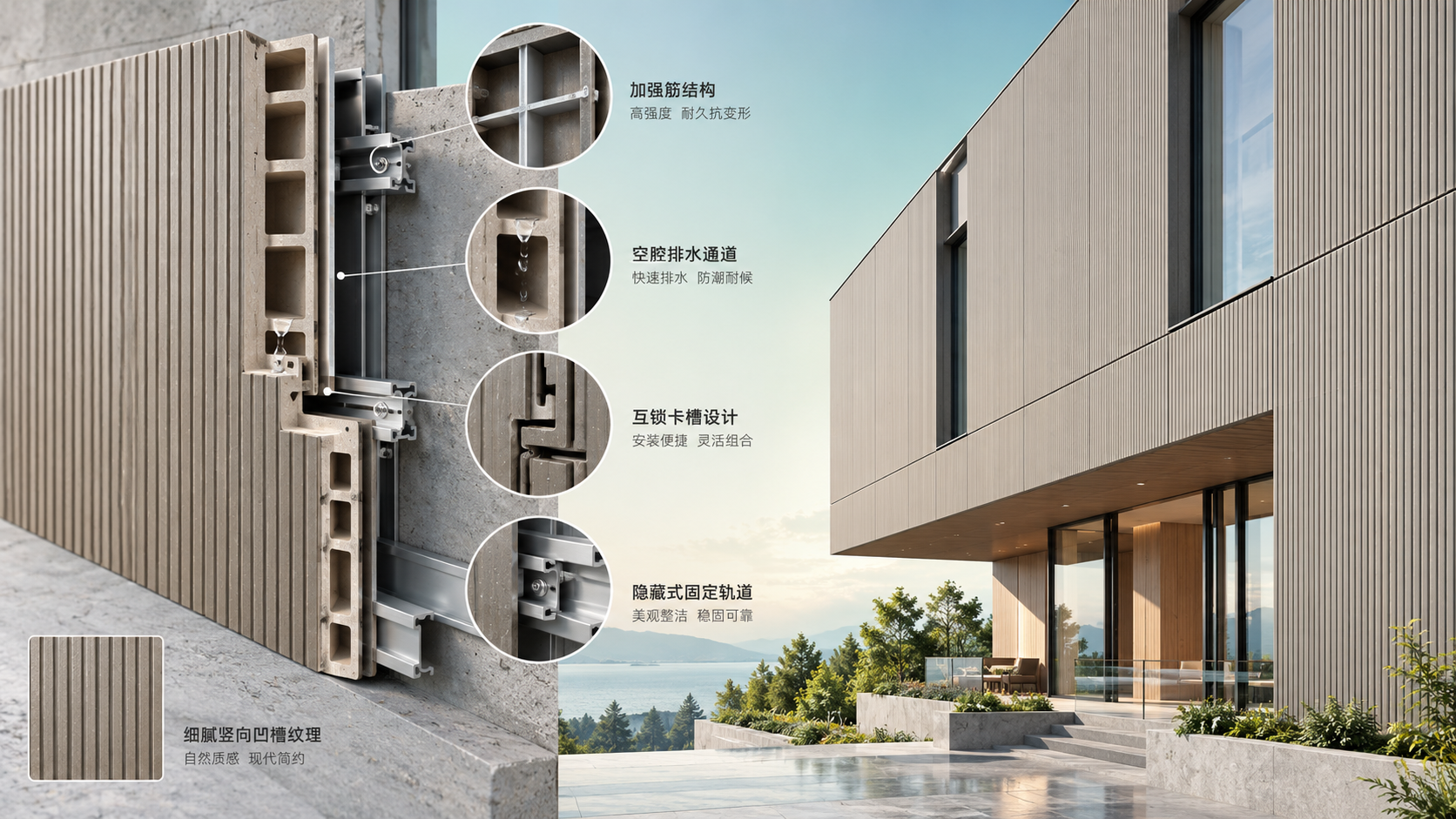
For manufacturers of blocks, façade elements, boards, hollow profiles, roofing products, and lightweight wall systems, extrusion remains attractive because it can produce long, repeatable geometries with relatively limited handling between mixing and cutting. It is particularly valuable when internal voids, ribs, tongue-and-groove edges, or thin-wall profiles are part of the design. But sustainability claims only become credible when the material, die design, curing route, and plant energy system are evaluated together.
What Makes a Material “Extrusion-Ready”?
An extrusion body needs a narrow but workable processing window. It must flow under pressure, develop enough green strength immediately after leaving the die, and retain dimensional control through cutting, transport, drying, curing, or firing. These demands can conflict. Adding water may improve flow but weaken the green body. Increasing fine particles can improve surface finish but raise shrinkage and drying sensitivity. Fibres can control cracking, yet they may complicate die flow or leave defects if dispersion is poor.
This is why feedstock chemistry alone does not determine suitability. Particle-size distribution, moisture consistency, binder activation, mixing order, vacuum de-airing, screw configuration, die land length, and post-extrusion support all matter. A material that works in a low-pressure laboratory ram extruder may not behave the same way in a continuous industrial line.
From a plant perspective, the most useful sustainable feedstocks are usually those that can be integrated without making the line excessively sensitive to routine variation. Recycled inputs are especially valuable, but they need control. A recycled mineral fraction with fluctuating moisture, salts, organic residues, or particle shape can create more production risk than its headline recycled-content figure suggests.
Recycled Clay and Ceramic-Based Bodies: The Most Familiar Route
Clay remains one of the most naturally extrusion-friendly construction materials. Its plasticity, especially when balanced with non-plastic mineral fractions, makes it well suited to bricks, hollow blocks, roof tiles, drainage products, and architectural terracotta. Recycled fired clay, crushed brick, ceramic waste, and selected mineral residues can be introduced into clay-based formulations where their particle size and mineral behaviour are compatible with the firing body.
The attraction is practical as well as environmental: plants that already understand clay preparation, vacuum extrusion, drying, and kiln firing are not starting from zero. However, recycled ceramic material is not automatically benign. Fired fragments may reduce plasticity; excessive coarse material can damage edge quality or increase die wear; and contaminants such as gypsum-bearing debris, salts, coatings, or insulation residues may cause defects during drying or firing. Feedstock sorting is therefore not a side issue. It is part of process design.
For lightweight fired products, pore-forming additives may also be considered. Their use calls for caution. The gain in thermal performance can be undermined if the additive creates uneven pore structure, weak webs in hollow sections, or unacceptable kiln emissions. The right decision depends on wall thickness, firing curve, required strength, and the plant’s existing flue-gas treatment capability.
Cementitious Extrusion: Strong Potential, Tighter Process Control
Fibre-reinforced cementitious mixes can be extruded into boards, cladding components, trim profiles, permanent formwork, and selected thin-wall products. Their main advantage is that they can achieve useful early shape retention without a firing stage. Depending on the binder system and curing method, this may offer a lower-temperature manufacturing route than ceramic products.
The trade-off is rheology. Cement-based extrusion formulations need close control of water, fine fillers, fibre loading, and admixture compatibility. A mix that is too wet may collapse after exiting the die; one that is too dry can show high pressure demand, poor surface cohesion, and uneven fibre distribution. Natural fibres, cellulose fibres, recycled polymer fibres, and mineral fibres may all be considered, but each changes water demand and processing behaviour differently.
Manufacturers should resist treating fibre as a generic “green reinforcement.” Durability in a highly alkaline binder, moisture movement, fire behaviour, and finish requirements must be considered for the final use. Exterior façade boards and protected interior partitions do not face the same exposure conditions. If a profile will be cut, drilled, coated, or fastened on site, those downstream operations should be tested on actual extruded samples rather than assumed from compressive-strength results alone.
Geopolymers and Alkali-Activated Materials: Promising, but Not Plug-and-Play
Low-carbon binder discussions increasingly include geopolymers and other alkali-activated materials based on suitable aluminosilicate feedstocks. In principle, these systems can be formulated for extrusion and may support precast or semi-dry construction products. They are of particular interest where industrial mineral by-products or calcined clays are locally available and where manufacturers are looking beyond conventional Portland-cement-heavy formulations.
In practice, extrusion is not forgiving of uncertain reaction kinetics. Setting behaviour can shift with raw-material variability, activator composition, temperature, and storage conditions. Some systems develop adequate early stiffness but are difficult to keep workable through a full production shift. Others can be extruded but require curing conditions that do not fit an existing line layout. Efflorescence risk, long-term moisture response, reinforcement compatibility, and local acceptance requirements also need review.
That does not make alkali-activated extrusion unsuitable; it means the development path should be industrially realistic. Start with a defined product geometry, a stable raw-material source, and a curing strategy that can be monitored. It is usually wiser to qualify one or two dependable feedstock streams than to build a formulation around an impressive but inconsistent waste input.
Biomass-Based and Bio-Composite Blends
Plant-based aggregates and fibres can be used in certain extruded building products, particularly non-load-bearing blocks, insulation-oriented elements, acoustic products, and interior systems. Hemp shiv, wood residues, agricultural fibres, and other lignocellulosic materials are often discussed because they are renewable and can contribute to lower-density products.
Their limitations are just as important as their advantages. Biomass absorbs water, changes mix consistency, and may degrade or char if subjected to inappropriate thermal processing. Its bulk density can vary considerably between suppliers and seasons. Long fibres may bridge in hoppers or align unpredictably in the screw, while very fine organic material can increase water demand. The formulation must also address biological durability, fire performance, and emissions from any added binders or coatings.
For these reasons, biomass-filled extrusion is usually most convincing when it serves a clear functional purpose—such as reducing density or improving acoustic response—rather than being added only to improve a sustainability narrative. A product with recycled or bio-based content still has to survive transport, installation, and real building exposure.
A Practical Comparison for Material Selection
The Equipment Question Is Often Decisive
Material selection cannot be separated from equipment capability. A stiff ceramic body may need robust vacuum de-airing and abrasion-resistant screw and die components. A fibre-containing cementitious mix may benefit from mixing arrangements that reduce fibre balling before the material reaches the extruder. A reactive low-carbon binder system may require tighter temperature control and shorter residence time than a conventional mix.
At CF-Elite, the more useful discussions around new building-material extrusion tend to start with this interface: what does the material demand from the line, and what does the existing line tolerate? The answer affects not only output stability but also energy use, maintenance intervals, dust management, and the feasibility of adding recycled streams. In heavy process industries, a technically elegant formulation that cannot run reliably for long campaigns is not yet a commercial material.
Before committing to a new sustainable feedstock, manufacturers should assess representative raw-material variability, extrusion pressure behaviour, die swelling or slump, green strength, drying or curing sensitivity, and finished-product durability. Pilot trials should include starts, stops, and normal plant interruptions—not only ideal steady-state conditions. That is where many promising formulations reveal their weak point.
Choose the Product First, Then the “Green” Ingredient
There is no universal winner among sustainable extrusion materials. Recycled clay composites remain a practical choice for fired masonry and ceramic profiles when feedstock control and kiln integration are strong. Fibre-reinforced cementitious systems are often better suited to thin, non-fired profiles where curing can be managed. Alkali-activated materials deserve serious attention where raw materials, curing conditions, and market acceptance align. Biomass blends can work well in lightweight applications, provided durability and fire performance are treated as design requirements rather than afterthoughts.
The soundest choice begins with the installed product’s job: load-bearing or non-load-bearing, exterior or interior, dense or insulating, fired or cured, simple section or hollow profile. Once that is clear, the sustainable feedstock can be selected for both environmental logic and production reality. Extrusion rewards formulations that are disciplined, repeatable, and honest about their processing limits.
Related News
 Ms. Elena RodriguezIndustrial Process Optimization: Where to Target Energy, Yield, and Throughput LossesIndustrial process optimization: identify energy, yield, and throughput losses to improve plant stability, reduce costs, and unlock measurable performance gains.Oct 12, 2026
 Ms. Elena RodriguezGlass Market Intelligence: How to Assess Demand, Capacity, and Regional Growth RisksGlass market intelligence for evaluating demand, effective capacity, energy exposure, trade dynamics, and regional growth risks before investing in glass manufacturing.Oct 11, 2026
 Structural Material AnalystWhich Sustainable Construction Materials Are Suitable for Extrusion?Which sustainable construction materials are suitable for extrusion? Explore recycled clay, cementitious mixes, geopolymers, and bio-composites for reliable, lower-impact building products.Oct 12, 2026
 Optical Glass Tech FellowWhat Should a Glass Furnace Energy Specification Include?What should be included in a glass furnace energy specification? Explore performance, fuel flexibility, heat recovery, emissions, and monitoring essentials.Oct 11, 2026
 Dr. Alistair VaughnHow Process Technology Platforms Improve Control Across Multi-Line ManufacturingDiscover how a process technology platform strengthens cross-line control, connects operational data, and improves energy, quality, and maintenance decisions.Oct 10, 2026
 Optical Glass Tech FellowHow Glass Furnace Emissions Are Measured and Controlled for Regulatory ComplianceGlass furnace emissions: learn how to measure, monitor, and control NOx, SOx, particulate, CO, and CO2 for reliable regulatory compliance.Oct 08, 2026
 Prof. Marcus ChenIndustrial Decarbonization Strategies in Europe: A Roadmap for Energy-Intensive PlantsIndustrial decarbonization strategies Europe: explore practical pathways for energy-intensive plants to cut emissions, improve efficiency, and protect performance.Oct 07, 2026
 Thermal Energy ArchitectEnergy-Efficient Silicate Production Lines: What to Compare Before SelectionSilicate production lines energy efficient selection guide: compare thermal performance, stability, emissions, controls, and lifecycle value before investing.Oct 06, 2026
 Optical Glass Tech FellowHow to Evaluate Automated Float Glass Lines for Capacity, Quality, and Energy UseEvaluate automated float glass lines for net capacity, consistent quality, energy efficiency, automation reliability, and lifecycle value. Explore key criteria for smarter investment decisions.Oct 05, 2026
 Thermal Energy ArchitectWhat Does CE Marking Require for an Energy-Efficient Industrial Kiln?Energy efficient kiln CE requirements explained: assess safety, technical files, energy performance, and EU compliance before purchase or commissioning.Oct 04, 2026
 Thermal Energy ArchitectRefractory Manufacturing Solutions for Brick Plants: How to Extend Kiln LifeRefractory manufacturing solutions for brick plant operations: discover proven strategies to extend kiln life, reduce heat loss, prevent lining failures, and plan cost-effective repairs.Oct 03, 2026
 Thermal Energy ArchitectHow to Specify Heavy Industrial Process Systems for High-Temperature PlantsHeavy industrial processes systems: learn how to specify high-temperature plants for efficiency, emissions control, maintainability, and lifecycle performance.Oct 02, 2026
 Structural Material AnalystHow Sustainable Material Extrusion Can Improve Wall Panel Durability and Design FlexibilityDiscover how sustainable material extrusion for wall panels improves durability, moisture resistance, design flexibility, and installation consistency for high-performing wall systems.Oct 01, 2026
 Thermal Energy ArchitectHow to Evaluate a High-Temperature Materials Manufacturer for Furnace ApplicationsChoose a high-temperature materials manufacturer with confidence: compare thermal performance, chemical resistance, quality controls, installation support, and lifecycle cost.Sep 30, 2026
 Ms. Elena RodriguezHow to Structure Global Specification Data for Faster Industrial Product EvaluationGlobal specification-oriented product information helps industrial teams compare capacity, energy, emissions, automation, and lifecycle data on a like-for-like basis for faster, confident equipment decisions.Sep 29, 2026
 Thermal Energy ArchitectHow to Specify High-Temperature Process Systems for Continuous Thermal OperationsHigh-temperature process engineering systems: learn how to specify resilient continuous thermal operations for efficiency, compliance, reliable uptime, and long-term performance.Sep 28, 2026
 Thermal Energy ArchitectHow to Evaluate a Thermal Engineering Contractor for High-Temperature Plant ProjectsChoose a thermal engineering contractor with proven process expertise, lifecycle value, emissions control, and delivery discipline for reliable high-temperature plant performance.Sep 27, 2026
 Silicate Process EngineerHow Latin American Cement Plants Can Reduce Dust Emissions in Kilns and Transfer PointsCement plant dust control Latin America: reduce kiln and transfer-point emissions with practical airflow, filtration, monitoring, and maintenance strategies.Sep 26, 2026
 Material Heat-Resist ExpertHow to Evaluate Refractory Production Lines for Output, Quality, and Energy UseRefractory production lines: learn how to assess qualified output, consistent quality, and total energy use for smarter, lower-risk investment decisions.Sep 25, 2026
 Dr. Alistair VaughnHow Waste Recycling Technology Improves Material Recovery in Industrial PlantsWaste recycling technology improves material recovery through source segregation, smart separation, thermal treatment, and quality control for industrial plants.Sep 24, 2026

Related News
- 00
0000-00
Which Sustainable Construction Materials Are Suitable for Extrusion? - 00
0000-00
How Sustainable Material Extrusion Can Improve Wall Panel Durability and Design Flexibility - 00
0000-00
How to Evaluate Lightweight Material Machinery for Output, Energy Use, and Product Quality - 00
0000-00
What Thermal Barrier Technology Works Best for Lightweight Industrial Panels? - 00
0000-00
Advanced Ceramic Processing for Honeycomb: Which Methods Improve Strength and Thermal Shock Resistance?
Weekly Insights
Stay ahead with our curated technology reports delivered every Monday.