
High-Temp Process Engineering Problems That Start Small




In high-temp process engineering, the most costly failures often begin as small, easy-to-ignore signals—an unstable flame, abnormal wear, drifting temperatures, or subtle pressure shifts. For after-sales maintenance teams, spotting these early warnings across kilns, incineration systems, glass lines, and extrusion equipment is critical to preventing downtime, energy loss, and larger process disruptions.
In heavy thermal systems, the difference between a 2-hour correction and a 2-week shutdown is often the speed of diagnosis. A slight burner imbalance, a 15°C temperature deviation, or a pressure fluctuation of only a few millibars can indicate deeper issues in combustion, refractory integrity, feed consistency, or airflow control. For maintenance personnel working after commissioning, these weak signals are where value is created.
For sectors observed by CF-Elite—cement production plants, glass manufacturing gear, industrial kilns and incineration, refractory production lines, and new building material extrusion—after-sales service is no longer limited to reactive repair. It has become a technical layer of process protection, energy stabilization, and carbon-efficiency support. In practical terms, effective high-temp process engineering depends on identifying small abnormalities before they trigger major thermal, mechanical, or chemical consequences.
Why Small Deviations Escalate Fast in High-Temperature Systems
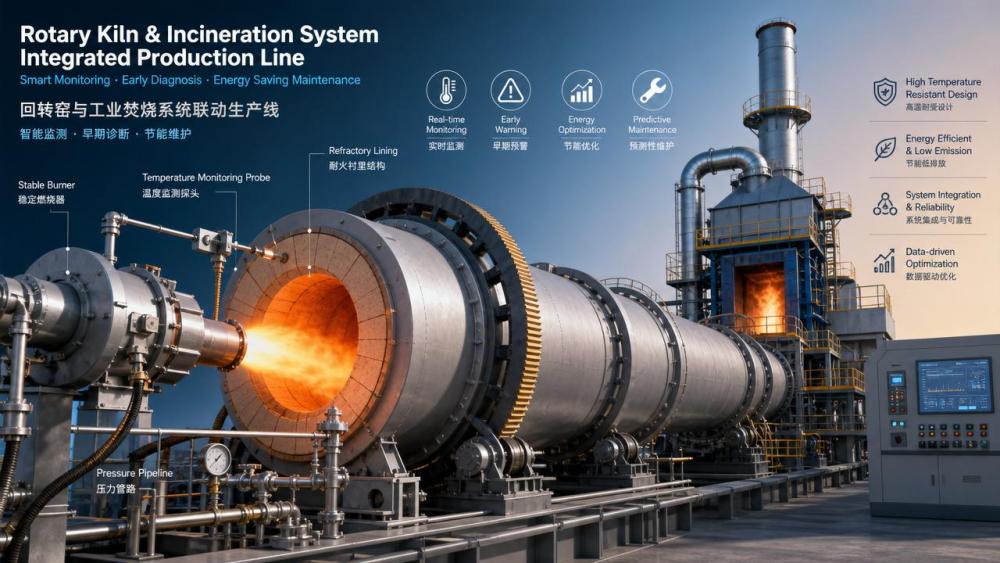
High-temperature equipment operates with tight thermal margins. In a rotary kiln, float glass furnace, incineration chamber, or extrusion heating zone, process stability depends on the interaction of at least 4 variables: temperature, residence time, atmosphere, and material movement. If one variable shifts by 3%–5%, the effect can propagate across the entire line within a single shift.
This is why small problems are dangerous. A minor air leak may lower combustion efficiency, which raises fuel demand, which changes flame shape, which increases localized refractory stress, which then creates hot spots and shell distortion. What appears at first as a maintenance nuisance can become an expensive process engineering event.
The Chain Reaction Behind Early Warning Signs
After-sales teams often encounter the first visible symptoms before production teams recognize the underlying cause. In high-temp process engineering, the most common chain reactions usually follow 3 stages: signal emergence, process drift, and structural impact. Detecting issues in stage 1 is the lowest-cost intervention point.
- Signal emergence: unstable flame, odd burner sound, minor dust carryover, or localized thermal drift.
- Process drift: rising fuel rate, uneven product quality, altered draft balance, or pressure instability over 8–24 hours.
- Structural impact: refractory cracking, coating collapse, fan overload, warped components, or emergency stoppage.
For example, in an incineration system, a secondary air imbalance may first appear as a slightly erratic flame pattern. Within 12–36 hours, operators may then notice incomplete burnout, elevated CO, or ash behavior changes. If ignored for 3–7 days, the same issue can contribute to refractory face damage or hotter-than-normal casing zones.
Typical Small Problems Across Core Equipment Types
Although each plant has its own process logic, maintenance teams can classify most early failures into repeatable patterns. The table below shows how minor symptoms often map to broader process risks in common high-temp process engineering environments.
The key lesson is simple: maintenance teams should not classify small anomalies as isolated mechanical defects. In high-temp process engineering, a small symptom often belongs to a larger thermal-material interaction. The faster that interaction is understood, the easier it is to protect uptime, energy use, and finished product consistency.
Why after-sales maintenance is the frontline
After-sales technicians are usually the first people to compare design intent with field behavior. They see how an installed line performs after 6 months, 12 months, or 24 months of actual fuel variability, raw material inconsistency, and changing production loads. That field perspective is essential because many failures do not begin with catastrophic breakage. They begin with trend deviation.
CF-Elite’s industry focus reflects this reality. Across thermal processing sectors, the most useful intelligence combines physical parameters, reaction behavior, and service observations. A line that appears mechanically sound can still be process-unstable if burner tuning, air distribution, insulation condition, or feed moisture control has drifted beyond normal operating windows.
What After-Sales Teams Should Check First
A practical maintenance response should begin with a fast triage model. In most high-temp process engineering scenarios, 5 diagnostic groups can cover the majority of hidden issues: combustion, temperature profile, pressure and airflow, refractory condition, and mechanical-material interface. These checks are especially useful during the first 30–90 minutes after an abnormal report.
The 5-point rapid assessment routine
- Check flame shape, color, length, and anchoring stability at current load.
- Compare actual zone temperatures against the last 7-day stable baseline, not only setpoints.
- Review pressure, draft, and fan load trends over the prior 8–12 hours.
- Inspect visible refractory, shell temperatures, and signs of abnormal expansion or coating loss.
- Verify material feed consistency, moisture, granularity, and extrusion or conveying resistance.
This routine helps separate symptom from root cause. If a kiln shows unstable burning, for example, the burner itself may not be the true problem. The issue could stem from fuel pressure inconsistency, false air ingress, feed chemistry shift, or ID fan behavior. A strong after-sales team resists the urge to replace parts before validating the process context.
Field thresholds that deserve immediate attention
Not every deviation requires an emergency stop, but some thresholds should trigger immediate escalation. The ranges below are general field references used in many plants; site-specific limits should always follow the original equipment and process design.
These thresholds matter because they shift maintenance from subjective judgment to repeatable action. A team that records baseline values during stable production has a better chance of catching process deterioration before quality losses or emergency maintenance costs accelerate.
Common misreadings in the field
One common mistake is treating every abnormality as a component failure. Another is trusting setpoint stability while ignoring actual thermal behavior. In high-temp process engineering, a stable display does not always mean a stable process. Sensor drift, lagging thermocouples, and local heat distribution changes can hide the real condition for several production cycles.
A second mistake is focusing only on one subsystem. Maintenance teams should remember that high-temperature lines are interconnected. A burner issue may show up first in emissions, a feed issue may appear first as temperature noise, and a refractory issue may surface first as fuel inefficiency. Looking at isolated readings often delays the right intervention.
Maintenance Strategies That Reduce Downtime and Energy Loss
Once early signals are identified, the next step is to build a disciplined response model. Good high-temp process engineering maintenance is not just about repair speed. It is about deciding which issue needs immediate shutdown, which can be corrected during the next 24-hour window, and which should be monitored for 3–5 operating days before a planned intervention.
A practical intervention hierarchy
For after-sales teams serving cement, glass, incineration, refractory, and extrusion plants, a 3-level intervention hierarchy is often effective.
- Level 1: Immediate correction within 0–2 hours. Used for combustion instability, active hot spot growth, sudden pressure loss, or severe product distortion risk.
- Level 2: Controlled adjustment within 1 shift. Used for moderate temperature drift, fan inefficiency, gradual wear patterns, or feed consistency deviations.
- Level 3: Planned maintenance within 3–14 days. Used for repeatable but non-critical anomalies confirmed by trends, inspections, and production impact reviews.
This approach improves coordination between service teams and plant operators. It also protects production planning. Not every abnormal trend should force shutdown, but every abnormal trend should be assigned a risk level, expected progression speed, and technical owner.
Tools and service practices that add real value
The strongest after-sales support combines inspection discipline with data logic. In many modern plants, service effectiveness improves when field teams use at least 4 layers of evidence: visual inspection, trend records, thermal readings, and process operator feedback. Where available, online monitoring and digital twin tools can further shorten diagnosis time.
For example, recurrent refractory trouble is easier to interpret when shell scan data, burner settings, and production rates are reviewed together over a 7-day period. Similarly, extrusion instability is more accurately diagnosed when hydraulic behavior, die wear, moisture variation, and product density results are analyzed as one system rather than as separate maintenance notes.
Where intelligence platforms support maintenance decisions
This is where sector-focused intelligence becomes practical. CF-Elite’s attention to thermal parameters, reaction kinetics, equipment evolution, and carbon reduction trends aligns directly with the needs of after-sales teams. Maintenance decisions today are not only about restoring operation. They are increasingly linked to fuel consumption, emissions control, material yield, and line modernization priorities.
In long-cycle heavy equipment industries, service teams also support future commercial decisions. When recurring issues appear in burner systems, lining designs, airflow architecture, or extrusion resistance, those field lessons influence retrofit choices, spare-part planning, and equipment upgrade timing over the next 6–24 months.
How to Build a Better Early-Warning Culture on Site
The final challenge is organizational, not only technical. Many small failures are missed because warning signs are seen as normal process noise. In high-temp process engineering, the best maintenance teams create simple reporting rules so that weak signals are logged, compared, and acted upon consistently.
A workable site routine for maintenance teams
- Define baseline values for 6–10 key parameters during stable operation.
- Review trend deviations at least once every shift for critical zones.
- Photograph or thermally record repeat anomalies in the same inspection points.
- Use a shared fault log that links symptom, probable cause, corrective action, and follow-up date.
- Escalate repeat deviations that appear 3 times within 7 days, even if production is still running.
This kind of routine helps convert experience into plant memory. It also reduces dependence on individual intuition alone. In sectors such as kilns, glass lines, and incineration systems, even a basic trend discipline can materially improve repair timing and reduce energy waste.
What buyers and plant managers increasingly expect
For B2B equipment owners, after-sales support is now judged on more than spare-part availability. Buyers want maintenance partners who understand process coupling, energy efficiency, and long-term risk control. In practical procurement terms, this means service providers should be able to explain not just what failed, but why it failed, how quickly it may worsen, and what operating or retrofit options are realistic.
That expectation is especially strong in capital-intensive thermal industries, where one preventable shutdown can affect output, emissions compliance, fuel cost, and delivery schedules all at once. A maintenance team that can detect small process shifts early is therefore not only a repair resource, but also a strategic operating asset.
Small signals are where major reliability gains begin. In high-temp process engineering, unstable flames, mild thermal drift, pressure irregularities, subtle wear, and feed-related resistance changes should never be treated as routine background noise. For after-sales maintenance personnel, these early indicators are the best opportunity to prevent unplanned downtime, reduce energy loss, protect refractory life, and stabilize product quality.
CF-Elite supports this work by connecting field-level maintenance observations with broader intelligence on thermal systems, process evolution, and equipment decision-making across cement, glass, incineration, refractory, and extrusion applications. If your team is evaluating service strategy, troubleshooting recurring thermal instability, or planning a retrofit path, now is the right time to get a more structured view. Contact us to discuss your operating challenges, request a tailored solution, or learn more about practical maintenance intelligence for high-temperature industries.
Related News
 Ms. Elena RodriguezProcess Equipment Pricing: How to Compare Quotes and Total CostsMaster process equipment comparison pricing: compare supplier quotes, uncover hidden costs, and evaluate lifetime expenses to make a confident buying decision.Nov 17, 2026
 Prof. Marcus ChenGlobal Cement Industry Decarbonization: Key Technologies and Cost BarriersExplore global cement industry decarbonization technologies, cost barriers, and practical investment strategies to cut emissions while protecting competitiveness.Nov 16, 2026
 Structural Material AnalystChoosing Specification Preparation Support for North American ProjectsChoose specification preparation support North America projects can rely on. Compare technical expertise, compliance, interfaces, and supplier acceptance criteria.Nov 14, 2026
 Structural Material AnalystSpecialty Ceramic Extrusion: How Material Properties Affect FormingExplore how ceramic specialized material extrusion is shaped by particle size, binders, and solids loading—and learn to improve forming and reduce defects.Nov 13, 2026
 Ms. Elena RodriguezHigh-Pressure Molding Equipment Prices in Europe: What Affects the Total Cost?Explore high pressure molding equipment price Europe buyers can expect to assess, from tooling and installation to running costs. Compare quotes with confidence.Nov 12, 2026
 Structural Material AnalystChoosing a Vacuum Extrusion System: Capacity, Materials and Vacuum LevelsChoosing a vacuum extrusion system? Compare capacity, material behavior and vacuum levels to improve product quality and select the right equipment.Nov 11, 2026
 Optical Glass Tech FellowGlass Melting Innovations: Comparing Electric and Hybrid Furnace TechnologiesExplore glass melting innovations and compare electric and hybrid furnaces by energy use, emissions, glass quality and operating costs to find the right fit.Nov 10, 2026
 Thermal Energy ArchitectHow Thermal Barrier Technology for Kilns Reduces Heat LossDiscover how thermal barrier technology for kilns reduces heat loss, and learn how to select insulation and assess savings without compromising lining durability.Nov 09, 2026
 Prof. Marcus ChenGlobal Materials Trends: What North American Manufacturers Need to KnowExplore global material trends North America manufacturers need to know, from energy costs and supply chains to lower-carbon materials and smarter investment decisions.Nov 08, 2026
 Thermal Energy ArchitectSelecting Abrasion-Resistant Refractories for High-Wear Kiln LiningsExplore advanced refractory materials abrasion resistant enough for high-wear kiln linings. Compare wear mechanisms, thermal stability, installation and lifecycle costs.Nov 06, 2026
 Dr. Alistair VaughnIndustrial Energy Efficiency Certification: ISO 50001 Requirements for PlantsExplore industrial energy efficiency certification with ISO 50001. Learn how plants define scope, measure performance and prepare credible evidence for audits.Nov 05, 2026
 Ms. Elena RodriguezWhat Is an Industrial Intelligence Database and How Is It Used?Discover how an industrial intelligence database helps researchers map markets, track projects, compare technologies, and assess evidence with confidence.Nov 04, 2026
 Ms. Elena RodriguezIndustrial Material Pricing: How Freight and Order Volume Affect QuotesExplore industrial material pricing and learn how freight, order volume, and inventory costs affect quotes. Compare suppliers and make smarter purchasing decisions.Nov 03, 2026
 Structural Material AnalystSingle- vs. Twin-Screw Extrusion Systems: Which Suits Your Material?Choose the right specialized extrusion systems screw type for your material. Compare single- and twin-screw options to improve quality and control costs.Nov 02, 2026
 Thermal Energy ArchitectChoosing Thermal Barrier Materials for Kilns: Temperature and Heat LossExplore thermal barrier materials for kilns and learn how to balance temperature resistance, heat loss, durability and operating costs when selecting a lining.Nov 01, 2026
 Ms. Elena RodriguezSupplier Reference Platform Pricing: Fees and Contract Terms to CompareCompare supplier reference platform pricing, hidden fees, verification costs and contract terms to choose the right solution for your sourcing team.Oct 31, 2026
 Ms. Elena RodriguezSupplier Comparison Metrics: How to Score Cost, Quality, and DeliveryUse supplier comparison metrics to score cost, quality, and delivery with a practical weighted scorecard. Make more confident equipment sourcing decisions.Oct 30, 2026
 Ms. Elena RodriguezWhat Does Industrial Waste Heat Recovery Cost, and When Does It Pay Back?Understand industrial waste heat recovery cost, from equipment and installation to net savings. Learn how to compare quotes, assess risks, and calculate realistic payback before investing.Oct 29, 2026
 Thermal Energy ArchitectChoosing Industrial Waste-to-Energy Equipment by Waste Moisture and Heating ValueChoose industrial waste to energy equipment by moisture and heating value. Compare technologies, fuel needs, and supplier guarantees to make a confident investment.Oct 28, 2026
 Thermal Energy ArchitectChoosing Industrial Kiln Insulation for High Heat and Repeated Thermal CyclingExplore high temperature industry solutions for kiln insulation under repeated thermal cycling. Compare materials, reduce heat loss, and select the right lining for your operating conditions.Oct 27, 2026


Related News
- 00
0000-00
How Thermal Barrier Technology for Kilns Reduces Heat Loss - 00
0000-00
Selecting Abrasion-Resistant Refractories for High-Wear Kiln Linings - 00
0000-00
Choosing Thermal Barrier Materials for Kilns: Temperature and Heat Loss - 00
0000-00
Choosing Industrial Waste-to-Energy Equipment by Waste Moisture and Heating Value - 00
0000-00
Choosing Industrial Kiln Insulation for High Heat and Repeated Thermal Cycling
0000-00
Weekly Insights
Stay ahead with our curated technology reports delivered every Monday.