
How industrial incineration equipment cuts compliance risk




For quality and safety managers, compliance risk in waste handling rarely comes from one dramatic failure. It usually builds through unstable combustion, incomplete records, repeated alarms, and emission control gaps that regulators can quickly trace.
Industrial incineration equipment lowers that risk when it is designed as a controlled system rather than a disposal box. The strongest setups combine steady thermal performance, robust air pollution control, operator safeguards, and auditable monitoring.
For plants handling hazardous, chemical, or process waste, the key question is not simply whether an incinerator can burn material. The real question is whether the equipment can keep operations within permit conditions day after day.
This matters because compliance failures can trigger shutdowns, fines, extra sampling, permit restrictions, insurance pressure, and reputational damage. In many facilities, the cost of one incident far exceeds the cost of better system design.
For quality and safety teams, the value of modern industrial incineration equipment is practical. It helps reduce variability, document control, protect workers, and create clearer evidence that the plant is operating as required.
Why compliance risk is usually a process control problem, not just a legal problem
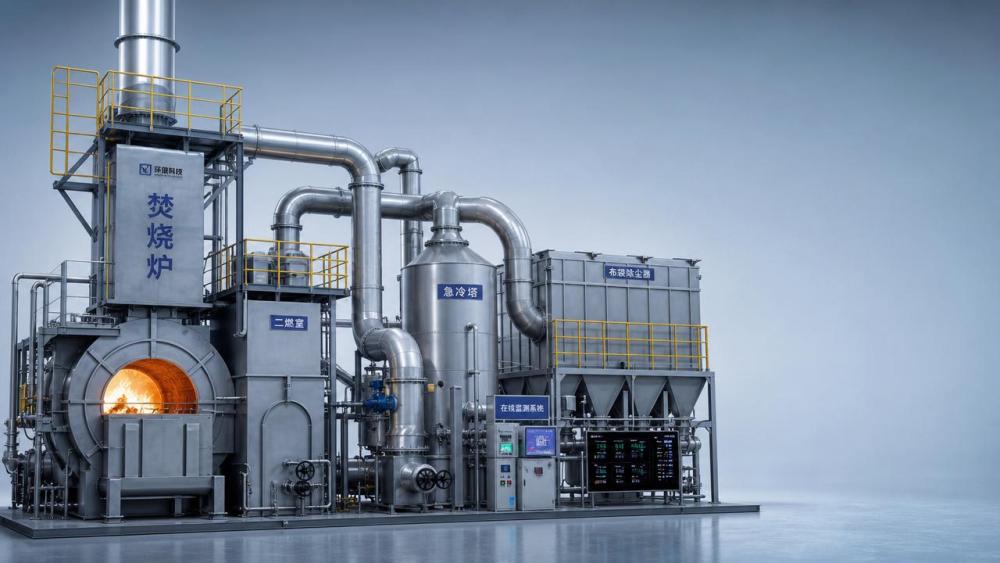
Many facilities treat compliance as a paperwork exercise, but regulators usually look at technical control first. If combustion temperature drifts, residence time falls, or feed composition changes suddenly, legal exposure rises immediately.
That is why industrial incineration equipment plays such a direct role in risk reduction. It determines whether waste destruction is consistent, whether pollutants are captured, and whether abnormal events are detected before they become violations.
For safety managers, poor process control also creates broader operational risk. Combustion instability can increase fire hazards, pressure fluctuations, refractory stress, and unsafe interventions by operators trying to correct conditions manually.
For quality teams, weak control often means weak traceability. If batch identity, feed rates, temperature history, or emissions trends cannot be verified, defending plant performance during an audit becomes much harder.
In other words, compliance risk is often a symptom. The root cause is usually equipment that cannot maintain stable operating windows, or management systems that do not capture enough reliable operating evidence.
What quality and safety managers care about most when evaluating industrial incineration equipment
Most target readers are not looking for broad promises about sustainability. They want to know whether a system can withstand inspection, reduce upset conditions, and support safe, repeatable operating discipline across shifts.
The first concern is combustion stability. A system that handles variable waste streams poorly can produce incomplete destruction, carbon monoxide spikes, odor complaints, and downstream emissions control overload.
The second concern is emissions performance under real operating conditions, not just under ideal test conditions. Managers want to know how the unit behaves during startup, shutdown, load changes, and feed composition variation.
The third concern is traceability. Regulators and internal auditors increasingly expect accessible records for temperatures, oxygen levels, pressure, residence time, alarm history, maintenance actions, and emissions monitoring data.
The fourth concern is operator safety and human error reduction. Equipment design should make correct operation easier through automation, interlocks, guided procedures, and alarms that are meaningful rather than excessive.
Finally, readers care about maintainability. A compliant system that suffers frequent downtime, sensor failures, or refractory degradation can quickly become a compliance liability if operators are forced into temporary workarounds.
How better combustion design reduces compliance exposure
The core compliance function of an incineration system is controlled destruction. That starts with chamber design, burner configuration, turbulence management, and thermal insulation that together support complete and stable combustion.
When industrial incineration equipment maintains required temperature and residence time more consistently, it reduces the likelihood of unburned compounds, visible smoke, odor events, and other indicators of poor destruction performance.
Secondary combustion chambers are especially important in many applications. They help complete oxidation of volatile components and smooth out fluctuations that may begin in the primary chamber due to feed variability.
Air distribution matters just as much as temperature. Poor mixing can leave cold spots or oxygen-poor zones, both of which raise the chance of incomplete combustion and inconsistent emissions performance.
For quality and safety teams, the practical takeaway is simple. Ask whether the equipment is engineered for your real waste profile, moisture range, calorific variability, and throughput swings, not just for a nominal design point.
A system matched to the process reduces the need for operator improvisation. That directly lowers the chance of permit deviations caused by rushed corrective actions, unstable feed handling, or repeated thermal cycling.
Emissions control is where many compliance failures are won or lost
Strong combustion alone is not enough. Compliance risk often depends on how effectively the system manages acid gases, particulates, heavy metals, dioxin precursors, and other pollutants before discharge.
Modern industrial incineration equipment is typically evaluated as an integrated train. That may include quenching, baghouses, wet scrubbers, dry or semi-dry systems, activated carbon injection, and induced draft control.
For managers, the critical issue is not simply whether these components exist. It is whether they are sized, sequenced, monitored, and maintained to perform under upset conditions as well as normal operation.
For example, a baghouse can deliver excellent particulate control, but only if temperature windows, dust loading, cleaning cycles, and differential pressure are managed within design limits. Otherwise performance degrades quickly.
Similarly, scrubber performance depends on reagent dosing, liquid distribution, pH control, and solids management. Weak control here can turn a nominally compliant system into one with recurring exceedances or corrosion problems.
Quality and safety teams should therefore evaluate emissions control as a reliability system. If one stage drifts, what warning signals appear, what protective actions trigger, and how quickly can the plant recover without violating limits?
Monitoring and data visibility are essential for audit readiness
In many inspections, the issue is not only what happened but what the facility can prove. That makes monitoring architecture one of the most valuable compliance features in industrial incineration equipment.
Continuous measurement of temperature, oxygen, pressure, flow, and key emissions indicators helps create a defensible operating record. It also gives operators earlier warning before a minor drift becomes a reportable event.
Alarm design deserves special attention. Too many alarms create fatigue and encourage bypass behavior. Too few alarms leave operators blind to developing conditions that may threaten emissions performance or worker safety.
Good systems also support event logging and trend review. This allows quality managers to investigate deviations, verify corrective actions, and identify patterns such as recurring feed-related instability or maintenance-linked failures.
For safety managers, integrated monitoring improves incident prevention. Interlocks can stop feed during low temperature conditions, abnormal draft, burner faults, or downstream control failures that would otherwise escalate risk.
Digital records also matter for management review. When data is structured and accessible, leadership can compare shifts, evaluate recurring alarms, track permit-critical parameters, and prioritize improvements based on evidence rather than assumptions.
Automation and interlocks help reduce human-error-driven violations
Many compliance incidents are linked to manual adjustments made under time pressure. Operators may continue feeding during unstable conditions or delay intervention because they lack clear guidance on what matters most.
This is where automation provides real value. Well-configured industrial incineration equipment can maintain key setpoints more consistently and enforce operating logic that prevents the most common procedural mistakes.
Examples include automatic feed cutoffs during low chamber temperature, lockouts when emissions control equipment is unavailable, burner management sequencing, and draft control that keeps pressure within safe ranges.
For quality and safety teams, automation should not be viewed as replacing operators. Its purpose is to reduce preventable variation and ensure that critical compliance decisions do not rely on memory or improvisation.
The best systems also make procedures visible. Human-machine interfaces should present permit-critical variables clearly, show alarm priorities logically, and guide response steps so that corrective action is both timely and documented.
When evaluating equipment, ask whether the controls philosophy supports disciplined operation across all shifts. A system that depends on one expert operator is a hidden compliance risk, especially during turnover or absenteeism.
Maintenance quality has a direct effect on compliance performance
Even well-designed industrial incineration equipment can become a liability if maintenance discipline is weak. Degraded burners, leaking seals, worn refractory, drifting sensors, and blocked ducts all increase violation risk.
From a compliance perspective, maintenance should focus first on components that affect destruction efficiency, emissions capture, and monitoring accuracy. These are the assets most likely to create both regulatory and safety consequences.
Calibration is especially important. If temperature probes, oxygen analyzers, pressure transmitters, or flow instruments are inaccurate, the plant may believe it is compliant while operating outside required limits.
Preventive maintenance plans should also align with the actual stress profile of the system. Waste variability, corrosive constituents, and thermal cycling can shorten life faster than generic schedules predict.
Quality managers benefit from linking maintenance records with process deviations. If alarm frequency rises after certain wear patterns appear, the plant can shift from reactive repairs toward risk-based intervention.
Safety managers should also watch for maintenance practices that create bypass culture. Temporary fixes around interlocks or monitoring hardware may keep production moving, but they often create the conditions for future violations.
How to assess whether a system truly lowers compliance risk
When selecting or reviewing an incineration line, managers should use a risk-based checklist rather than marketing claims. The objective is to understand whether the equipment strengthens control at the points regulators scrutinize most.
Start with waste compatibility. Can the unit handle expected variation in moisture, heating value, particle size, and chemical composition without repeated instability or excessive operator intervention?
Then review combustion assurance. What evidence supports residence time, temperature uniformity, and mixing effectiveness? Are there known limitations during startup, shutdown, low load, or abnormal feed conditions?
Next, examine the emissions control train. What pollutants drive permit risk in your application, and how does each control stage respond when conditions move away from design assumptions?
After that, evaluate monitoring depth. Are critical variables continuously recorded, easily retrievable, and linked to alarm and interlock logic? Can the facility reconstruct events clearly for internal review or external inspection?
Finally, review maintainability and support. Spare parts availability, service response, training quality, and software support all affect whether the system remains compliant over years rather than only at commissioning.
The broader operational payoff: safer plants and stronger governance
Reducing compliance risk is the immediate goal, but the benefits often extend further. Stable industrial incineration equipment can improve throughput predictability, reduce emergency interventions, and support more disciplined plant governance.
For quality teams, stronger control improves consistency in waste treatment outcomes and makes management reviews more evidence-based. That supports internal standards as well as external permit obligations.
For safety teams, fewer upset conditions usually mean fewer unsafe manual corrections, less exposure during troubleshooting, and better confidence that hazardous waste is being destroyed under controlled conditions.
There is also a reputational advantage. Facilities that can demonstrate robust monitoring, corrective action discipline, and reliable emissions performance are better positioned with regulators, customers, and corporate stakeholders.
In a tighter regulatory environment, this matters. Plants are increasingly expected not only to meet limits, but to show systematic control, documented accountability, and continuous improvement in environmental and safety performance.
Conclusion
Industrial incineration equipment cuts compliance risk when it delivers more than basic waste destruction. The real value lies in stable combustion, effective emissions control, reliable monitoring, strong interlocks, and maintainable design.
For quality and safety managers, the best systems make compliance easier to achieve and easier to prove. They reduce variability, limit human-error exposure, and create the records needed for audit readiness.
If you are assessing new equipment or reviewing an existing line, focus on the conditions that cause violations in real plants: drift, upset events, weak traceability, and maintenance-related degradation. That is where risk is reduced or amplified.
The strongest investment decisions come from viewing industrial incineration equipment as a compliance control platform. When the system is engineered and managed that way, it supports safer operations, stronger governance, and more resilient plant performance.
Related News
 Ms. Elena RodriguezHow to Structure Global Specification Data for Faster Industrial Product EvaluationGlobal specification-oriented product information helps industrial teams compare capacity, energy, emissions, automation, and lifecycle data on a like-for-like basis for faster, confident equipment decisions.Sep 29, 2026
 Thermal Energy ArchitectHow to Specify High-Temperature Process Systems for Continuous Thermal OperationsHigh-temperature process engineering systems: learn how to specify resilient continuous thermal operations for efficiency, compliance, reliable uptime, and long-term performance.Sep 28, 2026
 Thermal Energy ArchitectHow to Evaluate a Thermal Engineering Contractor for High-Temperature Plant ProjectsChoose a thermal engineering contractor with proven process expertise, lifecycle value, emissions control, and delivery discipline for reliable high-temperature plant performance.Sep 27, 2026
 Silicate Process EngineerHow Latin American Cement Plants Can Reduce Dust Emissions in Kilns and Transfer PointsCement plant dust control Latin America: reduce kiln and transfer-point emissions with practical airflow, filtration, monitoring, and maintenance strategies.Sep 26, 2026
 Material Heat-Resist ExpertHow to Evaluate Refractory Production Lines for Output, Quality, and Energy UseRefractory production lines: learn how to assess qualified output, consistent quality, and total energy use for smarter, lower-risk investment decisions.Sep 25, 2026
 Dr. Alistair VaughnHow Waste Recycling Technology Improves Material Recovery in Industrial PlantsWaste recycling technology improves material recovery through source segregation, smart separation, thermal treatment, and quality control for industrial plants.Sep 24, 2026
 Optical Glass Tech FellowHow to Specify Glass Annealing Equipment for European Quality and Energy RequirementsGlass annealing equipment Europe: learn how to specify lehrs for consistent glass quality, energy efficiency, compliance, automation, and reliable long-term performance.Sep 23, 2026
 Optical Glass Tech FellowSilicate Process Automation: Improving Batch Consistency and Energy ControlSilicate process automation improves batch consistency, energy control, traceability, and operator confidence across high-temperature manufacturing operations.Sep 22, 2026
 Optical Glass Tech FellowHow Silicate Industrial Processes Control Viscosity, Energy Use, and Product QualitySilicate industrial processes: learn how viscosity, chemistry, heat transfer, and atmosphere control reduce energy use, improve stability, and protect product quality.Sep 21, 2026
 Thermal Energy ArchitectHow European Plants Can Evaluate Energy Recovery Equipment for High-Temperature ProcessesIndustrial energy recovery equipment Europe: learn how high-temperature plants can assess waste-heat sources, integration risks, lifecycle value, and reliable recovery routes.Sep 20, 2026
 Thermal Energy ArchitectIndustrial Furnace Process Optimization: Reducing Fuel Use Without Sacrificing ThroughputIndustrial process optimization furnace strategies that cut fuel use while protecting throughput. Explore combustion control, heat recovery, refractory performance, and data-driven efficiency gains.Sep 19, 2026
 Ms. Elena RodriguezWhat Drives High-Pressure Extrusion Equipment Cost in Industrial Projects?High pressure extrusion equipment cost explained: compare pressure, die design, automation, wear, energy, and installation factors for smarter industrial investments.Sep 18, 2026
 Thermal Energy ArchitectHow to Size a Waste Heat Recovery Exchanger for High-Temperature Kiln Exhaust?Waste heat recovery exchanger sizing for high-temperature kiln exhaust: balance recoverable duty, fouling, corrosion limits, pressure drop, and reliable heat use.Sep 17, 2026
 Thermal Energy ArchitectWhy Heat-Resistant Materials Lose Abrasion Resistance at High TemperaturesHeat-resistant materials abrasion resistance can decline at high temperatures. Discover the thermal, chemical, and mechanical causes of wear—and how to choose longer-lasting linings.Sep 16, 2026
 Thermal Energy ArchitectHow to Evaluate a Thermal Energy Optimization Company for High-Temperature PlantsChoose a thermal energy optimization company with proven process expertise, measurable savings, and reliable delivery for high-temperature plants. Learn what to assess.Sep 15, 2026
 Thermal Energy ArchitectRotary Kiln Efficiency: How Feed Rate, Fuel Use, and Heat Loss Affect OutputRotary kiln efficiency explained: discover how feed rate, fuel use, heat loss, combustion, and cooling performance shape output, quality, and energy costs.Sep 14, 2026
 Thermal Energy ArchitectHow to Select Heat-Resistant Materials That Maintain Abrasion Resistance in KilnsHeat-resistant materials abrasion resistance: learn how to select kiln linings that withstand heat, wear, thermal cycling, and chemical attack for longer service life.Sep 13, 2026
 Thermal Energy ArchitectHow Rotary Kiln Automation Improves Temperature Control and Fuel EfficiencyRotary kiln technology automation enhances temperature control, stabilizes combustion, and improves fuel efficiency with smarter data, predictive control, and safer operations.Sep 12, 2026
 Silicate Process EngineerCement Plant Emission Control: Selecting Systems for Dust, NOx, and SO2 LimitsCement plant emission control guide: compare dust collectors, NOx reduction, and SO2 systems for reliable compliance across kiln modes, fuel changes, and operating upsets.Sep 11, 2026
 Thermal Energy ArchitectSelecting Abrasion-Resistant High-Temperature Materials for Kiln and Conveyor Wear ZonesHigh-temp material engineering guide to abrasion-resistant kiln and conveyor solutions—match wear, heat, chemistry, and installation design for longer service life.Sep 10, 2026


Related News
- 00
0000-00
How to Specify High-Temperature Process Systems for Continuous Thermal Operations - 00
0000-00
How to Evaluate a Thermal Engineering Contractor for High-Temperature Plant Projects - 00
0000-00
How European Plants Can Evaluate Energy Recovery Equipment for High-Temperature Processes - 00
0000-00
Industrial Furnace Process Optimization: Reducing Fuel Use Without Sacrificing Throughput - 00
0000-00
How to Size a Waste Heat Recovery Exchanger for High-Temperature Kiln Exhaust?
Weekly Insights
Stay ahead with our curated technology reports delivered every Monday.