
Can digital twin simulations prevent costly shutdowns?




For business evaluators in high-temperature industries, unplanned shutdowns can erase margins, delay contracts, and increase compliance risks.
Digital twin simulations offer a practical way to test operating scenarios, detect hidden process instability, and improve maintenance decisions before failures escalate.
Across cement, glass, incineration, refractory, and extrusion operations, digital twin simulations are becoming a stronger decision layer for uptime, energy control, and asset resilience.
What digital twin simulations mean in industrial operations
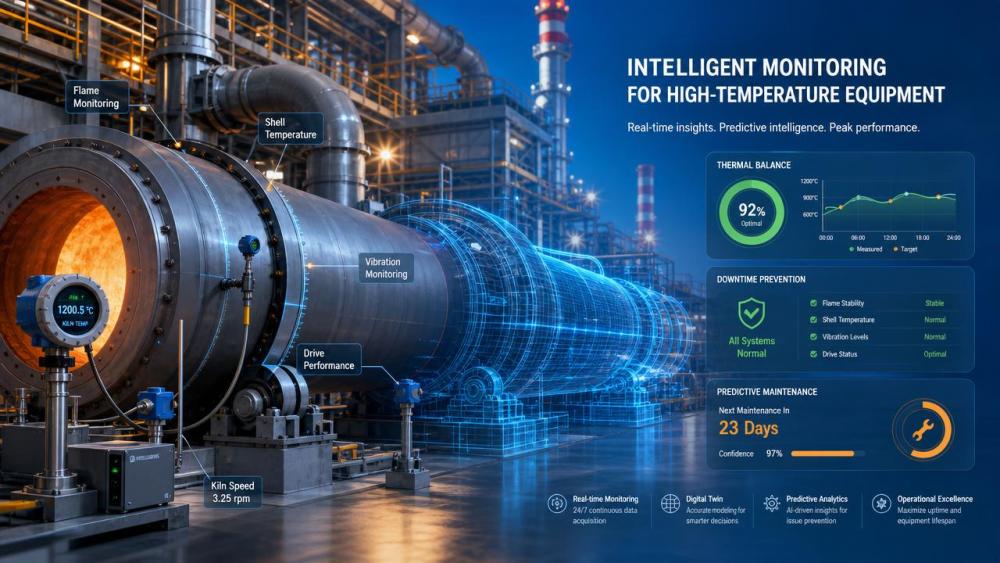
Digital twin simulations are virtual models connected to real equipment, process data, and operating history.
They mirror how production lines behave under normal load, transitional states, and abnormal conditions.
Unlike static engineering models, digital twin simulations evolve with sensor inputs, maintenance records, and control changes.
This makes them useful for predicting failure pathways before physical assets cross critical thresholds.
In high-temperature systems, the twin often integrates thermal profiles, residence time, fuel mix, airflow, pressure, refractory condition, and product quality signals.
For CF-Elite’s focus sectors, digital twin simulations help connect process chemistry, heat transfer, and equipment integrity.
That connection matters because shutdowns rarely come from one isolated variable.
Most costly events result from small deviations that interact over time.
Why shutdown risk is rising across complex thermal industries
Production environments are becoming harder to stabilize.
Fuel volatility, carbon pressure, alternative raw materials, and tighter environmental limits all increase operating complexity.
At the same time, aging assets remain in service longer.
That combination makes shutdown prevention more dependent on predictive intelligence.
Key pressure signals shaping current operations
These conditions explain why digital twin simulations are no longer viewed only as optimization tools.
They are increasingly used as shutdown prevention systems with strategic value.
How digital twin simulations help prevent costly shutdowns
The strongest advantage of digital twin simulations is early visibility.
They reveal unstable interactions that may look harmless in isolated dashboards.
1. Detecting hidden process drift
A kiln, furnace, or melting line may stay within alarm limits while performance slowly degrades.
Digital twin simulations compare live behavior against expected thermal and mechanical responses.
That helps identify drift before quality loss, buildup, overheating, or unstable combustion trigger stoppages.
2. Testing interventions without production risk
Operators often need to change fuel ratios, throughput, draft settings, or cooling conditions.
Digital twin simulations allow scenario testing before real implementation.
This reduces trial-and-error decisions that can destabilize sensitive thermal systems.
3. Improving maintenance timing
Calendar-based maintenance can miss urgent issues or waste shutdown windows.
By linking degradation patterns with operating conditions, digital twin simulations support condition-based planning.
That approach helps schedule work before failures become emergency events.
4. Supporting root-cause analysis after disturbances
After a near miss or short outage, teams often face conflicting interpretations.
Digital twin simulations reconstruct the event sequence using actual process history.
This improves corrective action quality and reduces repeat shutdowns.
Typical application paths across CF-Elite focus sectors
The value of digital twin simulations changes by process architecture, thermal intensity, and material behavior.
Across these sectors, digital twin simulations help unify engineering judgment with live operating evidence.
That creates stronger confidence when evaluating retrofit priorities, automation upgrades, or maintenance budgets.
Business significance beyond technical uptime
Preventing one major shutdown can justify a significant share of digitalization spending.
Still, the broader value of digital twin simulations extends further.
- Better production continuity during volatile input conditions
- More reliable product quality across long campaigns
- Lower maintenance waste from poorly timed interventions
- Stronger compliance control under emission constraints
- Clearer investment cases for refractory, burner, and control upgrades
For intelligence platforms like CF-Elite, this matters because high-temperature industries now compete on resilience as much as capacity.
Digital twin simulations provide a way to quantify that resilience using process evidence.
Implementation considerations and practical limits
Digital twin simulations are powerful, but results depend on disciplined design and data quality.
Weak sensor coverage or poor process understanding can create false confidence.
Recommended practice points
- Start with one critical shutdown mechanism, not the entire plant.
- Prioritize assets with high thermal stress and expensive restart sequences.
- Combine first-principles modeling with historian and maintenance data.
- Validate the model against known disturbances and past incidents.
- Review the twin regularly when raw materials, fuels, or control logic change.
It is also important to define decision ownership.
A simulation only prevents shutdowns when its warnings translate into timely action.
That means governance, threshold rules, and maintenance response plans should be set early.
A practical next step for evaluating digital twin simulations
A useful starting point is to map the three most expensive historical shutdown causes.
Then compare them against available sensor data, maintenance logs, and process models.
This reveals whether digital twin simulations can first target thermal imbalance, material variability, lining wear, or control instability.
For sectors covered by CF-Elite, the highest returns often come from assets where heat, chemistry, and mechanics interact continuously.
When applied carefully, digital twin simulations can do more than model operations.
They can reduce costly shutdowns, strengthen asset decisions, and improve confidence in long-cycle industrial investments.
Related News
 Thermal Energy ArchitectHow to Specify High-Temperature Process Systems for Continuous Thermal OperationsHigh-temperature process engineering systems: learn how to specify resilient continuous thermal operations for efficiency, compliance, reliable uptime, and long-term performance.Sep 28, 2026
 Thermal Energy ArchitectHow to Evaluate a Thermal Engineering Contractor for High-Temperature Plant ProjectsChoose a thermal engineering contractor with proven process expertise, lifecycle value, emissions control, and delivery discipline for reliable high-temperature plant performance.Sep 27, 2026
 Silicate Process EngineerHow Latin American Cement Plants Can Reduce Dust Emissions in Kilns and Transfer PointsCement plant dust control Latin America: reduce kiln and transfer-point emissions with practical airflow, filtration, monitoring, and maintenance strategies.Sep 26, 2026
 Material Heat-Resist ExpertHow to Evaluate Refractory Production Lines for Output, Quality, and Energy UseRefractory production lines: learn how to assess qualified output, consistent quality, and total energy use for smarter, lower-risk investment decisions.Sep 25, 2026
 Dr. Alistair VaughnHow Waste Recycling Technology Improves Material Recovery in Industrial PlantsWaste recycling technology improves material recovery through source segregation, smart separation, thermal treatment, and quality control for industrial plants.Sep 24, 2026
 Optical Glass Tech FellowHow to Specify Glass Annealing Equipment for European Quality and Energy RequirementsGlass annealing equipment Europe: learn how to specify lehrs for consistent glass quality, energy efficiency, compliance, automation, and reliable long-term performance.Sep 23, 2026
 Optical Glass Tech FellowSilicate Process Automation: Improving Batch Consistency and Energy ControlSilicate process automation improves batch consistency, energy control, traceability, and operator confidence across high-temperature manufacturing operations.Sep 22, 2026
 Optical Glass Tech FellowHow Silicate Industrial Processes Control Viscosity, Energy Use, and Product QualitySilicate industrial processes: learn how viscosity, chemistry, heat transfer, and atmosphere control reduce energy use, improve stability, and protect product quality.Sep 21, 2026
 Thermal Energy ArchitectHow European Plants Can Evaluate Energy Recovery Equipment for High-Temperature ProcessesIndustrial energy recovery equipment Europe: learn how high-temperature plants can assess waste-heat sources, integration risks, lifecycle value, and reliable recovery routes.Sep 20, 2026
 Thermal Energy ArchitectIndustrial Furnace Process Optimization: Reducing Fuel Use Without Sacrificing ThroughputIndustrial process optimization furnace strategies that cut fuel use while protecting throughput. Explore combustion control, heat recovery, refractory performance, and data-driven efficiency gains.Sep 19, 2026
 Ms. Elena RodriguezWhat Drives High-Pressure Extrusion Equipment Cost in Industrial Projects?High pressure extrusion equipment cost explained: compare pressure, die design, automation, wear, energy, and installation factors for smarter industrial investments.Sep 18, 2026
 Thermal Energy ArchitectHow to Size a Waste Heat Recovery Exchanger for High-Temperature Kiln Exhaust?Waste heat recovery exchanger sizing for high-temperature kiln exhaust: balance recoverable duty, fouling, corrosion limits, pressure drop, and reliable heat use.Sep 17, 2026
 Thermal Energy ArchitectWhy Heat-Resistant Materials Lose Abrasion Resistance at High TemperaturesHeat-resistant materials abrasion resistance can decline at high temperatures. Discover the thermal, chemical, and mechanical causes of wear—and how to choose longer-lasting linings.Sep 16, 2026
 Thermal Energy ArchitectHow to Evaluate a Thermal Energy Optimization Company for High-Temperature PlantsChoose a thermal energy optimization company with proven process expertise, measurable savings, and reliable delivery for high-temperature plants. Learn what to assess.Sep 15, 2026
 Thermal Energy ArchitectRotary Kiln Efficiency: How Feed Rate, Fuel Use, and Heat Loss Affect OutputRotary kiln efficiency explained: discover how feed rate, fuel use, heat loss, combustion, and cooling performance shape output, quality, and energy costs.Sep 14, 2026
 Thermal Energy ArchitectHow to Select Heat-Resistant Materials That Maintain Abrasion Resistance in KilnsHeat-resistant materials abrasion resistance: learn how to select kiln linings that withstand heat, wear, thermal cycling, and chemical attack for longer service life.Sep 13, 2026
 Thermal Energy ArchitectHow Rotary Kiln Automation Improves Temperature Control and Fuel EfficiencyRotary kiln technology automation enhances temperature control, stabilizes combustion, and improves fuel efficiency with smarter data, predictive control, and safer operations.Sep 12, 2026
 Silicate Process EngineerCement Plant Emission Control: Selecting Systems for Dust, NOx, and SO2 LimitsCement plant emission control guide: compare dust collectors, NOx reduction, and SO2 systems for reliable compliance across kiln modes, fuel changes, and operating upsets.Sep 11, 2026
 Thermal Energy ArchitectSelecting Abrasion-Resistant High-Temperature Materials for Kiln and Conveyor Wear ZonesHigh-temp material engineering guide to abrasion-resistant kiln and conveyor solutions—match wear, heat, chemistry, and installation design for longer service life.Sep 10, 2026
 Dr. Alistair VaughnIndustrial Process Engineering: How to Map Processes for Safer, More Efficient PlantsIndustrial process engineering reveals bottlenecks, safety risks, and energy losses through practical process mapping for safer, more efficient plants.Sep 09, 2026


Related News
- 00
0000-00
Thermal Energy Architecture in North America: Strategies for Lower Building Energy Use - 00
0000-00
How to Evaluate a Green Material Production Line for Energy Use, Output, and Product Quality - 00
0000-00
Silicate Technology Trends: What New Process Upgrades Matter for Refractory and Cement Plants? - 00
0000-00
Thermal Engineering Optimization: Which Process Parameters Most Affect Energy Use? - 00
0000-00
Material Extrusion Technology in Europe: Which Materials and Production Goals Fit Best?
Weekly Insights
Stay ahead with our curated technology reports delivered every Monday.