
When Glass Melting Technology Upgrades Create New Maintenance Gaps




As glass melting technology advances toward higher efficiency, cleaner combustion, and tighter process control, many after-sales maintenance teams are finding that new performance gains also introduce hidden service gaps. From refractory wear patterns to sensor reliability and thermal imbalance, understanding these shifts is essential for preventing downtime, reducing risk, and keeping modern glass lines stable, efficient, and ready for long-cycle operation.
Why a checklist-first approach works better for after-sales teams
For after-sales maintenance personnel, the challenge is not simply understanding glass melting technology in theory. The practical issue is that every upgrade changes the failure map. A furnace with better combustion control may create tighter thermal tolerances. A line with more sensors may improve visibility but also add more points of failure. A more efficient melting zone may reduce fuel use while accelerating localized refractory attack. Because of that, service teams need a checklist-based method that helps them identify what must be verified first, what can be monitored later, and what hidden gaps usually appear after a modernization project.
This guide is organized around maintenance judgment, inspection priorities, risk signals, and execution advice. It is designed for teams supporting float glass, container glass, specialty glass, and other thermal processing lines where uptime, energy stability, and lining life are tightly linked.
First checks: what to confirm immediately after a glass melting technology upgrade
Before troubleshooting symptoms, confirm whether the upgrade changed operating assumptions. Many maintenance gaps occur because teams keep using old service routines on a new process architecture.
- Verify whether furnace pull rate, flame shape, oxygen-fuel ratio, or boosting strategy changed. These directly alter heat distribution, crown loading, and bottom wear behavior.
- Check if the control logic was updated from operator-led adjustments to automated model-based control. This affects alarm interpretation, response time, and manual override procedures.
- Confirm whether refractory grade, block geometry, joint design, or insulation layering was modified during the upgrade. Wear mechanisms often change even when the furnace footprint looks similar.
- Review new sensor locations and calibration intervals. Improved monitoring in glass melting technology only works if maintenance teams trust the signal quality.
- Identify any revised raw material mix or cullet ratio. Chemical shifts can influence volatilization, foaming, corrosion, and deposit formation.
If these basic points are not aligned, maintenance teams may misdiagnose normal post-upgrade behavior as mechanical failure, or worse, miss early warning signs that the furnace is drifting out of design condition.
Core inspection checklist: the maintenance gaps most often created by glass melting technology upgrades
1. Refractory wear no longer follows old patterns
One of the biggest service gaps in advanced glass melting technology is assuming that refractory consumption remains predictable. Higher flame intensity, better heat recovery, electric boosting, and optimized batch melting can all shift hot spots. Instead of uniform degradation, teams may see localized crown distress, throat attack, breastwall corrosion, or bottom block instability.
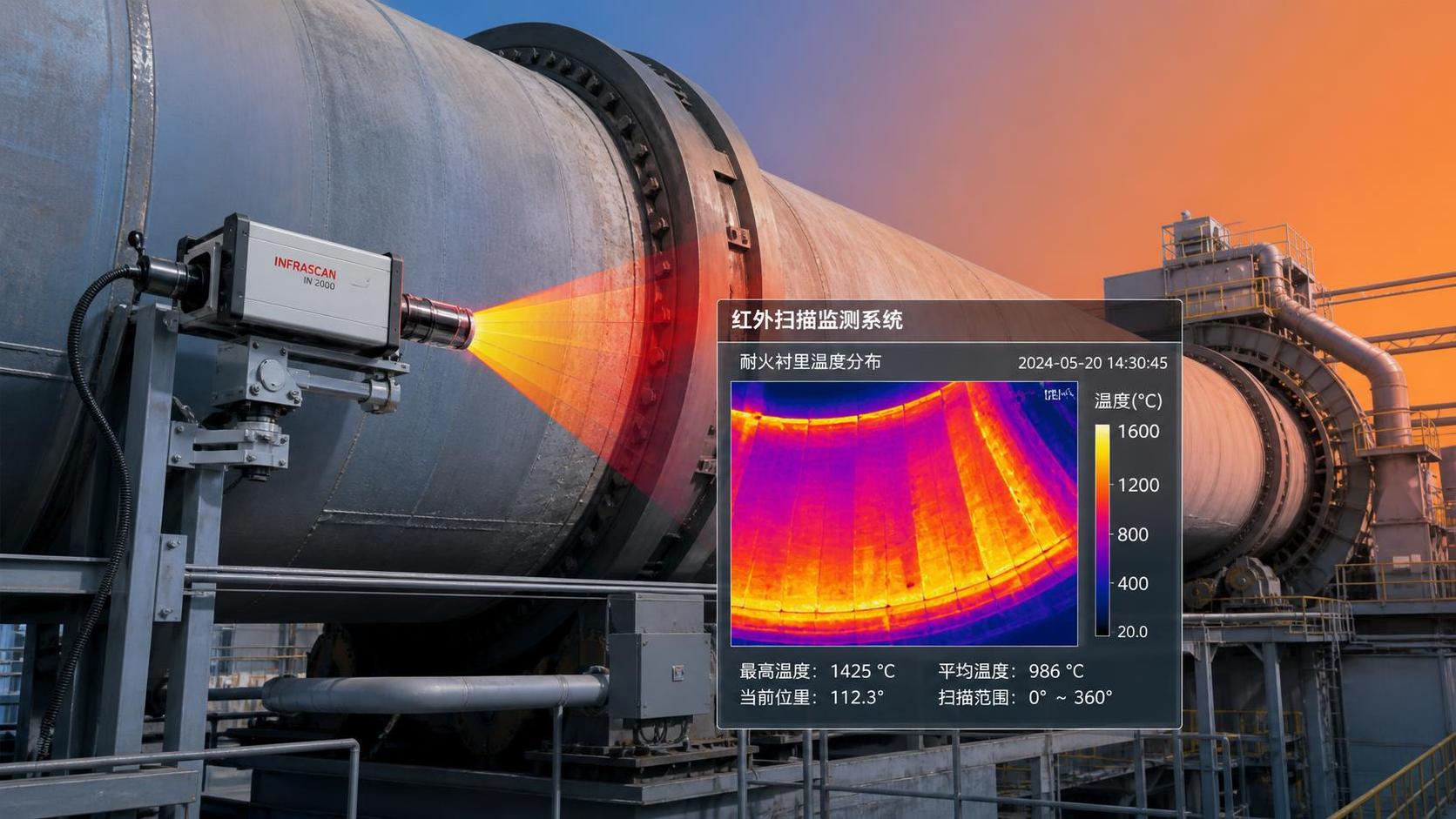
Priority checks include temperature mapping, visual inspection records, pull-rate correlation, and comparison between design thermal profile and actual shell temperatures. If shell temperature trends are stable overall but rise sharply at isolated points, that often indicates a new heat concentration pattern rather than generalized aging.
2. Sensors increase visibility but also maintenance dependency
Modern glass melting technology relies heavily on thermocouples, pressure transmitters, infrared monitoring, flow meters, camera systems, and combustion analyzers. The risk is that teams begin trusting dashboards without confirming instrument health. A bad reading can trigger wrong corrective action, especially in tightly controlled furnaces where automatic adjustments happen quickly.
After-sales teams should maintain a sensor hierarchy: critical sensors that affect firing, safety, glass level, and thermal balance must have stricter calibration, spare parts readiness, and signal verification routines than non-critical trend sensors.
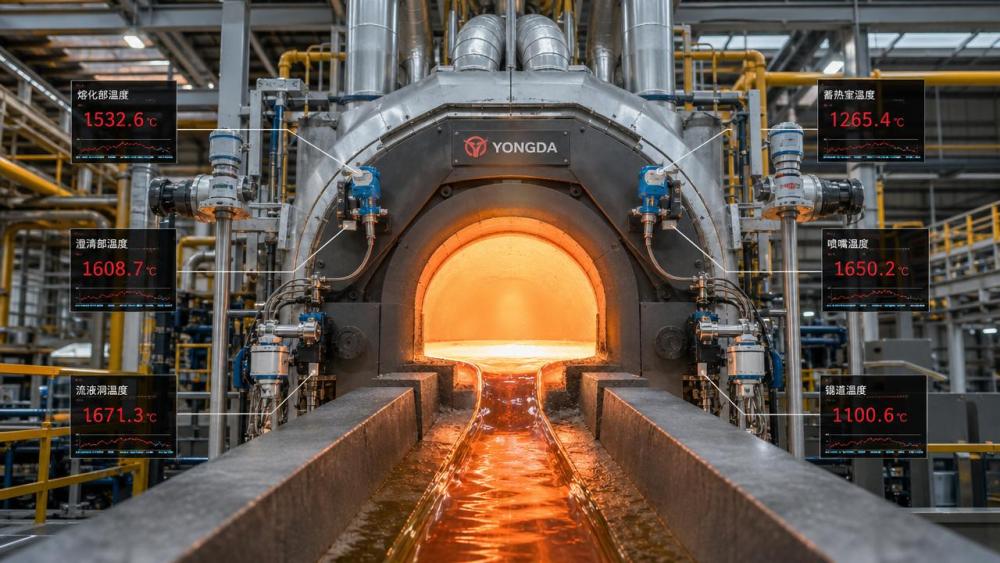
3. Thermal imbalance appears earlier and spreads faster
As glass melting technology becomes more efficient, the process window often becomes narrower. Small combustion imbalance, burner drift, leakage, or air infiltration can now create visible product or furnace effects sooner than before. That means maintenance personnel should treat slight asymmetry as a meaningful condition, not a minor deviation.
Look for side-to-side temperature variation, regenerator pressure instability, unusual port neck condition, and sudden changes in glass quality complaints. In many cases, product defects are the first maintenance signal of thermal imbalance.
4. Cleaner combustion can hide new deposit behavior
Low-NOx systems, oxygen enrichment, and fuel switching are important upgrades in glass melting technology, but they can alter vapor transport and deposit chemistry. Teams may experience less visible soot while facing more aggressive crown condensation, checker blockage, or burner-area fouling.
Maintenance judgment should include deposit type, growth rate, cleanability, and impact on heat exchange. A cleaner flame image does not automatically mean lower maintenance demand.
5. Automation reduces manual intervention but raises skill thresholds
When glass melting technology is integrated with advanced PLC, SCADA, or digital twin tools, frontline maintenance no longer depends only on mechanical inspection. Teams must understand control logic, alarm sequencing, interlock behavior, and historical trend analysis. A mechanical technician may find no visible issue, while the real problem is poor signal filtering, control loop hunting, or model mismatch after raw material changes.
Quick judgment table: how to spot the likely maintenance gap
Scenario-based checkpoints for different glass lines
Float glass lines
For float operations, maintenance teams should prioritize thermal uniformity, continuous pull stability, tin bath interaction signals, and long-campaign refractory planning. In float applications, glass melting technology upgrades often improve energy intensity but expose sensitivity to temperature asymmetry and throughput fluctuations.
Container glass plants
Container furnaces usually face more frequent production adjustments, color transitions, and cullet-related chemistry variation. After-sales teams should watch for forehearth temperature stability, burner wear consistency, and sensor contamination. Here, glass melting technology performance depends heavily on how well the system handles real production variability, not just ideal operating conditions.
Specialty and high-value glass
Specialty glass lines demand tighter quality windows, so maintenance gaps may appear first in defect patterns rather than in obvious equipment damage. Teams should link inspection routines with bubble count, cord, inclusion, optical distortion, and annealing stability. In this segment, glass melting technology must be maintained as a quality system, not only as a thermal asset.
Commonly overlooked items that cause expensive downtime
- Using old spare parts strategy after a control or burner upgrade. New systems may require different lead times, firmware compatibility, or calibration tools.
- Failing to update maintenance documentation after a retrofit. If diagrams, tag numbers, and alarm matrices are outdated, troubleshooting slows down immediately.
- Treating process engineers and maintenance technicians as separate problem owners. Advanced glass melting technology needs cross-functional diagnosis.
- Ignoring small leak paths in ports, seals, or observation openings. Minor infiltration can create major thermal imbalance in a high-efficiency furnace.
- Assuming energy savings guarantee lower total maintenance cost. In reality, improved efficiency can shift cost from fuel to monitoring, controls, or refractory management.
Execution advice: how after-sales teams should organize inspections and service response
A practical service plan for modern glass melting technology should be built in layers. First, define critical assets: furnace structure, combustion system, control system, boosting equipment, forehearth, and quality monitoring points. Second, classify each point by failure consequence: safety, product loss, fuel waste, campaign life reduction, or short-term nuisance. Third, assign inspection frequency based on process sensitivity rather than old routine only.
Maintenance leaders should also require three records after each major intervention: what changed, what trend moved, and what baseline must now be considered normal. This is especially important after burner replacement, control tuning, sensor relocation, refractory repair, or raw material adjustments. Without a revised baseline, future troubleshooting becomes guesswork.
FAQ for maintenance personnel dealing with glass melting technology changes
Should we inspect more often after an upgrade?
Yes, but selectively. Increase inspection intensity around changed zones and changed control points first. Once the new operating profile is proven stable, frequency can be optimized.
What is the earliest sign that the upgrade created a maintenance gap?
A mismatch between “normal” system readings and real furnace behavior is often the earliest clue. If product quality, shell temperatures, or operator interventions change while dashboards appear acceptable, investigate hidden drift.
Which data matters most?
Trend data that connects thermal behavior, combustion condition, equipment response, and quality outcome is more useful than isolated snapshots. Good after-sales work on glass melting technology depends on correlation, not just raw data volume.
Final action checklist before your next service review
If your team is supporting a newly upgraded furnace or evaluating service readiness for advanced glass melting technology, prepare these items before the next technical discussion: updated process parameters, equipment change list, sensor map, alarm logic summary, refractory design changes, recent quality deviations, and trend records for temperature, pressure, fuel, and pull rate. Also confirm spare part coverage, calibration capability, expected campaign targets, and the escalation path between operators, process engineers, and after-sales maintenance specialists.
For companies planning deeper optimization, the most useful next step is not a generic inspection. It is a targeted review of fit between actual operation and upgraded design assumptions. If you need to confirm parameter windows, maintenance scope, service cycles, refractory compatibility, sensor reliability, budget priorities, or cooperation models, those questions should be discussed early. That is where modern glass melting technology either delivers long-term value or begins creating avoidable maintenance gaps.
Related News
 Thermal Energy ArchitectHow European Plants Can Evaluate Energy Recovery Equipment for High-Temperature ProcessesIndustrial energy recovery equipment Europe: learn how high-temperature plants can assess waste-heat sources, integration risks, lifecycle value, and reliable recovery routes.Sep 20, 2026
 Thermal Energy ArchitectIndustrial Furnace Process Optimization: Reducing Fuel Use Without Sacrificing ThroughputIndustrial process optimization furnace strategies that cut fuel use while protecting throughput. Explore combustion control, heat recovery, refractory performance, and data-driven efficiency gains.Sep 19, 2026
 Ms. Elena RodriguezWhat Drives High-Pressure Extrusion Equipment Cost in Industrial Projects?High pressure extrusion equipment cost explained: compare pressure, die design, automation, wear, energy, and installation factors for smarter industrial investments.Sep 18, 2026
 Thermal Energy ArchitectHow to Size a Waste Heat Recovery Exchanger for High-Temperature Kiln Exhaust?Waste heat recovery exchanger sizing for high-temperature kiln exhaust: balance recoverable duty, fouling, corrosion limits, pressure drop, and reliable heat use.Sep 17, 2026
 Thermal Energy ArchitectWhy Heat-Resistant Materials Lose Abrasion Resistance at High TemperaturesHeat-resistant materials abrasion resistance can decline at high temperatures. Discover the thermal, chemical, and mechanical causes of wear—and how to choose longer-lasting linings.Sep 16, 2026
 Thermal Energy ArchitectHow to Evaluate a Thermal Energy Optimization Company for High-Temperature PlantsChoose a thermal energy optimization company with proven process expertise, measurable savings, and reliable delivery for high-temperature plants. Learn what to assess.Sep 15, 2026
 Thermal Energy ArchitectRotary Kiln Efficiency: How Feed Rate, Fuel Use, and Heat Loss Affect OutputRotary kiln efficiency explained: discover how feed rate, fuel use, heat loss, combustion, and cooling performance shape output, quality, and energy costs.Sep 14, 2026
 Thermal Energy ArchitectHow to Select Heat-Resistant Materials That Maintain Abrasion Resistance in KilnsHeat-resistant materials abrasion resistance: learn how to select kiln linings that withstand heat, wear, thermal cycling, and chemical attack for longer service life.Sep 13, 2026
 Thermal Energy ArchitectHow Rotary Kiln Automation Improves Temperature Control and Fuel EfficiencyRotary kiln technology automation enhances temperature control, stabilizes combustion, and improves fuel efficiency with smarter data, predictive control, and safer operations.Sep 12, 2026
 Silicate Process EngineerCement Plant Emission Control: Selecting Systems for Dust, NOx, and SO2 LimitsCement plant emission control guide: compare dust collectors, NOx reduction, and SO2 systems for reliable compliance across kiln modes, fuel changes, and operating upsets.Sep 11, 2026
 Thermal Energy ArchitectSelecting Abrasion-Resistant High-Temperature Materials for Kiln and Conveyor Wear ZonesHigh-temp material engineering guide to abrasion-resistant kiln and conveyor solutions—match wear, heat, chemistry, and installation design for longer service life.Sep 10, 2026
 Dr. Alistair VaughnIndustrial Process Engineering: How to Map Processes for Safer, More Efficient PlantsIndustrial process engineering reveals bottlenecks, safety risks, and energy losses through practical process mapping for safer, more efficient plants.Sep 09, 2026
 Optical Glass Tech FellowHow to Evaluate a Glass Annealing Equipment Manufacturer for Production StabilityChoose a glass annealing equipment manufacturer with proven thermal uniformity, reliable controls, lifecycle value, and responsive service for stable production.Sep 08, 2026
 Prof. Marcus ChenThermal Energy Architecture in North America: Strategies for Lower Building Energy UseThermal energy architecture North America helps project leaders cut building energy use through stronger envelopes, right-sized HVAC, storage, and smart commissioning.Sep 07, 2026
 Ms. Elena RodriguezHow Should Buyers Evaluate Building Material Industry Intelligence Pricing?Building material industry intelligence pricing: learn how to compare coverage, technical depth, and ROI to choose intelligence that reduces procurement risk.Sep 07, 2026
 Ms. Elena RodriguezHow to Use Building Material Intelligence Data for Market and Investment DecisionsBuilding material industry intelligence data helps leaders evaluate demand, costs, regulation, capacity, and technology to make smarter market and investment decisions.Sep 05, 2026
 Thermal Energy ArchitectHow PLC Control Improves Energy Efficiency and Temperature Stability in KilnsEnergy efficient kilns PLC control improves temperature stability, cuts fuel waste, and optimizes combustion, draft, and material flow. Explore proven strategies for smarter kiln modernization.Sep 04, 2026
 Optical Glass Tech FellowEuropean Glass Melting Processes: Furnace Choices, Energy Use, and Quality ControlGlass melting process Europe: explore furnace choices, energy efficiency, cullet strategy, and quality control to improve output, compliance, and long-term glass performance.Sep 03, 2026
 Thermal Energy ArchitectWhat Determines Refractory Lining Monitoring Price for Industrial Kilns?Refractory lining monitoring price depends on kiln size, sensor technology, installation, software, and support. Compare total lifecycle costs and choose the right solution.Sep 02, 2026
 Silicate Process EngineerCement Production System Costs: A Plant Buyer’s Guide to Budgeting and ROICement production systems cost planning made clear: compare CAPEX, operating costs, compliance, and ROI to build a resilient, profitable cement plant investment.Sep 01, 2026



Related News
- 00
0000-00
How to Evaluate a Glass Annealing Equipment Manufacturer for Production Stability - 00
0000-00
European Glass Melting Processes: Furnace Choices, Energy Use, and Quality Control - 00
0000-00
How Glass Melting Furnace Design Impacts Energy Use and Glass Quality - 00
0000-00
How Can Glass Manufacturing Technology Improve Furnace Efficiency and Cut Energy Costs? - 00
0000-00
How to Evaluate Continuous Glass Annealing Equipment for Stable Throughput?
Weekly Insights
Stay ahead with our curated technology reports delivered every Monday.