
Glass Melting Technology: Why Furnace Stability Still Fails




In glass manufacturing, even advanced glass melting technology cannot guarantee stable furnace performance. For operators, recurring temperature drift, uneven melting, refractory wear, and fuel inefficiency still create costly disruptions. Understanding why furnace stability fails is essential for improving product quality, extending campaign life, and maintaining energy-efficient, low-emission production in demanding high-temperature environments.
Why does furnace stability still fail even with modern glass melting technology?
This is the first question many operators ask, and the answer is practical rather than theoretical: glass melting technology is only as stable as the entire furnace system around it. A plant may install advanced burners, improved controls, or better batch charging logic, yet instability can continue because the furnace is not a single machine. It is a tightly connected thermal, chemical, and mechanical environment.
In daily operation, stability often fails because small deviations accumulate. A minor change in cullet ratio can alter melt behavior. Slight burner imbalance can shift flame geometry. Regenerator fouling can reduce heat recovery. Batch blanket distribution can become uneven. Refractory hot spots may slowly grow until pull rates and temperature control no longer match design conditions. In other words, the problem is rarely one isolated defect. It is usually a chain reaction inside the melting process.
For operators, this means that good glass melting technology should not be judged only by installed equipment or automation features. It must be judged by how well the furnace keeps thermal uniformity, melt homogeneity, combustion balance, and lining integrity over time. Stable production depends on system discipline, not just technology selection.
What are the most common signs that furnace stability is already deteriorating?
Many stability failures do not begin with a dramatic shutdown. They begin with patterns that operators see every shift but may normalize over time. Recognizing these signals early is one of the most valuable skills in glass melting technology management.
Common warning signs include repeated temperature corrections, inconsistent glass level, stronger-than-usual foam, visible cord or seeds in finished glass, rising specific fuel consumption, local crown overheating, and faster refractory corrosion near throat or doghouse zones. Pull rate may still look acceptable, but process variability becomes harder to hide.
Another overlooked sign is operator dependence. If stable output only happens when the most experienced crew is on shift, the furnace is not truly stable. It is being manually compensated. Good glass melting technology should reduce reliance on emergency adjustments and make the process more repeatable across teams.
This quick judgment table helps operators connect what they see with what may actually be failing inside the furnace. In most plants, stable glass melting technology depends on identifying these links before product complaints or refractory emergencies force action.
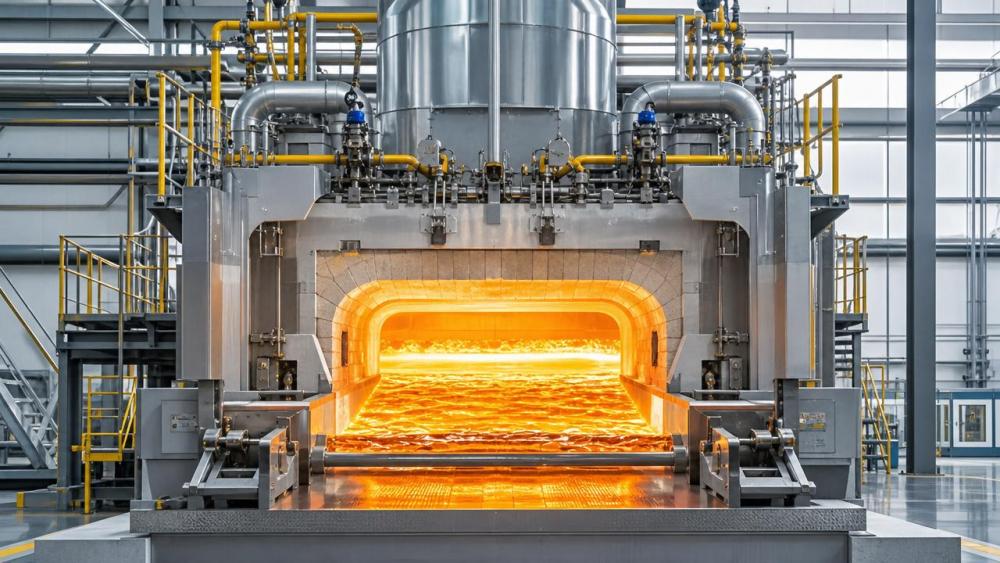
Which operating factors most often destabilize the melting furnace?
Several factors repeatedly appear across float glass, container glass, and specialized silicate production lines. The first is batch inconsistency. Moisture variation, particle segregation, and changing cullet quality can shift melting speed and fining behavior. Even advanced glass melting technology cannot fully smooth out raw material instability if charging conditions vary too much.
The second factor is combustion control. Operators often focus on furnace temperature averages, but average numbers can hide poor flame shape, asymmetrical heat distribution, or unstable switching performance. A furnace may show acceptable average temperature while still developing local overfire or underheating zones. That is why thermal mapping and trend comparison matter more than one-point readings.
The third factor is pull-rate pressure. Commercial targets frequently push production close to furnace limits. When throughput rises faster than heat transfer and residence time can support, the furnace starts losing stability. Operators then compensate by raising temperature, which may increase refractory attack and fuel use without fully fixing melting quality. This creates a costly loop: more heat, more wear, but not necessarily better glass.
A fourth factor is maintenance timing. Delayed checker cleaning, neglected burner tuning, poor sealing, and weak instrument calibration slowly reduce control quality. In many cases, plants blame glass melting technology itself when the real issue is that maintenance and process verification did not keep pace with operating intensity.
Is furnace instability mainly a technology problem or an operations problem?
In reality, it is usually both, but operations often determine whether technology performs as designed. A furnace with solid engineering can still become unstable under inconsistent firing practice, weak batch discipline, or delayed response to wear indicators. At the same time, an outdated or poorly matched furnace design can create operational difficulty even for skilled crews.
For operators, the useful question is not who is to blame. The better question is where controllable losses are occurring. If the installed glass melting technology includes digital monitoring, combustion feedback, or thermal modeling tools, are these tools being used in a disciplined way? Are temperature trends correlated with product defects, or only viewed in isolation? Are shift handovers documenting root causes, or only reporting symptoms?
CF-Elite regularly observes that stable high-temperature production depends on combining process intelligence with operator routines. This is especially true in sectors handling silicate lines, industrial kilns, refractory systems, and energy-intensive furnaces. The technology can provide visibility, but operators convert visibility into stability through timely decisions.
How can operators judge whether poor melting quality is caused by heat imbalance or material behavior?
This is one of the most practical questions in glass melting technology troubleshooting. Heat imbalance and material behavior often create similar symptoms, including seeds, cords, and uneven fining. However, the response should be different, so diagnosis matters.
If quality shifts appear after burner adjustments, regenerator performance decline, or furnace pressure fluctuations, thermal imbalance is the stronger suspect. If defects follow changes in cullet ratio, sand grading, sulfate behavior, or moisture levels, raw material behavior may be driving the problem. Time sequence is important. Operators should compare when the defect trend started, what process parameter changed first, and whether the issue is localized or broad across the melt.
A reliable approach is to cross-check five areas together: charging pattern, flame condition, glass level stability, defect trend by shift, and zone temperature trend. Looking at only one indicator often leads to the wrong correction. For example, increasing firing to fix incomplete melting may help temporarily, but if the true cause is poor batch spread or wet feed, extra heat can worsen crown stress and operating cost.
What are the biggest mistakes plants make when trying to improve furnace stability?
The biggest mistake is treating every instability as a temperature problem. Temperature matters, but glass melting technology is not controlled by temperature alone. Residence time, mixing behavior, melt chemistry, combustion symmetry, and refractory condition all interact. Raising temperature is the fastest reaction, but often the least strategic one.
Another common mistake is relying on short-term correction without trend analysis. Operators may solve a shift issue, yet the same issue returns because no one investigates repetitive patterns across days or weeks. Stability improves when teams review trend data, compare campaign stages, and understand how process drift develops gradually.
A third mistake is separating energy targets from quality targets. In modern glass melting technology, fuel efficiency, emissions control, and melt quality must be balanced together. Excessive focus on one target can damage the others. For example, aggressive fuel reduction without understanding heat distribution can increase defects or force later overcorrection.
Finally, many plants underestimate refractory intelligence. Refractory wear is not just a maintenance issue; it is a process stability issue. Once lining geometry changes, heat transfer and glass flow patterns change as well. Monitoring wall condition, throat wear, and crown temperature should be part of routine operating judgment, not only shutdown planning.
What should operators prioritize first if they want more stable glass melting technology performance?
Start with process consistency before expensive upgrades. In many furnaces, the fastest gains come from tightening daily control routines: stable batch composition, verified charging distribution, regular burner balancing, consistent pressure control, and disciplined instrument calibration. These actions improve the real performance of existing glass melting technology without waiting for major capital projects.
Next, improve data interpretation. Operators should not only record temperatures and fuel use; they should connect them to pull rate, visible defects, maintenance observations, and campaign age. This creates a practical operating map of how the furnace behaves under different loads. Once those relationships are clear, decisions become less reactive and more predictive.
Third, define clear alarm thresholds for early instability. A stable furnace rarely collapses suddenly. It usually sends warnings through small recurring deviations. Plants that set action levels for thermal drift, checker efficiency decline, refractory hot spots, or defect frequency can intervene sooner and reduce both cost and downtime.
Where budget allows, digital twin simulation, online refractory monitoring, and combustion analytics can strengthen operator judgment. These tools align well with CF-Elite’s focus on thermal management, silicate process intelligence, and energy-efficient operation across global high-temperature industries. Still, tools create value only when integrated into daily operating discipline.
Before evaluating upgrades, service support, or cooperation, what questions should be clarified first?
If a plant wants to improve glass melting technology performance, the first step is not to ask for equipment alone. It is to define the operating problem precisely. Is the main pain point fuel use, melting uniformity, refractory life, emissions, or pull-rate stability? Which zone is most unstable? Did the issue begin after a raw material change, campaign aging, or production increase?
It is also important to confirm the baseline data needed for evaluation: actual fuel consumption, recent temperature trend, glass defect pattern, regenerator condition, refractory wear observations, and current control logic. Without this baseline, even strong technical proposals may miss the root cause.
When discussing cooperation, operators and plant managers should prioritize a few direct questions: What instability mechanism is most likely? Which parameters should be monitored first? What can be improved through operating practice, and what requires equipment modification? How will proposed changes affect energy use, emissions, campaign life, and product quality at the same time?
Furnace stability fails not because glass melting technology lacks sophistication, but because high-temperature systems punish every weak link in materials, combustion, heat recovery, and maintenance. If you need to confirm a specific solution, process direction, upgrade cycle, technical support scope, or cooperation path, it is best to begin with the furnace’s actual instability pattern, current thermal data, material behavior, and campaign condition. That conversation creates a far more reliable basis for improvement than focusing on equipment labels alone.
Related News
 Optical Glass Tech FellowHow Silicate Industrial Processes Control Viscosity, Energy Use, and Product QualitySilicate industrial processes: learn how viscosity, chemistry, heat transfer, and atmosphere control reduce energy use, improve stability, and protect product quality.Sep 21, 2026
 Thermal Energy ArchitectHow European Plants Can Evaluate Energy Recovery Equipment for High-Temperature ProcessesIndustrial energy recovery equipment Europe: learn how high-temperature plants can assess waste-heat sources, integration risks, lifecycle value, and reliable recovery routes.Sep 20, 2026
 Thermal Energy ArchitectIndustrial Furnace Process Optimization: Reducing Fuel Use Without Sacrificing ThroughputIndustrial process optimization furnace strategies that cut fuel use while protecting throughput. Explore combustion control, heat recovery, refractory performance, and data-driven efficiency gains.Sep 19, 2026
 Ms. Elena RodriguezWhat Drives High-Pressure Extrusion Equipment Cost in Industrial Projects?High pressure extrusion equipment cost explained: compare pressure, die design, automation, wear, energy, and installation factors for smarter industrial investments.Sep 18, 2026
 Thermal Energy ArchitectHow to Size a Waste Heat Recovery Exchanger for High-Temperature Kiln Exhaust?Waste heat recovery exchanger sizing for high-temperature kiln exhaust: balance recoverable duty, fouling, corrosion limits, pressure drop, and reliable heat use.Sep 17, 2026
 Thermal Energy ArchitectWhy Heat-Resistant Materials Lose Abrasion Resistance at High TemperaturesHeat-resistant materials abrasion resistance can decline at high temperatures. Discover the thermal, chemical, and mechanical causes of wear—and how to choose longer-lasting linings.Sep 16, 2026
 Thermal Energy ArchitectHow to Evaluate a Thermal Energy Optimization Company for High-Temperature PlantsChoose a thermal energy optimization company with proven process expertise, measurable savings, and reliable delivery for high-temperature plants. Learn what to assess.Sep 15, 2026
 Thermal Energy ArchitectRotary Kiln Efficiency: How Feed Rate, Fuel Use, and Heat Loss Affect OutputRotary kiln efficiency explained: discover how feed rate, fuel use, heat loss, combustion, and cooling performance shape output, quality, and energy costs.Sep 14, 2026
 Thermal Energy ArchitectHow to Select Heat-Resistant Materials That Maintain Abrasion Resistance in KilnsHeat-resistant materials abrasion resistance: learn how to select kiln linings that withstand heat, wear, thermal cycling, and chemical attack for longer service life.Sep 13, 2026
 Thermal Energy ArchitectHow Rotary Kiln Automation Improves Temperature Control and Fuel EfficiencyRotary kiln technology automation enhances temperature control, stabilizes combustion, and improves fuel efficiency with smarter data, predictive control, and safer operations.Sep 12, 2026
 Silicate Process EngineerCement Plant Emission Control: Selecting Systems for Dust, NOx, and SO2 LimitsCement plant emission control guide: compare dust collectors, NOx reduction, and SO2 systems for reliable compliance across kiln modes, fuel changes, and operating upsets.Sep 11, 2026
 Thermal Energy ArchitectSelecting Abrasion-Resistant High-Temperature Materials for Kiln and Conveyor Wear ZonesHigh-temp material engineering guide to abrasion-resistant kiln and conveyor solutions—match wear, heat, chemistry, and installation design for longer service life.Sep 10, 2026
 Dr. Alistair VaughnIndustrial Process Engineering: How to Map Processes for Safer, More Efficient PlantsIndustrial process engineering reveals bottlenecks, safety risks, and energy losses through practical process mapping for safer, more efficient plants.Sep 09, 2026
 Optical Glass Tech FellowHow to Evaluate a Glass Annealing Equipment Manufacturer for Production StabilityChoose a glass annealing equipment manufacturer with proven thermal uniformity, reliable controls, lifecycle value, and responsive service for stable production.Sep 08, 2026
 Prof. Marcus ChenThermal Energy Architecture in North America: Strategies for Lower Building Energy UseThermal energy architecture North America helps project leaders cut building energy use through stronger envelopes, right-sized HVAC, storage, and smart commissioning.Sep 07, 2026
 Ms. Elena RodriguezHow Should Buyers Evaluate Building Material Industry Intelligence Pricing?Building material industry intelligence pricing: learn how to compare coverage, technical depth, and ROI to choose intelligence that reduces procurement risk.Sep 07, 2026
 Ms. Elena RodriguezHow to Use Building Material Intelligence Data for Market and Investment DecisionsBuilding material industry intelligence data helps leaders evaluate demand, costs, regulation, capacity, and technology to make smarter market and investment decisions.Sep 05, 2026
 Thermal Energy ArchitectHow PLC Control Improves Energy Efficiency and Temperature Stability in KilnsEnergy efficient kilns PLC control improves temperature stability, cuts fuel waste, and optimizes combustion, draft, and material flow. Explore proven strategies for smarter kiln modernization.Sep 04, 2026
 Optical Glass Tech FellowEuropean Glass Melting Processes: Furnace Choices, Energy Use, and Quality ControlGlass melting process Europe: explore furnace choices, energy efficiency, cullet strategy, and quality control to improve output, compliance, and long-term glass performance.Sep 03, 2026
 Thermal Energy ArchitectWhat Determines Refractory Lining Monitoring Price for Industrial Kilns?Refractory lining monitoring price depends on kiln size, sensor technology, installation, software, and support. Compare total lifecycle costs and choose the right solution.Sep 02, 2026


Related News
- 00
0000-00
How Silicate Industrial Processes Control Viscosity, Energy Use, and Product Quality - 00
0000-00
How to Evaluate a Glass Annealing Equipment Manufacturer for Production Stability - 00
0000-00
European Glass Melting Processes: Furnace Choices, Energy Use, and Quality Control - 00
0000-00
How Glass Melting Furnace Design Impacts Energy Use and Glass Quality - 00
0000-00
How Can Glass Manufacturing Technology Improve Furnace Efficiency and Cut Energy Costs?
Weekly Insights
Stay ahead with our curated technology reports delivered every Monday.