
What material extrusion systems improve output consistency?




For technical evaluators comparing material extrusion systems, output consistency depends on more than throughput alone. The right combination of pressure stability, feed control, thermal management, die design, and real-time monitoring can directly affect product uniformity, energy use, and long-term operating reliability. This article examines the core system features that help manufacturers achieve repeatable, high-quality extrusion performance in demanding industrial environments.
What does output consistency really mean in material extrusion systems?
In industrial practice, consistency means stable shape, density, moisture distribution, and dimensional accuracy across long production runs.
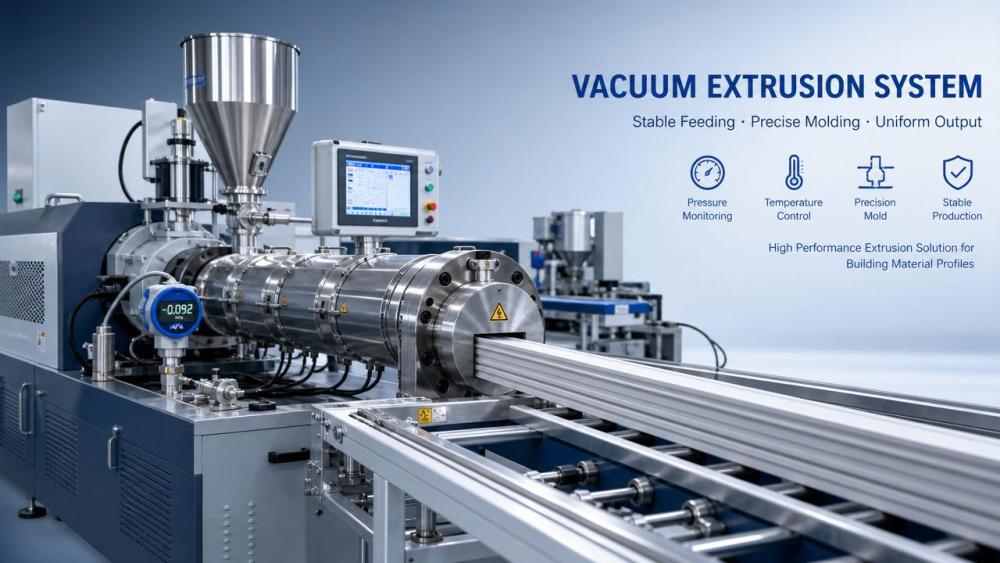
For material extrusion systems, consistency also includes predictable pressure behavior, controlled residence time, and repeatable discharge from the die.
This matters in silicate products, lightweight panels, refractory compounds, and other extruded building materials.
A system may show high nominal output, yet still deliver unstable quality if feed surges, temperature swings, or die wear remain unmanaged.
The best material extrusion systems balance mechanical force, thermal control, and process intelligence. They reduce variation before defects reach downstream cutting, curing, or firing steps.
In sectors tracked by CF-Elite, poor consistency often creates secondary losses. These include scrap, kiln loading imbalance, drying cracks, and unnecessary energy consumption.
So the core question is not only how much a line can produce. It is how reliably the line can repeat target properties every hour.
Which system features improve output consistency the most?
Several design elements consistently separate average lines from high-performance material extrusion systems.
1. Stable feed preparation and dosing
Uniform raw material size and moisture are the first controls. Even advanced extruders cannot fully correct poor upstream preparation.
Loss-in-weight feeders, gravimetric dosing, and moisture adjustment loops help maintain a steady mass flow into the screw or ram section.
2. Pressure-stable extrusion drive
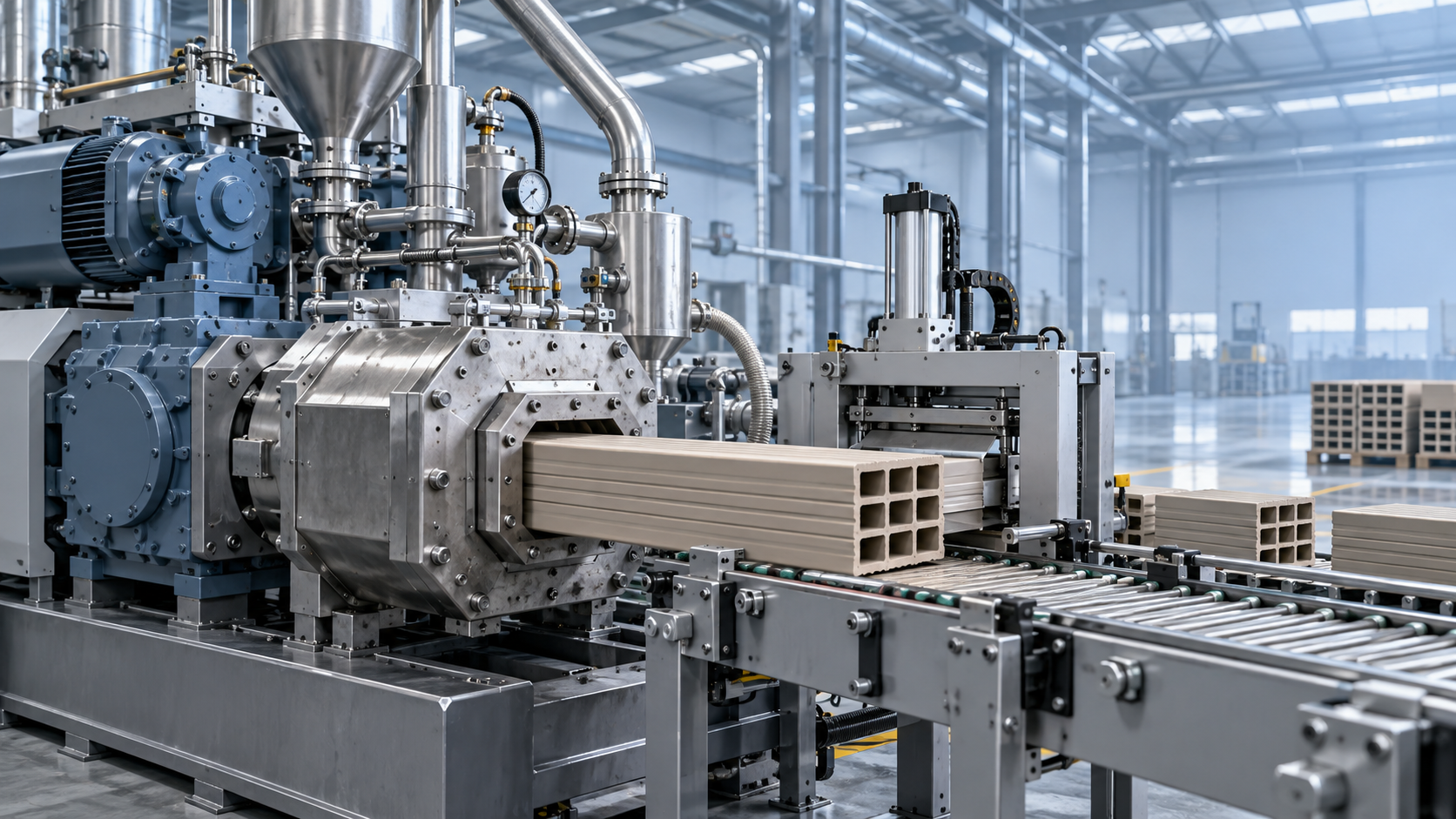
Servo-controlled drives and variable frequency systems smooth torque delivery. This reduces pulsation and helps maintain a more uniform extrudate profile.
In high-pressure applications, hydraulic stability and screw geometry strongly influence output repeatability.
3. Thermal management
Temperature shifts change viscosity, plasticity, and friction behavior. That directly affects density and surface quality.
Reliable material extrusion systems use zoned heating, cooling jackets, insulation, and temperature feedback to hold the process window.
4. Optimized die and flow path design
A well-designed die equalizes pressure and limits dead zones. This improves dimensional control and lowers the risk of internal defects.
Flow simulation is increasingly important for advanced material extrusion systems, especially where shapes are wide, hollow, or thin-walled.
5. Inline monitoring and feedback
Pressure sensors, motor load analysis, moisture probes, thermal imaging, and laser dimensional checks support closed-loop correction.
Without these tools, operators often detect drift only after product defects appear downstream.
How do different material extrusion systems compare in demanding applications?
Not all material extrusion systems serve the same duty. Performance depends on material behavior, desired geometry, and downstream thermal processing.
For green building products and silicate compounds, vacuum-assisted material extrusion systems often improve structural uniformity before drying or firing.
Where formulations vary frequently, twin-screw platforms may offer better process resilience through stronger homogenization.
The best choice is the one that maintains target quality under real feed variability, not only under ideal test conditions.
What operational mistakes reduce consistency even with advanced material extrusion systems?
Many consistency failures come from operations, not machine design alone.
- Allowing moisture variation in raw materials beyond the system’s compensation range.
- Running with worn screws, liners, seals, or dies that distort pressure balance.
- Changing speed too quickly, creating surge effects through the barrel and die.
- Ignoring vacuum instability, which can trap air and reduce density uniformity.
- Using limited instrumentation, then relying on visual checks after defects form.
Some plants also underestimate startup and shutdown procedures. Transitional phases often cause the largest quality drift in material extrusion systems.
Another frequent issue is mismatch between extruder output and downstream handling. If cutters, conveyors, dryers, or kilns fluctuate, consistency suffers.
In thermal industries, the extrusion line should be evaluated as part of a full process chain. CF-Elite often sees the best results where data links extend upstream and downstream.
How should material extrusion systems be evaluated before selection or upgrade?
A useful evaluation framework compares actual process control capability, not brochure output figures alone.
Key evaluation questions
- How stable is mass flow when feed moisture changes within expected operating limits?
- What pressure fluctuation range appears at the die during steady production?
- How quickly can the system correct thermal drift?
- Which sensors are standard, and which require custom integration?
- How easy is wear-part replacement without extended downtime?
- Can the line connect with MES, digital twins, or plant-wide monitoring platforms?
When comparing material extrusion systems, pilot trials should use realistic formulations, not simplified samples.
It is also important to test multiple rates. Some equipment remains stable at mid-load but loses consistency near maximum throughput.
Maintenance access deserves equal attention. A system that performs well initially may become inconsistent if inspection points are difficult to reach.
What costs and implementation factors should be considered?
High-consistency material extrusion systems may require greater upfront investment, but lifecycle economics are usually more important than purchase price.
Better consistency can lower scrap, reduce drying and firing losses, stabilize energy demand, and shorten troubleshooting time.
Implementation costs often include sensor integration, control logic tuning, operator training, spare parts planning, and upstream preparation upgrades.
Retrofits can be effective when the mechanical base is sound. Common upgrades include gravimetric feeding, vacuum optimization, smart drives, and inline measurement.
For large-scale industrial lines, downtime planning is critical. The highest-value upgrade is often the one that improves control without disrupting the full thermal production chain.
FAQ: What should be checked first when consistency problems appear?
The most effective starting point is trend analysis. Check feed rate, moisture, motor load, barrel temperature, vacuum level, and die pressure together.
That full view helps identify whether material extrusion systems need mechanical correction, control tuning, or wider process alignment.
In summary, the material extrusion systems that improve output consistency most are those built around feed stability, pressure control, thermal discipline, optimized die flow, and real-time monitoring.
For industrial decision-making, compare systems under realistic operating variation, review lifecycle support, and map the extrusion line against the complete thermal process.
A structured technical review, supported by process data, is the fastest next step toward more repeatable output and lower hidden production loss.
Related News
 Thermal Energy ArchitectHow to Specify High-Temperature Process Systems for Continuous Thermal OperationsHigh-temperature process engineering systems: learn how to specify resilient continuous thermal operations for efficiency, compliance, reliable uptime, and long-term performance.Sep 28, 2026
 Thermal Energy ArchitectHow to Evaluate a Thermal Engineering Contractor for High-Temperature Plant ProjectsChoose a thermal engineering contractor with proven process expertise, lifecycle value, emissions control, and delivery discipline for reliable high-temperature plant performance.Sep 27, 2026
 Silicate Process EngineerHow Latin American Cement Plants Can Reduce Dust Emissions in Kilns and Transfer PointsCement plant dust control Latin America: reduce kiln and transfer-point emissions with practical airflow, filtration, monitoring, and maintenance strategies.Sep 26, 2026
 Material Heat-Resist ExpertHow to Evaluate Refractory Production Lines for Output, Quality, and Energy UseRefractory production lines: learn how to assess qualified output, consistent quality, and total energy use for smarter, lower-risk investment decisions.Sep 25, 2026
 Dr. Alistair VaughnHow Waste Recycling Technology Improves Material Recovery in Industrial PlantsWaste recycling technology improves material recovery through source segregation, smart separation, thermal treatment, and quality control for industrial plants.Sep 24, 2026
 Optical Glass Tech FellowHow to Specify Glass Annealing Equipment for European Quality and Energy RequirementsGlass annealing equipment Europe: learn how to specify lehrs for consistent glass quality, energy efficiency, compliance, automation, and reliable long-term performance.Sep 23, 2026
 Optical Glass Tech FellowSilicate Process Automation: Improving Batch Consistency and Energy ControlSilicate process automation improves batch consistency, energy control, traceability, and operator confidence across high-temperature manufacturing operations.Sep 22, 2026
 Optical Glass Tech FellowHow Silicate Industrial Processes Control Viscosity, Energy Use, and Product QualitySilicate industrial processes: learn how viscosity, chemistry, heat transfer, and atmosphere control reduce energy use, improve stability, and protect product quality.Sep 21, 2026
 Thermal Energy ArchitectHow European Plants Can Evaluate Energy Recovery Equipment for High-Temperature ProcessesIndustrial energy recovery equipment Europe: learn how high-temperature plants can assess waste-heat sources, integration risks, lifecycle value, and reliable recovery routes.Sep 20, 2026
 Thermal Energy ArchitectIndustrial Furnace Process Optimization: Reducing Fuel Use Without Sacrificing ThroughputIndustrial process optimization furnace strategies that cut fuel use while protecting throughput. Explore combustion control, heat recovery, refractory performance, and data-driven efficiency gains.Sep 19, 2026
 Ms. Elena RodriguezWhat Drives High-Pressure Extrusion Equipment Cost in Industrial Projects?High pressure extrusion equipment cost explained: compare pressure, die design, automation, wear, energy, and installation factors for smarter industrial investments.Sep 18, 2026
 Thermal Energy ArchitectHow to Size a Waste Heat Recovery Exchanger for High-Temperature Kiln Exhaust?Waste heat recovery exchanger sizing for high-temperature kiln exhaust: balance recoverable duty, fouling, corrosion limits, pressure drop, and reliable heat use.Sep 17, 2026
 Thermal Energy ArchitectWhy Heat-Resistant Materials Lose Abrasion Resistance at High TemperaturesHeat-resistant materials abrasion resistance can decline at high temperatures. Discover the thermal, chemical, and mechanical causes of wear—and how to choose longer-lasting linings.Sep 16, 2026
 Thermal Energy ArchitectHow to Evaluate a Thermal Energy Optimization Company for High-Temperature PlantsChoose a thermal energy optimization company with proven process expertise, measurable savings, and reliable delivery for high-temperature plants. Learn what to assess.Sep 15, 2026
 Thermal Energy ArchitectRotary Kiln Efficiency: How Feed Rate, Fuel Use, and Heat Loss Affect OutputRotary kiln efficiency explained: discover how feed rate, fuel use, heat loss, combustion, and cooling performance shape output, quality, and energy costs.Sep 14, 2026
 Thermal Energy ArchitectHow to Select Heat-Resistant Materials That Maintain Abrasion Resistance in KilnsHeat-resistant materials abrasion resistance: learn how to select kiln linings that withstand heat, wear, thermal cycling, and chemical attack for longer service life.Sep 13, 2026
 Thermal Energy ArchitectHow Rotary Kiln Automation Improves Temperature Control and Fuel EfficiencyRotary kiln technology automation enhances temperature control, stabilizes combustion, and improves fuel efficiency with smarter data, predictive control, and safer operations.Sep 12, 2026
 Silicate Process EngineerCement Plant Emission Control: Selecting Systems for Dust, NOx, and SO2 LimitsCement plant emission control guide: compare dust collectors, NOx reduction, and SO2 systems for reliable compliance across kiln modes, fuel changes, and operating upsets.Sep 11, 2026
 Thermal Energy ArchitectSelecting Abrasion-Resistant High-Temperature Materials for Kiln and Conveyor Wear ZonesHigh-temp material engineering guide to abrasion-resistant kiln and conveyor solutions—match wear, heat, chemistry, and installation design for longer service life.Sep 10, 2026
 Dr. Alistair VaughnIndustrial Process Engineering: How to Map Processes for Safer, More Efficient PlantsIndustrial process engineering reveals bottlenecks, safety risks, and energy losses through practical process mapping for safer, more efficient plants.Sep 09, 2026


Related News
- 00
0000-00
How to Evaluate Lightweight Material Machinery for Output, Energy Use, and Product Quality - 00
0000-00
What Thermal Barrier Technology Works Best for Lightweight Industrial Panels? - 00
0000-00
Advanced Ceramic Processing for Honeycomb: Which Methods Improve Strength and Thermal Shock Resistance? - 00
0000-00
Building Material Extrusion Equipment Supplier Selection: 7 Parameters That Affect Line Performance - 00
0000-00
High Pressure Extruder Selection Guide: Output, Material Compatibility, and Wear
Weekly Insights
Stay ahead with our curated technology reports delivered every Monday.