
How to Use Global Material Sourcing Data to Compare Suppliers, Lead Times, and Price Risk




Why global material sourcing data matters before a shortage becomes visible
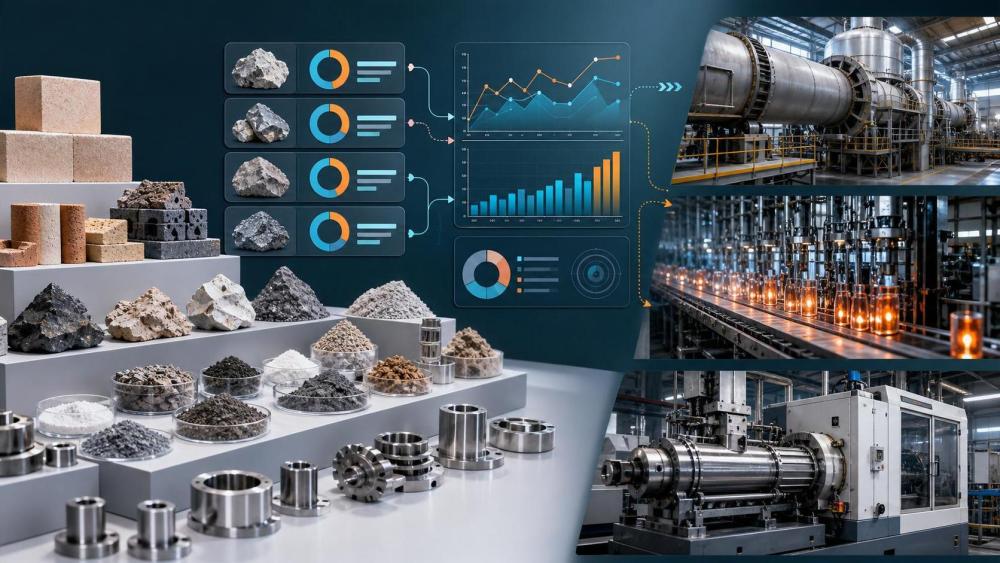
In heavy industry, cost pressure rarely arrives alone. It often comes with delayed shipments, unstable quality, and new compliance demands.
That is why global material sourcing data has become more than a reporting tool. It helps compare suppliers, test lead time assumptions, and detect price risk early.
The value is especially clear in sectors tied to high heat, mineral inputs, and long equipment cycles. A late refractory shipment affects operations differently than a delayed packaging component.
In practice, the useful question is not whether to track global material sourcing data. The real question is how to read it by operating context.
CF-Elite works close to this reality. Its coverage of cement plants, glass systems, kilns, incineration lines, refractory production, and material extrusion reflects markets where thermal efficiency and material continuity are tightly linked.
In these environments, supplier comparison cannot stop at price sheets. It must connect technical fit, regional logistics, carbon policy, and process risk.
Different operations read the same sourcing signal in different ways
A rise in alumina prices does not carry the same meaning across all facilities. For one site, it changes spare inventory strategy. For another, it threatens campaign stability.
This is where global material sourcing data becomes useful as an operating lens, not just a market dashboard.
For cement and lime systems, bulk input continuity often matters more than unit price volatility. For glass production, consistency across melt behavior and thermal response usually carries more weight.
Industrial incineration adds another layer. Feed variability, emission rules, and maintenance windows can change how supplier lead times should be judged.
With new building material extrusion, resin modifiers, fillers, or wear parts may have lower ticket values, yet their delay can stop a line with little warning.
A disciplined read of global material sourcing data starts by asking which failure hurts most: delayed startup, unstable process performance, margin erosion, or regulatory exposure.
Where supplier comparison becomes more than a price exercise
Supplier comparison looks simple until materials become process critical. In high-temperature operations, equal specifications on paper may still behave differently in service.
Global material sourcing data helps separate nominal equivalence from operational equivalence. That distinction matters when lining life, corrosion resistance, or thermal shock tolerance affects output.
When thermal performance is the real benchmark
In refractory sourcing, supplier comparison should include raw material origin, firing consistency, batch traceability, and observed wear behavior under similar kiln conditions.
A lower quotation may hide greater replacement frequency. That shifts cost from purchasing into shutdown time, labor, and heat loss.
When equipment uptime drives the decision
For extrusion and conveying systems, supplier comparison often turns on spare part availability, machining tolerance, and service response by region.
Here, global material sourcing data should include production footprint, export reliability, and substitution feasibility, not only component cost.
- Check whether quoted specifications come from identical testing methods.
- Confirm if supply comes from one plant or a shifting multi-site network.
- Review logistics routes against seasonal congestion and customs sensitivity.
- Compare replacement intervals, not only initial purchase values.
Lead time risk looks different in bulk materials, engineered parts, and energy-linked inputs
Lead time analysis becomes more accurate when materials are grouped by disruption pattern. That is where global material sourcing data can support practical planning.
The pattern is clear. Lead time is not just a number of weeks. It is a measure of how much operational flexibility exists when something changes.
Price risk is easier to spot when data is tied to process exposure
Many teams watch commodity indexes yet still miss actual price risk. The missing step is linking market movement to process dependency.
Global material sourcing data becomes more actionable when it shows which materials are difficult to substitute, which contracts reset quickly, and which freight lanes amplify volatility.
For example, a modest increase in fused minerals may matter more than a sharp increase in standard steel if the mineral grade is tightly tied to furnace life.
The same logic applies to fuels, binders, additives, and high-temperature alloys. Price risk should be ranked by operational leverage, not by market drama.
Signals worth treating seriously
- Repeated short-term surcharges replacing stable annual pricing.
- Export controls or environmental inspections near major production clusters.
- Wider spreads between nominal lead time and confirmed ship date.
- Growing dependency on one country for a process-critical grade.
This kind of reading aligns with CF-Elite's intelligence model, where thermal systems, material science, and carbon strategy are viewed together rather than in isolation.
The most common misreads happen when similar materials are treated as identical
A frequent mistake is assuming that similar grades create the same result across every plant. That shortcut weakens supplier comparison and distorts global material sourcing data analysis.
Another mistake is focusing on direct purchase cost while ignoring installation complexity, retuning time, or campaign disruption.
In real operations, site conditions shift the answer. Humidity, burner configuration, waste feed chemistry, and local energy pricing all change how sourcing choices perform.
There is also a timing error. Market data may look calm while supply risk is already building through maintenance backlogs, permit changes, or shipping concentration.
Global material sourcing data should therefore be read alongside maintenance schedules, process constraints, and regional policy movement.
A practical way to adapt sourcing analysis to the next decision cycle
Useful analysis starts with segmentation. Separate materials by process criticality, substitution difficulty, and lead time sensitivity before comparing suppliers.
Then map global material sourcing data against actual operating milestones. Planned shutdowns, furnace campaigns, line commissioning, and emission audits should shape the review window.
A workable evaluation routine usually includes four checks.
- Identify materials that can halt production or reduce thermal efficiency quickly.
- Compare supplier resilience using origin diversity, route options, and historical delivery accuracy.
- Translate price movement into exposure per maintenance cycle or production campaign.
- Define acceptable substitutes before disruption forces a rushed decision.
That approach keeps global material sourcing data grounded in business reality. It also makes cross-border market intelligence more useful for sectors where one delayed input can affect heat balance, emissions, and output quality at once.
The next step is straightforward: review current materials by operating scenario, confirm the variables that truly drive lead times, and rank price risk by process impact rather than headline volatility.
Once that structure is in place, supplier comparison becomes clearer, sourcing decisions become less reactive, and industrial planning gains a stronger margin of control.
Related News
 Thermal Energy ArchitectHow to Specify High-Temperature Process Systems for Continuous Thermal OperationsHigh-temperature process engineering systems: learn how to specify resilient continuous thermal operations for efficiency, compliance, reliable uptime, and long-term performance.Sep 28, 2026
 Thermal Energy ArchitectHow to Evaluate a Thermal Engineering Contractor for High-Temperature Plant ProjectsChoose a thermal engineering contractor with proven process expertise, lifecycle value, emissions control, and delivery discipline for reliable high-temperature plant performance.Sep 27, 2026
 Silicate Process EngineerHow Latin American Cement Plants Can Reduce Dust Emissions in Kilns and Transfer PointsCement plant dust control Latin America: reduce kiln and transfer-point emissions with practical airflow, filtration, monitoring, and maintenance strategies.Sep 26, 2026
 Material Heat-Resist ExpertHow to Evaluate Refractory Production Lines for Output, Quality, and Energy UseRefractory production lines: learn how to assess qualified output, consistent quality, and total energy use for smarter, lower-risk investment decisions.Sep 25, 2026
 Dr. Alistair VaughnHow Waste Recycling Technology Improves Material Recovery in Industrial PlantsWaste recycling technology improves material recovery through source segregation, smart separation, thermal treatment, and quality control for industrial plants.Sep 24, 2026
 Optical Glass Tech FellowHow to Specify Glass Annealing Equipment for European Quality and Energy RequirementsGlass annealing equipment Europe: learn how to specify lehrs for consistent glass quality, energy efficiency, compliance, automation, and reliable long-term performance.Sep 23, 2026
 Optical Glass Tech FellowSilicate Process Automation: Improving Batch Consistency and Energy ControlSilicate process automation improves batch consistency, energy control, traceability, and operator confidence across high-temperature manufacturing operations.Sep 22, 2026
 Optical Glass Tech FellowHow Silicate Industrial Processes Control Viscosity, Energy Use, and Product QualitySilicate industrial processes: learn how viscosity, chemistry, heat transfer, and atmosphere control reduce energy use, improve stability, and protect product quality.Sep 21, 2026
 Thermal Energy ArchitectHow European Plants Can Evaluate Energy Recovery Equipment for High-Temperature ProcessesIndustrial energy recovery equipment Europe: learn how high-temperature plants can assess waste-heat sources, integration risks, lifecycle value, and reliable recovery routes.Sep 20, 2026
 Thermal Energy ArchitectIndustrial Furnace Process Optimization: Reducing Fuel Use Without Sacrificing ThroughputIndustrial process optimization furnace strategies that cut fuel use while protecting throughput. Explore combustion control, heat recovery, refractory performance, and data-driven efficiency gains.Sep 19, 2026
 Ms. Elena RodriguezWhat Drives High-Pressure Extrusion Equipment Cost in Industrial Projects?High pressure extrusion equipment cost explained: compare pressure, die design, automation, wear, energy, and installation factors for smarter industrial investments.Sep 18, 2026
 Thermal Energy ArchitectHow to Size a Waste Heat Recovery Exchanger for High-Temperature Kiln Exhaust?Waste heat recovery exchanger sizing for high-temperature kiln exhaust: balance recoverable duty, fouling, corrosion limits, pressure drop, and reliable heat use.Sep 17, 2026
 Thermal Energy ArchitectWhy Heat-Resistant Materials Lose Abrasion Resistance at High TemperaturesHeat-resistant materials abrasion resistance can decline at high temperatures. Discover the thermal, chemical, and mechanical causes of wear—and how to choose longer-lasting linings.Sep 16, 2026
 Thermal Energy ArchitectHow to Evaluate a Thermal Energy Optimization Company for High-Temperature PlantsChoose a thermal energy optimization company with proven process expertise, measurable savings, and reliable delivery for high-temperature plants. Learn what to assess.Sep 15, 2026
 Thermal Energy ArchitectRotary Kiln Efficiency: How Feed Rate, Fuel Use, and Heat Loss Affect OutputRotary kiln efficiency explained: discover how feed rate, fuel use, heat loss, combustion, and cooling performance shape output, quality, and energy costs.Sep 14, 2026
 Thermal Energy ArchitectHow to Select Heat-Resistant Materials That Maintain Abrasion Resistance in KilnsHeat-resistant materials abrasion resistance: learn how to select kiln linings that withstand heat, wear, thermal cycling, and chemical attack for longer service life.Sep 13, 2026
 Thermal Energy ArchitectHow Rotary Kiln Automation Improves Temperature Control and Fuel EfficiencyRotary kiln technology automation enhances temperature control, stabilizes combustion, and improves fuel efficiency with smarter data, predictive control, and safer operations.Sep 12, 2026
 Silicate Process EngineerCement Plant Emission Control: Selecting Systems for Dust, NOx, and SO2 LimitsCement plant emission control guide: compare dust collectors, NOx reduction, and SO2 systems for reliable compliance across kiln modes, fuel changes, and operating upsets.Sep 11, 2026
 Thermal Energy ArchitectSelecting Abrasion-Resistant High-Temperature Materials for Kiln and Conveyor Wear ZonesHigh-temp material engineering guide to abrasion-resistant kiln and conveyor solutions—match wear, heat, chemistry, and installation design for longer service life.Sep 10, 2026
 Dr. Alistair VaughnIndustrial Process Engineering: How to Map Processes for Safer, More Efficient PlantsIndustrial process engineering reveals bottlenecks, safety risks, and energy losses through practical process mapping for safer, more efficient plants.Sep 09, 2026



Related News
- 00
0000-00
What Drives High-Pressure Extrusion Equipment Cost in Industrial Projects? - 00
0000-00
How Should Buyers Evaluate Building Material Industry Intelligence Pricing? - 00
0000-00
How to Use Building Material Intelligence Data for Market and Investment Decisions - 00
0000-00
How to Evaluate a Silicate Processing Equipment Manufacturer for Plant Projects - 00
0000-00
Process Equipment Comparison: Which Metrics Matter Most for Reliable Selection?
Weekly Insights
Stay ahead with our curated technology reports delivered every Monday.