
How to Structure Supplier Capability Evaluation for Manufacturers Before OEM Approval




OEM approval is rarely a paperwork exercise. In industrial sourcing, it is a decision about production risk, process control, and future accountability.
A strong supplier capability evaluation for manufacturers helps separate suppliers that look qualified from those that can actually deliver under pressure, at volume, and over time.
That distinction matters even more in sectors tied to thermal processing, silicate systems, heavy equipment, and specialized materials, where one weak process can disrupt an entire line.
For businesses tracking cement plants, glass production gear, industrial kilns, refractory systems, or extrusion lines, supplier review needs technical depth as well as commercial discipline.
Why supplier capability now deserves closer attention
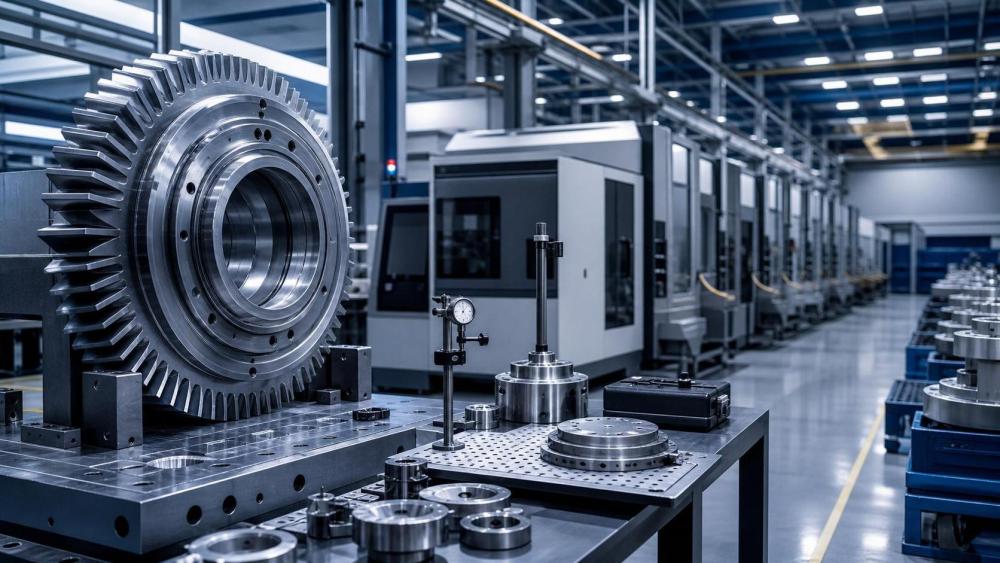
Global manufacturing has become less forgiving. Delivery windows are tighter, compliance expectations are broader, and plant operators expect better traceability across the supply chain.
At the same time, decarbonization targets and energy efficiency goals are reshaping procurement standards. Component quality now affects emissions, thermal stability, maintenance cycles, and operating cost.
This is why supplier capability evaluation for manufacturers has moved beyond price benchmarking. It has become a core part of operational resilience.
In CF-Elite’s observed sectors, that shift is especially visible. Rotary kilns, float lines, incineration systems, and refractory production assets depend on stable materials and repeatable fabrication quality.
A supplier that misses tolerance bands or process records can create problems that only appear after commissioning. By then, the commercial cost is much higher.
What supplier capability evaluation for manufacturers really covers
At its core, the evaluation asks a practical question: can this supplier meet defined requirements consistently, not just once, but across changing demand and operating conditions?
That means the review should cover more than certificates. It should connect technical ability, quality systems, process discipline, capacity planning, and business reliability.
A useful framework usually examines five areas.
- Technical fit with drawings, material specifications, and performance parameters.
- Manufacturing control, including process capability, equipment condition, and operator discipline.
- Quality assurance, with traceability, inspection routines, and corrective action management.
- Supply reliability, including lead times, bottlenecks, subcontracting exposure, and logistics readiness.
- Commercial and compliance stability, covering financial health, regulatory exposure, and contract execution history.
When these dimensions are reviewed together, supplier capability evaluation for manufacturers becomes a decision tool rather than a vendor onboarding form.
Start with risk, not with a generic checklist
The best structure begins with the sourced item’s risk profile. Not every supplier needs the same level of scrutiny.
A standard fabricated bracket and a refractory-contact component should not pass through identical evaluation gates. Their failure consequences are very different.
Before scoring suppliers, define where the part or system sits in the project.
This step keeps resources focused. It also makes supplier capability evaluation for manufacturers more defensible when approvals are later reviewed internally.
What evidence matters more than presentations
Supplier presentations often emphasize installed equipment, export markets, and certificate lists. Those details are useful, but they are not enough.
Real capability appears in operating evidence. The most reliable assessments look for proof that production controls work under normal commercial conditions.
Process evidence
Review routing sheets, control plans, maintenance logs, calibration status, and scrap trends. These records show whether process discipline is routine or staged for audits.
Quality evidence
Ask for nonconformance handling records, root cause reports, and response times. A capable supplier does not claim zero issues; it resolves them systematically.
Capacity evidence
Check actual utilization, shift patterns, tooling redundancy, and key dependency points. A plant with modern equipment can still be fragile if one machine drives the whole schedule.
Application evidence
Past supply to comparable thermal, abrasive, or continuous-process environments carries more weight than general manufacturing experience.
For CF-Elite-related sectors, this can include kiln-facing assemblies, wear parts, insulation materials, burner-adjacent fabrications, or extrusion tooling with demanding dimensional stability.
Common weak points hidden during OEM approval
Some suppliers pass formal reviews because the evaluation focuses on visible assets rather than performance risk. Several warning signs appear repeatedly.
- Heavy reliance on subcontractors without clear process ownership.
- Strong sample quality but weak batch consistency.
- Inspection activity concentrated at final check, with limited in-process control.
- Engineering support that cannot explain variation drivers in material or thermal performance.
- Capacity claims based on theoretical output rather than booked production reality.
- Compliance files that are complete on paper but disconnected from shop-floor practice.
These issues are especially relevant where heat resistance, dust control, refractory integrity, or chemical stability affect downstream equipment life.
That is one reason intelligence-led review has become more valuable. Market news alone does not reveal process maturity.
How sector context changes the evaluation method
A generic supplier scorecard misses industry context. The right evaluation criteria should reflect how the supplied item behaves in service.
In cement production systems, dust handling, abrasion resistance, and uptime pressure may dominate the assessment.
In glass manufacturing equipment, dimensional precision, thermal uniformity, and defect sensitivity may carry more weight.
In industrial kilns and incineration, combustion conditions, refractory interaction, emissions compliance, and service life predict supplier suitability more accurately than catalog range.
In material extrusion, tooling repeatability, wear rate, and pressure stability often decide whether the supplier can support scale-up.
This is where CF-Elite’s intelligence model is relevant. Cross-reading process engineering, thermal management, regulation shifts, and commercial demand gives better context for OEM approval decisions.
Building a practical evaluation sequence
A workable supplier capability evaluation for manufacturers usually follows a staged sequence rather than a single pass or fail meeting.
1. Define the approval scope
Specify the product family, required standards, service conditions, target volumes, and critical failure modes.
2. Screen for baseline fit
Remove suppliers that clearly lack process capability, sector relevance, or compliance readiness.
3. Validate through evidence review
Examine records, audit findings, quality trends, and comparable project history.
4. Test real performance
Use pilot orders, sample qualification, FAT alignment, or controlled first-batch verification.
5. Approve with conditions where needed
Some suppliers deserve limited approval tied to corrective actions, extra inspections, or narrower supply scope.
This staged method creates a more realistic supplier capability evaluation for manufacturers, especially when equipment projects have long replacement cycles and high shutdown costs.
What to do after the initial approval decision
OEM approval should not freeze the evaluation. Capability changes over time as demand, ownership, staffing, and regulatory pressure shift.
The stronger approach is to treat approval as the start of monitored performance.
- Track delivery reliability against promised lead times.
- Monitor defect patterns by batch, process step, and application site.
- Review engineering response quality during changes or failures.
- Update risk ratings when product scope or operating conditions change.
- Re-audit suppliers tied to high-temperature, high-wear, or regulated applications.
For organizations sourcing into heavy thermal industries, the next step is usually to align evaluation criteria with actual service conditions, not just with procurement templates.
That means comparing technical requirements, plant risk, and supplier evidence side by side, then refining approval thresholds where performance really matters.
A disciplined supplier capability evaluation for manufacturers does more than reduce sourcing uncertainty. It improves decision quality before cost, downtime, or compliance exposure make the decision for you.
Related News
 Ms. Elena RodriguezHow to Structure Global Specification Data for Faster Industrial Product EvaluationGlobal specification-oriented product information helps industrial teams compare capacity, energy, emissions, automation, and lifecycle data on a like-for-like basis for faster, confident equipment decisions.Sep 29, 2026
 Thermal Energy ArchitectHow to Specify High-Temperature Process Systems for Continuous Thermal OperationsHigh-temperature process engineering systems: learn how to specify resilient continuous thermal operations for efficiency, compliance, reliable uptime, and long-term performance.Sep 28, 2026
 Thermal Energy ArchitectHow to Evaluate a Thermal Engineering Contractor for High-Temperature Plant ProjectsChoose a thermal engineering contractor with proven process expertise, lifecycle value, emissions control, and delivery discipline for reliable high-temperature plant performance.Sep 27, 2026
 Silicate Process EngineerHow Latin American Cement Plants Can Reduce Dust Emissions in Kilns and Transfer PointsCement plant dust control Latin America: reduce kiln and transfer-point emissions with practical airflow, filtration, monitoring, and maintenance strategies.Sep 26, 2026
 Material Heat-Resist ExpertHow to Evaluate Refractory Production Lines for Output, Quality, and Energy UseRefractory production lines: learn how to assess qualified output, consistent quality, and total energy use for smarter, lower-risk investment decisions.Sep 25, 2026
 Dr. Alistair VaughnHow Waste Recycling Technology Improves Material Recovery in Industrial PlantsWaste recycling technology improves material recovery through source segregation, smart separation, thermal treatment, and quality control for industrial plants.Sep 24, 2026
 Optical Glass Tech FellowHow to Specify Glass Annealing Equipment for European Quality and Energy RequirementsGlass annealing equipment Europe: learn how to specify lehrs for consistent glass quality, energy efficiency, compliance, automation, and reliable long-term performance.Sep 23, 2026
 Optical Glass Tech FellowSilicate Process Automation: Improving Batch Consistency and Energy ControlSilicate process automation improves batch consistency, energy control, traceability, and operator confidence across high-temperature manufacturing operations.Sep 22, 2026
 Optical Glass Tech FellowHow Silicate Industrial Processes Control Viscosity, Energy Use, and Product QualitySilicate industrial processes: learn how viscosity, chemistry, heat transfer, and atmosphere control reduce energy use, improve stability, and protect product quality.Sep 21, 2026
 Thermal Energy ArchitectHow European Plants Can Evaluate Energy Recovery Equipment for High-Temperature ProcessesIndustrial energy recovery equipment Europe: learn how high-temperature plants can assess waste-heat sources, integration risks, lifecycle value, and reliable recovery routes.Sep 20, 2026
 Thermal Energy ArchitectIndustrial Furnace Process Optimization: Reducing Fuel Use Without Sacrificing ThroughputIndustrial process optimization furnace strategies that cut fuel use while protecting throughput. Explore combustion control, heat recovery, refractory performance, and data-driven efficiency gains.Sep 19, 2026
 Ms. Elena RodriguezWhat Drives High-Pressure Extrusion Equipment Cost in Industrial Projects?High pressure extrusion equipment cost explained: compare pressure, die design, automation, wear, energy, and installation factors for smarter industrial investments.Sep 18, 2026
 Thermal Energy ArchitectHow to Size a Waste Heat Recovery Exchanger for High-Temperature Kiln Exhaust?Waste heat recovery exchanger sizing for high-temperature kiln exhaust: balance recoverable duty, fouling, corrosion limits, pressure drop, and reliable heat use.Sep 17, 2026
 Thermal Energy ArchitectWhy Heat-Resistant Materials Lose Abrasion Resistance at High TemperaturesHeat-resistant materials abrasion resistance can decline at high temperatures. Discover the thermal, chemical, and mechanical causes of wear—and how to choose longer-lasting linings.Sep 16, 2026
 Thermal Energy ArchitectHow to Evaluate a Thermal Energy Optimization Company for High-Temperature PlantsChoose a thermal energy optimization company with proven process expertise, measurable savings, and reliable delivery for high-temperature plants. Learn what to assess.Sep 15, 2026
 Thermal Energy ArchitectRotary Kiln Efficiency: How Feed Rate, Fuel Use, and Heat Loss Affect OutputRotary kiln efficiency explained: discover how feed rate, fuel use, heat loss, combustion, and cooling performance shape output, quality, and energy costs.Sep 14, 2026
 Thermal Energy ArchitectHow to Select Heat-Resistant Materials That Maintain Abrasion Resistance in KilnsHeat-resistant materials abrasion resistance: learn how to select kiln linings that withstand heat, wear, thermal cycling, and chemical attack for longer service life.Sep 13, 2026
 Thermal Energy ArchitectHow Rotary Kiln Automation Improves Temperature Control and Fuel EfficiencyRotary kiln technology automation enhances temperature control, stabilizes combustion, and improves fuel efficiency with smarter data, predictive control, and safer operations.Sep 12, 2026
 Silicate Process EngineerCement Plant Emission Control: Selecting Systems for Dust, NOx, and SO2 LimitsCement plant emission control guide: compare dust collectors, NOx reduction, and SO2 systems for reliable compliance across kiln modes, fuel changes, and operating upsets.Sep 11, 2026
 Thermal Energy ArchitectSelecting Abrasion-Resistant High-Temperature Materials for Kiln and Conveyor Wear ZonesHigh-temp material engineering guide to abrasion-resistant kiln and conveyor solutions—match wear, heat, chemistry, and installation design for longer service life.Sep 10, 2026









Related News
- 00
0000-00
How to Structure Global Specification Data for Faster Industrial Product Evaluation - 00
0000-00
What Drives High-Pressure Extrusion Equipment Cost in Industrial Projects? - 00
0000-00
How Should Buyers Evaluate Building Material Industry Intelligence Pricing? - 00
0000-00
How to Use Building Material Intelligence Data for Market and Investment Decisions - 00
0000-00
How to Evaluate a Silicate Processing Equipment Manufacturer for Plant Projects
Weekly Insights
Stay ahead with our curated technology reports delivered every Monday.