
Choosing a Silicate Solution Manufacturer: Batch Quality and Supply Reliability




A silicate solution that meets its specification on paper can still behave differently in your process. A change in viscosity may affect pumping or coating, while variation in solids content can alter drying demand and the amount of active material delivered. Late deliveries create another problem: even a competitively priced product loses its value when production must wait for it.
Choosing a silicate industrial solutions manufacturer therefore requires two connected checks: whether the supplier can consistently produce the chemistry your application needs, and whether it can deliver that material under workable commercial and logistical conditions. Start with a process-specific specification, then assess batch records, production controls, delivery arrangements, and performance in your own operation.
Define the grade before comparing manufacturers
“Liquid silicate” is not a complete purchasing specification. Sodium silicate and potassium silicate are distinct materials, and grades within either family can differ in silica-to-alkali ratio, concentration, viscosity, and impurity profile. A supplier may manufacture an acceptable product for one application that performs poorly in another.
Describe what the solution must do. Is it serving as a binder, contributing alkalinity, helping disperse mineral particles, or forming part of a coating? Include the conditions it will encounter: dilution water, mixing sequence, operating temperature, other ingredients, and storage time. These details help identify which properties need tight control and which can tolerate a wider range.
For mineral binders and refractory formulations, evaluate performance through the relevant mixing, setting, drying, and heating stages. For coatings or adhesives, application behavior and drying may be more immediately sensitive. Similar chemical descriptions do not establish interchangeability across these uses.
If replacing an existing grade, provide its specification and your actual operating requirements. Asking only for an “equivalent” leaves room for different interpretations, particularly when suppliers use different test methods or reporting conventions.
Read batch chemistry as a connected set of properties
A useful specification explains both the required values and how they are measured. The following parameters provide a starting point; acceptance limits should reflect the application.
Never compare modulus values without checking the reporting basis. A mass ratio and a molar ratio express composition differently. Likewise, viscosity results measured at different temperatures may create an apparent quality difference that comes from the test conditions.
Concentration also needs context. Two solutions can have a similar modulus but different solids contents, changing the water balance and dosing requirement. Density can help detect a receiving discrepancy, but it cannot establish the full composition by itself.
Avoid specifying unnecessarily narrow limits across every parameter. Tighter tolerances can increase cost or reduce available supply without improving the finished product. Set tighter limits where variation causes a measurable process problem.
Ask for evidence of consistency across batches
A technical data sheet describes the grade. A certificate of analysis, or COA, records results for an identified batch or lot. Neither document alone demonstrates stable production over time.
Request recent COAs from separate production lots, preferably covering different production dates. Look for the spread of actual results within the specification. A grade that repeatedly moves between opposite ends of a broad acceptance range may require more process adjustment than one that stays near a stable operating target.
Check whether entries are measured results, typical values, or simply statements of compliance. Some properties may reasonably be tested periodically, but that distinction should be explicit. Each shipment should be traceable to its release documentation.
Ask how the manufacturer handles an out-of-specification batch. A credible explanation covers isolation, investigation, any reprocessing, retesting, and release authority. If blending is used to adjust composition, the final blended lot should have traceable records and representative test results.
Also agree on how conflicting results will be resolved. Sampling location, sample temperature, storage, and laboratory methods can all affect comparisons. Retained samples and a defined escalation process make a disagreement easier to investigate before it becomes a prolonged supply dispute.
Check the production controls behind the certificate
A quality management certificate can support supplier assessment, but it does not establish suitability for your particular grade. The more useful question is how the plant controls the variables that could change your material.
Manufacturers may produce solution from their own silicate glass, dissolve purchased material, or use other suitable production routes. These arrangements create different dependencies. An integrated producer still depends on raw materials, energy, and equipment availability; a dissolving operation depends partly on its feedstock suppliers. Assess the controls and backup arrangements associated with the actual route.
During a technical review or site assessment, focus on raw-material identification, water quality, dissolution or reaction control, filtration, tank management, sampling, and laboratory capability. Ask how batches are kept identifiable when storage tanks receive multiple production runs.
Change control deserves a written agreement. Changes to feedstock, manufacturing location, process conditions, or test methods may matter even when the published product name stays the same. Define which changes require advance notice and which require renewed qualification.
A supplier should also be able to discuss compatibility limits. Silicate solutions are alkaline, and contact with acids or unsuitable ingredients can cause gel formation or precipitation. Useful technical support connects these risks to your mixing and handling conditions.
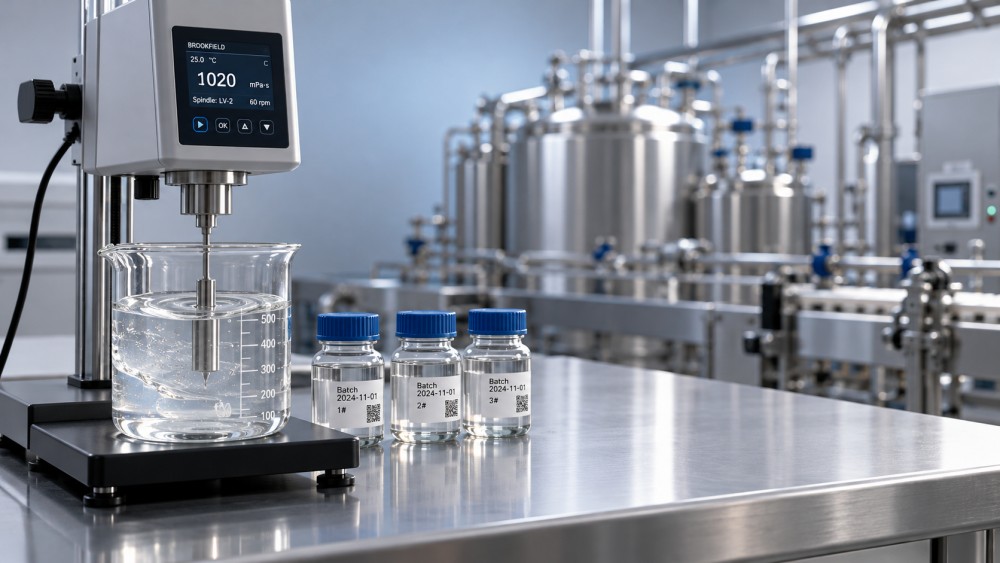
Qualify the material through receiving, storage, and production
A small laboratory sample can establish basic compatibility, but it does not demonstrate routine manufacturing or delivery performance. Where practical, obtain trial material from a normal production batch and retain its batch identity throughout evaluation.
Agree on success criteria before the trial. Include receiving properties, transfer behavior, dosing stability, mixing response, and the finished-product characteristics that matter. This prevents approval from resting on a vague judgment that the material “looks acceptable.”
Use representative storage and handling conditions. A sample evaluated immediately after arrival may behave differently from material held through the normal inventory cycle. Temperature affects viscosity and pumping; evaporation, contamination, and exposure to atmospheric carbon dioxide can alter material at exposed surfaces.
If dilution is part of the process, use the intended plant water and mixing sequence. Water hardness and interactions with other formulation ingredients can reveal problems that a trial using purified laboratory water misses.
For a production-critical application, successful trials across separate batches provide stronger evidence than one successful sample. Match the extent of qualification to the consequence of failure and the difficulty of reversing the supplier change.
Supply reliability depends on the whole delivery route
Annual plant capacity says little about whether your next shipment will arrive on time. Ask about available capacity for the required grade, planned maintenance, normal order lead time, and the constraint that governs dispatch. Production, storage, packaging, or transport may each become the limiting factor.
Examine delivery history using an agreed definition of on-time performance. Dispatching on the promised date and arriving within your receiving window are different measures. Historical performance is most useful when it covers comparable destinations and shipment formats.
For bulk deliveries, establish tanker cleanliness requirements, previous-cargo controls where relevant, unloading connections, available discharge equipment, and responsibility for delays. For drums or intermediate bulk containers, consider seal integrity, container suitability, handling damage, and return arrangements.
Cold conditions can increase viscosity and complicate unloading. Storage and transport requirements should be specific to the grade and climate. Confirm the supplier’s handling guidance alongside your tank capacity, pump capability, and receiving arrangements.
A contingency plan should identify usable alternatives. Ask whether another production site can supply the same qualified grade, whether backup transport is available, and how stock is allocated during disruption. An alternative plant may use different feedstocks or controls, so its output should not automatically inherit approval.
A second supplier offers stronger protection when it reduces a shared dependency. Two vendors relying on the same upstream producer or transport bottleneck may provide less resilience than their separate names suggest.
Compare cost at the point of use
Price per delivered tonne is an incomplete comparison when concentration, transport distance, and handling requirements differ. Begin by comparing equivalent quantities of usable solids, while checking that the chemistry and application performance remain suitable.
A more concentrated solution may reduce the amount of water transported, but it can also increase transfer difficulty or require additional dilution and mixing capacity. A lower-concentration grade may fit existing equipment better while increasing freight and storage demand. The economical choice depends on the receiving plant.
Include freight, packaging, unloading time, inventory requirements, and any routine adjustment needed in production. Keep disruption costs separate from established costs unless you have a defensible basis for estimating them. This makes the comparison transparent without creating false precision.
Sustainability information also needs a clear comparison basis. If manufacturing energy or transport emissions influence the decision, ask what the supplier’s figures include and whether they describe the relevant site and grade. Broad corporate claims are less useful than information tied to the material being purchased.
Make approval and purchasing terms work together
Technical approval should lead to a purchasing agreement that preserves the conditions under which the grade passed evaluation. Attach the approved specification, test methods, documentation requirements, packaging or bulk-delivery conditions, and change-notification obligations.
Clarify when the COA will be available, how nonconforming deliveries will be handled, and who coordinates urgent technical support. Agree on order forecasts, lead times, and emergency requests without treating an informal promise as reserved capacity.
A practical decision sequence is:
- Eliminate grades that fail chemistry, compatibility, or handling requirements.
- Compare batch consistency and confirm the controls supporting it.
- Complete representative trials with defined acceptance criteria.
- Assess delivery performance and the credibility of disruption arrangements.
- Compare total cost among suppliers that have passed the necessary checks.
Before placing a routine order, assemble an approval file containing the agreed specification, representative COAs, trial results, delivery plan, and change-control terms. Those records give both parties a shared definition of acceptable supply—and give your plant a clear basis for accepting the next shipment.
Related News
 Ms. Elena RodriguezProcess Equipment Pricing: How to Compare Quotes and Total CostsMaster process equipment comparison pricing: compare supplier quotes, uncover hidden costs, and evaluate lifetime expenses to make a confident buying decision.Nov 17, 2026
 Prof. Marcus ChenGlobal Cement Industry Decarbonization: Key Technologies and Cost BarriersExplore global cement industry decarbonization technologies, cost barriers, and practical investment strategies to cut emissions while protecting competitiveness.Nov 16, 2026
 Structural Material AnalystChoosing Specification Preparation Support for North American ProjectsChoose specification preparation support North America projects can rely on. Compare technical expertise, compliance, interfaces, and supplier acceptance criteria.Nov 14, 2026
 Structural Material AnalystSpecialty Ceramic Extrusion: How Material Properties Affect FormingExplore how ceramic specialized material extrusion is shaped by particle size, binders, and solids loading—and learn to improve forming and reduce defects.Nov 13, 2026
 Ms. Elena RodriguezHigh-Pressure Molding Equipment Prices in Europe: What Affects the Total Cost?Explore high pressure molding equipment price Europe buyers can expect to assess, from tooling and installation to running costs. Compare quotes with confidence.Nov 12, 2026
 Structural Material AnalystChoosing a Vacuum Extrusion System: Capacity, Materials and Vacuum LevelsChoosing a vacuum extrusion system? Compare capacity, material behavior and vacuum levels to improve product quality and select the right equipment.Nov 11, 2026
 Optical Glass Tech FellowGlass Melting Innovations: Comparing Electric and Hybrid Furnace TechnologiesExplore glass melting innovations and compare electric and hybrid furnaces by energy use, emissions, glass quality and operating costs to find the right fit.Nov 10, 2026
 Thermal Energy ArchitectHow Thermal Barrier Technology for Kilns Reduces Heat LossDiscover how thermal barrier technology for kilns reduces heat loss, and learn how to select insulation and assess savings without compromising lining durability.Nov 09, 2026
 Prof. Marcus ChenGlobal Materials Trends: What North American Manufacturers Need to KnowExplore global material trends North America manufacturers need to know, from energy costs and supply chains to lower-carbon materials and smarter investment decisions.Nov 08, 2026
 Thermal Energy ArchitectSelecting Abrasion-Resistant Refractories for High-Wear Kiln LiningsExplore advanced refractory materials abrasion resistant enough for high-wear kiln linings. Compare wear mechanisms, thermal stability, installation and lifecycle costs.Nov 06, 2026
 Dr. Alistair VaughnIndustrial Energy Efficiency Certification: ISO 50001 Requirements for PlantsExplore industrial energy efficiency certification with ISO 50001. Learn how plants define scope, measure performance and prepare credible evidence for audits.Nov 05, 2026
 Ms. Elena RodriguezWhat Is an Industrial Intelligence Database and How Is It Used?Discover how an industrial intelligence database helps researchers map markets, track projects, compare technologies, and assess evidence with confidence.Nov 04, 2026
 Ms. Elena RodriguezIndustrial Material Pricing: How Freight and Order Volume Affect QuotesExplore industrial material pricing and learn how freight, order volume, and inventory costs affect quotes. Compare suppliers and make smarter purchasing decisions.Nov 03, 2026
 Structural Material AnalystSingle- vs. Twin-Screw Extrusion Systems: Which Suits Your Material?Choose the right specialized extrusion systems screw type for your material. Compare single- and twin-screw options to improve quality and control costs.Nov 02, 2026
 Thermal Energy ArchitectChoosing Thermal Barrier Materials for Kilns: Temperature and Heat LossExplore thermal barrier materials for kilns and learn how to balance temperature resistance, heat loss, durability and operating costs when selecting a lining.Nov 01, 2026
 Ms. Elena RodriguezSupplier Reference Platform Pricing: Fees and Contract Terms to CompareCompare supplier reference platform pricing, hidden fees, verification costs and contract terms to choose the right solution for your sourcing team.Oct 31, 2026
 Ms. Elena RodriguezSupplier Comparison Metrics: How to Score Cost, Quality, and DeliveryUse supplier comparison metrics to score cost, quality, and delivery with a practical weighted scorecard. Make more confident equipment sourcing decisions.Oct 30, 2026
 Ms. Elena RodriguezWhat Does Industrial Waste Heat Recovery Cost, and When Does It Pay Back?Understand industrial waste heat recovery cost, from equipment and installation to net savings. Learn how to compare quotes, assess risks, and calculate realistic payback before investing.Oct 29, 2026
 Thermal Energy ArchitectChoosing Industrial Waste-to-Energy Equipment by Waste Moisture and Heating ValueChoose industrial waste to energy equipment by moisture and heating value. Compare technologies, fuel needs, and supplier guarantees to make a confident investment.Oct 28, 2026
 Thermal Energy ArchitectChoosing Industrial Kiln Insulation for High Heat and Repeated Thermal CyclingExplore high temperature industry solutions for kiln insulation under repeated thermal cycling. Compare materials, reduce heat loss, and select the right lining for your operating conditions.Oct 27, 2026









Related News
- 00
0000-00
Process Equipment Pricing: How to Compare Quotes and Total Costs - 00
0000-00
High-Pressure Molding Equipment Prices in Europe: What Affects the Total Cost? - 00
0000-00
What Is an Industrial Intelligence Database and How Is It Used? - 00
0000-00
Industrial Material Pricing: How Freight and Order Volume Affect Quotes - 00
0000-00
Supplier Reference Platform Pricing: Fees and Contract Terms to Compare
0000-00
Weekly Insights
Stay ahead with our curated technology reports delivered every Monday.