
How to Choose a Glass Melting Furnace: Capacity, Fuel Type, and Temperature Control




How to Choose a Glass Melting Furnace: Capacity, Fuel Type, and Temperature Control
Choosing the right glass melting furnace requires more than comparing size or price.
Capacity, fuel type, and temperature control shape melt quality, energy use, emissions, and long-term operating stability.
A sound selection process starts with production reality, not brochure numbers.
That means checking daily tonnage, glass chemistry, cullet ratio, forming speed, utility conditions, and maintenance capacity together.
Start with Process Requirements Before Comparing Furnace Designs
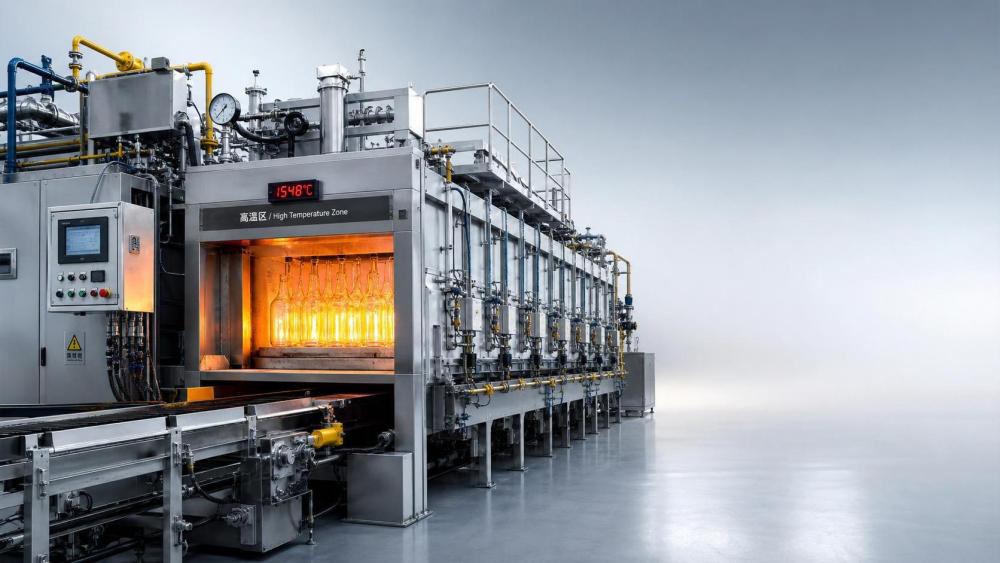
A glass melting furnace should be selected from the process backward.
The first question is not fuel.
It is whether the furnace can deliver stable glass under real production swings.
In practical evaluation, four inputs matter most.
- Target output in tons per day, including peak and average load.
- Glass type, such as container glass, float glass, fiber glass, or specialty silicate products.
- Batch composition, especially cullet percentage, volatile components, and fining agents.
- Product quality limits for bubbles, cords, stones, and color variation.
These factors define the thermal duty of the glass melting furnace.
They also influence furnace geometry, burner arrangement, pull rate, and residence time.
A furnace sized only for nameplate output may struggle when raw materials shift.
That is where many long-term operating problems begin.
How to Evaluate Furnace Capacity Without Undersizing or Overbuilding
Capacity is often treated as a simple output number.
In reality, glass melting furnace capacity is a balance between throughput, heat transfer, and glass quality margin.
If capacity is too low, operators push the furnace harder.
That usually raises specific energy use, shortens refractory life, and increases defect risk.
If capacity is too high, efficiency often drops at partial load.
Capital cost also rises, along with heat losses and control complexity.
Useful Capacity Checks
- Compare nominal tonnage with expected pull rate over twelve months.
- Check overload tolerance during seasonal demand peaks.
- Review expected residence time for melting, refining, and homogenization.
- Verify cullet-rich and virgin-heavy batch performance separately.
- Look at thermal efficiency at 70%, 85%, and 100% operating load.
A good rule is to size the glass melting furnace for stable operation in the normal production band.
Then confirm it can absorb short-term variability without pushing temperatures beyond safe refractory limits.
From recent market changes, flexibility matters more than before.
Demand cycles, energy price volatility, and recycled material swings all make rigid furnace sizing less attractive.
Choosing the Right Fuel Type for Cost, Emissions, and Plant Infrastructure
Fuel choice changes more than the utility bill.
It affects flame characteristics, heat transfer, emissions profile, maintenance workload, and future compliance costs.
For a glass melting furnace, the main options usually include natural gas, heavy oil, electricity, or hybrid systems.
Natural Gas
Natural gas supports cleaner combustion and easier burner control.
It is often preferred where stable supply and emissions pressure both matter.
However, price exposure can be significant in some regions.
Heavy Oil
Heavy oil can still work where fuel cost and local availability favor liquid fuels.
The tradeoff is higher particulate, sulfur-related concerns, and more demanding maintenance.
Storage, preheating, and atomization quality also become part of the selection decision.
Electric Melting
Electric glass melting furnace systems offer precise heating and low on-site combustion emissions.
They can be attractive for specialty glass, smaller campaigns, or decarbonization-led projects.
The weak point is power price, grid stability, and transformer infrastructure.
Hybrid and Oxy-Fuel Configurations
Hybrid designs combine combustion and electric boosting.
Oxy-fuel options can improve thermal efficiency and reduce flue gas volume.
Still, oxygen supply cost and system integration must be checked carefully.
The right answer depends on total operating context.
That includes energy contracts, emission permits, local fuel security, and decarbonization targets.
Why Temperature Control Is a Core Selection Factor
Temperature control is where furnace selection becomes decisive.
A glass melting furnace with poor control may still melt glass.
But it will struggle to maintain homogeneity, refining performance, and stable downstream forming conditions.
More importantly, uneven thermal fields can accelerate crown wear, sidewall attack, and local overheating.
Control Features Worth Evaluating
- Temperature measurement coverage across melting, refining, and forehearth zones.
- Response speed of burners, electrodes, dampers, and combustion air systems.
- Control logic for load changes, batch moisture shifts, and cullet ratio variation.
- Alarm strategy for thermal deviation, hot spots, and sensor failure.
- Integration with historian data, digital twin tools, or predictive maintenance systems.
This is also where suppliers start to separate clearly.
Some offer a glass melting furnace with strong hardware but limited control depth.
Others provide tighter process visibility, better thermal mapping, and easier tuning during product changeovers.
In real operations, that difference shows up in waste rate, pull stability, and campaign life.
Compare Suppliers Using a Decision Matrix, Not a Single Price Sheet
A supplier quote rarely tells the whole story.
For a glass melting furnace, evaluation should combine technical fit, lifecycle cost, and implementation risk.
This matrix makes tradeoffs visible.
It also helps separate a low purchase price from a truly competitive glass melting furnace solution.
Practical Questions to Ask Before Final Approval
Before final selection, narrow the decision with site-specific questions.
- Can the glass melting furnace maintain quality at both current and projected product mix?
- What happens to energy consumption when cullet ratio drops unexpectedly?
- How quickly can the system recover after a temperature disturbance?
- Which components are most exposed to wear, and what is the replacement plan?
- Does the supplier provide operating references with similar glass chemistry and production scale?
- How does the furnace align with future emissions rules and carbon reduction targets?
These questions sound simple, but they usually reveal the strongest decision signals.
They turn a furnace comparison into a production risk review.
Final Selection Should Balance Performance Today and Flexibility Tomorrow
The best glass melting furnace is rarely the largest or the cheapest.
It is the one that matches output needs, fuel reality, and control demands with the fewest long-term compromises.
Capacity determines operating window.
Fuel type shapes cost and compliance exposure.
Temperature control protects quality and furnace life.
When these three factors are evaluated together, equipment selection becomes much more defensible.
For industrial decision-making, that is the real goal.
Build the shortlist around process fit, test supplier claims against operating data, and select a glass melting furnace that stays reliable under change.
Related News
 Silicate Process EngineerHow Latin American Cement Plants Can Reduce Dust Emissions in Kilns and Transfer PointsCement plant dust control Latin America: reduce kiln and transfer-point emissions with practical airflow, filtration, monitoring, and maintenance strategies.Sep 26, 2026
 Material Heat-Resist ExpertHow to Evaluate Refractory Production Lines for Output, Quality, and Energy UseRefractory production lines: learn how to assess qualified output, consistent quality, and total energy use for smarter, lower-risk investment decisions.Sep 25, 2026
 Dr. Alistair VaughnHow Waste Recycling Technology Improves Material Recovery in Industrial PlantsWaste recycling technology improves material recovery through source segregation, smart separation, thermal treatment, and quality control for industrial plants.Sep 24, 2026
 Optical Glass Tech FellowHow to Specify Glass Annealing Equipment for European Quality and Energy RequirementsGlass annealing equipment Europe: learn how to specify lehrs for consistent glass quality, energy efficiency, compliance, automation, and reliable long-term performance.Sep 23, 2026
 Optical Glass Tech FellowSilicate Process Automation: Improving Batch Consistency and Energy ControlSilicate process automation improves batch consistency, energy control, traceability, and operator confidence across high-temperature manufacturing operations.Sep 22, 2026
 Optical Glass Tech FellowHow Silicate Industrial Processes Control Viscosity, Energy Use, and Product QualitySilicate industrial processes: learn how viscosity, chemistry, heat transfer, and atmosphere control reduce energy use, improve stability, and protect product quality.Sep 21, 2026
 Thermal Energy ArchitectHow European Plants Can Evaluate Energy Recovery Equipment for High-Temperature ProcessesIndustrial energy recovery equipment Europe: learn how high-temperature plants can assess waste-heat sources, integration risks, lifecycle value, and reliable recovery routes.Sep 20, 2026
 Thermal Energy ArchitectIndustrial Furnace Process Optimization: Reducing Fuel Use Without Sacrificing ThroughputIndustrial process optimization furnace strategies that cut fuel use while protecting throughput. Explore combustion control, heat recovery, refractory performance, and data-driven efficiency gains.Sep 19, 2026
 Ms. Elena RodriguezWhat Drives High-Pressure Extrusion Equipment Cost in Industrial Projects?High pressure extrusion equipment cost explained: compare pressure, die design, automation, wear, energy, and installation factors for smarter industrial investments.Sep 18, 2026
 Thermal Energy ArchitectHow to Size a Waste Heat Recovery Exchanger for High-Temperature Kiln Exhaust?Waste heat recovery exchanger sizing for high-temperature kiln exhaust: balance recoverable duty, fouling, corrosion limits, pressure drop, and reliable heat use.Sep 17, 2026
 Thermal Energy ArchitectWhy Heat-Resistant Materials Lose Abrasion Resistance at High TemperaturesHeat-resistant materials abrasion resistance can decline at high temperatures. Discover the thermal, chemical, and mechanical causes of wear—and how to choose longer-lasting linings.Sep 16, 2026
 Thermal Energy ArchitectHow to Evaluate a Thermal Energy Optimization Company for High-Temperature PlantsChoose a thermal energy optimization company with proven process expertise, measurable savings, and reliable delivery for high-temperature plants. Learn what to assess.Sep 15, 2026
 Thermal Energy ArchitectRotary Kiln Efficiency: How Feed Rate, Fuel Use, and Heat Loss Affect OutputRotary kiln efficiency explained: discover how feed rate, fuel use, heat loss, combustion, and cooling performance shape output, quality, and energy costs.Sep 14, 2026
 Thermal Energy ArchitectHow to Select Heat-Resistant Materials That Maintain Abrasion Resistance in KilnsHeat-resistant materials abrasion resistance: learn how to select kiln linings that withstand heat, wear, thermal cycling, and chemical attack for longer service life.Sep 13, 2026
 Thermal Energy ArchitectHow Rotary Kiln Automation Improves Temperature Control and Fuel EfficiencyRotary kiln technology automation enhances temperature control, stabilizes combustion, and improves fuel efficiency with smarter data, predictive control, and safer operations.Sep 12, 2026
 Silicate Process EngineerCement Plant Emission Control: Selecting Systems for Dust, NOx, and SO2 LimitsCement plant emission control guide: compare dust collectors, NOx reduction, and SO2 systems for reliable compliance across kiln modes, fuel changes, and operating upsets.Sep 11, 2026
 Thermal Energy ArchitectSelecting Abrasion-Resistant High-Temperature Materials for Kiln and Conveyor Wear ZonesHigh-temp material engineering guide to abrasion-resistant kiln and conveyor solutions—match wear, heat, chemistry, and installation design for longer service life.Sep 10, 2026
 Dr. Alistair VaughnIndustrial Process Engineering: How to Map Processes for Safer, More Efficient PlantsIndustrial process engineering reveals bottlenecks, safety risks, and energy losses through practical process mapping for safer, more efficient plants.Sep 09, 2026
 Optical Glass Tech FellowHow to Evaluate a Glass Annealing Equipment Manufacturer for Production StabilityChoose a glass annealing equipment manufacturer with proven thermal uniformity, reliable controls, lifecycle value, and responsive service for stable production.Sep 08, 2026
 Prof. Marcus ChenThermal Energy Architecture in North America: Strategies for Lower Building Energy UseThermal energy architecture North America helps project leaders cut building energy use through stronger envelopes, right-sized HVAC, storage, and smart commissioning.Sep 07, 2026



Related News
- 00
0000-00
How to Specify Glass Annealing Equipment for European Quality and Energy Requirements - 00
0000-00
Silicate Process Automation: Improving Batch Consistency and Energy Control - 00
0000-00
How Silicate Industrial Processes Control Viscosity, Energy Use, and Product Quality - 00
0000-00
How to Evaluate a Glass Annealing Equipment Manufacturer for Production Stability - 00
0000-00
European Glass Melting Processes: Furnace Choices, Energy Use, and Quality Control
Weekly Insights
Stay ahead with our curated technology reports delivered every Monday.