
Waste to Energy vs Landfill: Which Option Delivers Better Long-Term ROI?




Waste to Energy vs Landfill: what really drives long-term ROI?
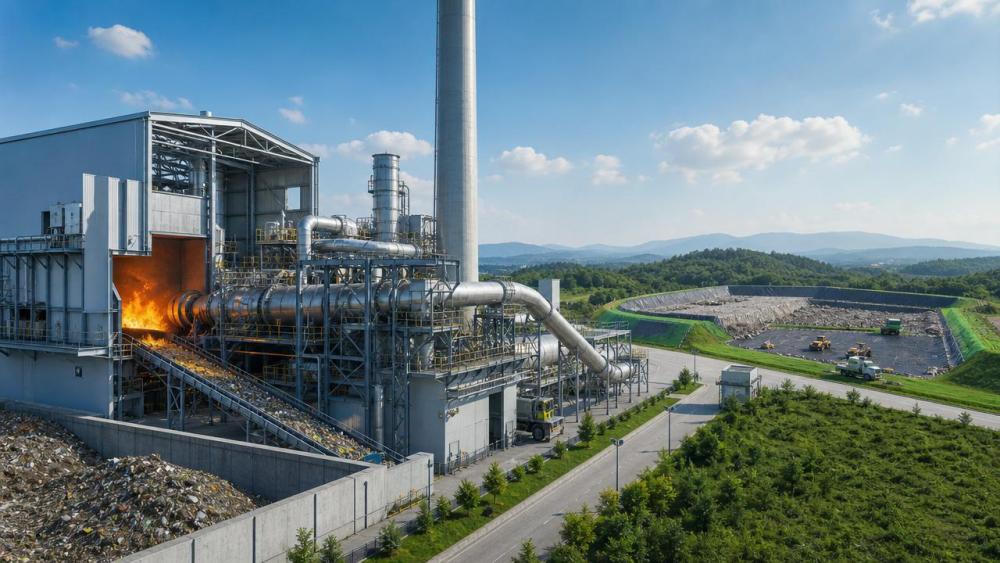
Waste disposal decisions now shape energy cost, compliance exposure, and future asset value.
That is why the debate around waste to energy versus landfill is no longer a narrow environmental question.
For many industrial groups, the bigger issue is which option protects margins over ten, fifteen, or twenty years.
Landfill can look cheaper at the contract stage.
In practice, hidden costs often build through hauling distance, methane obligations, permit pressure, and rising gate fees.
Waste to energy usually starts with a higher capital or service price.
Yet it can return value through power generation, heat recovery, landfill avoidance, and stronger carbon positioning.
This matters even more in sectors linked to kilns, glass furnaces, refractory systems, and building material production.
Platforms such as CF-Elite track these links closely because thermal management and circular resource use now move together.
So the better question is not which route disposes waste fastest.
It is which route converts waste into a more resilient operating model.
Is landfill still cheaper, or does that view miss the full cost picture?
On a short horizon, landfill often wins on visible price.
That is especially true where land is available and regulation remains relatively soft.
The problem is that long-term ROI rarely follows visible price alone.
A landfill-based strategy accumulates secondary costs that can be easy to underestimate during early budgeting.
- Tipping fees tend to rise as local capacity tightens.
- Transport costs become volatile when fuel and routing conditions change.
- Methane-related rules can create future liabilities.
- Community opposition can delay expansion permits or shorten operating certainty.
- Carbon accounting may make landfill less attractive in investor reviews.
Waste to energy changes the model because part of the waste stream becomes a fuel source.
That does not eliminate cost.
It reframes cost into a combination of treatment expense and recoverable value.
In actual procurement reviews, the strongest comparisons use net system cost, not disposal fee alone.
Where does waste to energy create financial value beyond disposal?
The most obvious return comes from energy recovery.
Electricity sales matter, but heat utilization often has stronger impact in thermal industries.
A site with steady steam or process heat demand can capture value more efficiently than a grid-only project.
This is one reason waste to energy continues to attract attention around cement, glass, incineration, and refractory operations.
CF-Elite’s coverage of kiln co-processing and thermal optimization reflects that industrial reality.
The second value source is avoided landfill dependence.
When local disposal capacity tightens, alternative treatment infrastructure becomes strategically valuable.
The third source is carbon and policy positioning.
More lenders, industrial buyers, and regulators now review waste management through decarbonization metrics.
Waste to energy will not solve every emissions issue.
Still, it can fit broader circularity goals better than simply burying combustible residuals.
A practical way to compare both paths is to map value drivers side by side.
The table does not mean waste to energy always wins.
It shows why ROI should be modeled across a full operating cycle.
When does landfill remain the rational choice?
There are still cases where landfill is commercially defensible.
Low and stable waste volume is one example.
If waste composition is inconsistent, moisture is high, or calorific value stays weak, waste to energy performance may disappoint.
Another case is when energy offtake is uncertain.
A project that cannot use heat locally may rely too heavily on electricity pricing alone.
Landfill can also remain a bridge option where permitting for thermal treatment is slow.
That said, a rational landfill decision usually comes with a time limit and clear review triggers.
Without those triggers, temporary disposal logic often becomes a costly long-term habit.
- Use landfill when waste volume is too small to support efficient recovery.
- Use landfill when local regulations make thermal investment uneconomic in the near term.
- Reassess quickly if transport distance, tax policy, or carbon reporting changes.
What risks are commonly missed in waste to energy ROI calculations?
The biggest mistake is to assume every waste stream behaves like a reliable fuel.
Feedstock variability affects combustion stability, residue volumes, emissions control load, and maintenance frequency.
This is where technical diligence matters.
In high-temperature operations, small changes in ash chemistry or moisture can reshape thermal performance.
That is why intelligence around reaction kinetics, lining durability, and process monitoring has become more valuable.
CF-Elite’s focus on rotary kilns, incineration systems, and refractory monitoring is relevant here for a reason.
Another missed risk is overestimating utilization.
A plant may be technically sound, yet underperform financially if waste supply contracts are weak or heat demand is seasonal.
There is also a residue management issue.
Waste to energy reduces landfill demand, but it does not always eliminate final disposal needs for ash or treatment byproducts.
A more grounded assessment usually reviews these checkpoints:
- Net calorific value across seasons
- Heat or power offtake certainty
- Emissions control operating cost
- Refractory and maintenance lifecycle
- Bottom ash and fly ash handling routes
How should a serious comparison be structured before any commitment?
A useful comparison starts with the waste stream, not the preferred technology.
Composition, volume stability, moisture, contamination, and future growth all matter.
Then model three layers of value.
The first layer is direct cost.
This includes hauling, gate fees, processing, maintenance, and compliance cost.
The second layer is recoverable value.
That means electricity, steam, thermal substitution, avoided landfill expansion, and possible material recovery.
The third layer is strategic resilience.
This covers policy readiness, carbon reporting, energy security, and asset integration with existing high-temperature operations.
A short decision table can keep that review disciplined.
If those answers remain vague, the ROI model is probably premature.
So which option usually delivers the better long-term ROI?
In many medium- to high-volume cases, waste to energy has the stronger long-term case.
That is most convincing where landfill costs are rising, carbon scrutiny is increasing, and usable heat demand already exists.
The return improves further when waste to energy is integrated with thermal assets rather than treated as a stand-alone disposal project.
Landfill still fits some conditions.
But its advantage is usually tactical, not strategic.
A sound next step is to build a site-specific comparison using waste quality, energy demand, permit outlook, and lifecycle cost.
That approach turns the waste to energy debate into a measurable investment decision rather than a generic sustainability discussion.
For operations tied to kilns, furnaces, or advanced material lines, it also helps align disposal choices with broader efficiency goals.
The most reliable decisions come from connecting financial models with process intelligence, not separating them.
Related News
 Thermal Energy ArchitectHow to Select Heat-Resistant Materials That Maintain Abrasion Resistance in KilnsHeat-resistant materials abrasion resistance: learn how to select kiln linings that withstand heat, wear, thermal cycling, and chemical attack for longer service life.Sep 13, 2026
 Thermal Energy ArchitectHow Rotary Kiln Automation Improves Temperature Control and Fuel EfficiencyRotary kiln technology automation enhances temperature control, stabilizes combustion, and improves fuel efficiency with smarter data, predictive control, and safer operations.Sep 12, 2026
 Silicate Process EngineerCement Plant Emission Control: Selecting Systems for Dust, NOx, and SO2 LimitsCement plant emission control guide: compare dust collectors, NOx reduction, and SO2 systems for reliable compliance across kiln modes, fuel changes, and operating upsets.Sep 11, 2026
 Thermal Energy ArchitectSelecting Abrasion-Resistant High-Temperature Materials for Kiln and Conveyor Wear ZonesHigh-temp material engineering guide to abrasion-resistant kiln and conveyor solutions—match wear, heat, chemistry, and installation design for longer service life.Sep 10, 2026
 Dr. Alistair VaughnIndustrial Process Engineering: How to Map Processes for Safer, More Efficient PlantsIndustrial process engineering reveals bottlenecks, safety risks, and energy losses through practical process mapping for safer, more efficient plants.Sep 09, 2026
 Optical Glass Tech FellowHow to Evaluate a Glass Annealing Equipment Manufacturer for Production StabilityChoose a glass annealing equipment manufacturer with proven thermal uniformity, reliable controls, lifecycle value, and responsive service for stable production.Sep 08, 2026
 Prof. Marcus ChenThermal Energy Architecture in North America: Strategies for Lower Building Energy UseThermal energy architecture North America helps project leaders cut building energy use through stronger envelopes, right-sized HVAC, storage, and smart commissioning.Sep 07, 2026
 Ms. Elena RodriguezHow Should Buyers Evaluate Building Material Industry Intelligence Pricing?Building material industry intelligence pricing: learn how to compare coverage, technical depth, and ROI to choose intelligence that reduces procurement risk.Sep 07, 2026
 Ms. Elena RodriguezHow to Use Building Material Intelligence Data for Market and Investment DecisionsBuilding material industry intelligence data helps leaders evaluate demand, costs, regulation, capacity, and technology to make smarter market and investment decisions.Sep 05, 2026
 Thermal Energy ArchitectHow PLC Control Improves Energy Efficiency and Temperature Stability in KilnsEnergy efficient kilns PLC control improves temperature stability, cuts fuel waste, and optimizes combustion, draft, and material flow. Explore proven strategies for smarter kiln modernization.Sep 04, 2026
 Optical Glass Tech FellowEuropean Glass Melting Processes: Furnace Choices, Energy Use, and Quality ControlGlass melting process Europe: explore furnace choices, energy efficiency, cullet strategy, and quality control to improve output, compliance, and long-term glass performance.Sep 03, 2026
 Thermal Energy ArchitectWhat Determines Refractory Lining Monitoring Price for Industrial Kilns?Refractory lining monitoring price depends on kiln size, sensor technology, installation, software, and support. Compare total lifecycle costs and choose the right solution.Sep 02, 2026
 Silicate Process EngineerCement Production System Costs: A Plant Buyer’s Guide to Budgeting and ROICement production systems cost planning made clear: compare CAPEX, operating costs, compliance, and ROI to build a resilient, profitable cement plant investment.Sep 01, 2026
 Dr. Alistair VaughnWhat Should a Process Technology Database Track for High-Temperature Plants?Process technology database essentials for high-temperature plants: track thermal profiles, feed chemistry, refractory wear, emissions, energy, and maintenance for safer, data-driven decisions.Aug 31, 2026
 Ms. Elena RodriguezHow to Evaluate a Silicate Processing Equipment Manufacturer for Plant ProjectsSilicate processing equipment manufacturer selection: assess process fit, guarantees, energy, compliance, delivery risk, and lifecycle support for dependable plant performance.Aug 30, 2026
 Dr. Alistair VaughnHow to Specify Custom Agricultural Processing Equipment for Throughput and HygieneEquipment customization services for agricultural processing: learn to specify hygienic, high-throughput lines that improve yield, reliability, and long-term efficiency.Aug 29, 2026
 Dr. Alistair VaughnHow to Select Process Plant Equipment for High-Temperature, Abrasive Production LinesProcess plant equipment selection for high-temperature, abrasive lines: reduce downtime, improve durability, and optimize lifecycle performance.Aug 28, 2026
 Silicate Process EngineerHow Kiln Heat Recovery Systems Cut Fuel Use in Cement and Lime ProductionKiln heat recovery helps cement and lime plants cut fuel use, improve thermal stability, and build practical, reliable decarbonization strategies.Aug 27, 2026
 Ms. Elena RodriguezProcess Equipment Comparison: Which Metrics Matter Most for Reliable Selection?Process equipment comparison made practical: discover which metrics truly drive reliable selection, from energy efficiency and control stability to wear life, maintainability, and uptime.Aug 26, 2026
 Ms. Elena RodriguezWhat Buyers Should Check Before Sourcing Precision Alloy Bars for Critical PartsPrecision Alloy Bars buyers should verify grade, chemistry, tolerances, surface quality, traceability, and lead time before sourcing for critical parts. Learn what prevents costly machining and reliability risks.Aug 27, 2026



Related News
- 00
0000-00
How to Select Heat-Resistant Materials That Maintain Abrasion Resistance in Kilns - 00
0000-00
How Rotary Kiln Automation Improves Temperature Control and Fuel Efficiency - 00
0000-00
Selecting Abrasion-Resistant High-Temperature Materials for Kiln and Conveyor Wear Zones - 00
0000-00
How PLC Control Improves Energy Efficiency and Temperature Stability in Kilns - 00
0000-00
What Determines Refractory Lining Monitoring Price for Industrial Kilns?
Weekly Insights
Stay ahead with our curated technology reports delivered every Monday.