
Industrial Waste Management for Kilns: Emissions, Ash, and Compliance Risks




Industrial Waste Management for Kilns Is Becoming a Compliance Control Point
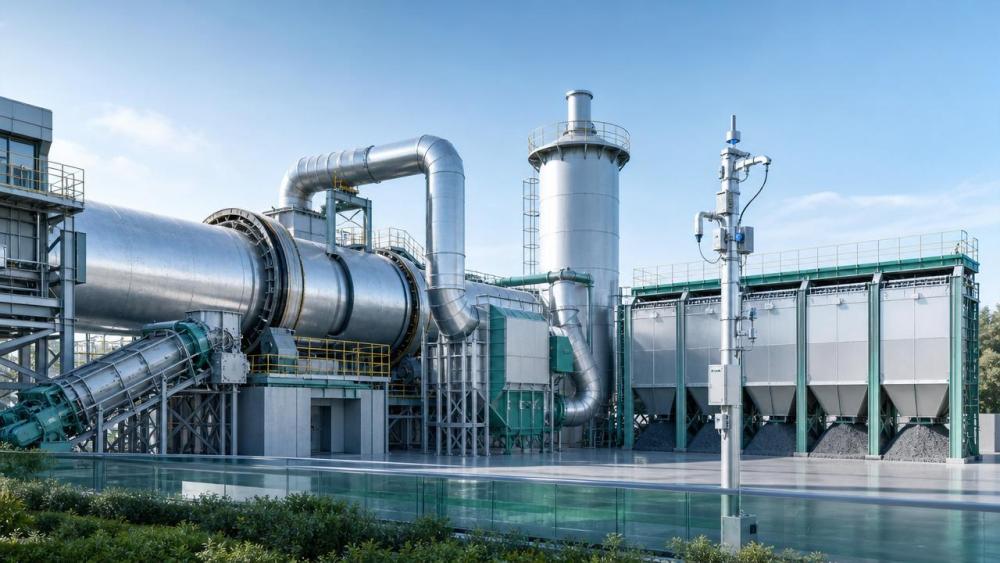
Industrial waste management in kiln operations is no longer a back-end housekeeping task. It now defines emissions stability, ash quality, worker safety, and permit confidence.
In cement, ceramics, glass, refractory, and incineration-linked thermal systems, small waste variations can create major operational consequences.
A chloride spike may affect refractory life. A moisture shift may disturb flame temperature. A metal-rich feed may change ash classification.
As thermal industries pursue decarbonization and circular resource use, industrial waste management is moving from disposal logic to process governance.
This shift is especially visible in rotary kilns, tunnel kilns, hazardous waste incinerators, and co-processing lines.
For CF-Elite’s high-temperature intelligence scope, the key question is practical: can waste become fuel or feedstock without destabilizing compliance?
Trend Signals: Waste Feeds Are Becoming More Complex
Kiln-based industrial waste management is changing because waste streams are no longer predictable, single-source, or chemically simple.
More plants now receive mixed sludges, contaminated packaging, spent catalysts, demolition residues, solvents, and biomass-derived industrial byproducts.
This diversity supports resource circularity, yet it also raises uncertainty in combustion behavior, emissions loading, and residue performance.
The result is a more demanding operating environment for industrial waste management across high-temperature industries.
Permit conditions are also becoming more data-driven. Continuous emissions monitoring and digital reporting reduce tolerance for unexplained deviations.
At the same time, carbon strategies encourage alternative fuels, material recovery, and landfill diversion.
Industrial waste management therefore sits between two pressures: use more secondary materials, but prove cleaner and safer performance.
Why the Trend Is Accelerating Across Thermal Operations
Several forces are pushing industrial waste management into the center of kiln strategy.
These drivers make industrial waste management a strategic function, not only an environmental obligation.
The most resilient facilities connect waste acceptance, kiln control, emissions monitoring, and ash management into one decision loop.
Emissions Risk: Stability Depends on Feed, Flame, and Capture
Emissions are the most visible compliance outcome of industrial waste management in kilns.
However, the root cause often appears earlier, inside waste profiling, blending, storage, or feeding control.
High moisture can reduce combustion temperature. Excess volatile organics can intensify flame instability. Fine powders can increase entrainment.
Chlorine, sulfur, alkalis, and heavy metals require special attention in industrial waste management programs.
These elements may affect acid gas formation, particulate loading, slagging, ring formation, and downstream treatment demand.
Key emissions indicators to watch
- Oxygen, carbon monoxide, and temperature trends during waste feed changes.
- Particulate matter before and after dust control equipment.
- NOx and SOx response under different fuel substitution rates.
- Hydrogen chloride, fluorides, mercury, and heavy metal indicators.
- Dioxin formation risk during poor combustion or cooling windows.
Strong industrial waste management links these indicators to specific waste batches, not only daily averages.
Batch-level traceability helps distinguish equipment failure from unsuitable waste composition.
Ash and Residue Quality Are Becoming Commercial and Legal Issues
Ash is no longer viewed only as an unavoidable byproduct. It is a compliance record, material risk, and potential recovery route.
In industrial waste management, ash classification can determine disposal cost, reuse options, and public confidence.
Bottom ash, fly ash, kiln dust, filter cake, and scrubber residues each require different handling logic.
Leachable metals, soluble salts, unburned carbon, and pH values can change residue status quickly.
A kiln may meet stack limits while still producing residues that create hazardous waste liabilities.
This is why industrial waste management should include ash forecasting, not only post-operation testing.
Residue control priorities
- Separate ash streams with different contamination profiles.
- Track metals, chloride, sulfate, moisture, and ignition loss.
- Prevent uncontrolled mixing that complicates final classification.
- Confirm storage design against dust release and rainwater contact.
- Review reuse claims against local regulatory acceptance.
Effective industrial waste management treats ash as a managed output with specifications, not a disposal afterthought.
Impact Across Kiln Business Links and Operating Decisions
Industrial waste management affects multiple business links, from contract acceptance to refractory planning.
If waste profiles are weak, commercial intake decisions may transfer hidden risk into kiln operation.
If feeding systems lack precision, even approved waste can produce thermal shocks or emissions instability.
If residue testing is delayed, ash handling may become reactive and costly.
The main trend is integration. Industrial waste management succeeds when each link shares data with the next link.
Compliance Risks Are Shifting From Single Events to System Weaknesses
Modern enforcement often looks beyond one emissions exceedance. It examines whether control systems were adequate and consistently applied.
That makes documentation a core part of industrial waste management.
Waste profiles, laboratory results, feeding records, CEMS data, maintenance logs, and ash certificates should support one consistent story.
Gaps between documents can expose facilities to permit challenges, insurance questions, or customer audits.
The most common compliance risks include unauthorized waste acceptance, undocumented blending, weak calibration, and unclear residue custody.
Industrial waste management also needs clear response rules when emissions trend toward limits.
Waiting for a formal exceedance is less effective than using early-warning thresholds.
Practical warning thresholds
- CO fluctuations during new waste feed introduction.
- Rising dust pressure drop across bag filters.
- Unexpected chloride or sulfur increases in kiln dust.
- Ash leachability moving toward hazardous thresholds.
- Repeated manual corrections to stabilize combustion.
These signals help industrial waste management move from reaction to prevention.
Core Priorities for Safer Industrial Waste Management
The following priorities support stronger industrial waste management under tighter environmental expectations.
- Strengthen waste characterization. Test calorific value, moisture, ash, chlorine, sulfur, metals, and volatile content.
- Define acceptance boundaries. Use clear rejection rules for unstable, incompatible, or poorly documented waste.
- Control blending discipline. Avoid dilution as a substitute for real hazard understanding.
- Link feed rate to kiln condition. Adjust feed according to temperature, oxygen, CO, and draft stability.
- Maintain dust and gas treatment systems. Compliance depends on capture performance during peak loading.
- Manage ash by specification. Separate streams, test regularly, and document final destinations.
- Build audit-ready records. Make industrial waste management evidence easy to trace and verify.
These priorities are practical across cement kilns, incineration units, refractory lines, and broader thermal treatment assets.
Future Judgment: Data Integration Will Separate Strong Programs
The next stage of industrial waste management will rely heavily on connected operational intelligence.
Digital twins, online gas analysis, automated feeding records, and predictive ash models will become more common.
However, technology alone will not solve weak discipline in sampling, classification, or operating response.
A strong system combines field judgment, laboratory accuracy, thermal process knowledge, and regulatory awareness.
Industrial waste management will increasingly be judged by consistency, transparency, and the ability to prove control under variable conditions.
Action Path: Turning Compliance Pressure Into Operational Confidence
A practical improvement path should begin with a risk map of waste streams, emissions behavior, and ash outcomes.
Start by comparing accepted waste specifications with actual laboratory results and kiln performance records.
Then identify which waste characteristics most often correlate with unstable combustion, dust loading, or difficult residues.
Next, update acceptance rules, blending instructions, feeding limits, and emergency response triggers.
Finally, review whether records can demonstrate compliant industrial waste management during normal operation and abnormal events.
For high-temperature industries, the strongest position is not simply treating more waste.
It is treating the right waste, under stable thermal conditions, with verified emissions control and responsible ash governance.
CF-Elite’s intelligence focus supports this direction through thermal process insight, regulatory observation, and equipment-linked trend analysis.
Industrial waste management that connects emissions, ash, and compliance will become a defining capability in cleaner kiln operations.
The next step is clear: audit the waste-to-ash chain, close data gaps, and convert uncertainty into controlled industrial performance.
Related News
 Optical Glass Tech FellowHow to Evaluate a Glass Annealing Equipment Manufacturer for Production StabilityChoose a glass annealing equipment manufacturer with proven thermal uniformity, reliable controls, lifecycle value, and responsive service for stable production.Sep 08, 2026
 Prof. Marcus ChenThermal Energy Architecture in North America: Strategies for Lower Building Energy UseThermal energy architecture North America helps project leaders cut building energy use through stronger envelopes, right-sized HVAC, storage, and smart commissioning.Sep 07, 2026
 Ms. Elena RodriguezHow Should Buyers Evaluate Building Material Industry Intelligence Pricing?Building material industry intelligence pricing: learn how to compare coverage, technical depth, and ROI to choose intelligence that reduces procurement risk.Sep 07, 2026
 Ms. Elena RodriguezHow to Use Building Material Intelligence Data for Market and Investment DecisionsBuilding material industry intelligence data helps leaders evaluate demand, costs, regulation, capacity, and technology to make smarter market and investment decisions.Sep 05, 2026
 Thermal Energy ArchitectHow PLC Control Improves Energy Efficiency and Temperature Stability in KilnsEnergy efficient kilns PLC control improves temperature stability, cuts fuel waste, and optimizes combustion, draft, and material flow. Explore proven strategies for smarter kiln modernization.Sep 04, 2026
 Optical Glass Tech FellowEuropean Glass Melting Processes: Furnace Choices, Energy Use, and Quality ControlGlass melting process Europe: explore furnace choices, energy efficiency, cullet strategy, and quality control to improve output, compliance, and long-term glass performance.Sep 03, 2026
 Thermal Energy ArchitectWhat Determines Refractory Lining Monitoring Price for Industrial Kilns?Refractory lining monitoring price depends on kiln size, sensor technology, installation, software, and support. Compare total lifecycle costs and choose the right solution.Sep 02, 2026
 Silicate Process EngineerCement Production System Costs: A Plant Buyer’s Guide to Budgeting and ROICement production systems cost planning made clear: compare CAPEX, operating costs, compliance, and ROI to build a resilient, profitable cement plant investment.Sep 01, 2026
 Dr. Alistair VaughnWhat Should a Process Technology Database Track for High-Temperature Plants?Process technology database essentials for high-temperature plants: track thermal profiles, feed chemistry, refractory wear, emissions, energy, and maintenance for safer, data-driven decisions.Aug 31, 2026
 Ms. Elena RodriguezHow to Evaluate a Silicate Processing Equipment Manufacturer for Plant ProjectsSilicate processing equipment manufacturer selection: assess process fit, guarantees, energy, compliance, delivery risk, and lifecycle support for dependable plant performance.Aug 30, 2026
 Dr. Alistair VaughnHow to Specify Custom Agricultural Processing Equipment for Throughput and HygieneEquipment customization services for agricultural processing: learn to specify hygienic, high-throughput lines that improve yield, reliability, and long-term efficiency.Aug 29, 2026
 Dr. Alistair VaughnHow to Select Process Plant Equipment for High-Temperature, Abrasive Production LinesProcess plant equipment selection for high-temperature, abrasive lines: reduce downtime, improve durability, and optimize lifecycle performance.Aug 28, 2026
 Silicate Process EngineerHow Kiln Heat Recovery Systems Cut Fuel Use in Cement and Lime ProductionKiln heat recovery helps cement and lime plants cut fuel use, improve thermal stability, and build practical, reliable decarbonization strategies.Aug 27, 2026
 Ms. Elena RodriguezProcess Equipment Comparison: Which Metrics Matter Most for Reliable Selection?Process equipment comparison made practical: discover which metrics truly drive reliable selection, from energy efficiency and control stability to wear life, maintainability, and uptime.Aug 26, 2026
 Ms. Elena RodriguezWhat Buyers Should Check Before Sourcing Precision Alloy Bars for Critical PartsPrecision Alloy Bars buyers should verify grade, chemistry, tolerances, surface quality, traceability, and lead time before sourcing for critical parts. Learn what prevents costly machining and reliability risks.Aug 27, 2026
 Ms. Elena RodriguezHow to Evaluate Thermal Management Solutions Insulation for High-Heat Industrial SystemsThermal management solutions insulation: learn how to assess high-heat industrial systems by thermal performance, durability, lifecycle cost, and supplier data for smarter decisions.Aug 25, 2026
 Ms. Elena RodriguezWhat Drives Waste Recycling Cost in Industrial Projects and How to Estimate It?Waste recycling cost in industrial projects depends on composition, moisture, transport, pre-treatment, and compliance. Learn how to estimate it accurately and compare suppliers with confidence.Aug 24, 2026
 Silicate Process EngineerHow to Evaluate Cement Production Plants in the Middle East for Capacity, Fuel Flexibility, and ROIcement production plants Middle East: Learn how to assess true capacity, fuel flexibility, and ROI risks to identify resilient assets and smarter investment opportunities.Aug 23, 2026
 Structural Material AnalystHow to Evaluate Lightweight Material Machinery for Output, Energy Use, and Product QualityLightweight material machinery evaluation guide: compare stable output, energy use, and product quality to choose equipment that cuts waste, lowers costs, and improves production confidence.Aug 22, 2026
 Material Heat-Resist ExpertWhat Determines Refractory Production Line Price in a Turnkey Plant Project?Refractory production line price depends on raw materials, forming method, kiln and drying design, automation, utilities, and scope. Learn what really drives turnkey plant cost before you invest.Aug 21, 2026

Related News
- 00
0000-00
How PLC Control Improves Energy Efficiency and Temperature Stability in Kilns - 00
0000-00
What Determines Refractory Lining Monitoring Price for Industrial Kilns? - 00
0000-00
How Digital Twin Simulations Help Kiln Operators Cut Fuel Use and Stabilize Output - 00
0000-00
What to Evaluate in a Rotary Kiln Technology Manufacturer for High-Temperature Process Projects - 00
0000-00
How to Evaluate an Incineration Equipment Exporter for Compliance, Capacity, and After-Sales Support
Weekly Insights
Stay ahead with our curated technology reports delivered every Monday.