
When waste to energy makes business sense




For business evaluators, waste to energy is no longer just an environmental concept—it is a strategic decision tied to fuel costs, compliance pressure, and long-term asset value. In high-temperature industries, the real question is not whether the model works, but when it delivers measurable commercial returns. This article explores the operational, financial, and regulatory conditions that make waste to energy a sound business case.
When does waste to energy become a commercial decision rather than a sustainability project?
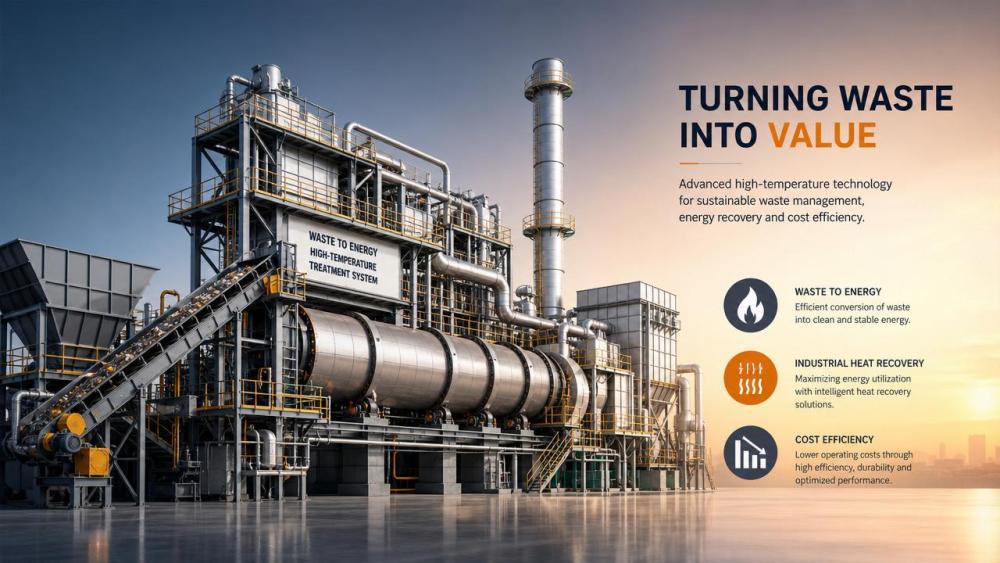
In industrial settings, waste to energy makes business sense when disposal cost, thermal demand, and compliance pressure converge. This is especially true in cement plants, industrial kilns, incineration systems, glass manufacturing support utilities, and other heat-intensive operations where fuel substitution can be measured in operating margin rather than public relations value.
For a business evaluator, the core issue is not the concept itself. The issue is whether the project improves cost stability, reduces exposure to fossil fuel volatility, protects the plant from tightening emissions rules, and fits the technical limits of existing assets. A waste to energy project that looks attractive on paper can fail if feedstock quality fluctuates, kiln chemistry changes, or downtime offsets fuel savings.
This is where sector-specific intelligence matters. CF-Elite focuses on the thermal and process realities behind large-scale silicate production lines, industrial incineration, refractory systems, and specialized extrusion equipment. That perspective helps decision teams connect fuel replacement targets with flame temperature, ash behavior, refractory wear, emission control burden, and long-cycle equipment economics.
- If the plant already consumes large amounts of coal, petcoke, gas, or heavy fuel, waste to energy can directly affect the fuel bill.
- If landfill or hazardous disposal fees are rising, the avoided cost may become as important as the energy recovered.
- If local regulators are tightening carbon, NOx, SOx, dioxin, dust, or waste diversion requirements, earlier investment can preserve permit continuity and asset value.
Which industrial scenarios give waste to energy the strongest payback profile?
Not every facility captures value from waste to energy in the same way. The economics improve when a plant has steady thermal demand, the ability to tolerate variable fuels, and enough process control to maintain product quality while handling alternative feedstocks.
High-temperature industries with continuous heat demand
Rotary kilns and continuous furnaces are often better candidates than batch systems because they consume heat every hour of operation. In cement and certain industrial kiln applications, co-processing can integrate waste-derived fuel streams without building a fully separate energy island, which lowers capital intensity compared with stand-alone incineration and power generation assets.
Sites under disposal and compliance pressure
Some projects become viable because the avoided waste cost is substantial. If the site handles sludge, packaging residue, industrial solids, or combustible by-products that are expensive to transport and dispose of, waste to energy improves the business case by reducing outbound waste logistics while recovering part of the embedded calorific value.
Operations with fuel diversification goals
A plant heavily exposed to imported fossil fuels may value resilience as much as direct savings. Waste to energy can reduce dependence on a single fuel basket, which matters in periods of geopolitical volatility, carbon cost expansion, or disrupted shipping lanes.
The following table helps business evaluators compare where waste to energy tends to create the clearest commercial return across industrial scenarios.
The strongest business cases usually sit at the intersection of high thermal demand and high disposal burden. Facilities with only one of those drivers often need subsidies, gate fee advantages, or strategic carbon objectives to justify investment.
What financial signals tell you that waste to energy will pay back?
A sound waste to energy decision starts with a structured economic screen. Evaluators should avoid relying on fuel price alone. In most real projects, value comes from several stacked effects: avoided disposal cost, partial fuel replacement, lower carbon exposure, by-product handling optimization, and better permit resilience.
Key financial variables to test
- Current and forecast fossil fuel cost, including transport, storage, and handling losses.
- Waste disposal fees by stream, including hazardous surcharges and off-site logistics.
- Capital required for fuel preparation, feeding, combustion, heat recovery, and flue gas treatment.
- Impact on maintenance intervals, refractory life, and production stability.
- Carbon pricing, emissions compliance costs, and potential future permit constraints.
- Potential revenue or avoided purchase from steam, electricity, or recovered thermal energy.
For business evaluators reviewing waste to energy options, the table below provides a practical cost framework that is easier to discuss internally than a purely technical design memo.
A project usually becomes more convincing when at least three variables are favorable at the same time. If the economics depend on a single optimistic assumption, the business case is fragile. CF-Elite’s intelligence-led approach is useful here because it connects market pricing, process limits, and regulatory trend analysis before a plant locks into a costly path.
What technical conditions determine whether waste to energy performs reliably?
In high-temperature industries, commercial success depends on process compatibility. Waste to energy is not only a combustion issue. It is a materials, heat transfer, emissions, and asset integrity issue. This is why general energy models often mislead investors when applied to kilns, float-support systems, refractory lines, or mixed industrial thermal assets.
Feedstock consistency matters more than headline calorific value
A waste stream with attractive calorific value can still damage economics if moisture is unstable, particle size is inconsistent, or chlorine and alkali content create circulation problems. Evaluators should request feed characterization over time rather than single-batch samples. Seasonal variability often changes project economics more than the average heating value.
Thermal integration must match process reality
Waste to energy works best when recovered heat is used close to where it is generated and where demand is steady. If a project depends on selling excess power into an uncertain market while the host plant still purchases expensive process fuel, the design may be solving the wrong problem. In many industrial cases, direct thermal substitution outperforms electricity-led recovery models.
Refractory and corrosion exposure cannot be treated as minor details
Alternative fuels and waste-derived streams can change flame shape, ash deposition, alkali loading, and corrosive attack. CF-Elite’s specialization in refractory production lines and thermal barriers is relevant because a project that saves fuel but shortens lining life may simply move cost from energy to maintenance.
- Check residence time, burnout behavior, and feed point suitability before promising substitution rates.
- Review ash and halogen impact on product quality, dust cycling, and downstream baghouse or scrubber load.
- Model refractory exposure and maintenance planning under expected operating envelopes, not idealized steady-state conditions.
How should business evaluators compare waste to energy against other decarbonization options?
Waste to energy is often assessed beside natural gas conversion, biomass co-firing, electrification, waste heat recovery, and process efficiency upgrades. The right comparison is not ideological. It depends on thermal duty, local infrastructure, permit risk, and capital discipline.
Comparison logic for decision teams
- Start with measures that reduce heat demand permanently, because the cheapest unit of energy is the one not consumed.
- Then compare waste to energy with fuel-switching based on full delivered cost, not headline commodity price.
- Finally, test whether the option improves regulatory resilience and plant flexibility over a ten-year horizon.
The table below compares waste to energy with common alternatives from a business evaluation perspective.
In many industrial portfolios, the most resilient strategy is not a single solution. It is a layered roadmap: efficiency first, then waste heat recovery, then waste to energy or alternative fuel integration where process chemistry and local economics support it.
Which compliance and risk factors are often underestimated?
Business evaluators often focus on capex and fuel savings but underestimate permit timing, feedstock classification, stack emissions monitoring, ash management, and community scrutiny. These issues can delay revenue realization more than equipment fabrication does.
Common risk areas
- Waste classification can determine handling, storage, transport, and combustion constraints.
- Emissions obligations may require continuous monitoring for dust, NOx, SOx, acid gases, or organic pollutants depending on jurisdiction and waste type.
- Residue and ash management can become a hidden cost if material cannot be reused or easily disposed of.
- Insurance, lender review, and local stakeholder acceptance can change project schedule assumptions.
This is another area where CF-Elite’s Strategic Intelligence Center is valuable. A waste to energy project in a rotary kiln or industrial incineration setting should never be screened only by generic energy consultants. It must be reviewed through the combined lens of thermal process engineering, material behavior, evolving environmental regulation, and commercial demand for long-cycle heavy equipment.
How should a buyer or evaluator structure the decision process?
A disciplined procurement and evaluation flow reduces the risk of pursuing the wrong waste to energy model. The goal is to move from broad attractiveness to site-specific viability before major design spending begins.
- Map the waste streams by quantity, composition, moisture, contaminants, and seasonal variation.
- Map thermal demand by process step, temperature level, and operating hours.
- Screen technical routes such as kiln co-processing, direct thermal recovery, steam generation, or dedicated incineration.
- Build a risk-adjusted financial model that includes downtime, refractory, emissions systems, and permit timing.
- Run sensitivity cases for fuel price, waste availability, carbon cost, and operating factor.
If this process reveals that project returns depend on a narrow feedstock band or unusually optimistic run rates, caution is justified. If returns remain acceptable under conservative assumptions, waste to energy is more likely to support board-level approval.
FAQ: what do business evaluators ask most about waste to energy?
Is waste to energy only suitable for very large plants?
No, but scale strongly affects economics. Large plants benefit from continuous heat demand, in-house technical teams, and easier absorption of compliance costs. Smaller sites can still succeed if waste supply is concentrated, disposal cost is high, and the recovered heat is used efficiently on site rather than exported through a weak market.
What is the biggest mistake in a waste to energy business case?
The biggest mistake is treating all waste as equivalent fuel. Feed consistency, contaminants, moisture swings, and ash behavior matter as much as nominal heating value. A second common mistake is ignoring maintenance and refractory consequences, which can erase savings if thermal and chemical impacts were underestimated.
How do we know whether co-processing or dedicated incineration is better?
Co-processing is often attractive when an existing high-temperature asset such as a rotary kiln can safely absorb part of the waste-derived fuel and when mineral residues can be managed within the process. Dedicated incineration is often stronger when destruction assurance, waste segregation, and independent energy recovery are the main drivers. The better route depends on process tolerance, permit boundaries, and capital strategy.
How long should the evaluation horizon be?
For industrial assets, a short-term fuel spread is not enough. A practical evaluation horizon often needs to cover several years of carbon policy tightening, maintenance cycles, and waste supply contracts. Long-cycle industries should also test what happens if regulations change faster than expected or if the waste mix shifts over time.
Why choose us when assessing waste to energy opportunities?
CF-Elite supports decision-makers who need more than a generic market summary. Our focus on cement production plants, glass manufacturing systems, industrial kilns and incineration, refractory production lines, and new building material extrusion gives evaluators a cross-functional view of waste to energy economics in real thermal industries.
We help connect commercial decisions with process reality. That includes reviewing feedstock suitability, substitution logic, refractory and thermal management implications, equipment matching, compliance trend signals, and regional market shifts affecting heavy industrial investment.
- Parameter confirmation for thermal demand, waste characteristics, and retrofit boundaries.
- Route selection between co-processing, dedicated incineration, heat recovery, and related alternatives.
- Guidance on equipment matching, delivery cycle expectations, and project sequencing.
- Support for compliance review, operating risk identification, and supplier communication.
- Commercial insight for quotation comparison, long-cycle procurement planning, and customized solution discussions.
If you are evaluating whether waste to energy fits your plant, portfolio, or distribution strategy, contact CF-Elite with your operating parameters, target fuel substitution level, waste stream profile, expected delivery schedule, and compliance concerns. We can help you narrow the feasible options, identify the hidden cost drivers, and structure a more defensible business case before capital is committed.
Related News
 Optical Glass Tech FellowHow to Evaluate a Glass Annealing Equipment Manufacturer for Production StabilityChoose a glass annealing equipment manufacturer with proven thermal uniformity, reliable controls, lifecycle value, and responsive service for stable production.Sep 08, 2026
 Prof. Marcus ChenThermal Energy Architecture in North America: Strategies for Lower Building Energy UseThermal energy architecture North America helps project leaders cut building energy use through stronger envelopes, right-sized HVAC, storage, and smart commissioning.Sep 07, 2026
 Ms. Elena RodriguezHow Should Buyers Evaluate Building Material Industry Intelligence Pricing?Building material industry intelligence pricing: learn how to compare coverage, technical depth, and ROI to choose intelligence that reduces procurement risk.Sep 07, 2026
 Ms. Elena RodriguezHow to Use Building Material Intelligence Data for Market and Investment DecisionsBuilding material industry intelligence data helps leaders evaluate demand, costs, regulation, capacity, and technology to make smarter market and investment decisions.Sep 05, 2026
 Thermal Energy ArchitectHow PLC Control Improves Energy Efficiency and Temperature Stability in KilnsEnergy efficient kilns PLC control improves temperature stability, cuts fuel waste, and optimizes combustion, draft, and material flow. Explore proven strategies for smarter kiln modernization.Sep 04, 2026
 Optical Glass Tech FellowEuropean Glass Melting Processes: Furnace Choices, Energy Use, and Quality ControlGlass melting process Europe: explore furnace choices, energy efficiency, cullet strategy, and quality control to improve output, compliance, and long-term glass performance.Sep 03, 2026
 Thermal Energy ArchitectWhat Determines Refractory Lining Monitoring Price for Industrial Kilns?Refractory lining monitoring price depends on kiln size, sensor technology, installation, software, and support. Compare total lifecycle costs and choose the right solution.Sep 02, 2026
 Silicate Process EngineerCement Production System Costs: A Plant Buyer’s Guide to Budgeting and ROICement production systems cost planning made clear: compare CAPEX, operating costs, compliance, and ROI to build a resilient, profitable cement plant investment.Sep 01, 2026
 Dr. Alistair VaughnWhat Should a Process Technology Database Track for High-Temperature Plants?Process technology database essentials for high-temperature plants: track thermal profiles, feed chemistry, refractory wear, emissions, energy, and maintenance for safer, data-driven decisions.Aug 31, 2026
 Ms. Elena RodriguezHow to Evaluate a Silicate Processing Equipment Manufacturer for Plant ProjectsSilicate processing equipment manufacturer selection: assess process fit, guarantees, energy, compliance, delivery risk, and lifecycle support for dependable plant performance.Aug 30, 2026
 Dr. Alistair VaughnHow to Specify Custom Agricultural Processing Equipment for Throughput and HygieneEquipment customization services for agricultural processing: learn to specify hygienic, high-throughput lines that improve yield, reliability, and long-term efficiency.Aug 29, 2026
 Dr. Alistair VaughnHow to Select Process Plant Equipment for High-Temperature, Abrasive Production LinesProcess plant equipment selection for high-temperature, abrasive lines: reduce downtime, improve durability, and optimize lifecycle performance.Aug 28, 2026
 Silicate Process EngineerHow Kiln Heat Recovery Systems Cut Fuel Use in Cement and Lime ProductionKiln heat recovery helps cement and lime plants cut fuel use, improve thermal stability, and build practical, reliable decarbonization strategies.Aug 27, 2026
 Ms. Elena RodriguezProcess Equipment Comparison: Which Metrics Matter Most for Reliable Selection?Process equipment comparison made practical: discover which metrics truly drive reliable selection, from energy efficiency and control stability to wear life, maintainability, and uptime.Aug 26, 2026
 Ms. Elena RodriguezWhat Buyers Should Check Before Sourcing Precision Alloy Bars for Critical PartsPrecision Alloy Bars buyers should verify grade, chemistry, tolerances, surface quality, traceability, and lead time before sourcing for critical parts. Learn what prevents costly machining and reliability risks.Aug 27, 2026
 Ms. Elena RodriguezHow to Evaluate Thermal Management Solutions Insulation for High-Heat Industrial SystemsThermal management solutions insulation: learn how to assess high-heat industrial systems by thermal performance, durability, lifecycle cost, and supplier data for smarter decisions.Aug 25, 2026
 Ms. Elena RodriguezWhat Drives Waste Recycling Cost in Industrial Projects and How to Estimate It?Waste recycling cost in industrial projects depends on composition, moisture, transport, pre-treatment, and compliance. Learn how to estimate it accurately and compare suppliers with confidence.Aug 24, 2026
 Silicate Process EngineerHow to Evaluate Cement Production Plants in the Middle East for Capacity, Fuel Flexibility, and ROIcement production plants Middle East: Learn how to assess true capacity, fuel flexibility, and ROI risks to identify resilient assets and smarter investment opportunities.Aug 23, 2026
 Structural Material AnalystHow to Evaluate Lightweight Material Machinery for Output, Energy Use, and Product QualityLightweight material machinery evaluation guide: compare stable output, energy use, and product quality to choose equipment that cuts waste, lowers costs, and improves production confidence.Aug 22, 2026
 Material Heat-Resist ExpertWhat Determines Refractory Production Line Price in a Turnkey Plant Project?Refractory production line price depends on raw materials, forming method, kiln and drying design, automation, utilities, and scope. Learn what really drives turnkey plant cost before you invest.Aug 21, 2026

Related News
- 00
0000-00
How Should Buyers Evaluate Building Material Industry Intelligence Pricing? - 00
0000-00
How to Use Building Material Intelligence Data for Market and Investment Decisions - 00
0000-00
How to Evaluate a Silicate Processing Equipment Manufacturer for Plant Projects - 00
0000-00
Process Equipment Comparison: Which Metrics Matter Most for Reliable Selection? - 00
0000-00
What Buyers Should Check Before Sourcing Precision Alloy Bars for Critical Parts
Weekly Insights
Stay ahead with our curated technology reports delivered every Monday.