
What defines quality in advanced ceramics production today




In today’s high-temperature industries, quality in advanced ceramics production is defined by more than material purity alone. For quality control and safety managers, it depends on stable raw materials, precise thermal processing, equipment reliability, and strict compliance with environmental and workplace standards. Understanding how these factors interact is essential to reducing defects, improving consistency, and securing long-term operational performance.
That is why advanced ceramics production now matters across the broader industrial chain. It affects wear resistance, thermal stability, electrical insulation, emissions control, and equipment lifetime. In sectors observed by CF-Elite, ceramic quality is no longer judged only at final inspection. It is judged by how well every production stage supports repeatable, efficient, and low-risk output.
When does quality in advanced ceramics production become a critical operational issue?
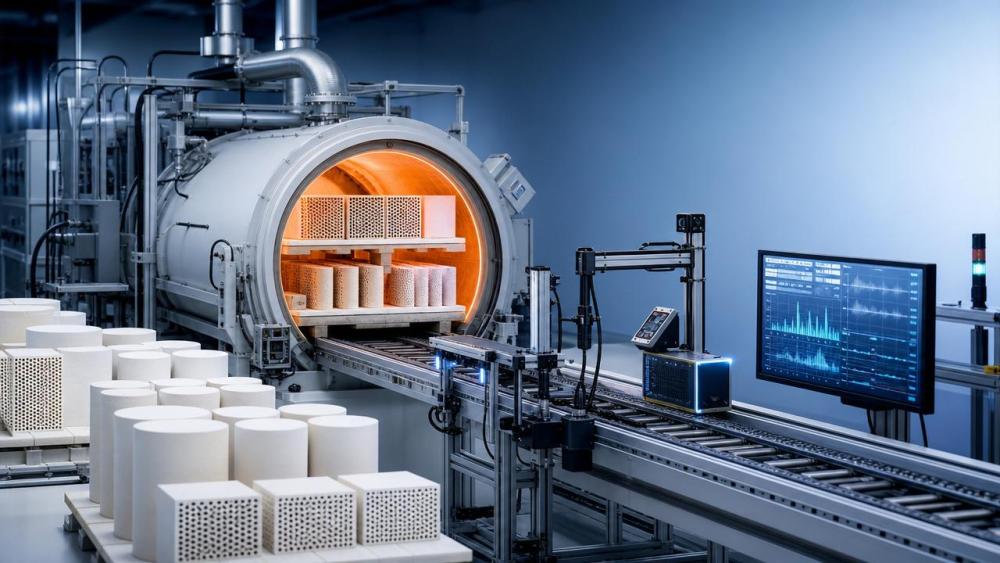
The answer depends on the operating scenario. A kiln furniture line faces different quality pressures than technical ceramic parts for electronics. Refractory linings, extrusion dies, and insulation ceramics also demand different controls.
In advanced ceramics production, quality becomes critical when small variations create large downstream losses. A slight firing error may cause cracking. A particle size shift may reduce density. Weak traceability may hide the root cause.
For high-temperature industries, this means quality is a system decision. It links feed preparation, forming, drying, firing, handling, maintenance, and environmental control. The best plants treat quality as an operating discipline, not a final checkpoint.
Scenario 1: Stable mass production lines need consistency more than peak lab performance
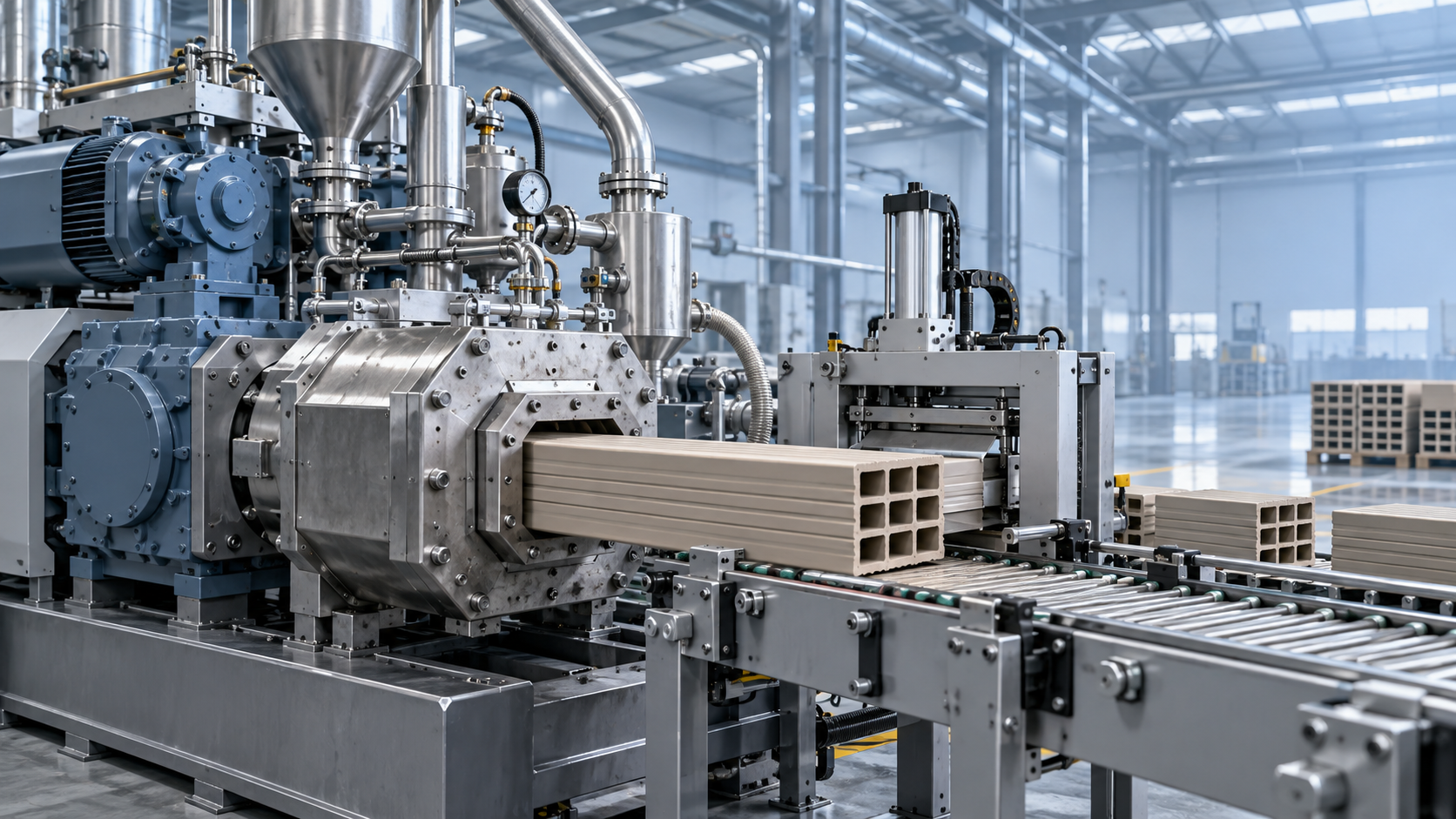
Large-volume advanced ceramics production often serves demanding but repetitive applications. Examples include kiln rollers, setter plates, honeycomb structures, wear tiles, and thermal insulation components.
In this scenario, quality means low variability. A material with excellent lab strength is not enough if dimensions drift across batches. Production quality is defined by repeatable density, shrinkage, surface condition, and thermal shock behavior.
Core judgment points
- Raw material lots stay within a narrow chemical and granulometric range.
- Mixing and granulation produce uniform feed behavior.
- Drying removes moisture evenly before thermal treatment.
- Kiln temperature profiles remain stable across loading conditions.
- Inspection data can be traced back to each process stage.
This is where digital monitoring becomes practical. Temperature uniformity, energy balance, and inline dimensional control help identify drift before scrap rises. For heavy thermal operations, consistency is the true measure of advanced ceramics production quality.
Scenario 2: Precision technical ceramics require tighter process windows and cleaner environments
Technical parts used in electronics, medical devices, sensors, and precision machinery face another quality definition. Here, advanced ceramics production is judged by microstructure control and defect elimination.
A tiny pore, contamination event, or binder residue can change performance. Electrical insulation may fail. Surface finish may become unacceptable. Dimensional tolerance may move outside application limits.
Core judgment points
- Powder purity, morphology, and dispersibility are tightly controlled.
- Forming methods match shape complexity and density targets.
- Debinding avoids internal pressure and residue formation.
- Atmosphere control supports the intended chemistry during sintering.
- Final machining and inspection protect functional surfaces.
In this scenario, quality in advanced ceramics production depends on discipline across clean handling, thermal scheduling, and measurement accuracy. The acceptable process window is narrower, and the cost of hidden defects is higher.
Scenario 3: Refractory and thermal barrier applications depend on service-life quality
For rotary kilns, incineration systems, glass furnaces, and metallurgical units, ceramic quality is linked to survival under thermal cycling, slag attack, abrasion, and atmosphere changes.
In these applications, advanced ceramics production must focus on service-life behavior, not only initial strength. A part may pass basic tests but still fail early if porosity distribution, phase balance, or bonding is weak.
Core judgment points
- The composition matches thermal, chemical, and mechanical exposure.
- Firing creates a stable phase structure for harsh operation.
- Shape accuracy supports reliable installation and thermal sealing.
- Testing reflects real service conditions, not only standard benchmarks.
This scenario is especially relevant to CF-Elite’s focus areas. Refractory production lines and industrial kilns demand quality decisions that combine material science, energy efficiency, and maintenance planning.
How do quality demands differ across advanced ceramics production scenarios?
This comparison shows why one universal quality checklist rarely works. Advanced ceramics production must be assessed by application context, equipment capability, and operating exposure.
Which process decisions most strongly define advanced ceramics production quality today?
Several process decisions now shape quality across nearly all ceramic scenarios. They matter because they reduce variation, improve traceability, and support safer thermal operation.
1. Raw material qualification before production begins
Quality starts with incoming powder, additives, and recycled fractions. Chemical purity, particle size distribution, moisture, and flow behavior should be checked before batching.
2. Thermal process control instead of operator estimation
Modern advanced ceramics production depends on measured heating rates, soak times, cooling curves, and atmosphere balance. This reduces warping, residual stress, and uneven densification.
3. Equipment reliability as a quality variable
Worn feeders, unstable burners, faulty thermocouples, and uneven kiln airflow often create quality losses before anyone notices. Maintenance data should be integrated with production quality records.
4. Environmental and workplace compliance
Dust control, emissions management, ventilation, and safe binder handling also influence quality. A poorly controlled environment increases contamination risk, process instability, and shutdown probability.
What practical actions improve scenario fit in advanced ceramics production?
- Define quality targets by end-use conditions, not by generic material labels.
- Map each defect to the most likely stage of formation.
- Use SPC or trend analysis for temperature, density, and shrinkage.
- Link lab testing with actual kiln loading and operating cycles.
- Review whether recycled inputs change firing response or impurity levels.
- Align energy-saving upgrades with ceramic performance validation.
These actions support both product quality and carbon-aware manufacturing. For high-temperature sectors, better advanced ceramics production quality often comes from better thermal intelligence, not simply higher firing temperatures.
What common misjudgments weaken quality in advanced ceramics production?
One common mistake is treating quality as a laboratory issue only. Many defects are created by plant conditions, handling practice, or maintenance gaps rather than formulation errors.
Another mistake is assuming tighter specifications always deliver better results. If process capability is unstable, narrow limits only increase rejection without fixing the cause.
A third misjudgment is separating energy efficiency from quality. In advanced ceramics production, combustion tuning, insulation condition, and thermal uniformity affect both fuel use and product consistency.
Finally, some operations rely on standard tests that do not reflect real exposure. Service-life quality should be judged under realistic thermal, chemical, and mechanical conditions whenever possible.
How should the next quality upgrade be planned?
Start by identifying which production scenario defines the biggest business risk. It may be volume instability, precision defects, or premature failure in thermal service. That choice sets the right quality priorities.
Then audit the full chain of advanced ceramics production. Review raw material variation, forming behavior, kiln control, emissions systems, and equipment health together. Quality gains are strongest when process data is connected.
For operations linked to kilns, glass lines, refractory systems, and thermal equipment, intelligence-led evaluation is increasingly valuable. The strongest results come from combining material insight, thermal management, and long-cycle operational analysis.
Quality in advanced ceramics production today is defined by application fit, process stability, thermal precision, and traceable control. When these elements align, defects fall, efficiency rises, and long-term industrial performance becomes more predictable.
Related News
 Ms. Elena RodriguezHow to Structure Global Specification Data for Faster Industrial Product EvaluationGlobal specification-oriented product information helps industrial teams compare capacity, energy, emissions, automation, and lifecycle data on a like-for-like basis for faster, confident equipment decisions.Sep 29, 2026
 Thermal Energy ArchitectHow to Specify High-Temperature Process Systems for Continuous Thermal OperationsHigh-temperature process engineering systems: learn how to specify resilient continuous thermal operations for efficiency, compliance, reliable uptime, and long-term performance.Sep 28, 2026
 Thermal Energy ArchitectHow to Evaluate a Thermal Engineering Contractor for High-Temperature Plant ProjectsChoose a thermal engineering contractor with proven process expertise, lifecycle value, emissions control, and delivery discipline for reliable high-temperature plant performance.Sep 27, 2026
 Silicate Process EngineerHow Latin American Cement Plants Can Reduce Dust Emissions in Kilns and Transfer PointsCement plant dust control Latin America: reduce kiln and transfer-point emissions with practical airflow, filtration, monitoring, and maintenance strategies.Sep 26, 2026
 Material Heat-Resist ExpertHow to Evaluate Refractory Production Lines for Output, Quality, and Energy UseRefractory production lines: learn how to assess qualified output, consistent quality, and total energy use for smarter, lower-risk investment decisions.Sep 25, 2026
 Dr. Alistair VaughnHow Waste Recycling Technology Improves Material Recovery in Industrial PlantsWaste recycling technology improves material recovery through source segregation, smart separation, thermal treatment, and quality control for industrial plants.Sep 24, 2026
 Optical Glass Tech FellowHow to Specify Glass Annealing Equipment for European Quality and Energy RequirementsGlass annealing equipment Europe: learn how to specify lehrs for consistent glass quality, energy efficiency, compliance, automation, and reliable long-term performance.Sep 23, 2026
 Optical Glass Tech FellowSilicate Process Automation: Improving Batch Consistency and Energy ControlSilicate process automation improves batch consistency, energy control, traceability, and operator confidence across high-temperature manufacturing operations.Sep 22, 2026
 Optical Glass Tech FellowHow Silicate Industrial Processes Control Viscosity, Energy Use, and Product QualitySilicate industrial processes: learn how viscosity, chemistry, heat transfer, and atmosphere control reduce energy use, improve stability, and protect product quality.Sep 21, 2026
 Thermal Energy ArchitectHow European Plants Can Evaluate Energy Recovery Equipment for High-Temperature ProcessesIndustrial energy recovery equipment Europe: learn how high-temperature plants can assess waste-heat sources, integration risks, lifecycle value, and reliable recovery routes.Sep 20, 2026
 Thermal Energy ArchitectIndustrial Furnace Process Optimization: Reducing Fuel Use Without Sacrificing ThroughputIndustrial process optimization furnace strategies that cut fuel use while protecting throughput. Explore combustion control, heat recovery, refractory performance, and data-driven efficiency gains.Sep 19, 2026
 Ms. Elena RodriguezWhat Drives High-Pressure Extrusion Equipment Cost in Industrial Projects?High pressure extrusion equipment cost explained: compare pressure, die design, automation, wear, energy, and installation factors for smarter industrial investments.Sep 18, 2026
 Thermal Energy ArchitectHow to Size a Waste Heat Recovery Exchanger for High-Temperature Kiln Exhaust?Waste heat recovery exchanger sizing for high-temperature kiln exhaust: balance recoverable duty, fouling, corrosion limits, pressure drop, and reliable heat use.Sep 17, 2026
 Thermal Energy ArchitectWhy Heat-Resistant Materials Lose Abrasion Resistance at High TemperaturesHeat-resistant materials abrasion resistance can decline at high temperatures. Discover the thermal, chemical, and mechanical causes of wear—and how to choose longer-lasting linings.Sep 16, 2026
 Thermal Energy ArchitectHow to Evaluate a Thermal Energy Optimization Company for High-Temperature PlantsChoose a thermal energy optimization company with proven process expertise, measurable savings, and reliable delivery for high-temperature plants. Learn what to assess.Sep 15, 2026
 Thermal Energy ArchitectRotary Kiln Efficiency: How Feed Rate, Fuel Use, and Heat Loss Affect OutputRotary kiln efficiency explained: discover how feed rate, fuel use, heat loss, combustion, and cooling performance shape output, quality, and energy costs.Sep 14, 2026
 Thermal Energy ArchitectHow to Select Heat-Resistant Materials That Maintain Abrasion Resistance in KilnsHeat-resistant materials abrasion resistance: learn how to select kiln linings that withstand heat, wear, thermal cycling, and chemical attack for longer service life.Sep 13, 2026
 Thermal Energy ArchitectHow Rotary Kiln Automation Improves Temperature Control and Fuel EfficiencyRotary kiln technology automation enhances temperature control, stabilizes combustion, and improves fuel efficiency with smarter data, predictive control, and safer operations.Sep 12, 2026
 Silicate Process EngineerCement Plant Emission Control: Selecting Systems for Dust, NOx, and SO2 LimitsCement plant emission control guide: compare dust collectors, NOx reduction, and SO2 systems for reliable compliance across kiln modes, fuel changes, and operating upsets.Sep 11, 2026
 Thermal Energy ArchitectSelecting Abrasion-Resistant High-Temperature Materials for Kiln and Conveyor Wear ZonesHigh-temp material engineering guide to abrasion-resistant kiln and conveyor solutions—match wear, heat, chemistry, and installation design for longer service life.Sep 10, 2026


Related News
- 00
0000-00
How to Evaluate Refractory Production Lines for Output, Quality, and Energy Use - 00
0000-00
What Determines Refractory Production Line Price in a Turnkey Plant Project? - 00
0000-00
How to Evaluate a Silicate Production Line for Capacity, Energy Use, and Product Quality - 00
0000-00
Silicate Production Line Process Explained: Key Stages, Equipment, and Quality Control - 00
0000-00
How to Evaluate a Refractory Production Line in Southeast Asia: Capacity, Fuel, and Raw Material Factors
Weekly Insights
Stay ahead with our curated technology reports delivered every Monday.